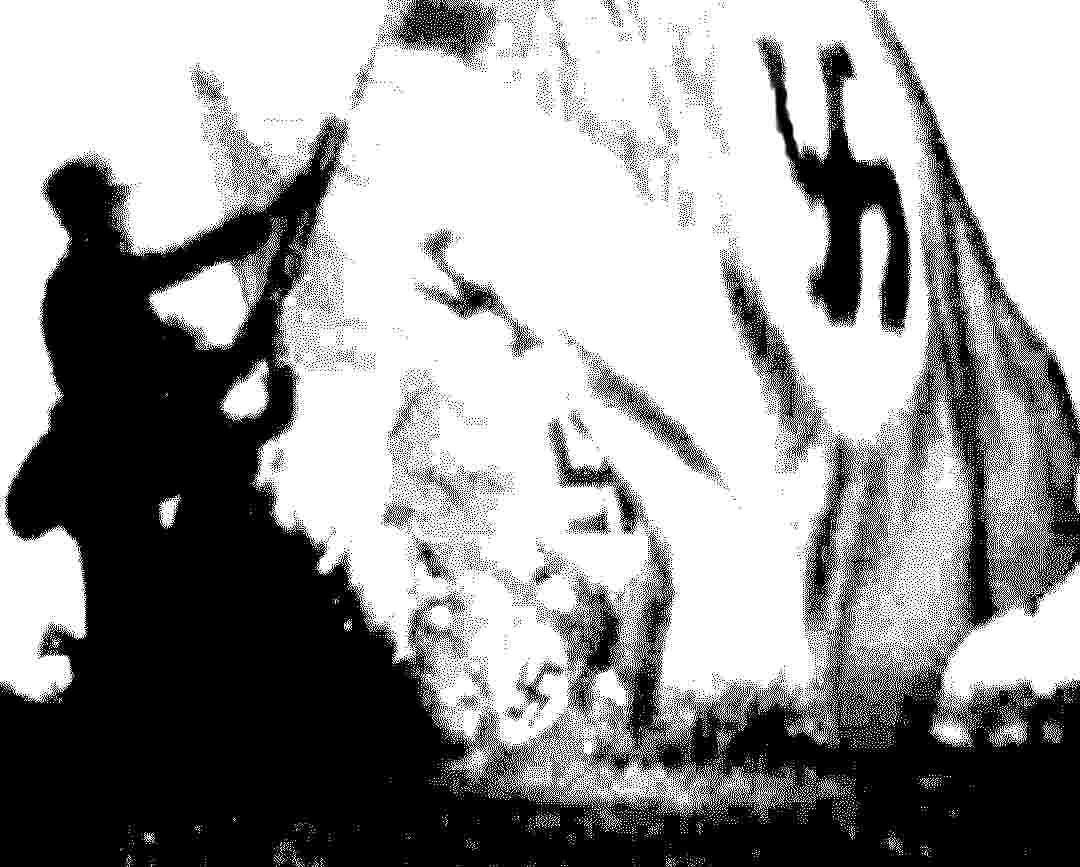
FILM
- AS A -
SUBVERSIVE ART
"But
that the white eye-lid of the
screen
reflect its proper light,
the
Universe would go up in flames."
Luis
Bunuel
A
SUBTERRANEAN CINEMA
PRESENTATION
FROM THE
ORIGINAL 1974 BOOK
BY
AMOS
VOGEL
TRANSCRIBED AND
EDITED
BY
DON ALEX HIXX
From the
beginning, the cinema has been a major target of
censors,
the state, and traditionalists afraid of its powerful
impact, especially when manipulated by
aesthetic and ideo-
logical
innovators and rebels. As a result, public cinema
has often found it difficult to display
openly some of man's
most
fundamental experiences. Today, however, neither
fear nor repression seem able to
stem an accelerating
world-wide
trend toward a more liberated cinema,
in
which subjects and forms hitherto considered
unthinkable
or forbidden are boldly explored.
The
attack on the visual taboo and its demystification
by
open display is profoundly subversive, for it strikes at
prevailing concepts of morality and
religion and thereby at
law and
order itself. Equally subversive is the destruction
of old cinematic forms and "immutable"
rules by new
approaches to
narrative style, camera work, and editing.
Amos
Vogel places this subversion of content and form
within
the context of the contemporary world view of
science,
philosophy, and politics. The aesthetic, sexual,
and political subversives of the cinema
are introduced to
the reader as
catalysts of social and intellectual change.
There
are special chapters on Nazi propaganda, the early
Soviet
Russian avant-garde, expressionism, surrealism,
the
counterculture, and the "forbidden subjects" of cinema
(sex, birth, death, blasphemy). Also
analyzed are the massive
assaults
on narrative, time, and space in modern cinema and
the
effectiveness and containment of filmic subversion.
Each
chapter focuses on a major aspect of this movement
and
is followed by a detailed examination of representative
films; these include many banned or rarely
seen works.
The text
is rounded out with more than 300
rare
stills accompanied by unique, detailed
captions
designed to invite their "close reading".
Amos
Vogel has drawn on the experience of
25
years in film, exhaustive international research,
and
personal archives of over 20,000 titles and stills
to
produce a thought-provoking, controversial work
that
deals with areas of film rarely covered by
standard
histories and is simultaneously designed
to
test the limits of each reader's tolerance as well.
(from the book jacket)
"Your
order is meaningless,
my chaos
is significant."
Nathaniel
West
"I
like my movies made in Hollywood."
Richard
Nixon
"Only
the perverse fantasy can still save us."
Goethe,
to Eckerman
"Behind
the initiation to sensual
pleasure,
there loom narcotics."
Pope
Paul VII
"By
the displacement of an
atom, a
world may be shaken."
Oscar
Wilde
"Film
is the greatest teacher,
because
it teaches not
only through the
brain,
but through the whole
body."
Vsevolod
Pudovkin
"The
cinema implies a total inversion
of
values, a complete upheaval of optics,
of
perspective and logic. It is more exciting
than
phosphorus, more captivating than love."
Antonin
Artaud
"Don't
go on multiplying the mysteries," Unwin said.
"They
should be kept simple. Bear in mind Poe's
purloined
letter, bear in mind Zangwill's locked room."
"Or
made complex," replied Dunraven.
"Bear
in mind the universe."
Jorge
Luis Borges
THIS IS AN

PRESENTATION
IF YOU ARE
UNDER 18 OR OVERLY SENSITIVE
TO
DISTURBING & GRAPHIC VISUAL MATERIAL,
DO
NOT TAKE THIS SUBVERSIVE JOURNEY.
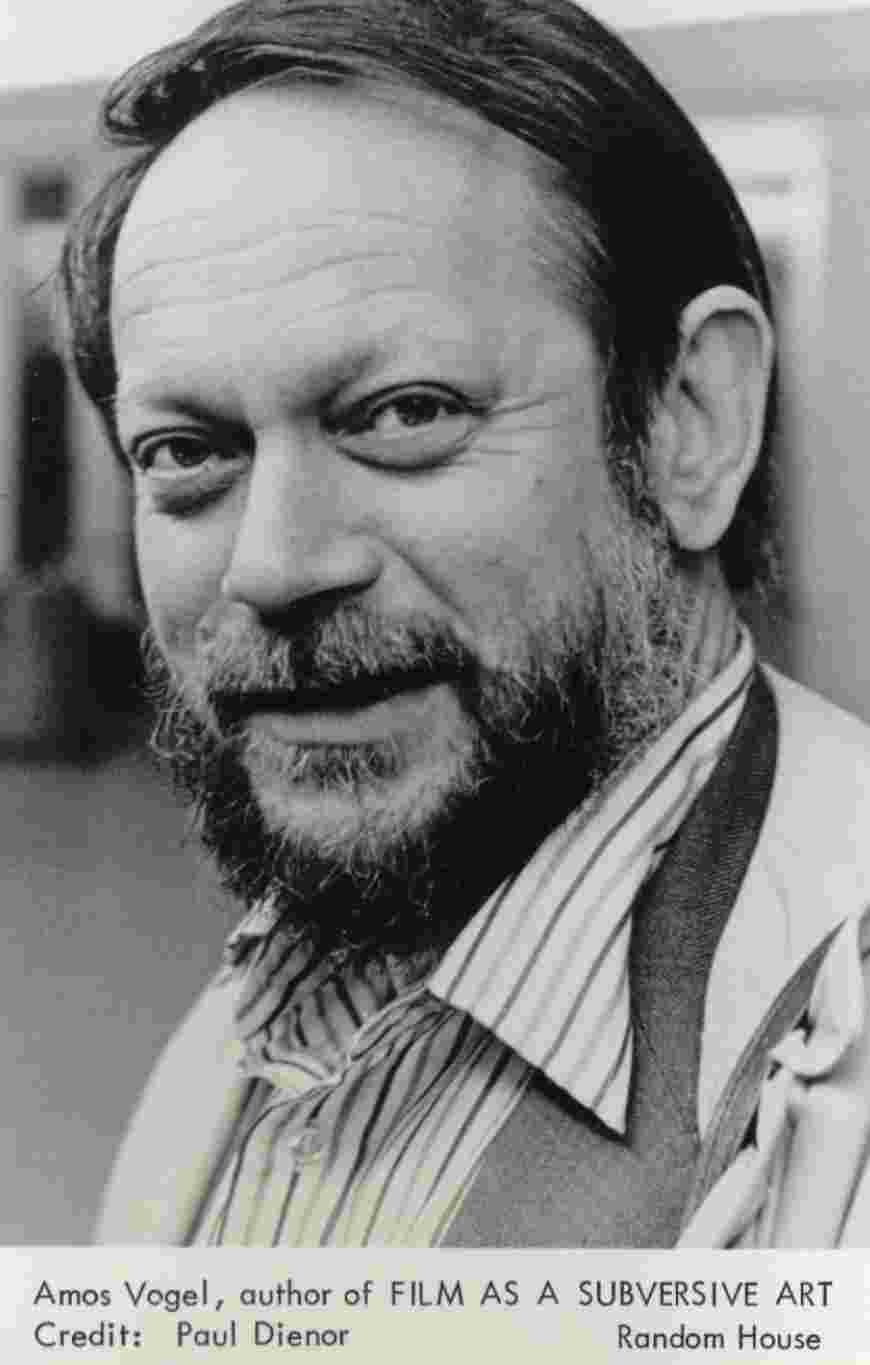
Founder-director
of Cinema 16, America's largest and most
famous
film society, and director of the New York Film Festival
and the Lincoln Center Film Department
(until 1968), Amos Vogel
has been in the forefront of
discovering new film talents for almost
three
decades. He has been film consultant to Grove Press and
National Educational Television, a member
of many international
juries,
program directorof the National Public Television Conference,
and has lectured widely in America and
Europe on film aesthetics
and
history. He also was chairman of the American Selection
Committee for the Cannes, Moscow, Berlin,
and Venice International
Film
Festivals. He is on the faculty of Harvard and the University
of
Pennsylvania's Annenberg
School, and is a regular contributor to
the
Village Voice, the New York Times, and other
publications.
(original book credit)
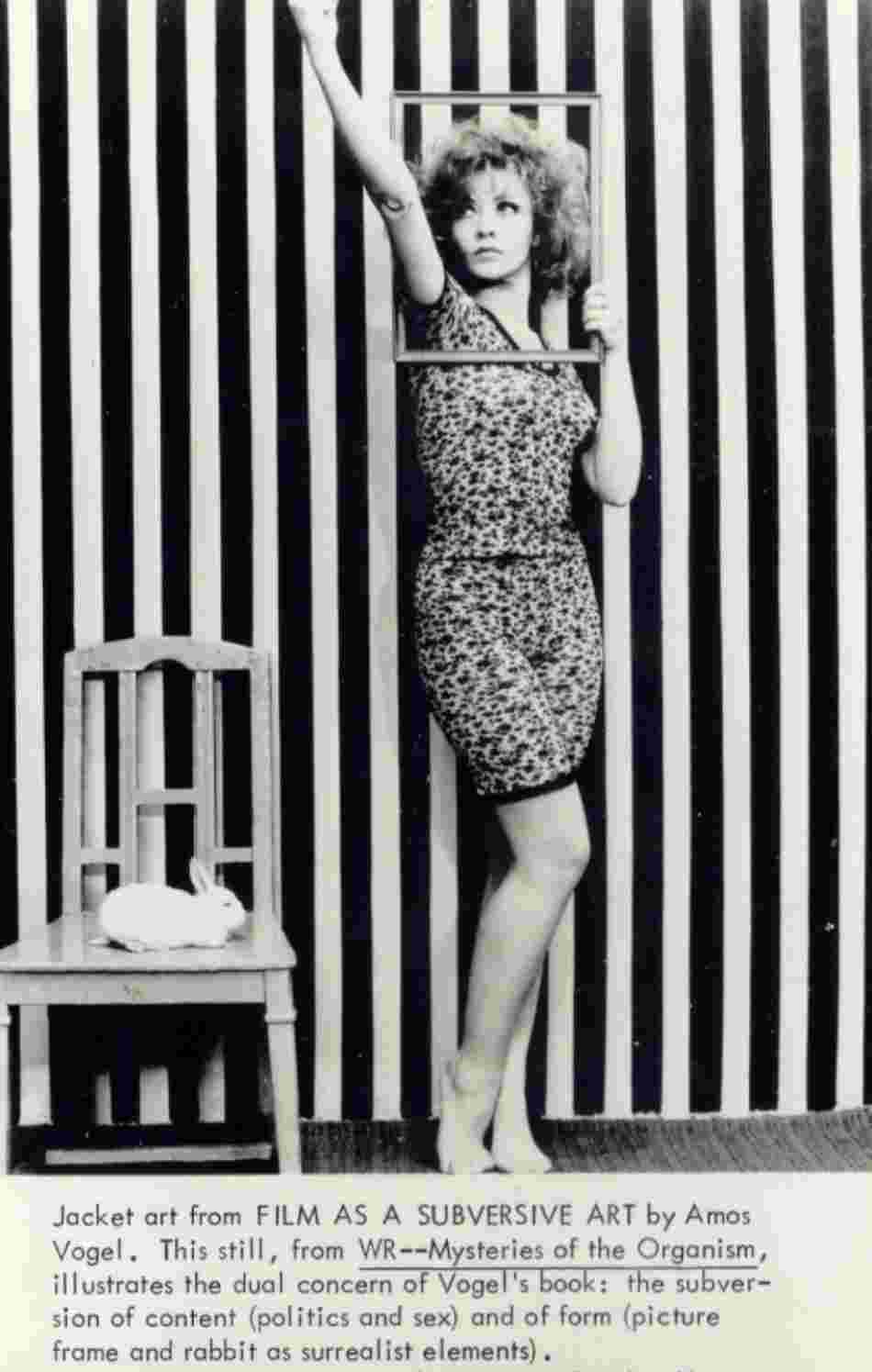
Subversion
of content (politics and sex) and of form
(picture
frame and rabbit as surrealist elements).
Wilhelm
Reich and Karl Marx in a call for political,
personal
and sexual liberation. This film is forbidden
in
its country of origin. The young lady is Milena Dravic.
WR:
MYSTERIES OF THE ORGANISM
Dusan
Makavejev, Yugoslavia, 1971