FILM
- AS A -
SUBVERSIVE ART
UNIDENTIFIED
NAZI DOCUMENTARY FOOTAGE
(circa
1942)
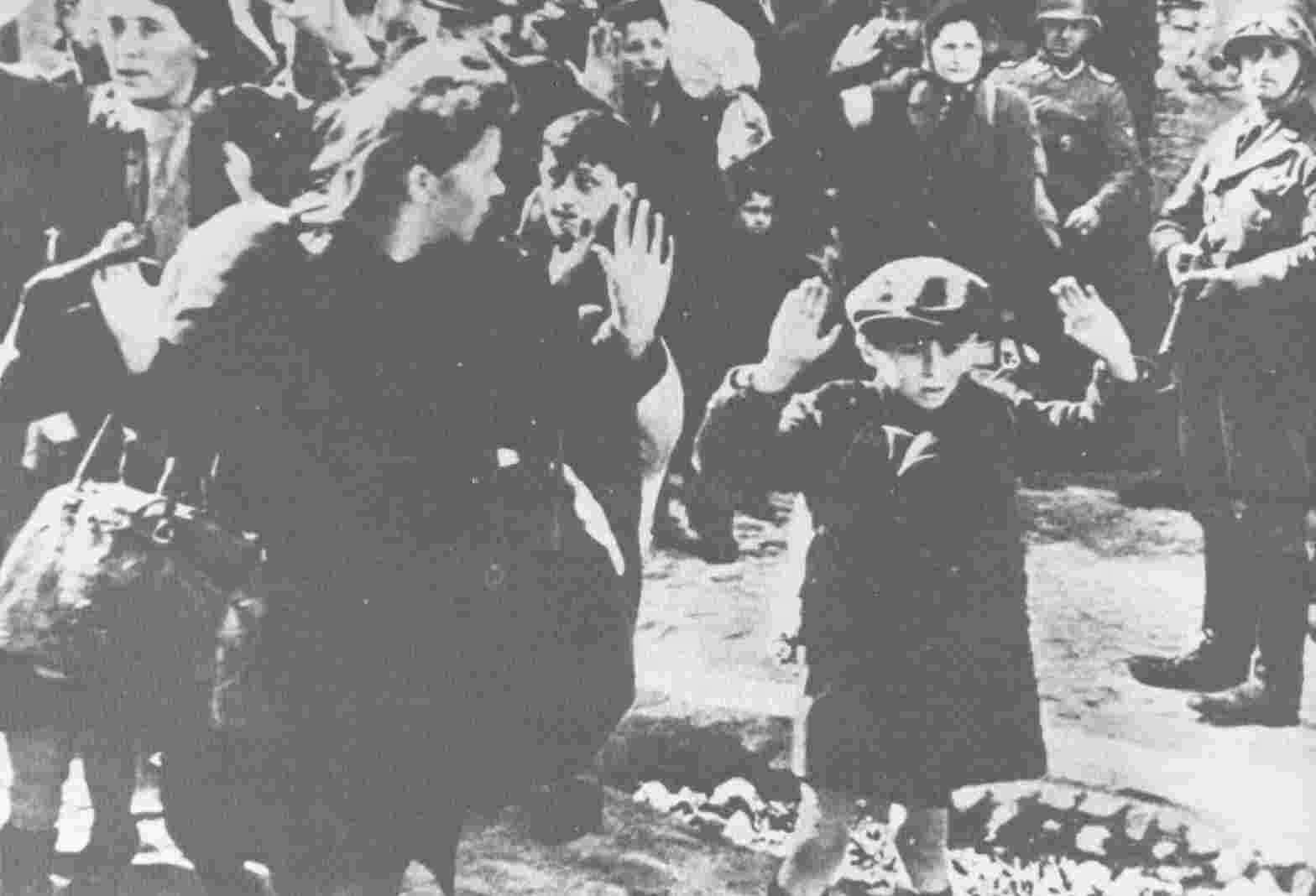
The start of the
journey. Jews being rounded up in an
East
European town by German troops. The camera
catches
the immediacy and terror of a moment in time,
repeated
with the same ferocity in endless situations
elsewhere:
but it is the small boy on the right
who
has made this particular image live forever.
CONCENTRATION CAMPS
FILMS
___________________________________________________________________________________________
UNIDENTIFIED
NAZI DOCUMENTARY FOOTAGE
(circa
1944)
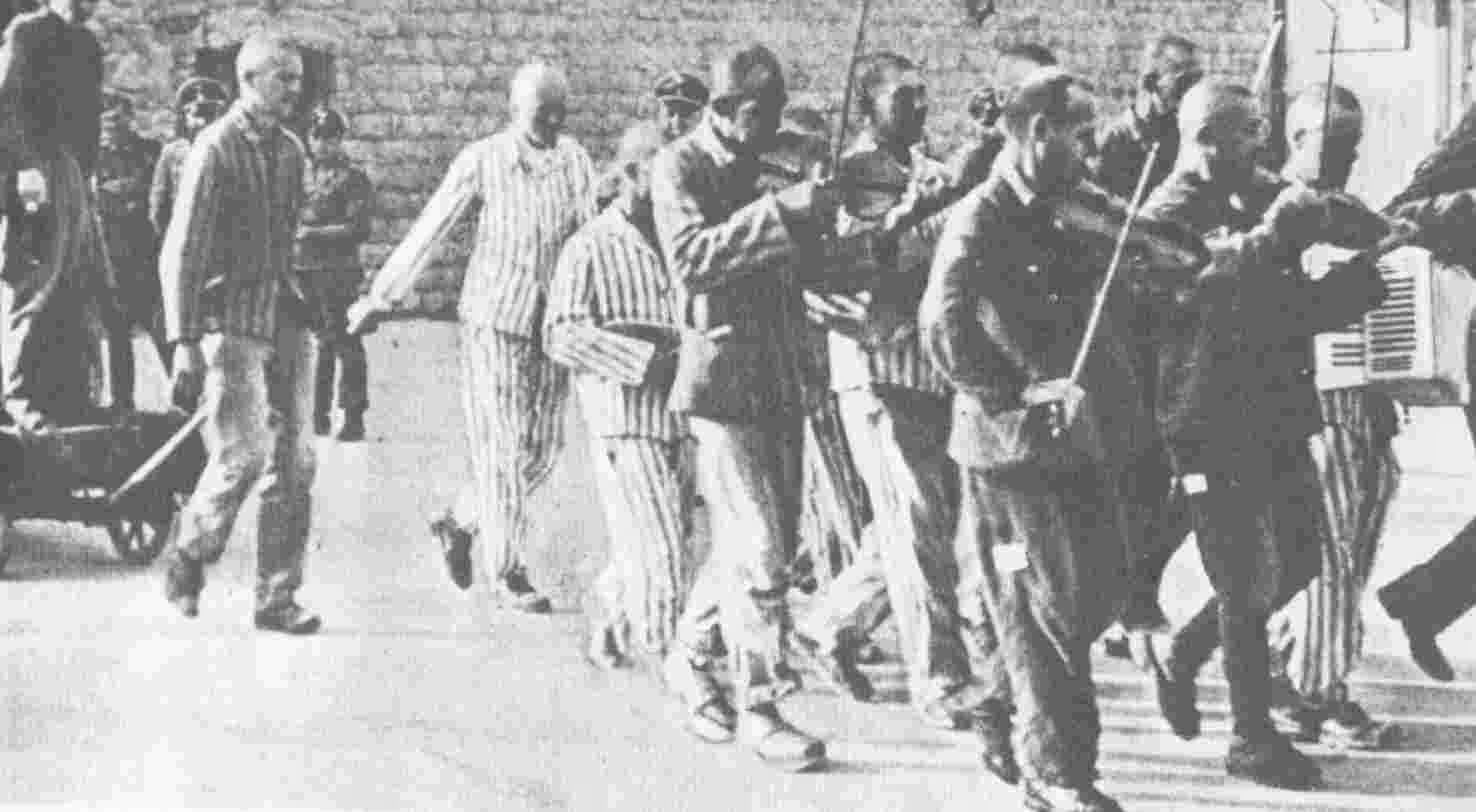
The reality of the
camps; on the way to an execution.
Only
the Nazis could have succeeded in surpassing the
most
grotesque nightmares of Bosch or the Surrealists.
The
existence of these bands is a matter of record
in
almost all camps; there is nothing human beings
are
incapable either of creating or of enduring.
___________________________________________________________________________________________
ARCHAEOLOGY
(ARCHAEOLOGIA)
(Andrzej Brzozowski, Poland, 1967)
Peaceful woods, bird noises. A
group of archeologists
from
the Polish Academy of Sciences begin their
excavations
in a leisurely, methodical fasion;
as
they progress and slowly uncover relics of
the
past -- tin cups, rusted watches, dolls, and
combs
-- a sudden horrible suspicion is confirmed:
this
is Auschwitz today, its "realities" transmuted
into congealed history rediscovered by a
new
generation. Simple
titles listing the objects
found
strengthen this persiflage of conventional
documentary,
created in order to shock and subvert.
___________________________________________________________________________________________
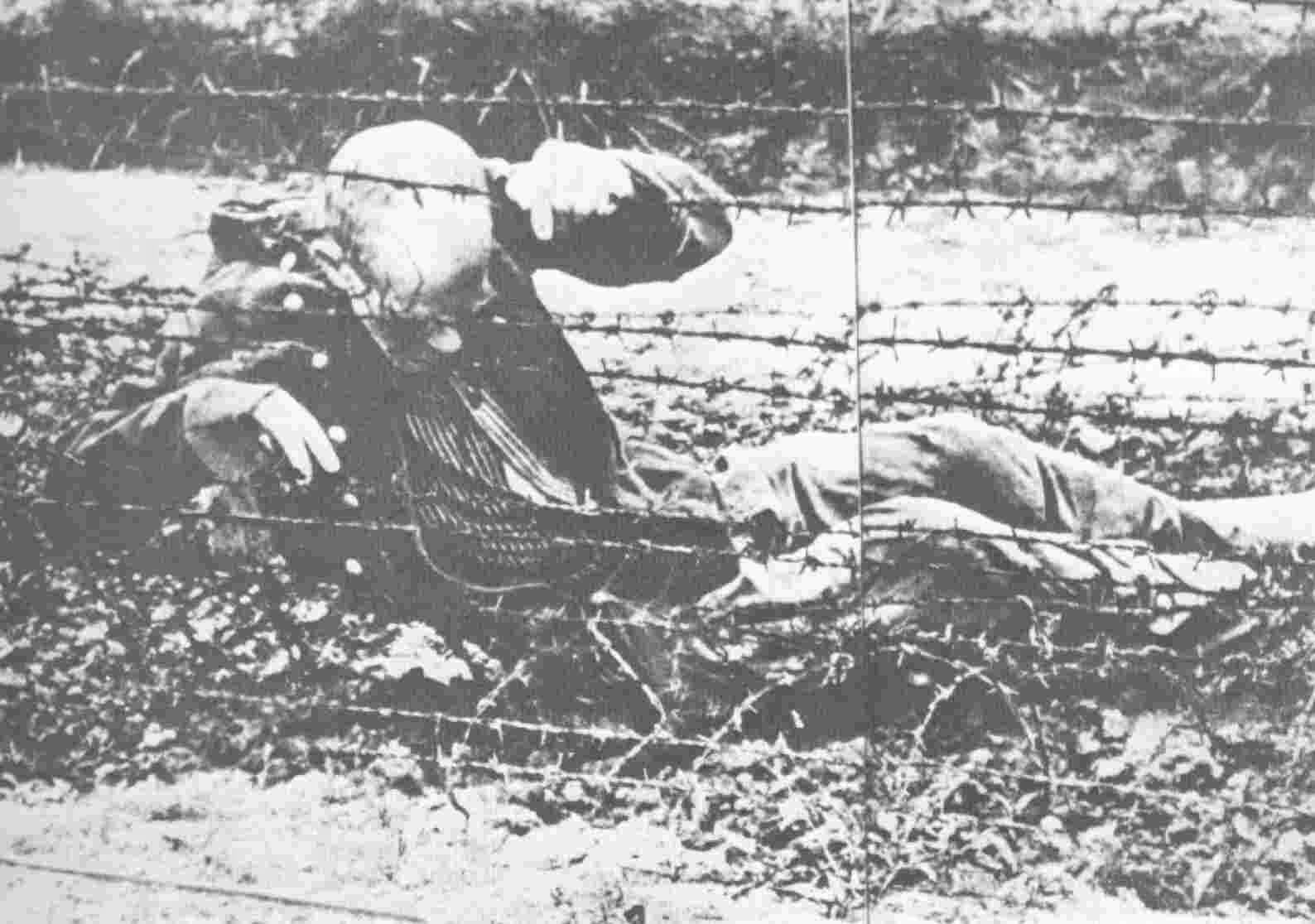
A
TOWN PRESENTED TO THE JEWS
AS A
GIFT BY THE FUHRER
(MESTO
DAROVANE)
(Vladimir
Kressl, Czechoslavakia, 1968)
An
unprecedented historical document. The Nazi concentration camp
of Terecin in Czechoslovakia was unique
in occupying the area of an entire
city,
"presented as a gift to the Jews by the Fuhrer" in an
obscene gesture.
In
preparation for a visit by the International Red Cross "to
investigate
conditions",
the Nazis began producing what was to have been a 40-minute
documentary film extolling the happy life
of the camp's inmates and forced
a
Jewish prisoner, the well known actor Kurt Gerron, of Blue Angel
fame,
to direct it.
About half of this unfinished film was accidentally recovered
after the war by the Czechs and is
incorporated in this instructive, horrifying
object
lesson of how "reality" can be manipulated and how false
the "authentic"
film
image can be; for here, in this contrived documentary, we see the
actual
inmates of the
camp-city at soccer games, listening to concerts, peacefully
working at various jobs, tending their
gardens in their spare time. It is difficult
to
decide what is more horrific, the "use" (by force) of human
beings as actors
in a
portrayal of their lives that they knew to be false; or their
constant, eager
smiles to the
camera (anything less may have meant instant death). "I
like it
here in Terecin,"
one of the inmates says. "I lack nothing." Within
months, he and
all the other
hundreds of happy, smiling people in this film were exterminated.
SC
___________________________________________________________________________________________
CAMPS
OF THE DEAD
(Allied
cameramen, France, 1947)
As
film record and historical document, this skillful
and
horrifying compilation of newsreel and docu-
mentary
materials gathered by Allied cameramen
upon
their entry into the concentration camps in
1945/6,
is the definitive work. In its portrayal of
corpses, mass graves, decayed and
martyred flesh,
lampshades,
severed limbs, living skeletons, it
is
also an example of the worst nightmares of
surrealism
overtaken by 20th century realities.
___________________________________________________________________________________________

BUTTERFLIES
DO NOT LIVE HERE
(MOTYLI
TADY NEZIJI)
(Miro
Bernat, Czechoslovakia, 1958)
"Detail
from drawing, Butterflies, a pencil and pastel sketch
by Marika Friedmanova, born on April 19,
1933, and deported
to Terezin
on August 3, 1942. Twenty-three more of her drawings
exist. She lived in building L410,
House 13. Perished at Auschwitz
in
1944." This is one of hundreds of drawings and poems
produced by
child inmates of
the Terezin concentration camp, carefully catalogued
by
illegal prison teachers and accidentally rediscovered after the war.
______________________________________________
A
poignant and harrowing study of the paintings and poems by
Jewish child inmates of the Terecin
concentration camp. Produced
in
illegal art classes during their imprisonment, they were carefully
identified by name and biographical
note, hidden away by the
teacher-inmates,
and accidentally recovered after the war,
years
after students and teachers had perished in the gas-
chambers; a document of our era. The
title derives from
one of the
poems; its author died at the age of 12.
___________________________________________________________________________________________
CHOTYN
- 5 KM
(Igor
Kolovsky, USSR, 1968)
In an
unknown Russian hamlet, we meet a few old men
who
haltingly and with great emotion relive the destruction
of the town and its population by
the Nazis. The obvious
sincerity
and tears are unbearable; so are the endless
rows
of graves; but just as we become accustomed
to
the idea of "one" more town destroyed, a sudden
map of Russia reveals the names of
countless
other hamlets that
met an identical fate.
___________________________________________________________________________________________
THE
GAMES OF THE ANGELS
(LES
JEUX DES ANGES)
(Walerian
Borowczyk, France, 1964)
This
haunting and oppressive animation -- a masterpiece
of
modern art -- represents a daring attempt to portray
not
the reality of the camps, but their atmosphere, the
"weight" of infinite fear and
unknown horror, the presence
of
continuous and unforeseeable death. Ironically described
as a "reportage in the city of the
angels", the surrealist-
expressionist
images (reminiscent of both Di Chirico and
Beckmann)
take the unwilling spectator on a journey through a
nightmarish world of metaphysical
terror. There are oppressive
cells
with ominous wall openings and pipes, indistinct torture
instruments, misshapen torsos locked in
brutal, endless
struggle,
executions, rivers of blood running in false colors.
A
unique and original work that aims at changing the viewer's
consciousness by transporting him into an
obsessively
imaged recreation
of what it must have been like.
___________________________________________________________________________________________
DISTANT
JOURNEY
(GHETTO
TEREZIN)
(Alfred
Radok, Czechoslovakia, 1948) (F)
Over
the years, the stature of this unaccountably
neglected
masterpiece of the humanist cinema
has
been growing. An unrelenting epic of human
suffering and degradation, it is one of
the very
few films that
succeed in making the horror and
inexplicable
reality of the concentration camp
universe
comes alive. Intentionally intensified,
non-realist
film techniques (derived from both
expressionist
and surrealist tradition) are utilized
as
only they can cope with the enormity of the
event.
These "distortions" of reality reaveal its
inner truth, simultaneously building up
an
atmosphere of nightmare and
madness
that explodes in final
mass destruction.
___________________________________________________________________________________________
I
WAS A KAPO
(BYLEM
KAPO)
(Tadeusz
Jaworski, Poland, 1964)
For a
new generation, it is a subversive experience to meet
actual, living representatives of the
Nazi terror and to
realize,
with sudden anxiety, that they are as "ordinary"
as we are. Here a former
concentration camp "trusty" --
now
imprisoned for life in Poland -- recounts on camera
how,
upon entering Auschwitz as a young man, he became
part
of the Nazi hierarchy "in order to survive". He
recounts
his crimes (as do
other survivors who knew him). He cries.
___________________________________________________________________________________________
MEMORANDUM
(Donald Brittain and John Spotten,
Canada, 1966)
With Night
and Fog, this is unquestionably the most sophisticated
film yet made on the philosophical and
moral problems posed
by the
concentration camp universe. Twenty years after the
liberation, a group of Canadian survivors
return on a pilgrimage
to a
former Bergen-Belsen concentration camp. A complex filmic
structure, combining cinema verite and a
constant mingling of
past and
present, records the result: a morass of paradox, irony,
unanswerable questions; and a strong
implication that it may be
impossible
to go back or to "understand". The camp has become
a NATO base and a garden for Germans; the
returning Jews are unable
to
live up to the presumably heroic role imposed on them and fumble;
an old German introduces himself as one
of the 60,000,000 cowards who
did
nothing against Hitler; and we learn of Jewish collaborators, anti-
Nazi Germans, NATO soldiers who have no
idea of where or who they are.
But
the question hovering over the entire film -- unspoken, yet implicit
in every scene -- is simply how, or
whether, one can learn from the past.
___________________________________________________________________________________________
NIGHT
AND FOG
(NUIT
ET BROUILLARD)
(Alain
Resnais, France, 1955)
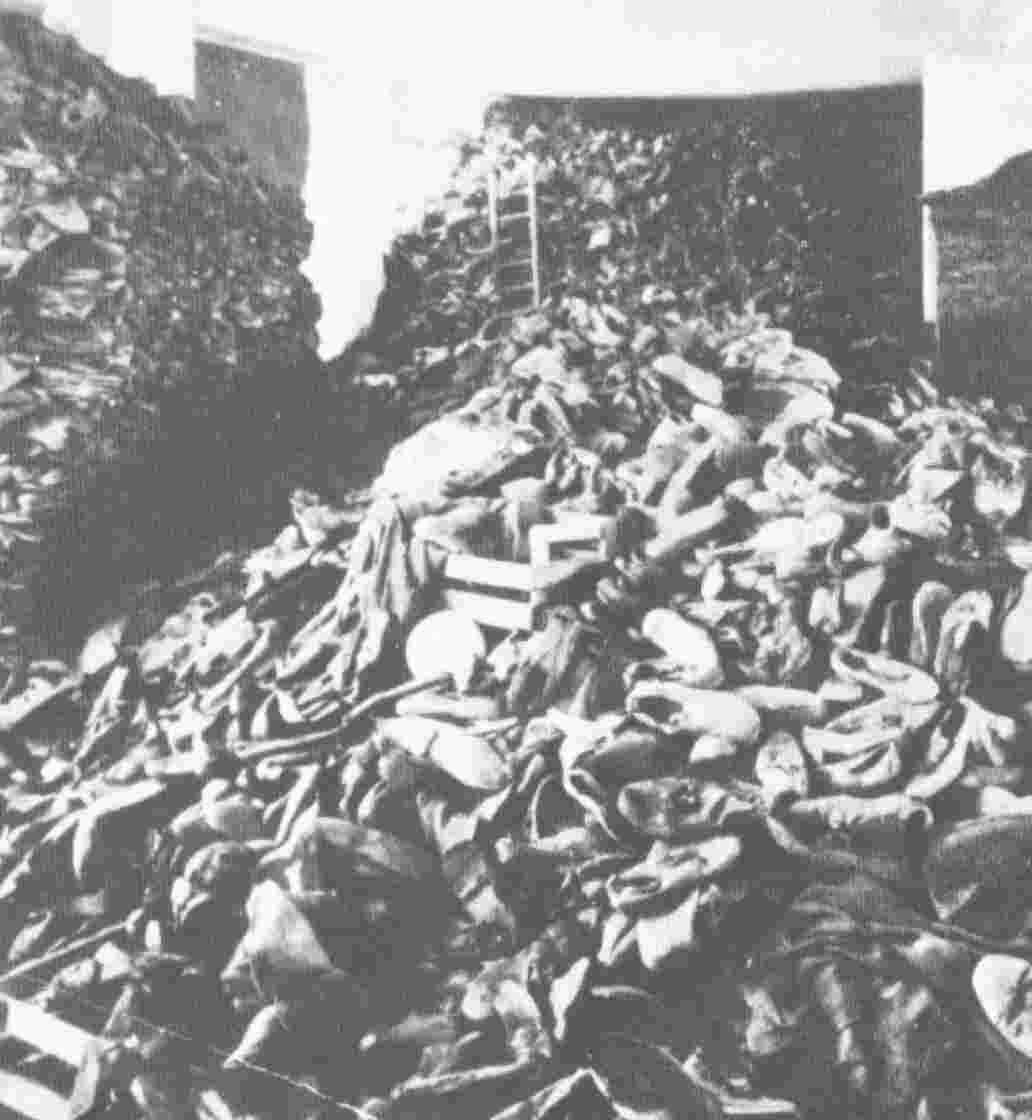
Resnais'
classic, definitive study of the concentration camp
universe is a searing meditation on
individual and collection
responsibility,
a film about human forgetfulness, a reminder
of
a reproduceable past, an account of a cosmic horror, an
archetypal, surrealist nightmare come
alive. Based on
exhaustive and
terrifying documentary footage and shots
of
the camps ten years later -- the horror receding beneath
vegetation as part of the inevitable
"healing" of time -- it
aims
to shock into awareness "those who believe that this
happened once and for all and in a single
country and
who do not think
to look around and do not hear the
cries
without end." Jean Cayrol provides a cruel, poetic
commentary that will live forever, Hans
Eisler one of
his most
memorable scores. The constant transitions
from
then to now presage Resnais' later work and serve
to
confirm that the horror the film depicts continues
into
the present and is, in fact, concurrent to it.
___________________________________________________________________________________________
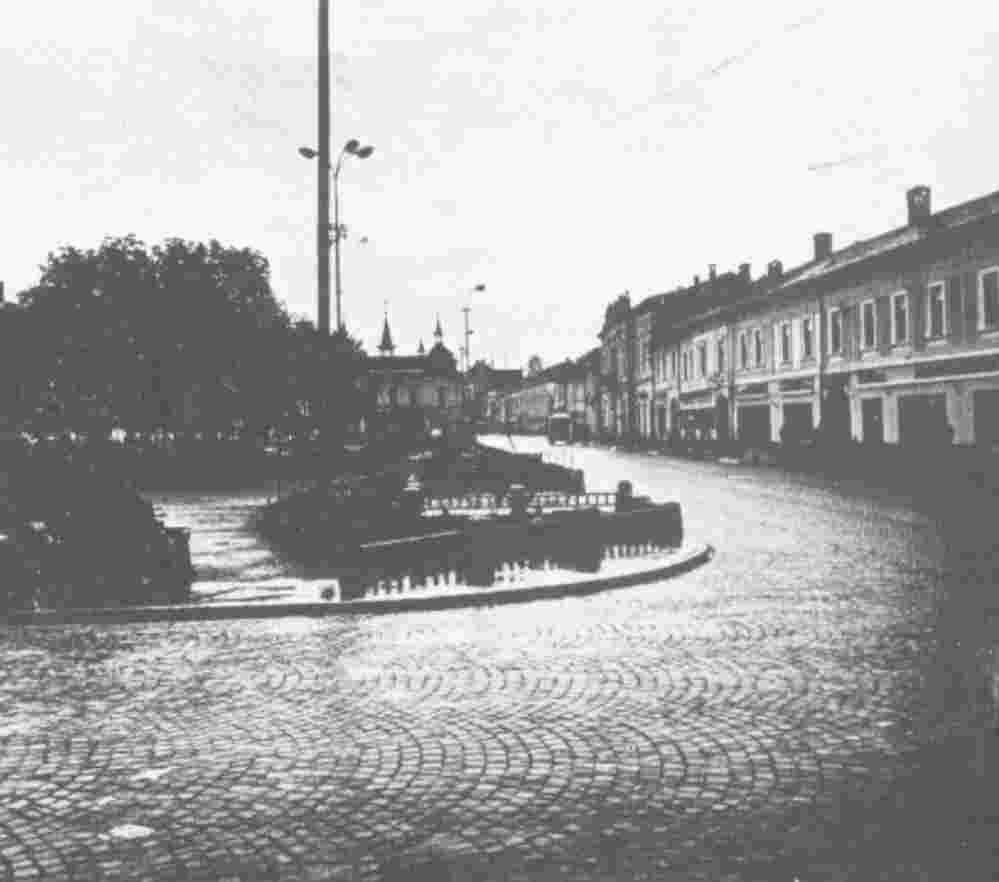
SIGHET,
SIGHET
(Harold
Becker, USA, 1967)
For once, a
lifeless, single shot conveys the total
atmosphere
of a film. The blindly staring windows
and
storefronts, the black-shadowed trees, the
unearthly
light on the empty pavements denote a
town
that -- for one man -- has died. Elie Wiesel's
hometown,
from which all Jews were deported by the
Nazis
and to which he attempts to return, in vain.
______________________________________________
lie
Wiesel, survivor of the Hungarian town of Sighet,
from
which a thousand Jews were deported to the
ovens
of Auschwitz, returns, unknown and unseen,
a
silent witness to the town where he was born and
grew
up. Life goes on in Sighet, the same buildings
are
still there but for Wiesel this normalcy is a lie;
for
the inhabitants he knew have vanished before
their
time and he realizes that he cannot "return".
___________________________________________________________________________________________
WARSAW
GHETTO
(Anonymous,
Germany, 1943/44)
This secret
Nazi film -- unforgettable documentary of a vanquished world --
was photographed just before the Ghetto's
total destruction and either
never
completed or not intended for public release. For once, the Nazis --
albeit unintentionally -- revealed the
truth about an event, though it was
a
truth distorted by their presence; the only Jews who did not know
that
they were being
photographed were the dead; the others, depending on
degree of desperation, indifference, or
nearness of death, attempted to smile
or
otherwise co-operate with the photographer/director (representative
of
unlimited power over life
or death), an obscene spectacle difficult to bear.
The
footage, by its very artlessness and the sepulchral absence of sound,
exerts the most hypnotic and oppressive
influence on the viewer; for this
is
a spectral parade of horrors enveloped by silence. While an
attempt
is made to pretend
that life is proceeding "as usual" in the Ghetto, reality
breaks through with a vengeance. A
long shot of a shopping area with
purchasers
(to denote normalcy) suddenly reveals several festering
corpses, with flies, lying
unattended on the sidewalk; people pass by and
no
longer notice. Children in dirty cots -- their skeletal bodies
mercilessly
exposed by an
anonymous hand turning back their covers -- stare at the
camera wordlessly. Ghetto
inhabitants are filmed with rashes, lice in their
hair
and dirty feet (in lingering close-ups), to show how filthy
Jews are.
The nude corpses of
a couple, next to each other in strange intimacy, put
on
to a cart for disposal; one falls off, and is put back,
re-establishing the
bond. A
child, dressed in the most surrealist rags, dancing for the camera
and a piece of pretzel, with unaffected,
innocent charm, unaware of her fu-
ture,
in total silence and to a tune that will remain unknown forever.
A truck
full of corpses,
dumped by chute into a mass grave, with children tumbling
behind women and men. Close-ups of faces
(unbelievable faces) staring
straight
at the camera, undoubtedly compelled to do so, attempting to
look normal and happy (lest they be
killed on the spot), betraying fear,
the
horror of things seen, the nearness of death. Dying men on a
bed
jumping to attention as a
piece of bread is offered; children with baggy
clothes,
roughly searched by German soldiers, "contraband" spilling
out
of folds, pockets, trouser
legs -- carrots, more carrots, nothing but carrots.
Death
exudes from every frame of this film: death past, present, and
future;
all of its stars and
extras died within the year, except the man behind the
camera, his identity unknown. And
here is an intriguing unsolved mystery:
for
in choice of subject matter, camera angles, duration of shots and
editing,
one discerns not only
the cruelty of a Nazi historian "objectively" recording
impermissible history, but -- this is a
stab of sudden, uncanny surprise --
a
note of compassion, of sympathy wrenched perhaps unwillingly from
its source, indeed possibly unknown to
it. The Nazis, after all, did
not
believe in the subconscious universe explored by the Jew Freud.
___________________________________________________________________________________________
___________________________________________________________________________________________