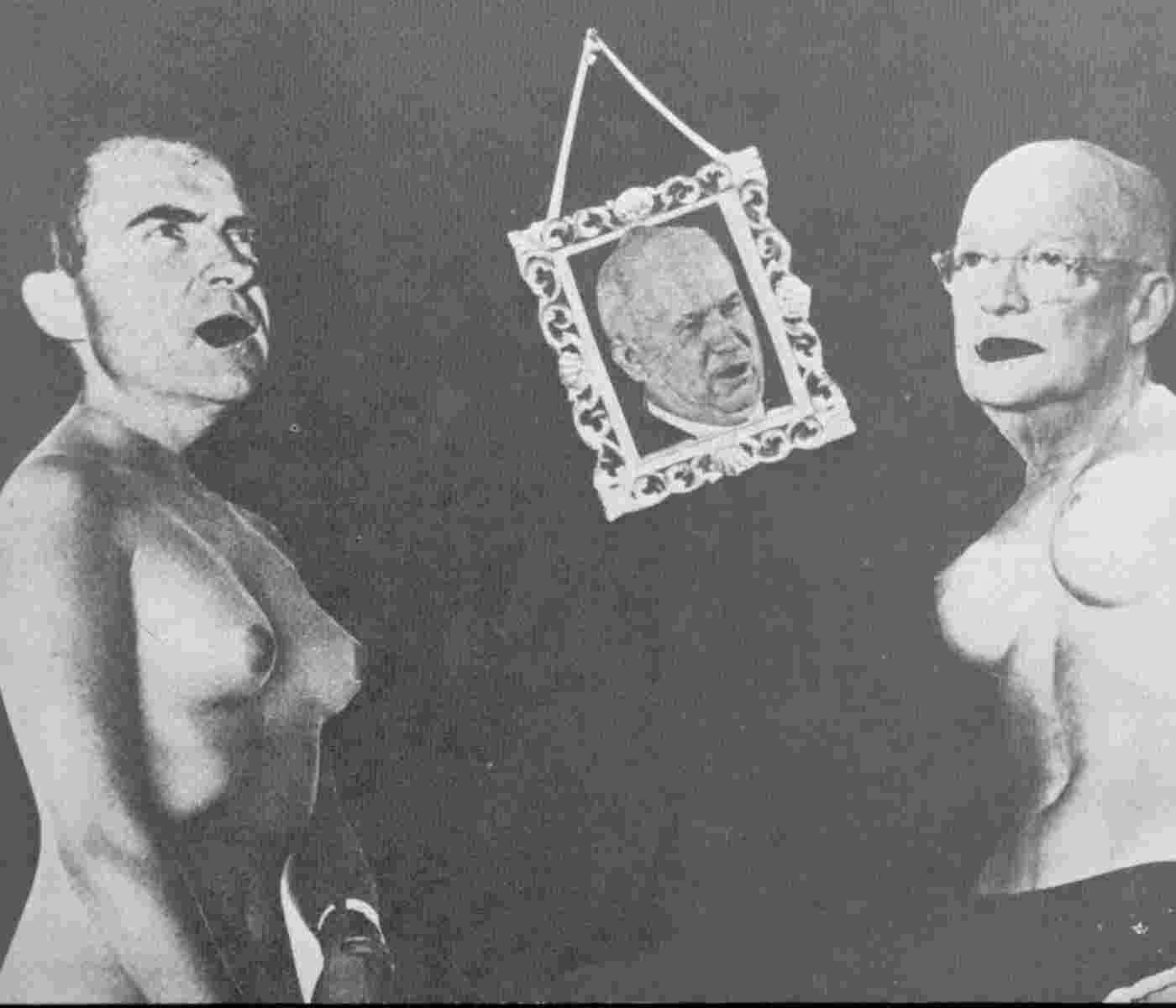
FILM
- AS A -
SUBVERSIVE ART
BLACK
AND WHITE BURLESQUE
(Richard
Preston, USA, 1958)
Several
taboos merge to create instantaneous,
unconscious
shock; nudity, unacceptable sex change,
vulgar
desecration of national leaders, and, worse
still,
of the dead. But is it an insult to be a woman?
DADA AND POP: ANTI-ART?
FILMS
___________________________________________________________________________________________
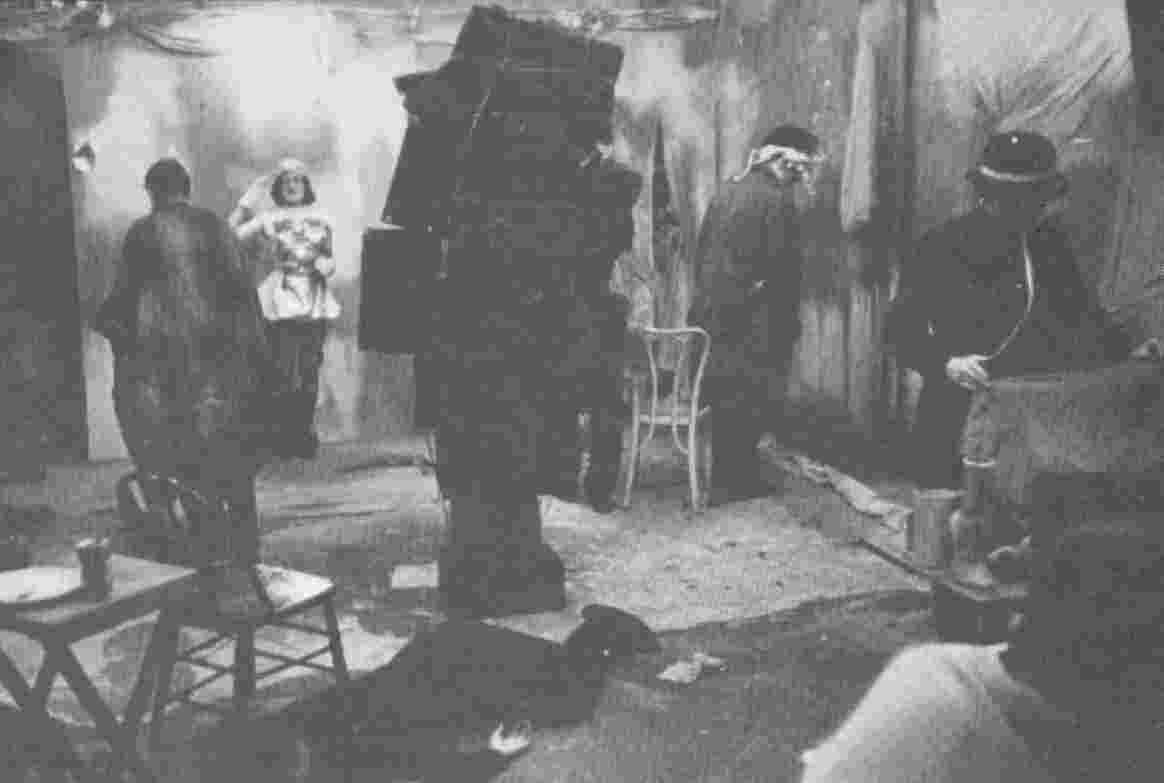
FOTODEATH
(Al Kouzel, USA, 1958?)
A
film record of one of Claes Oldenburg's celebrated
happenings -- largely improvised,
mysterious or humorous,
neo-dadaist
or surreal events, not necessarily causal or
meaningful,
which sardonically comment on an absurd
universe
and aim at fusing actor and spectator, art and life.
___________________________________________________________________________________________
ANEMIC
CINEMA
(Marcel
Duchamp, France, 1926)
One of
the earliest dadaist classics, Duchamp's
mysteriously
rotating circular discs evoke true three-
dimensional
illusion (without glasses), their playful
solemnity
further subverted by verbal dadaist puns.
___________________________________________________________________________________________
A
LA MODE
(Stan
Vanderbeek, USA, 1961)
A
satire on fashions, style, vanity, and the female
form
divine. The film attacks the visual excesses of
our
time, using girlie and glamour magazine cut-
outs
as raw material. "A cine-igmatic comment on
the
mythology of women" (Stan Vanderbeek)
___________________________________________________________________________________________
THE
DEATH OF MARIA MALIBRAN
(DER
TOD DER MARIA MALIBRAN)
(Werner
Schroeter, Germany, 1971) (F)
This
bizarre film by one of the most original directors now
working in Germany is hermetic,
expressionist, oblique, and
of
a creative perversity that bespeaks the presence of a genius.
Purporting to deal with a real-life
19th century diva "whose
popularity
was such that over-exertion led to her death while
singing", the film is actually a
grisly series of frozen or tortured
tableaux
(predominantly lesbian in implication) of heavily
rouged,
frequently ugly women who, pretending to sing heavy
opera, go through contorted, icy attempts
at communication
that lead
nowhere. The lip-sync is off; the singing is off-pitch;
mouths are frequently open while no sound
issues forth, or
closed, with
mellifluous arias or cheap popular songs heard
on
scratchy renditions of old records. Neither burlesque nor
slapstick, the film's intent, at least in
the beginnning, is never-
theless
ironical and subversive, though mysteriously so.
However,
it grows increasingly dark and more threatening,
with
screams, faces bathed in Vaseline, red, wet mouths,
smeared eye shadows, and dehumanized
figures. One cannot
"explain"
Schroeter's work, other than recognize his debunking
of
opera as a metaphorical rejection of bourgeois society;
but one trembles in recognition of a
prospective major talent.
___________________________________________________________________________________________
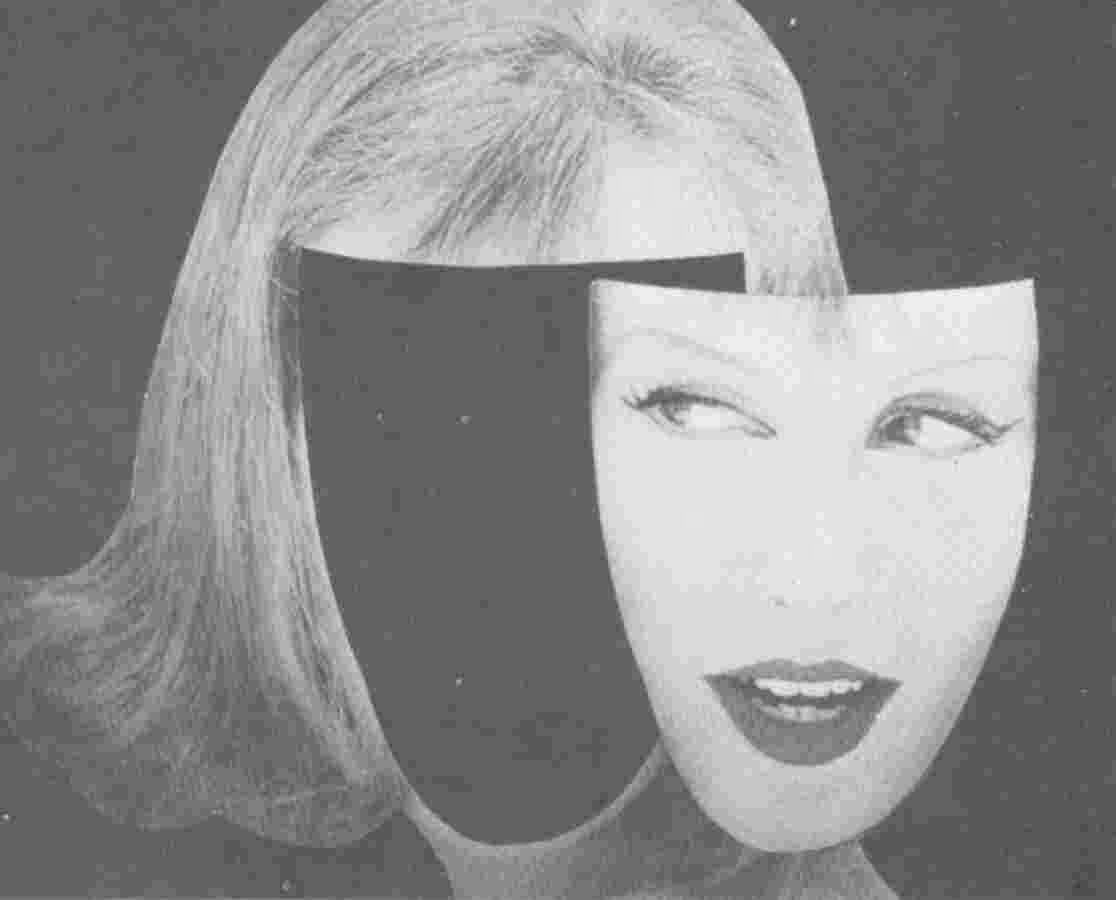
WHAT,
WHO, HOW
(Stan
Vanderbeek, USA, 1955)
Ethereal
Vogue models, terrible beasts,
and
bedraggled knights in a grotesque
animation
collage concerning "the
unexpected
beneath the real". However
much
the image draws attention to
its
own artificiality, one cannot avoid
uneasiness
at the displacement of "real"
face
and the resulting "emptiness".
___________________________________________________________________________________________
A
DAY IN TOWN
(EN
DAG I STADEN)
(Pontus
Hulten and Hans Nordenstrom, Sweden, 1956)
A
dadaist explosion that starts as a typical
Hollywood
travelogue of Stockholm and ends
in
the city's total destruction by fire and dynamite.
This
is a hilarious anarchist film; made by the then
unknown
Hulten now director of Stockholm's Museum
of
Modern Art. In a particularly subversive scene,
the
fire engine, arriving at a fire, goes up in flames.
___________________________________________________________________________________________
COSMIC
RAY
(Bruce
Conner, USA, 1962)
Eight
images per second flash by at the brink of retinal
perception in this extraordinary pop art
collage of a nude
dancing girl
surrounded by Academy leaders, war footage,
Mickey
Mouse, and the raising of the American flag at Iwo Jima.
An attempt at a total audio-visual
experience, this hypnotic
four-minute
film contains two thousand different images.
___________________________________________________________________________________________
HOMAGE
TO JEAN TINGUELY
(Robert
Breer, USA, 1960)
Eighty
bicycle-, tricycle- and wagon-wheels, a piano of sorts,
some metal drums, an addressing machine,
a bathtub, bottles,
a
meterological balloon powered by fifteen motors; the film
records the short life and sudden demise
of Tinguely's bizarre
protest
against mechanized society, the "self-creating and
self-destroying" machine that
committed suicide in the
garden
of New York's Museum of Modern Art in 1960.
___________________________________________________________________________________________
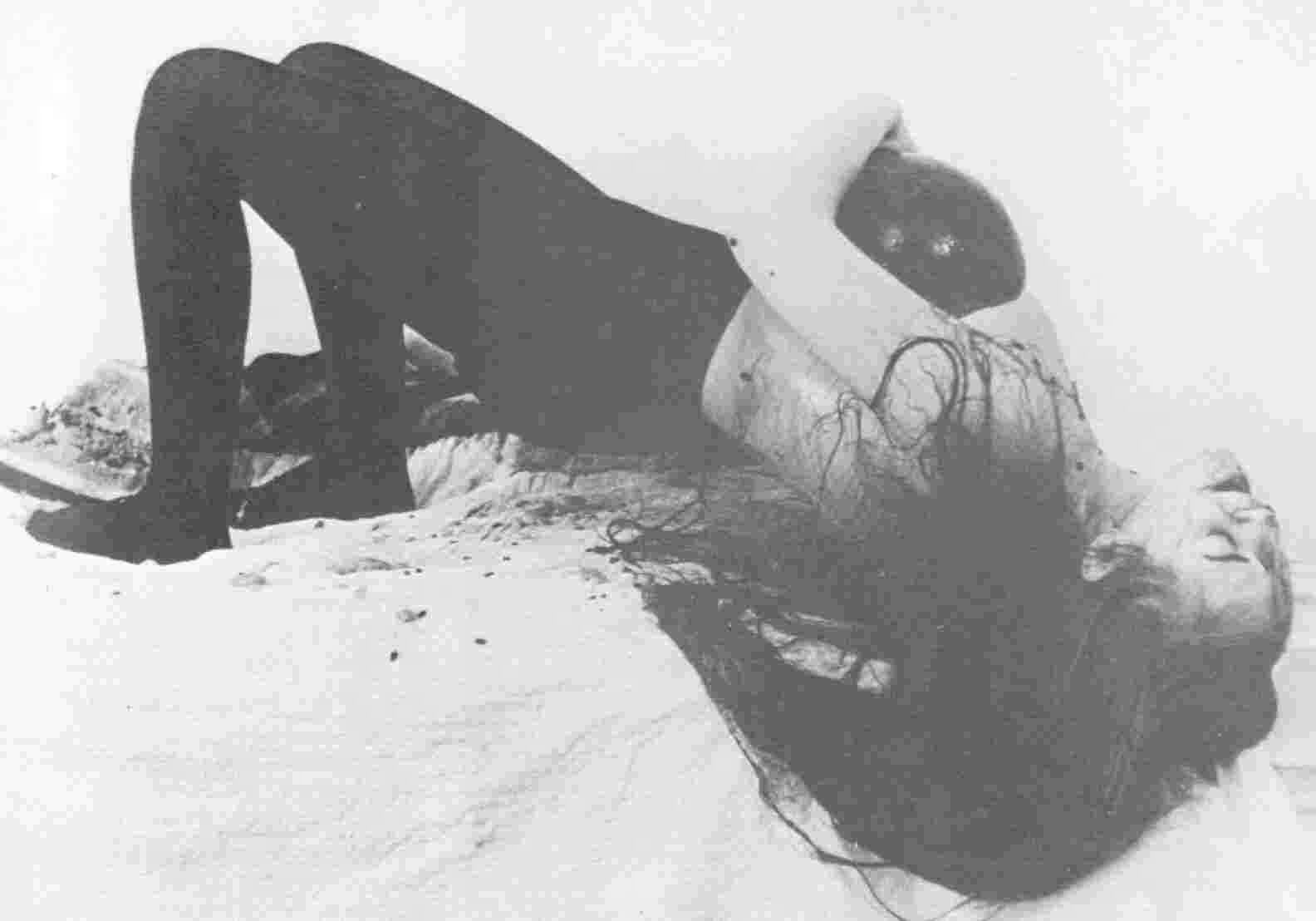
OH
DEM WATERMELONS
(Robert Nelson, USA, 1965)
Climactic still from the definitive
film on watermelons. They can be cut,
sawed, shot, run over, used as bombs,
or for masturbation. A sickly
satire
on documentary films,
its manic
intensity spills
over into somber
solemnity in
which the satirical
almost
becomes the impossible. SC
______________________________________________
The
definite film about watermelons:
they
are cut, sawed, shot, run over,
used
as bombs or for masturbation,
appear
at the UN, and in toilet bowls.
A
sick take-off on documentary films, it
also
seems to comment on racial cliches.
___________________________________________________________________________________________
PIANISSIMO
(Carmen D'Avino, USA, 1963)
An exumberant and joyous animation --
one of the few "optimistic"
works of the
American avant
garde -- this film creates
an
artificial world from elements of reality.
In
a riot of color, the invisible artist decorates
a
drab player-piano by stop-motion animation
in
rhythm to a driving musical score.
___________________________________________________________________________________________
FURTHER
ADVENTURES OF UNCLE SAM
(Robert
Mitchell and Dale Chase, USA, 1971)
An
original and sophisticated animated film,
with
strong pop art and surreal influences.
Uncle
Sam and the Statue of Liberty are in
chains
in a future totalitarian America ruled by
Pentagon
and Dollar Men. The Statue of Liberty
is
finally tied to a stake in Yankee Stadium, but
rescued
by Uncle Sam and they go off into the sunset.
___________________________________________________________________________________________
JAMESTOWN
BALOOS
(Robert
Breer, USA, 1967)
Impish and
sophisticated visual puns,
flashing
by in abstract rhythms at extreme
speed,
debunk Delft, Napoleon, Sophia Loren,
the
military, Dulles. This is a visual assault
by
an iconoclastic cinematic genius.
___________________________________________________________________________________________
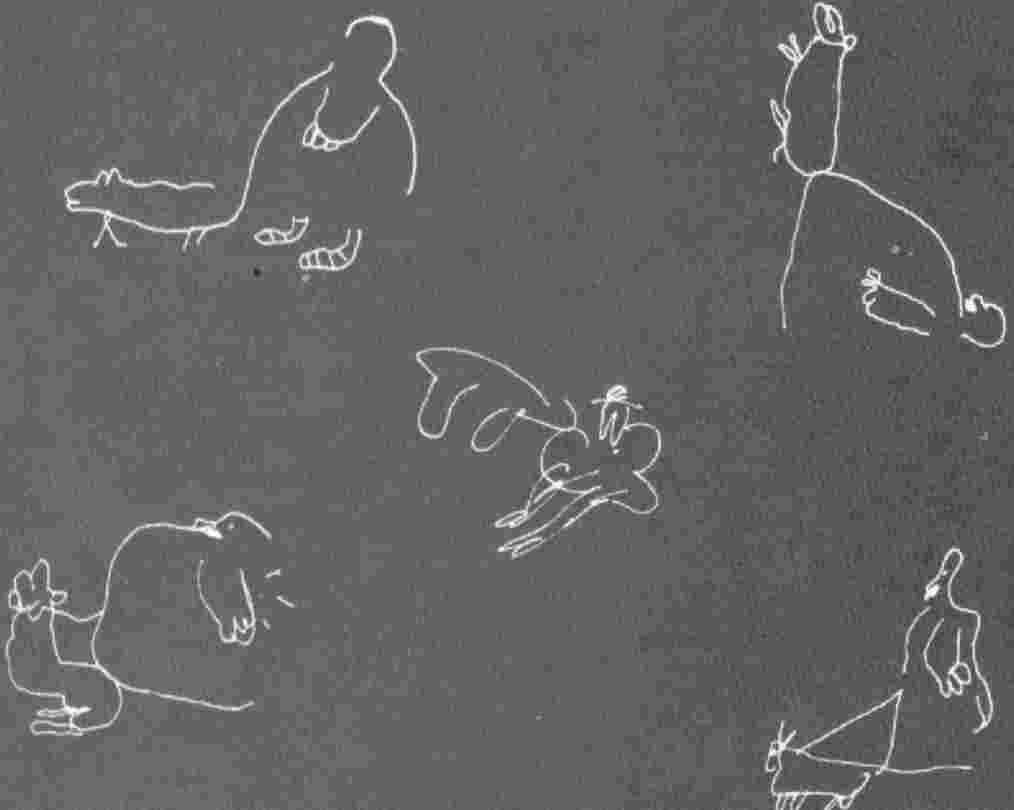
MAN
AND DOG OUT FOR AIR
(Robert
Breer, USA, 1957)
Dadaist and
abstract influences converge
in
this subtle animation by a most original
avant-gardist.
The images constantly merge,
collapse,
change into lines and shapes of
astonishing
fluidity and expressive power,
as
the director re-invents space and inflicts
gengle
dadaist outrage on a defenseless world.
___________________________________________________________________________________________
SCIENCE
FRICTION
(Stan
Vanderbeek, USA, 1960)
A
neo-dadaist, non-verbal political satire,
ominous
and comical, this film reflects mass
society,
conformism, and bombs large enough to
blast
the Eiffel tower and the Pieta into outer space.
At
the end, a mysterious gloved hand picks up the
spinning
earth and makes an omelette with it.
___________________________________________________________________________________________
SKULLDUGGERY
(Stan Vanderbeek, USA, 1956)
Animated collage of very important people
are satirically fused with live, often
incongruous,
newsreel footage
by double exposure and other
cinematic
witchcraft, "mixing the eye with
live
scenes and unlive scenes,to jibe at the
politicians,
and world so-called leaders".
___________________________________________________________________________________________
SORT
OF A COMMERCIAL FOR AN ICEBAG
(Michel
Hugo, USA, 1970)
An inherently
"insane" pop art idea --
the
projected creation of an 18-foot long
and
11-foot high icebag as living, motorized
sculpture
-- is seriously discussed by Claes
Oldenburg,
complete with blackboard; he even
superimposes
it on a model of St. Peter's Cupola
as
a possible site. The artist's teasing serious-
ness and the cool, restrained humor
beneath
the surface are
typical of pop art. The icebag
ultimately
made its appearance at Osaka's
Expo
'79 as Oldenberg's first kinetic sculpture.
___________________________________________________________________________________________
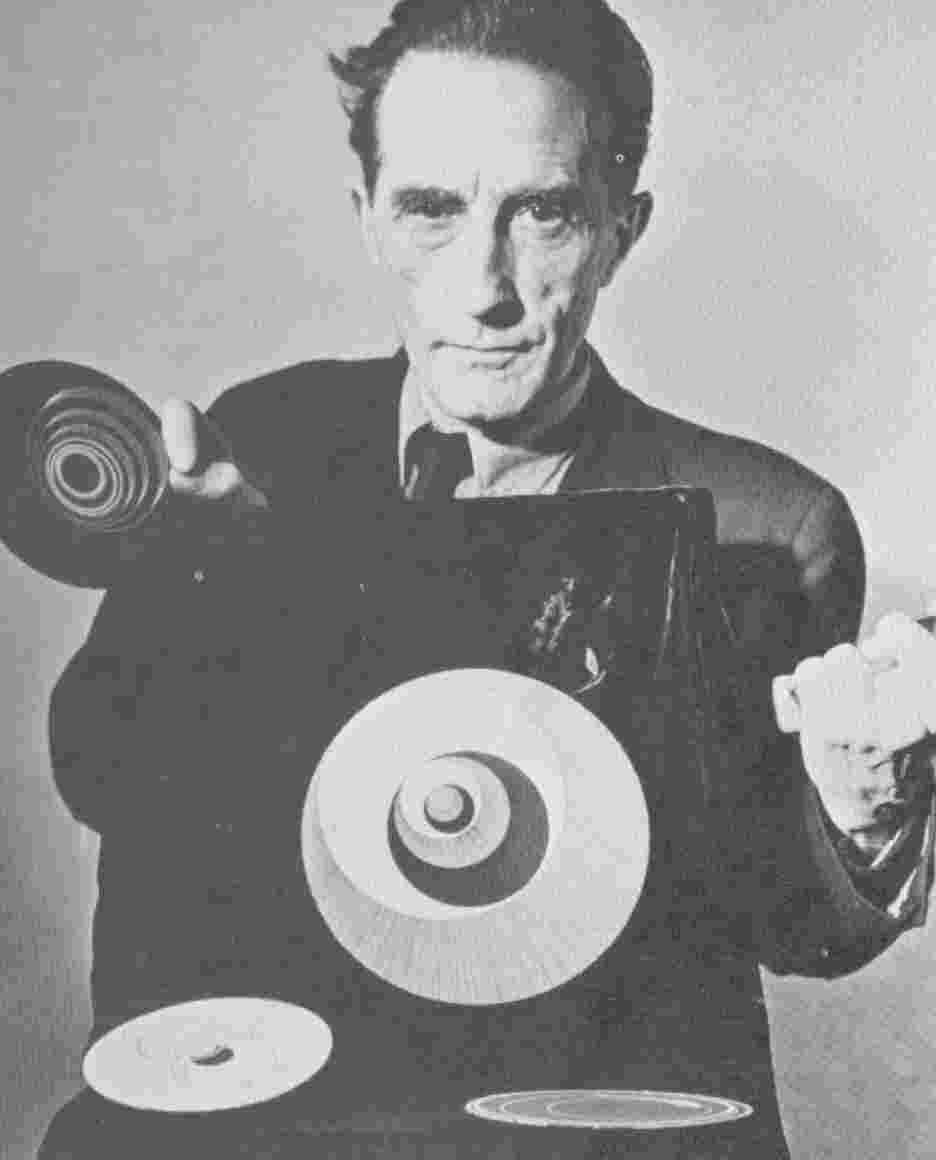
DREAMS
THAT MONEY CAN BUY
(Hans
Richter, USA, 1948)
The most
private artist of our generation --
Marcel
Duchamp -- here shows himself fully,
exhibiting
his famous moving discs to the
camera
many years after their creation.
The
expression is proud, defiant,
secret,
and of an inner sadness.