FILM
- AS A -
SUBVERSIVE ART
PIGPEN
aka PIGSTY
(Pier
Paolo Pasolini, France/Italy, 1969) (F)
The
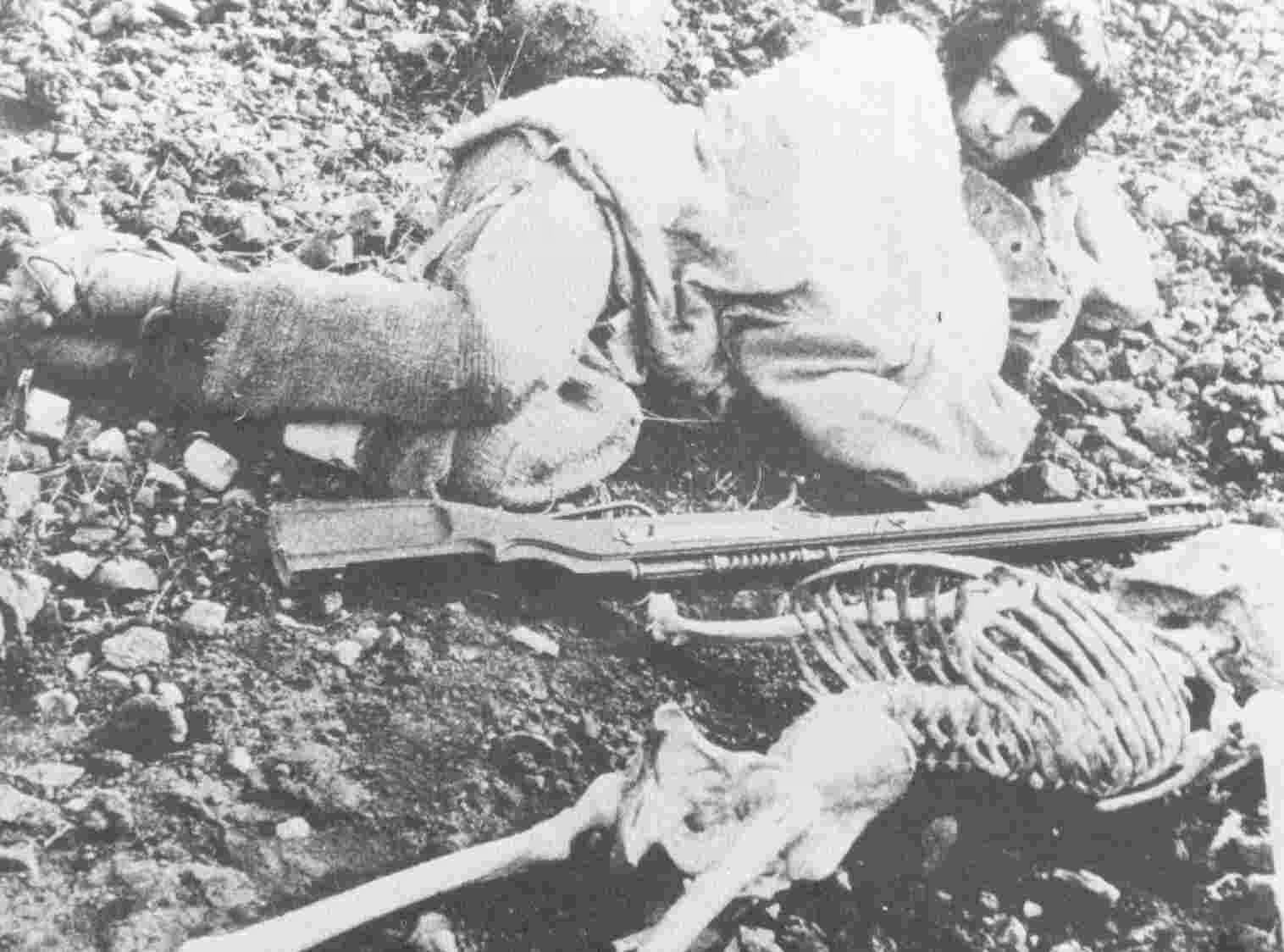
contemplation of death. In one episode of Pasolini's
most personal and most controversial
film, Clementi plays a
savage
during the Middle Ages, reduced to cannibalism by
hunger
in some deserted, possibly war-torn landscape. Caught,
he
is tied to a stake and eaten in turn by scavenging animals. SC
THE
ULTIMATE SECRET:
DEATH
Although
in a fit of metaphysical paradox contemporary science
acknowledges the boundary between life and
non-life to be fluid,
the
periodic transformation of matter from one state into another
continues to evoke all the superstitious
alarms and taboos of pre-
history.
For primitive man believed death to be neither normal nor
inevitable, but rather caused by the
breaking of a taboo, sorcery,
or
the revenge of the dead; and since it was a source of
pollution,
the dying, the dead,
and those who handled them had therefore
to
be isolated. Clothing, houses, and household objects were to be
destroyed and, according to Fraser, even
burial grounds were taboo.
While it
is clear that these prohibitions and fears remain in varying
degrees part of our subconscious, we tend
to overlook their origin
in
superstition. The corpse is still considered contagious to such
an
extent that not merely its
actual presence, but even its fictional
portrayal
sets off profound anxiety; for it disrupts the pattern of
normal life, subverting the illusion of
eternity and order on which
our
existence is built, and all the reassurances of power, wealth,
and ideology with which we attempt to hold
nothingness at bay.
That the
commercial cinema either avoids death or romanticizes
it
is therefore not surprising. The insufferable sentimentality
and
the manageable, antiseptic
way in which people die in commercial
films
(Love Story for example) once again reveals this kind of
cinema to be an important purveyor of
Establishment values.
For the
smooth functioning of technological society requires the
excommunication of all disruptive elements
(criminals, madmen,
corpses) in
the quickest, most secretive manner possible.
What is
more significant, however, is that the documentary
filmmakers -- those intrepid realists,
having roamed the globe
twice
over for material -- carefully neglect this area. Although
they have already documented large areas
of human activity
and visited
all the forbidden places with their lightweight
cameras
and portable sound, their curiosity, with hardly an
exception, has stopped short of death,
funeral parlors,
morgues, or
morticians with their ointments, tools, and
injections.
That this entire area -- more universal by far
than
others covered ad nauseum -- simply does not exist
in contemporary cinema, reveals taboo in
its purest form.
This is
why there are so few film records of individuals dying
of
natural causes; it is rather war deaths or executions that
have been caught on film. Even these
are rarely shown except
on
ceremonial occasions at which an audience gathers in
guilt, remorse, or solemn, ineffectual
vows never to forget.
The
cinematic image -- the meticulous reproduction of whatever
is before the camera -- has a way of
looking "real" even if fictional;
how
much more powerful its impact is when portraying a true event.
It is our unconscious perception of the
gap between actuality and
invention
that gives the accidentally filmed knife murder of the black
spectator in the Rolling Stones film Gimme
Shelter such tremendous
power.
For when we witness unstaged, real death in the cinema, we
are frightened, caught in the sweet and
deadly trap of the voyeur;
mixed
feelings of attraction and repulsion take hold of us as
we anxiously watch the actual end of
another being and search
his
face for hints of the mystery or proper rules of conduct.
The
Nazis, pursuing their dreams of super-human perfection,
banished death from their films
altogether, hiding concentration
camp
corpses, war casualties, and civilian victims even better
than the Americans were to hide
their victims in Vietnam.
Film
footage of the latter exists in profusion, but dead soldiers
or civilians are seldom seen on American
television. Even more
significantly,
America prohibited the showing of US government film
records of what happened to the
populations of Hiroshima and Naga-
saki;
such is the power and fear of death even over its perpetrators.
The
reaction to the use of these bombs again makes it clear that
our technology far outstrips our capacity
for outrage or empathy.
We
are capable of feeling one death or even several (and of
making these stand symbolically for more);
but once confronted
with
casualty figures of war and other of man's "civilizing"
missions,
we "tune out".
This indifference to large numbers (one million
Vietnamese ... six million Jews ... ten
million Pakistanis) becomes
more
pronounced when the corpses belong to "underdeveloped"
races. We react more strongly to white
students killed at Kent State
than
to black students killed at some (which?) Southern college;
to twelve clearly identified
Israelis killed in Munich rather than
to
fifty unknown Arabs killed in retaliation; and since in any case
we have "difficulty"
distinguishing one Asiatic from another, we can
bear
the deaths in Hiroshima or Vietnam with greater equanimity.
This
same poverty-stricken imagination -- so convenient in times of
stress -- compels us to sympathize far
more with those about to die
than
those already dead; it is apparently too difficult for the
living
to identify with a
corpse. Our sensitivity and sophistication prompts
to erect elaborate mechanisms for
censoring pictorial representation
of
acts that we commit instead of concentrating our efforts on
their
elimination; it is never
the image that goes too far but always reality.
The
calculated omission of death has not been lost on the subversives of
cinema. They have begun to invade
this last stronghold of primitive taboo,
dragging
from their graves the victims of warfare, torture, state persuasion,
new weaponry, and extermination camps in
order to compel us either to
look
at these horrors or to eradicate them. And in beginning to
record and
comment on "normal"
death as well, these same subversives attempt to
project
a more humanist acceptance of its mystery by subsuming it into
the mystery of life. Said Alexander
Solzhenitsyn in his The First Circle:
There
is no immortality and therefore
death
is not an evil; it simply does not
concern
us; while we exist, there is no
death,
and when death comes, we are gone.
The
concentration camp universe, 30 years later, has variously
become a cliche of mass culture (referred
to by that most
offensive of
alienating terms, "the holocaust"), been elevated to
a profound moral problem, or pushed
into the subconscious as an
unbelievable
episode, however true, of no relevance to our times.
While
the Nazis were in power, the very topic of the camps
was
taboo, although hinted at in intentionally vague internal
propaganda. No film records made by
enemies of the regime
within
the camps survive, nore were any documentaries made
by
the Nazis for public consumption (except for the two films
described in the chapter on concentration
camps); but there ex-
ists in
the archives horrifying footage shot by guards or officials.
Since
the fall of the regime, a band of stubborn film subversives in
several countries have, from time to time,
attempted to recall the
horror
(Resnais called his concentration camp film "an essay in hu-
man forgetfulness") and to
re-establish a link between our "rational"
world and this by now mythological event.
They have done this
by
dispassionate documentation of actual evidence, artistic trans-
mutation of the material, or by the
recreation of an "atmosphere".
The
subversion of the concentration camp lies in its absolute denial
of bourgeois normalcy, its ultimate
abolition of rationalism. In
the
enormity of this one event, many have found the death of
God, the end of history, the
destruction of the myth of man.
Thirty
years later, one's only quarrel with the philosophers is that
they turned to hopelessness too soon; for
since then, we have for the
first
time witnessed the utilization of atomic weapons against humanity
and the destruction of entire countries,
both in the name of peace.
FILMS
___________________________________________________________________________________________
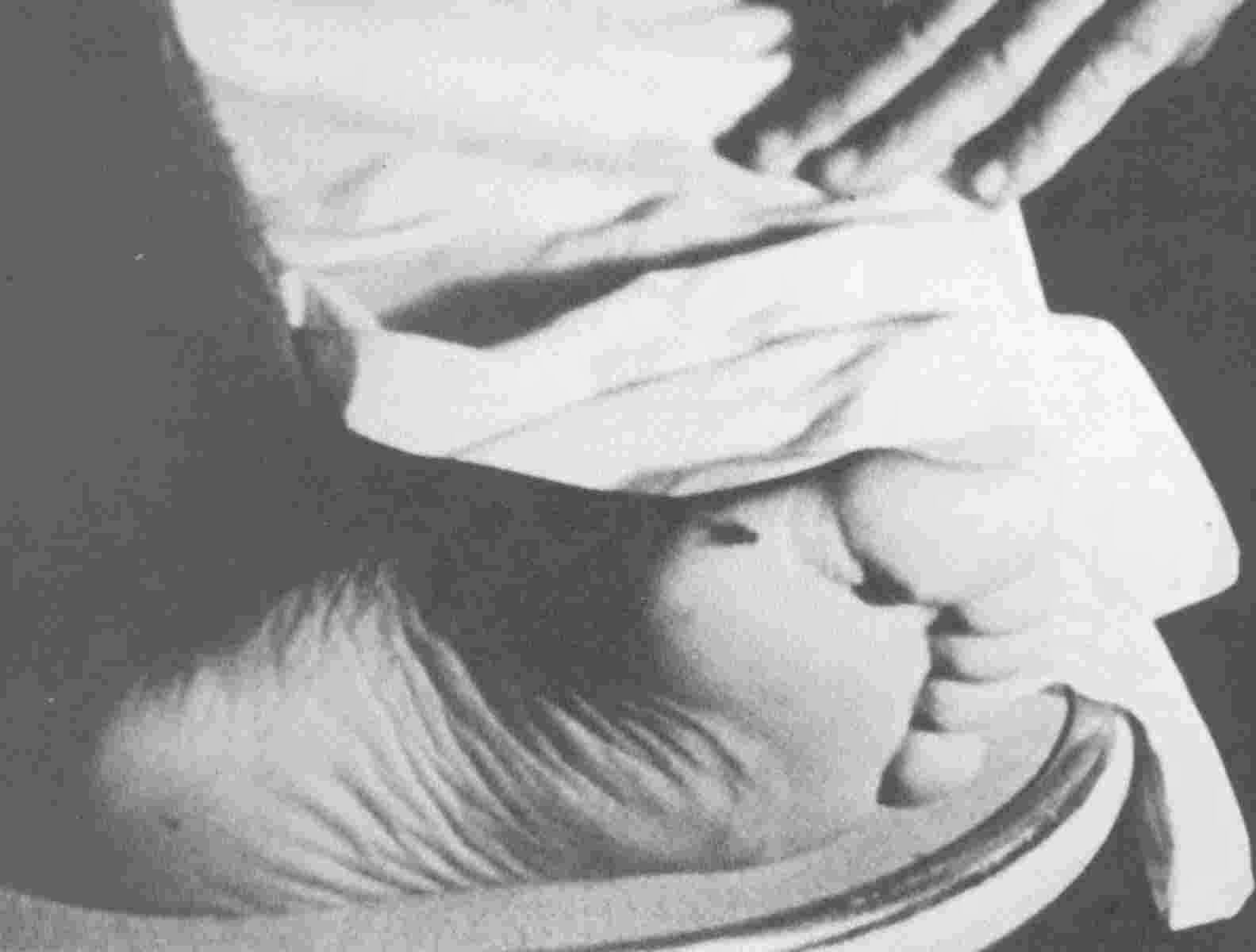
THE
ACT OF SEEING WITH ONE'S OWN EYES
(Stan Brakhage, USA, 1972)
A
mysterious hand, a white cloth, and a table edge, a fly
walks calmly on the sole of a foot,
undisturbed. A powerful
visual
metaphor from the first film to deal with morgue
and
autopsy, recorded in poetic documentary style by a
noted
avant-gardist. Here life and death are inextricable
as medical personnel and corpses mingle
in close contact. SC
______________________________________________
Inevitably,
it is an avant-garde filmmaker who confronts us for
the
first time with morgue and autopsy room. This is an appalling,
haunting work of great purity and truth.
It dispassionately records
whatever
transpires in front of the lens; bodies sliced length-wise,
organs removed, skulls and scalp cut open
with electric tools, blood
drawn;
a fly that walks on the sole of a foot, undisturbed.
There are
timeless images: the
hands, closed forever upon themselves, the dead
eyes,
the deft and simple opening of a body's surface, the empty ab-
dominal cage (a hole at the bottom
leading to the outside), suddenly
poignant
clothes (the unexpectedly final attire of murder or acci-
dent victims), a penis (at last at peace)
attached to an open, gaping
body.
Life and death are inextricable here, as doctors and orderlies
(never clearly seen) mingle with and
manipulate the inert flesh,
dead
and live hands often touching its strong close-ups. After
every act of carnage, the
merciful white sheet descends on the
remains,
a symbolic gesture reinforced in series of quick, haunting
fades. Then the camera follows (in
tracking shots and rapid cuts)
a
surrealist procession of dimly-lit heaps -- at times still red
with blood -- on stretchers and under
shrouds, receding into
the
distance along bleak corridors under greenish lights.
A great
desire "to see clearly" informs the work -- the film's
title
derives from the Greek
meaning of the term "autopsy" -- a refusal
to
sentimentalize or to avert one's glance; yet the "objective"
film-
maker continuously
breaks through to compassion and horrified
wonder
in his selection of shots, angles, and filmic continuity.
With
almost the entire film photographed in close-up or medium
shot and utter silence, form and content
are for once perfectly
blended
to create a subversive work that changes our consciousness.
This
final demystification of man -- an unforgettable reminder
of our physicality, fragility,
mortality -- robs us of metaphysics
only
to reintroduce it on another level; for the more physical
we are seen to be, the more marvelous
becomes the mystery.
______________________________________________
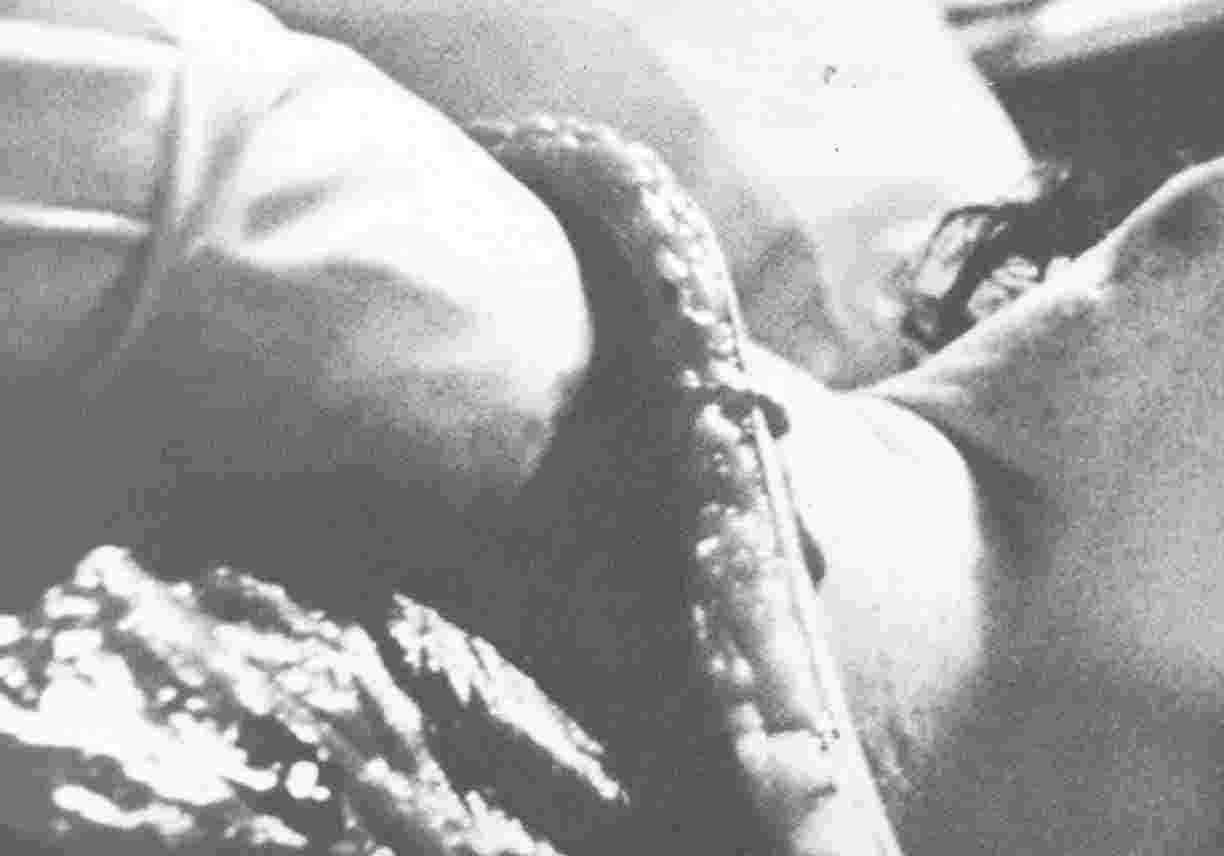
THE
ACT OF SEEING WITH ONE'S OWN EYES
(Stan Brakhage, USA, 1972)
The doctor's hand nonchalantly digs into
a chest cavity
to look for a
bullet, as his arm rests on the body's exposed
organs.
The texture and thickness of skin and fat reveals
just
how far away we are from our insides. To accept
this taboo shot means to accept one's
physicality and to
reject any
metaphysical concept of the human body. SC
______________________________________________
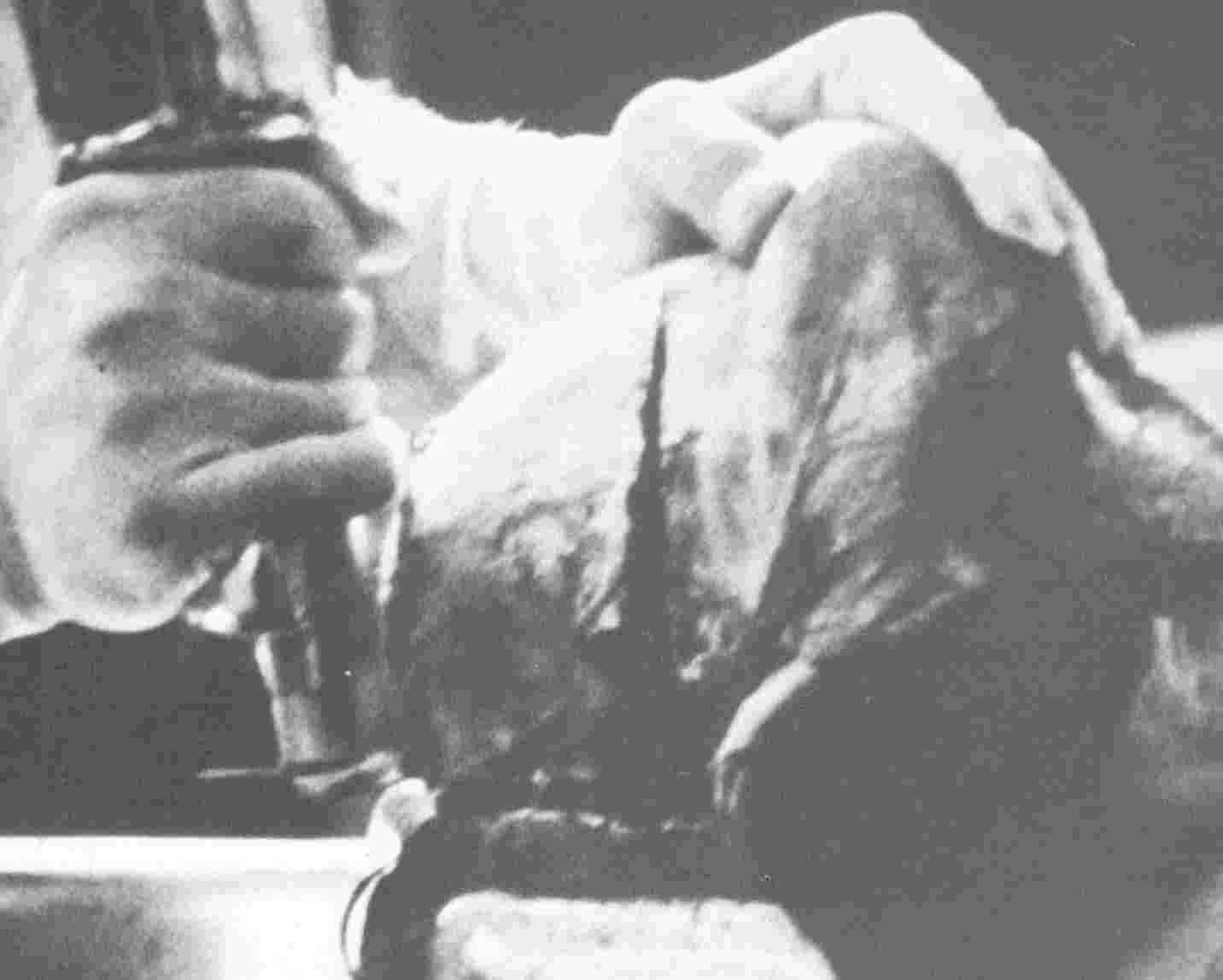
THE
ACT OF SEEING WITH ONE'S OWN EYES
(Stan Brakhage, USA, 1972)
Two impersonal, professional hands coolly
at
work on a mysterious
object; a man's exposed
skull,
about to be removed, while his scalp has
been
pushed forward to cover all of his face except
his
chin. Particularly upsetting are the surgical drill
and the up-turned scalp; direct attacks
on the viewer. SC
______________________________________________
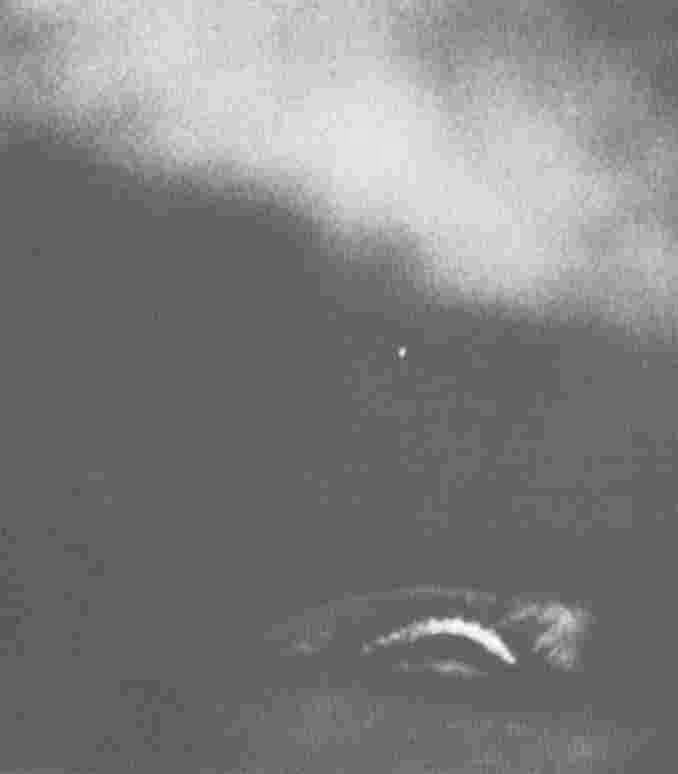
THE
ACT OF SEEING WITH ONE'S OWN EYES
(Stan Brakhage, USA, 1972)
The eye of death. The open eye of a
corpse,
caught and framed in a
breathtaking, lin-
gering shot
by a master filmmaker. It looks
upwards,
unblinkingly, and inexplicable gra-
dations
of light and shadow. This is the end. SC
___________________________________________________________________________________________
THE
ATOM STRIKES
(Army
Pictorial Service, US Signal Corps
for
War Department, USA, 1950)
The
explosions at Hiroshima and Nagasaki and their
aftereffects are among the most widely
photographed
and most
thoroughly suppressed events in history.
While
hundreds of thousands of feet were shot by sci-
entific,
military, and medical personnel, most of this
material
remains secreted in official archives. Sig-
nificantly,
this first official record (released only on a
restricted
basis) is confined to structural damage, and
completely omits visual evidence of
human casualties. The
initially
routine interview with a survivor (a Jesuit priest,
also
described in John Hersey's book) becomes a horrifying
reliving of the event when he recounts
the actual bombing.
___________________________________________________________________________________________
BIRTH
AND DEATH
(Arthur
and Evelyn Barron, USA, 1968) (F)
This
cinema-verite-style documentary interweaves
the
pregnancy and childbirth of a young woman
with
the lingering death of a cancer patient to
comment
on the celebration and tragedy of existence.
The
tenderness and intimacy of the young couple,
and
the mystery of birth are contrasted with the
dignity
of a man who faces his death without deception.
___________________________________________________________________________________________
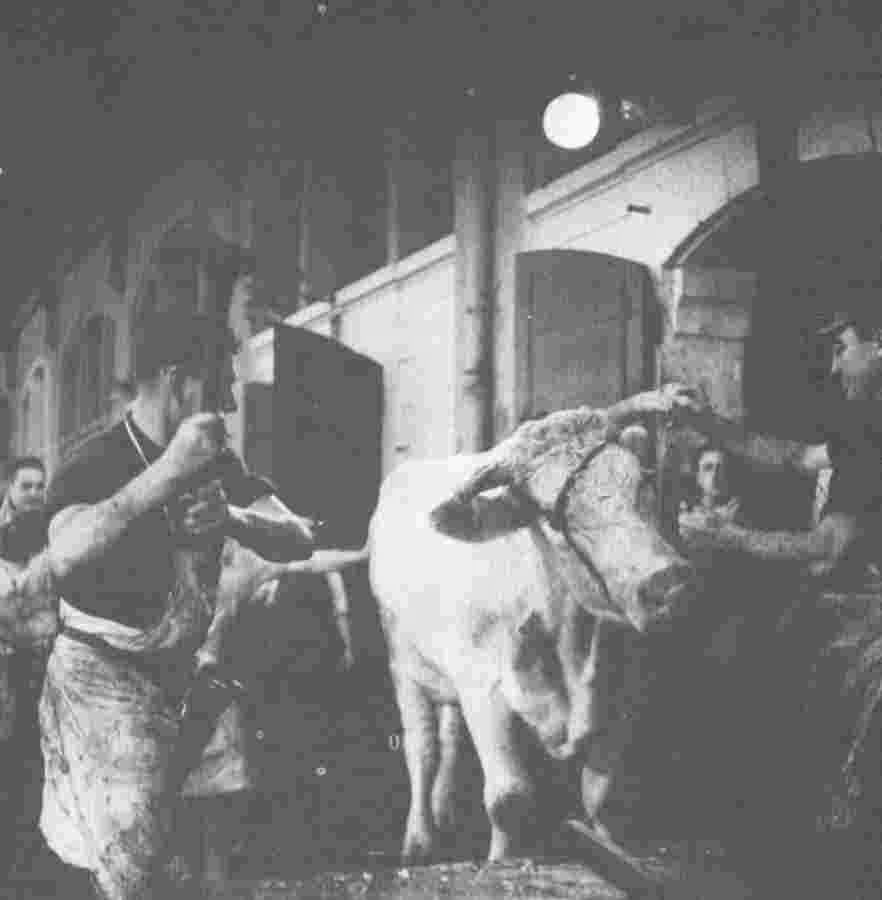
THE
BLOOD OF THE BEASTS
(LE
SANG DES BETES)
(Georges
Franju, France, 1949)
When the
butcher raises his axe-like tool to
stun
the animal, the camera stays with him
until
the bitter end; there is no attempt either
to
protect or cheat the spectator; we must
come
to terms with daily slaughter, committed
(not
only in slaughterhouses) in our name.
______________________________________________
This
documentary on the slaughterhouses of Paris is one of
the
great masterpieces of subversive cinema; here, for once,
we are face to face with death, and are
neither protected nor
cheated.
Unlike Hollywood films, when the butcher raises
the
hammer to stun the horse there is no "cutting away";
the
camera, objectively and
cruelly, stays with the event, making
us
its shocked accomplices. As these "killers without hate",
knee-deep in blood and surrounded by
steaming excrema and
vomit,
murder animals in cold indifference before the camera --
the number of animals dying but a
fraction of a day's output
of
slaughterhouses everywhere -- we learn to see, and then
perhaps to feel what we have not felt
before. Violence here
is
neither fictional nor titillating; it is massive and real.
A
dream-like quality permeates the intense realism of the
images; a surrealist intent -- akin to
Bunuel's slitting of the eye-
ball
in Un Chien Andalou -- is discernable in this anti-bourgeois
film. But the eyeball,
however shocking, was fictional; The Blood
of
the Beasts is real. Forcing us to view another being's
painful and
sordid death in
all its detailed enormity, it subverts our natural state
of consciousness and opens us to greater
insight. Franju, committed
artist,
resistance fighter, moralist, wants us to consider all
slaughter
anywhere committed
on our behalf by those we hire to do our dirty
work, so that we can sit down at
clean tablecloths and deny complicity.
______________________________________________
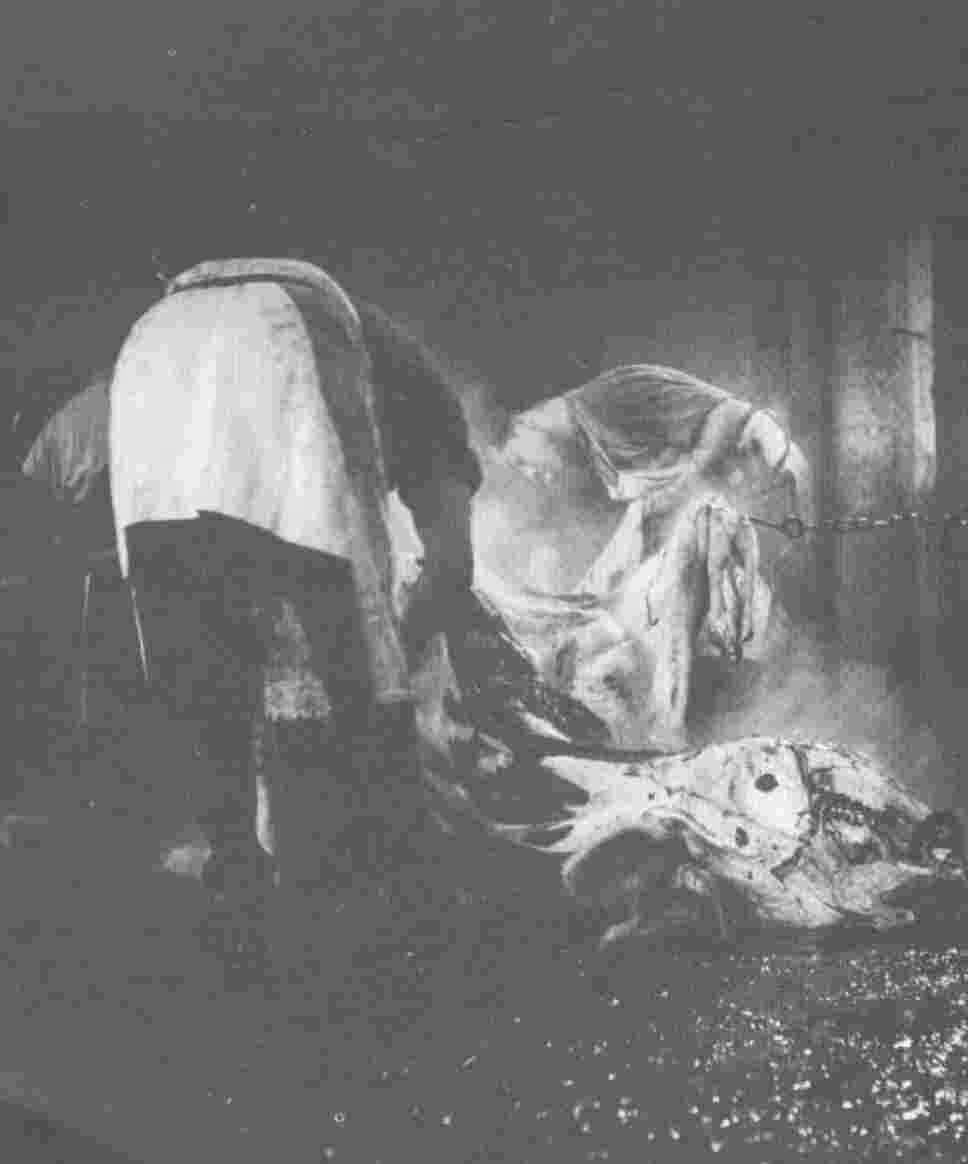
THE
BLOOD OF THE BEASTS
(LE
SANG DES BETES)
(Georges
Franju, France, 1949)
Amidst
steaming blood and men wading in excrement, even
Vietnam
and the concentration camps are not too far away.
The
killing of animals in Paris slaughterhouses becomes, in
this masterpiece, a poetic metaphor of
the human condition.
Its
unflinching realism and ice-cold brutality --depicting
what "killers without hate"
(Baudelaire) do to animals
daily
at our behest -- carries its own surreal impact, which
compels those willing to watch to enter
into new awareness.
___________________________________________________________________________________________
DEATH
DAY
(Visuals:
Sergei Eisenstein, Mexico, 1934)
The
enormous amont of film shot by Eisenstein in Mexico for
his ill-fated Que Viva Mexico was
never edited or completed.
However
it provided footage for works edited by others, of
which
this is one. Death Day is a record of a curious Mexican
holiday, a cross between Memorial Day
and Halloween, taken
from the
Aztec feast for the dead. For one day, death rules
supreme in the form of candy
skulls, death toys, processions
of
skeletons, and funereal masks; yet it also seems strangely,
almost benevolently, integrated into
life, the fear
of it weakened
by mockery and familiarity.
___________________________________________________________________________________________
DIABOLIQUE
(LES
DIABOLIQUES)
(Henri-Georges
Clouziot, France, 1955) (F)
One
of the most frightening and shocking films ever made, Diabolique
is notable for its particularly effective
exploitation of our fear of the
dead
and their return. For its diabolic timing, sadistic heightening
of tension, and meticulous shock-montage
are merely stations on
the way
to the ultimate horror: the return to life, before the breaking
eyes of the murderess, of the "drowned"
victim of her deed, gruesomely
emerging
from a filled bathtub, and in a further turn of the screw,
his apparent removal of his own "eyes".
Since only a small portion
of
the film's length consists of frightening images, it is clear that
Clouziot succeeds in evoking the
"nameless dread" of our atavistic past.
___________________________________________________________________________________________
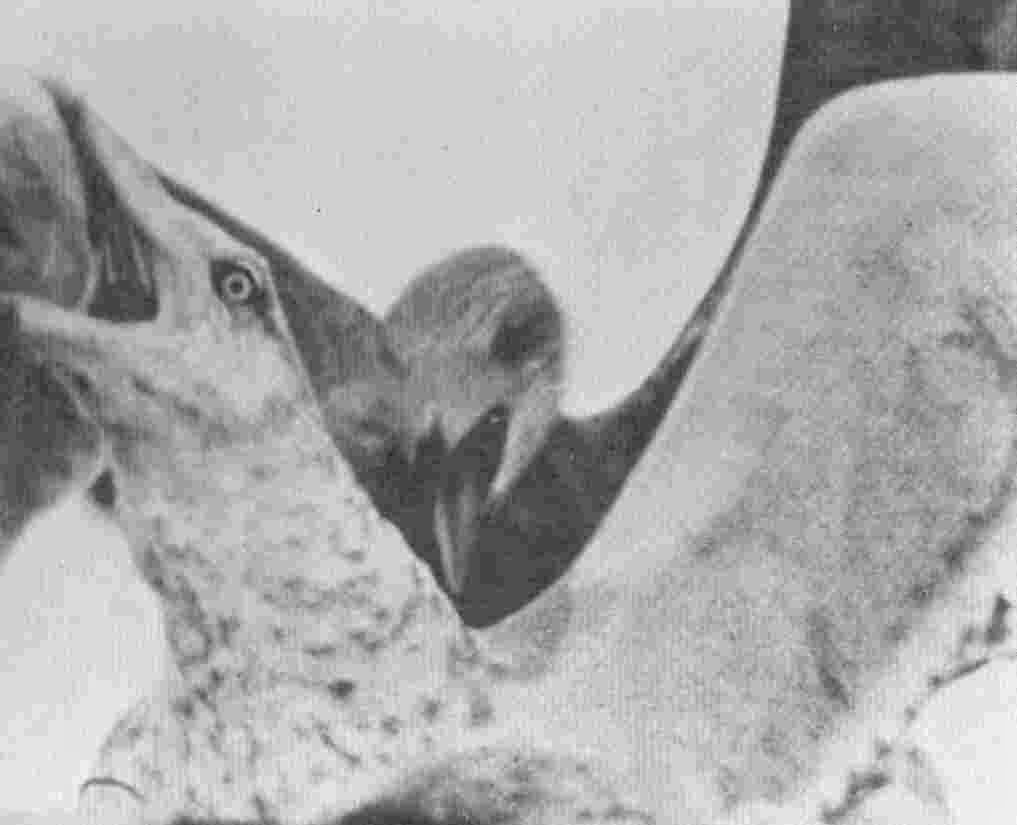
THE
END OF ONE
(Paul
Kocela, USA, 1971)
These
alien, prehistoric monster birds --
caught
in a powerful, dynamic composition
of
blacks and whites -- are merely close-ups
of
seagulls, but photographed from their view-
point.
One dies a slow, lonely death on a beach,
recorded
by the filmmaker with utmost gravity.
______________________________________________
A
documentary of a dying seagull, alone on a beach.
She
falls for the last time, turns her head sideways
and
we see her eyes. There is no sound except nature.
Time passes. Her eyes glaze over as
we watch them.
A being has
died; a filmmaker has made us care.
___________________________________________________________________________________________
FORBIDDEN
BULLFIGHT
(CORRIDA
INTERDITE)
(Denyus
Columb de Daunant)
This
lyrical, dreamlike masterpiece of the visual
cinema
-- entirely based on documentary footage --
creates
its hallucinatory effects through that simple
and
perhaps most effective of all filmic devices; slow
motion. One of the few films to
convey the mystique
of the
corrida in emotional rather than intellectual
terms, it proceeds entirely in
choreographed, majestic
images,
and never fails to remind us of impending
death;
when it comes, the driving home of the
sword
is repeated in twelve langorous dissolves
in
a beautiful, ominous cascade of images.
___________________________________________________________________________________________
DEATH
IN VENICE
(Luschino
Visconti, Italy, 1971)
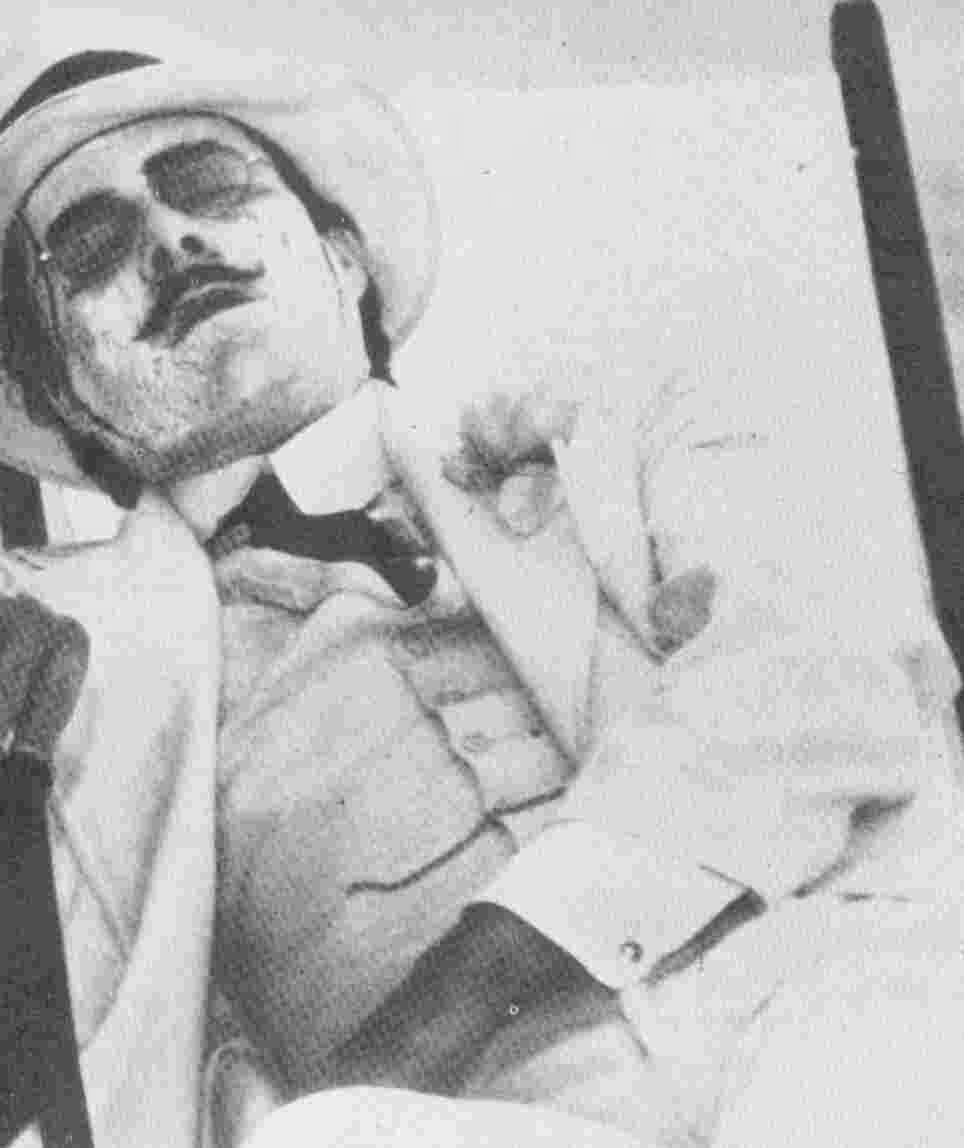
The
chalk-white face, in ironic contrast with newly-dyed mous-
tache and hair (for youthful looks),
denotes the death of
the
famous writer on the Lido, his unrequited homosexual
passion for a young boy now forever
unfulfillable. Sun and
sweat
make the hair dye run down his face in tragic rivulets. SC
___________________________________________________________________________________________
FORBIDDEN
GAMES
(JEUX
INDERDITS)
(Rene
Clement, France, 1952) (F)
Very
few films are capable of portraying the secret worlds
of
children; this is achieved here in the context of a story
of war and death. Set in France
during the Second World
War,
it deals with a five-year-old girl orphan and an older
boy who, ironically, can retain normalcy
only by recreating
images and
episodes of a death so familiar as to be integrated
into
their universe. Building secret burial grounds for animals,
they engage in rites and fashion a
macabre alternate reality open
only
to them. The psychological penetration of the mind of the
child is consummate; and death, in its
many guises, never absent.
___________________________________________________________________________________________
GERM
AND CHEMICAL WARFARE
(CBS
News, USA, 1968)
A documentary
look at the chemical and biological weapons
developed
and stored by the US, including nerve gases,
chemical
disorienting and disabling agents, defoliants,
crop-killers, plague, anthrax, and
botulism carriers. The
film
asks why the US remains the only major power which
has
not ratified the 1925 Geneva Treaty against chemical and
bacteriological warfare. There is an odor
of massive death.
___________________________________________________________________________________________
INTERVIEWS
WITH MY LAI VETERANS
(Joseph
Strick, USA, 1971)
This deeply
disturbing cinema-verite study consists
of
uncensored interviews with American veterans
of
the My Lai massacres. It is a film about death --
and how somebody's death can be caused,
faced
and then talked about by
the assassin. Clean-cut
young
Americans, now back in civilian life, recount
with
defensive smiles, false indifference, and concealed
remorse, how and why they murdered.
Disassociated
from their acts,
destroyed by war, dead in life, alien
to
guilt, they emerge as victims as well as executioners.
Their artless straightforwardness
convinces us immedi-
ately of
the veracity of their horrifying self-indictment.
The
fact that their statements are accepted as truth
is
what creates the shattering, seditious effect of
this
film and separates it from the propaganda.
___________________________________________________________________________________________
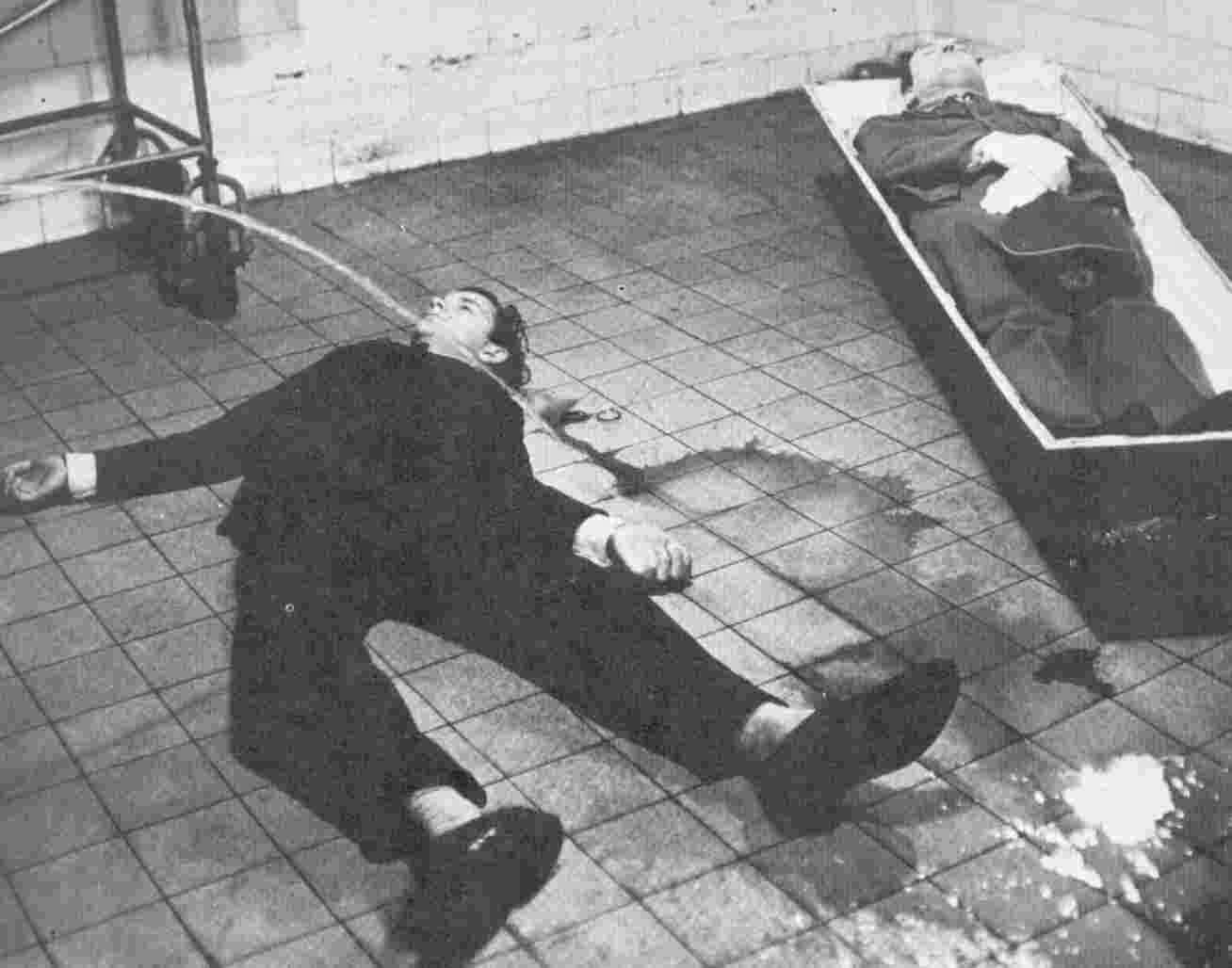
THE
CREMATOR
(Juraj
Herz, Czechoslovakia, 1968)
A
mystifying, therefore arresting image. An open coffin,
with an undoubted corpse; a young man, as
if dead,
next to it; and, most
disturbing of all, a stream of
water
-- the only action, hence, focal point of the still;
only
later do we notice the hand holding the nozzle,
a
terrifying sight, since its invisible (and implicated)
owner offers no help but merely rinses
what we
now realize to be
blood from the young man's body.
___________________________________________________________________________________________
IT
IS GOOD TO LIVE
(Fumio
Kamei, Japan, 1958)
This is
one of the first documentary films about
the
survivors of Hiroshima and Nagasaki. It coldly
records the lingering effects of the bomb
on the
victims decades later.
In a succession of realistic,
shocking
sequences, their lives, difficulties, and came-
raderie
are examined. The very objective of incidents,
scenes, and faces makes the film the more
terrifying.
___________________________________________________________________________________________
MEDITATION
ON THE END OF HUMAN LIFE
(POSLEDNI
VECI CLOVEKA)
(Jovan
Kubicek, Czechoslavakia, 1967)
A
very original student film from Prague's famed film
school, made during the period of
liberalization. This
clear-eyed
study of funeral services and crematoria
reflects
on how mass production methods and the im-
personality
of technological society have invaded even
this
last ritual. An accelerated sequence condenses
the
endless repititions of identical funeral services,
the
arrivals and departures of mourners, into a few
moments
of sad comment. Though crematoria in the
East
are fast, popular, and clean, the director points to
the
even more efficient ones of Terecin and Hiroshima.
___________________________________________________________________________________________
A
MOVIE
(Bruce
Conner, USA, 1958)
One of the
most original works of the inter-
national
film avant-garde, this is a pessimistic
comedy
of the human condition, consisting of
executions,
catastophes, mishaps, accidents,
and
stubborn feats of ridiculous daring, magic-
ally
compiled from jungle movies, calendar
art,
Academy leaders, cowboy films, cartoons,
documentaries,
and newsreels. None of the
visual
material is original; and none is used for
its
original purpose. Amidst initial amusement
and
seeming confusion, an increasingly dark
social
statement emerges which profoundly
disturbs
us on a subconscious level.
Particularly
important are the documentary
images
of death; the battered bodies of Mussolini
and
his mistress, suspended upside down; the
crash
of a waterplane, with the pilot hitting
against
the fuselage in a brief, terrifying moment;
a
one-second documentary shot of an execution,
"revealed"
as if it was a dirty secret, and just as
quickly
withdrawn; the death of a bridge (wildly
swaying,
then collapsing), immediately following
an
optimistic speech by Teddy Roosevelt. The
entire
film is a hymn to creative montage.
___________________________________________________________________________________________
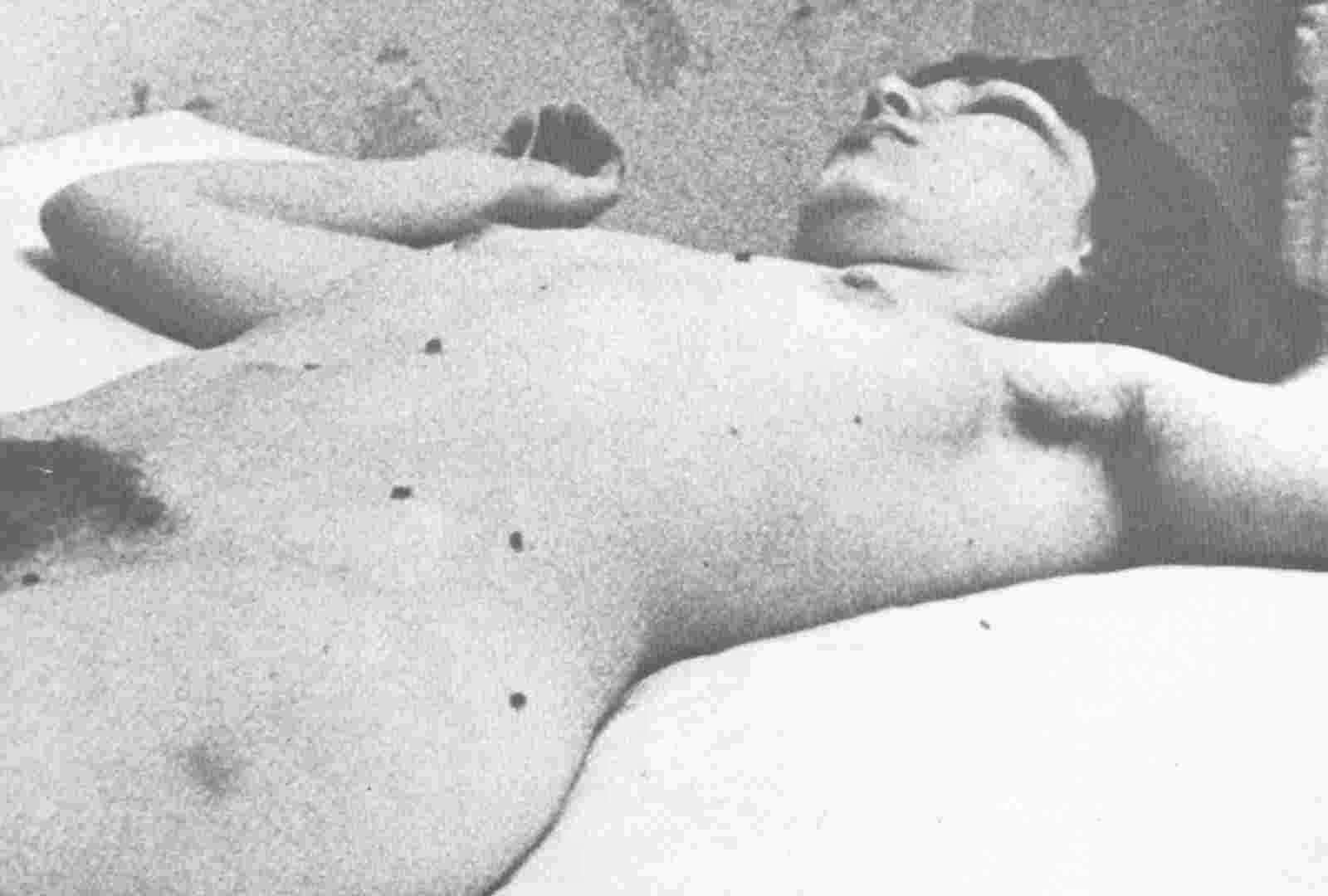
FLY
(Yoko Ono, Great Britain, 1970)
An ominous and deceptive shot; the girl
is heavily
drugged, not dead,
but the presence of flies busily infesting
all
parts of her body sets off an inevitable chain of morbid
associations. The graniness of the image
further contributes to
this
impression; it is as if the body was already decomposing. SC
___________________________________________________________________________________________
NECROLOGY
(Standish Lawder, USA, 1969)
Minimal cinema in the service of a
non-verbal, apoca-
lyptic
statement: a stationary camera trained on an
escalator crowded with blank,
motionless, introverted
people
-- endless victims -- ascending (backwards!)
in
unbroken, heart-rending succession, to heaven,
hell,
or oblivion. Original and disturbing.
___________________________________________________________________________________________
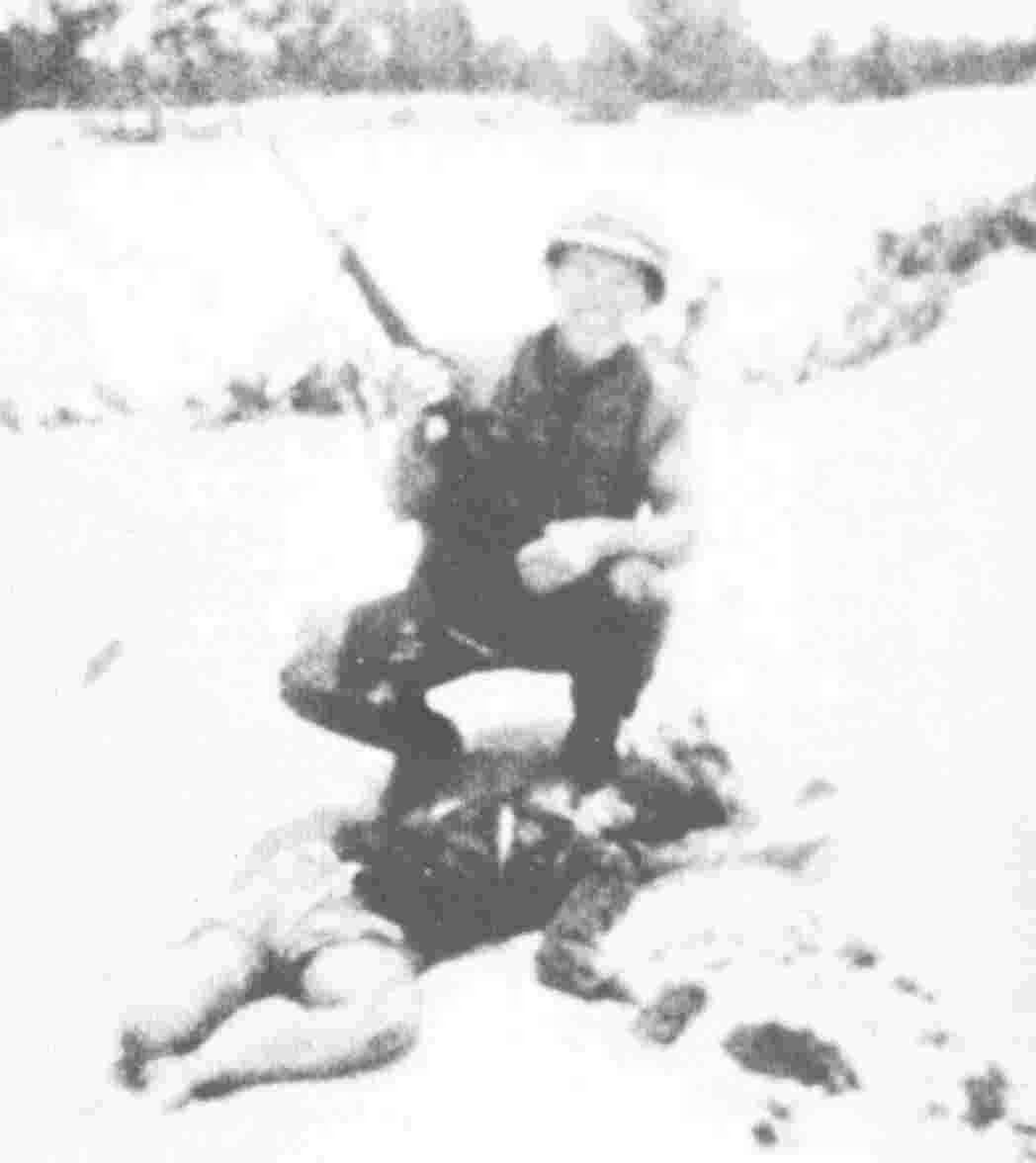
WINTERSOLDIER
(Winterfilm Collective, USA, 1972)
"It was like a hunting trip".
A further example of America's
civilizing
role in Vietnam, showing the hunter and his trophy.
The
smile, the stance, the contemptuous posing of executioner
astride the victim he has "bagged",
are still visible in this indis-
tinct
photograph which thereby already symbolizes (for those
with short memories) the slow receding of
the crime into history.
But
the task of the subversives is to tear open old wounds.
______________________________________________
This
feature-length documentary of the historic, terrifying
testimony given by more than 200 ex-GIs
at the 1971 Detroit
Winter
Soldier Investigation concerning American atrocities
in
Vietnam renders academic any disputes as to the relative
effectiveness of word as against image.
There is simply no
substitute
for seeing the faces of the men as they testify:
their
strain, tears, and hesitations, all inexorable guarantors
of veracity, none available from a
reading of the testimony.
One
after another, these veterans of crime recount their ex-
periences in acts of accusation and
expiation; the testimony
of
these long-haired, intense young men implicates them as
well; and judicious intercutting of old
photographs showing
them in
crewcut and uniform further solidifies this theme
and
broadens it to one potentially encompassing all of us,
given only our presence at the right time
and place.
Authenticity
and horror are built with small, precise
details.
An American officer advises his men not to
count
prisoners at the beginning of their removal
in
American planes, only upon arrival. A woman
is
split open from vagina to neck. A small child
is
stoned to death for taunting the Americans.
The
effect of the testimonials is enhanced by intercutting
of
color slides and live footage of tortures, killings, burnings,
bombings -- images otherwise hidden away
by the hundreds and
thousands
of feet in film libraries of television networks and
never seen. They show
pitiful, enormously frightened, totally
disoriented
human beings, delicate and small in build, violated
and
murdered by massive, huge Westerners who seem to look like
men from outer space, dropped by evil
machines to rain destruction
on
their ancestral lands. All the "cliches" are there --
the crying
mother displaying a
maimed child, the aged grandparents herded
off,
the civilians crouching in unbelievable fear in bulrushes, in-
effectively hiding from helicopters in
which one of the monsters
actually
films their plight. One feels frightened at the thought
of untold thousands of others patiently
waiting in television
vaults
to be stirred into pitiful life by future researchers, an
accusing army of corpses that we
will never surmount.
Far
from being a horror show or propagandistic exercise,
however, the film, by the very enormity
of what it portrays,
becomes a
philosophical set-piece, raising all the basic
moral
issues; the mechanisms by which "ordinary"
people become torturers and killers, the
inability to
feel the
suffering of others, the possible inevitability of
violence and murder in human affairs, the
capability
of all-encompassing
evil on the part of everybody. It
postulates
self-protection, the need to maintain per-
sonal
sanity, the urge for revenge, as premises for total
indifference toward the "enemy",
and asks unvoiced,
insistent
questions as to the irreversible damage
this
war has already done to American civilization.
The
great and ultimate stars of the film are the tears shed by men
who have learned that to destroy the
false machismo instilled by
school,
state, and army, it is necessary to learn how to cry. Through
the depth of their tearful misery, openly
expressed, they reveal the
true
essence of a masculinity which, for the first time, is human.
___________________________________________________________________________________________
THE
RACE
(William
Copland, Australia, 1970)
In
this angry newsreel compilation of injustice
against
the oppressed there occurs, without any
particular
preparation, a most shocking documentary
sequence:
the meticulously detailed, on-camera killing
of
a captured prisoner -- possibly in the course of the
Congo "action" -- who, cringing
on the ground, has just
been
promised life. Since the "outcome" is unknown
to either him or us, we "share"
-- in the comfort of a
movie
theatre -- his unbearable dread, and attempt
to
believe, as does he, the promises and taunts of
his
captors. A tiny part of our humanity, perhaps,
dies
with this unknown man -- one nameless victim out
of
thousands dying somewhere at any given moment.
___________________________________________________________________________________________
REFLECTION
(ZRCADLENI)
(Evald Schorm, Czechoslavakia, 1965)
A leading director of the Czech film
renaissance provides a
philosophical
meditation on life and death, set amidst com-
plex
hospital apparatus and the sadness, hope, or resigna-
tion of the patients. Existentialist
rather than optimist, the
approach
is one of humanistic atheism, accepting death as
part of life. Interviews with doctors and
nurses explore their
outlook;
all speak of death as a fact, without either senti-
mentality or religiosity. The studied
objectivity of the
film only
imperfectly hides an intense emotionalism.
___________________________________________________________________________________________
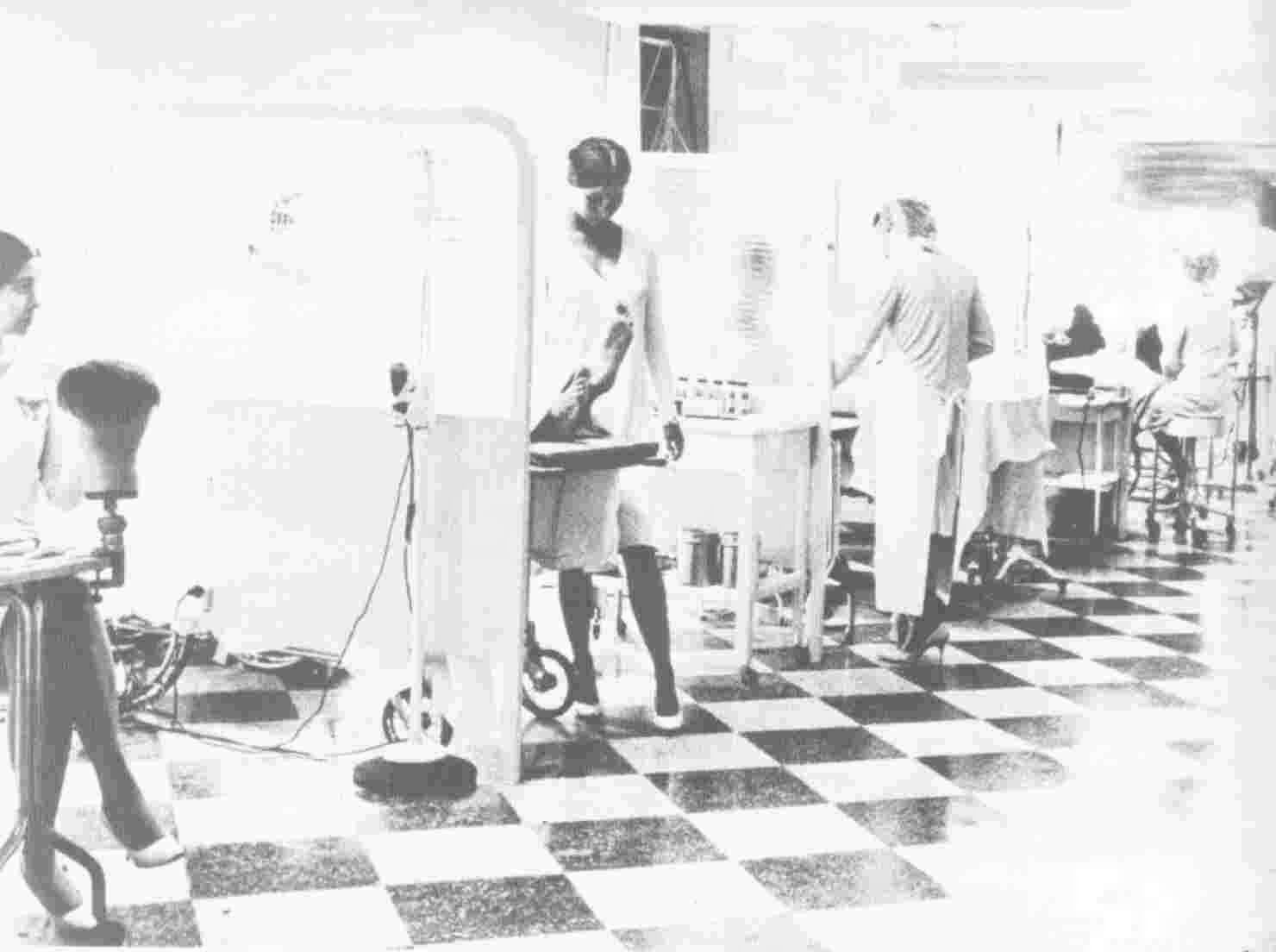
THE
LOVED ONE
(Tony
Richardson, Great Britain, 1965)
Perhaps
only a "foreigner" could so elegantly have
exposed and debunked America's high-camp
burial
establishments, their
financial greed, hypocrisy and
fake
religiosity. In a very American attempt at banishing
death, the mortuary literally assumes the
trappings of a
beauty salon,
an ominous union of Eros and Thanatos. SC
___________________________________________________________________________________________
RITE
OF LOVE AND DEATH
(Yukio
Mishima, Japan, 1965)
The
distinguished Japanese novelist who committed hara-kiri
in 1970 as a protest against the
corruption of national ideals
uncannily
anticipated this in a film he wrote, directed, and
starred in five years earlier, in which
he enacts the same
traditional
samurai suicide by which he later took his life.
Based
on his short story, "Patriotism", it deals with a histori-
cal incident of the 1930s, in which an
officer in the elite guard
is
asked by the Emperor to execute a number of his peers
after an attempted coup d'etat.
Faced with the traditional
samurai
conflict of divided loyalties -- to Emperor and to
fellows-in-arms -- the officer maintains
his honor in the only
way
possible for him: hara-kiri. His detailed, bloody suicide
is one of the most gruesome and
convincing examples of fic-
tional
death in cinema. Acted by Mishima himself, its ferocity
is the more frightening in view of what
actually transpired later.
___________________________________________________________________________________________
SIRIUS
REMEMBERED
(Stan
Brakhage, USA, 1959)
The face
of death; a daring, silent poem on a dead and
gradually
decaying dog, compusively recalled in inter-
related,
dream-like episodes, from many angles and in
many
seasons. The handheld camera, in its distraught
movements, reflects the filmmaker's
anguish. A homage.
___________________________________________________________________________________________
TO
LIVE
(VIVRE)
(Carlos Vilardebo, France, 1960?)
The eternal victims. This
compassionate compilation of
authentic
documentary materials of the last 20 years -- without
a
single staged scene -- shows the endless suffering, torture,
and death of civilians, war victims,
natives, peasants, people
all
over the world, in images of unforgettable power and directness.
Just think -- admonishes an
introductory title -- scenes such as these
are
probably taking place once again somewhere at this very moment.
___________________________________________________________________________________________
THE
TWILIGHT OF THE DAMNED
(L'AUBE
DES DAMNES)
(Ahmed
Rachedi, Algeria, 1970) (F)
This
excellent feature-length documentary --
the
story of the imperialists colonization of
Africa
-- is a film about death. Its most shocking
sequences derive from the captured French
film
archives in Algeria
containing -- unbelievably --
masses
of French-shot documentary footage
of
their tortures, massacres and executions of
Algerians.
The real death of children, passers-by,
resistance
fighters, one after the other, becomes
unbearable.
Rather than by blatant propaganda,
the
film convinces entirely by its visual evidence,
constituting an object lesson for
revolutionary cinema.
___________________________________________________________________________________________
VIETNAM,
LAND OF FIRE
(No
credits available, France, 1966)
The
ferocious reality of the suffering, torture,
and
death imposed on the civilian population
of
Vietnam by America, as seen in newsreel
and
documentary materials; children with
terrible
wounds, bodies being cut open (on
camera);
the effects of napalm and poisonous
chemicals,
corpses burnt to a crisp, victims
without
limbs, villages set on fire --
and
Vietnamese resistance.
___________________________________________________________________________________________
WHEN
LOVE FALLS
episode
in LOVE AND THE CITY
(Michelangelo
Antonioni, Italy, 1953)
In one
of Antonioni's earliest films -- an episode in Zavattini's
ove in the City -- he interviews
survivors of suicide attempts
who
then re-enact them in the actual locales. An example
of Zavattini's insistence on "actuality"
and non-fiction
as the stuff
of drama and consciousness-raising.
___________________________________________________________________________________________
THE
WAR GAME
(Peter
Watkins, Great Britain, 1965)
A
terrifying "fabricated" documentary records the horrors
of a future atomic war in the most
painstaking, sickening
detail.
Photographed in London, it shows the flash burns
and
firestorms, the impossibility of defense, the destruction
of all life. Produced for the BBC,
the film was promptly
banned
and became world-famous and rarely seen. SC
___________________________________________________________________________________________
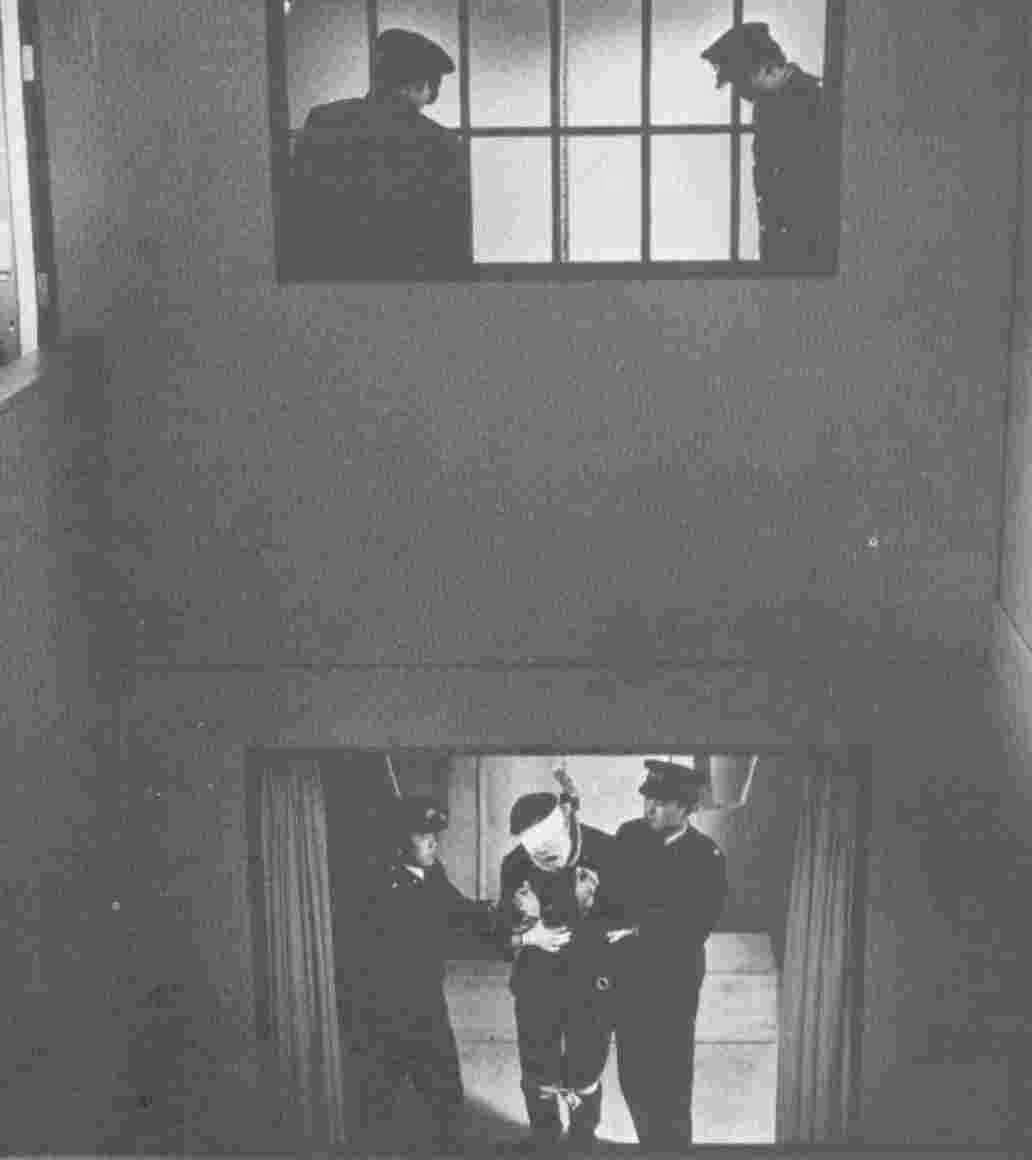
DEATH
BY HANGING
(Nagisa
Oshima, Japan, 1968) (F)
Death
by hanging: fictional. The strongly geometric division
of this still into two separate
components (causing a peep-hole
effect)
and its powerful contrast between black and white rivet
attention on the pitiful and involuntary
gesture of the condemned
man,
entirely surrounded by efficient, cold-blooded automatons.
___________________________________________________________________________________________
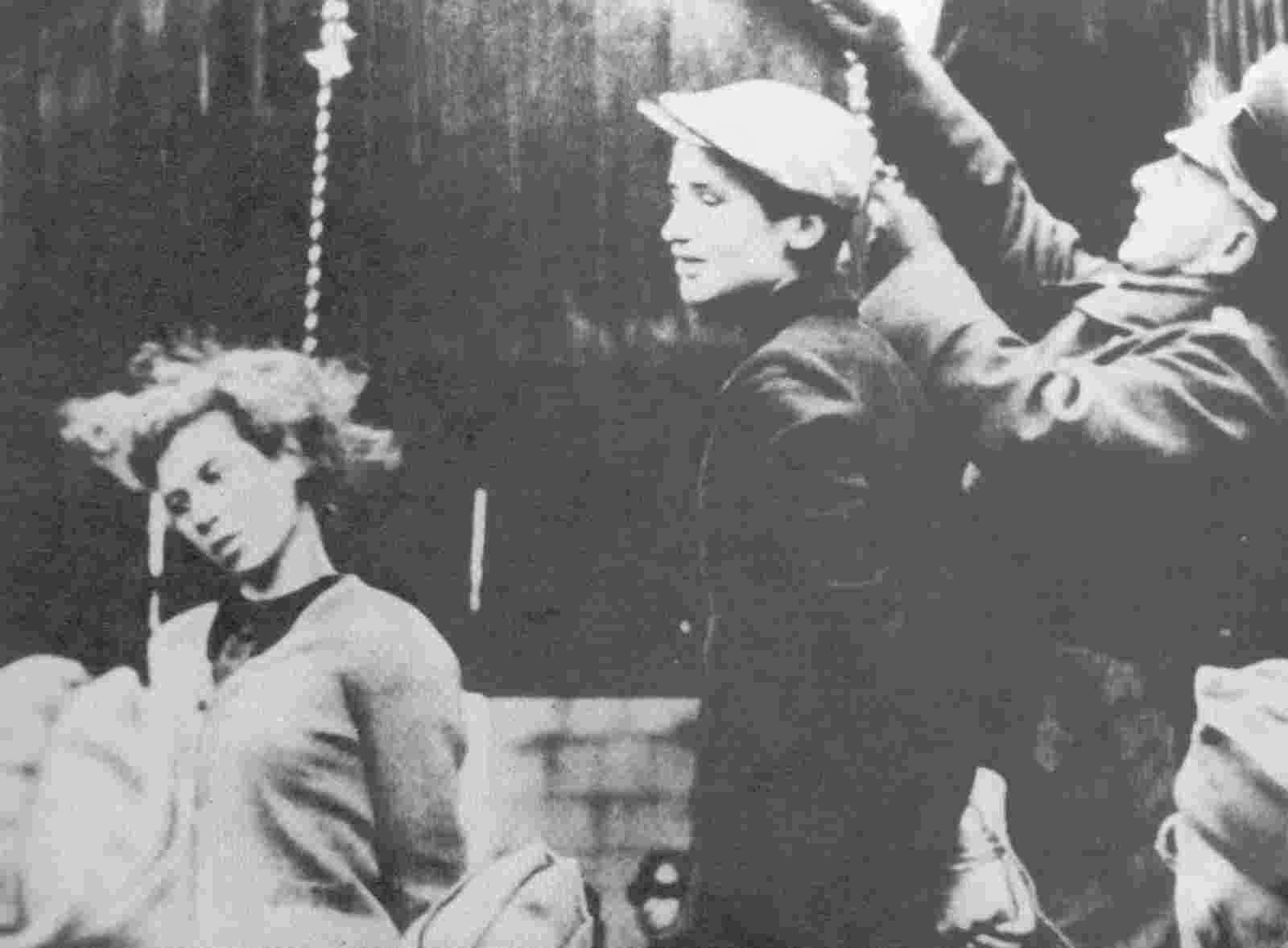
ORDINARY
FASCISM
(Mikhail
Romm, USSR, 1965)
Death by
hanging: real. An efficient and solicitous
German officer strings up a young
civilian in the East.
Another,
a girl, has already died, her eyes uncomprehen-
ding.
The young man's slight smile may be due to shock.
The
recording of real death is always traumatic for the viewer.