FILM
- AS A -
SUBVERSIVE ART
THE
DESERTER AND THE NOMADS
(Juro
Jakubisco, Czechoslavakia, 1968) (F)
In
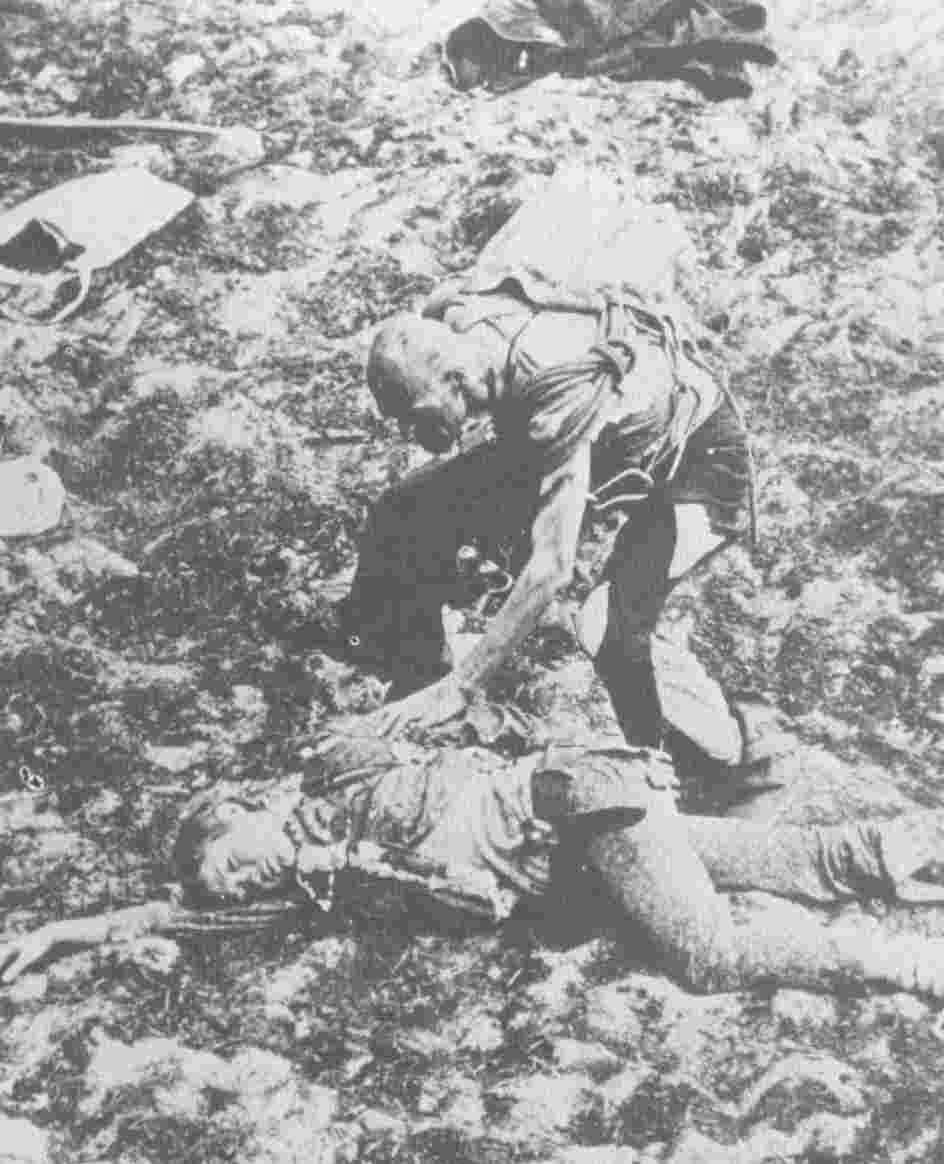
a world devastated by atomic war, Death searches
the
battlefield for his missing companion. The lack of
contrast, the irregularly colored ground,
and the gaunt
profile lend a
forbidding air to a powerful sequence
by
one of Czechoslavakia's most original talents, who
in
one year shifted from the playful lightheartedness
of
The Critical Years to a generalized social pessimism.
______________________________________________
A
powerful, original and obsessive work about war and death,
permeated with expressionist outrage and
cosmic pessimism.
In three
horrifying episodes set in World Wars I, II, and III,
we
witness endless carnage, unmotivated death, the triumph
of mindless violence, and orgies of
bloodletting. One episode,
dealing
with Soviet Russian troops during the 2nd World War,
shows them as venal, imperial, and
lecherous, and ends with
documentary
footage of the (later) Soviet invasion of Czechosla-
vakia. As the tanks enter Prague, the
subtitle reads: "We thought
they
might have been another crew also making a film." The
horri-
fying last episode
takes place in a world devastated by atomic war.
SUBVERSION
IN EASTERN EUROPE:
AESOPIAN
METAPHORS
-
PART ONE -
FILMS
THE
CRITICAL YEARS
(Juro
Jakubisco, Czechoslavakia, 1967 )
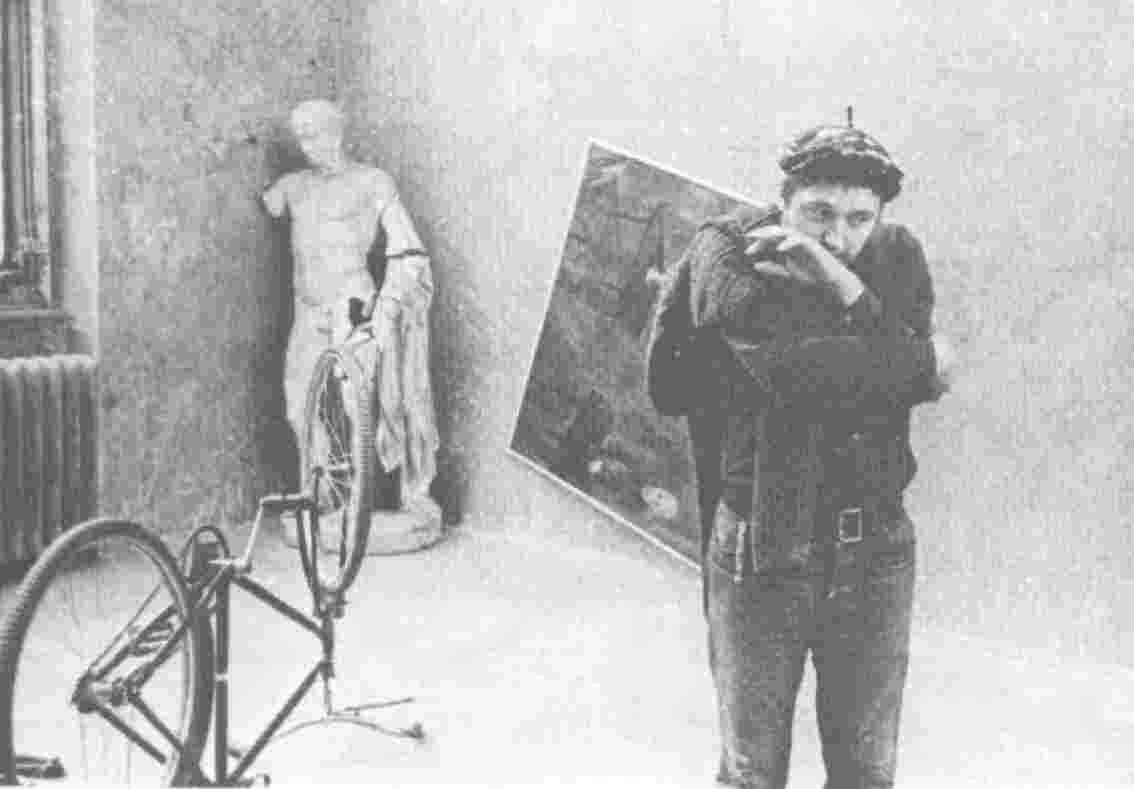
The
casualness and disorder, the satirical edge (Greek
statue, tilted picture and bicycle
frame), the emphasis
on the
individual are entirely "modern" and, in fact,
Godardesque; the more surprising since
this is an early
example of a
Czech film renaissance and represents a
total
break with the ossified heroics of Stalinist cinema.
_____________________________________________-_____________________________________________
AN
AFFAIR OF THE HEART, OR
THE
TRAGEDY OF A SWITCHBOARD OPERATOR
(LJUBAVNI
SLUCAJ ILI TRAGEDIJA SLUZBENICE P.T.T.)
(Dusan Makavejev, Yugoslavia, 1967)
(F)
Makavejev burst upon the
international film scene
with
this unpredictable, ironic, and erotic "love story"
which in its portrayal of humanistic,
personal values
as against
official, ossified ideology represented the new
values
of the Eastern young. Alternating between clever
comedy and casual tragedy, it cast a
tender but cruel eye
on a
bizarre affair between a switchboard operator and a
rat
exterminator, proclaiming that the ultimate values
are
in the fascinating trivialities and senseless moments
of
life. "Men live their beautiful, wild lives quite close
to magnificent ideas and progressive
truths. My film is
dedicated
to those interesting, vague, in between spaces." SC
_____________________________________________-_____________________________________________
ALONE
(MAGANY)
(Vince Lakatos, Hungary, 1969 )
In recording the life and ideas of an old
poverty-stricken peasant woman living
alone
in a ramshackle hut, the
film, the producers
assure us,
lets us listen in to the dead traditions
of
the old generation. In reality, however, we
seem
to be confronted with a proud non-conformist
perhaps
even a semi-heroine in the filmmaker's eyes
who
knows the name Lenin only as that of a "regent".
_____________________________________________-_____________________________________________
AMONG
MEN
(WUEAROD
LUDZI)
(Wladyslaw
Slesicki, Poland, 1962 )
The
most important of the famed Polish "Black Series"
documentaries (at first forbidden), which
dared to
touch on negative
aspects of "socialist" society. This
is a laconic and cruel story of a stray
dog living "among
men",
an outcast, hurt, persecuted or treated with indif-
ference. Caught by the municipal
dogcatchers, he pitifully
howls
for his life in a dilapidated concentration camp-like
structure with, suddenly, innumerable
other victims; there
is an
escape, but it leads him back to the same life. A
film
about victims and
persecutors, not necessarily about dogs.
_____________________________________________-_____________________________________________
ANDREI
ROUBLEV
(ANDREJ
RUBLJOW)
(Andrei
Tarkovsky, USSR, 1962-66) (F)
This
secret, hitherto forbidden, epic masterpiece of the new
Soviet Russian cinema for the first time
connects this cinema
with the
golden era of Soviet film, to whose most sublime cre-
ations it has rightly been compared.
More important than
its
massive beauty, the sensuous plasticity of its images, and
extraordinary fusion of ideological,
narrative, and aesthetic
structure,
is its message of human freedom; the pre-eminence
of
the suffering, questioning individual, as against the mass,
of the indominable spirit of
self-realization and the deline-
ation
of relations between individual and temporal power.
Though the ideas are subtly presented in
the most clandestine
manner on
a plane entirely removed from facile propaganda
or
human- itarian sentimentality, the Russian authorities
"understood" the coded
implications well enough to block
the
release and distribution of the film for several years.
Telling
the story of a famed Russian icon painter of the
15th
century, it is a film -- as none before -- that reeks
with the evil odor of the Middle Ages, an
era of
brutality, human
degradation, abject poverty, rape,
senseless
mass slaughter, mud and pagan orgies,
when
people were at the mercy of both temporal and
"spiritual"
powers. But the Middle Ages were also
an
era in which crazy peasants put on wings to fly
in
dreams of freedom and crashed to their death;
unknown
craftsmen fashioned huge church bells
in
agonies of creation; and artists, in infinite pain
and
doubt, had to find a way to themselves.
The
production of a work of such scope and humanist
grandeur
under conditions of extreme bureaucracy
and
a system of censorship that breeds the most
odious
conformism, is an act of unprecedented
self-affimation
and will -- provided the film
goes
through normal distribution channels --
itself
contribute to the inevitable transformation
of
consciousness that must still come in Russia. SC
_____________________________________________-_____________________________________________
...
AND THE FIFTH HORSEMAN IS FEAR
(A
PATY JEZDEC JE STRACH ... )
(Zbynek
Brynych, Czechoslavakia, 1964 )
A
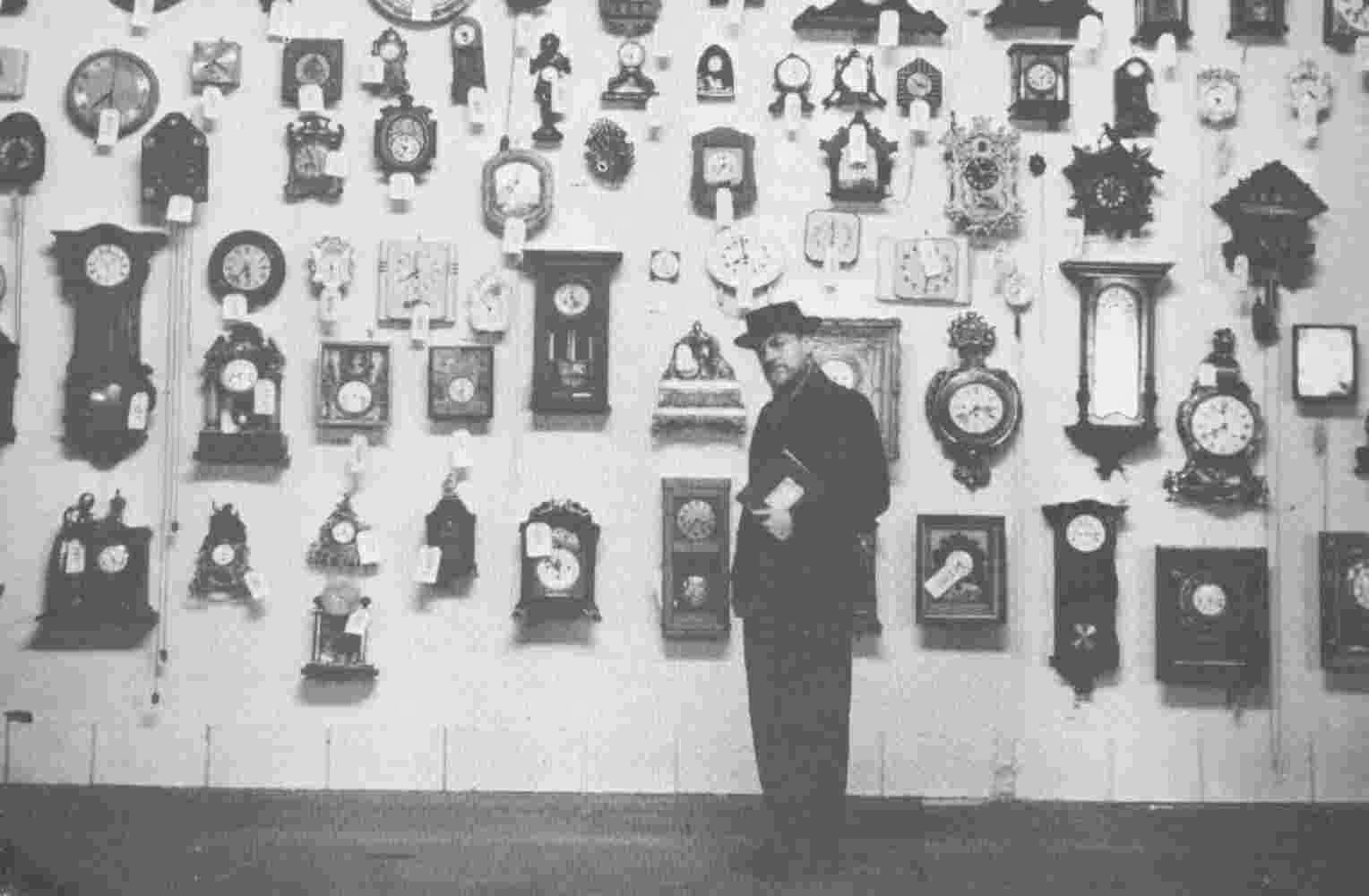
Jew dwarfed by symbols of passing time.
The
place may be Prague; the time may
be
the Nazi period or the Stalinist era;
the
theme is fear. A courageous allegory
that
preceded the Czechoslavak "thaw".
______________________________________________
Special
note must be made of those courageous Czech
films
that preceded the Dubcek era, yet raised contro-
versial
questions or created embarrassing analogies.
This
expressionist, semi- surrealist drama of betrayal,
cowardice, and heroism in a totalitarian
state probes
the varieties and
limits of human behavior under ex-
treme
conditions in brilliantly conceived sequences of
hypnotic
power. Telling the story of a Jewish doctor,
unexpectedly confronted with a
frightful choice, it
raises
basic questions. The oppressors, ostensibly
Nazis,
wear no uniforms; the events, ostensibly
occurring
during the last war, in fact take place
in
a timeless and therefore universal reality,
reinforcing
the film's oppressive topicality.
The
locate may be Prague; the theme is fear.
_____________________________________________-_____________________________________________
THE
APARTMENT
(BYT)
(Jan Svankmajer, Czechoslavakia, 1968)
In this ominous, brilliantly conceived
work, objects --
the
unfortunate apartment dweller's world -- conspire
against
him; a mirror shows only the back of his head;
a
stove, when lit, drips water; and a soup spoon has
holes
in it. The axe offered him by a stranger to help
him break out to freedom only reveals, on
use, a second
stone wall,
carrying thousands of names, and a pencil,
with
which he slowly writes his own name: Josef K.
_____________________________________________-_____________________________________________
BAD
LUCK
(Andrzej
Munk, Poland, 1961)
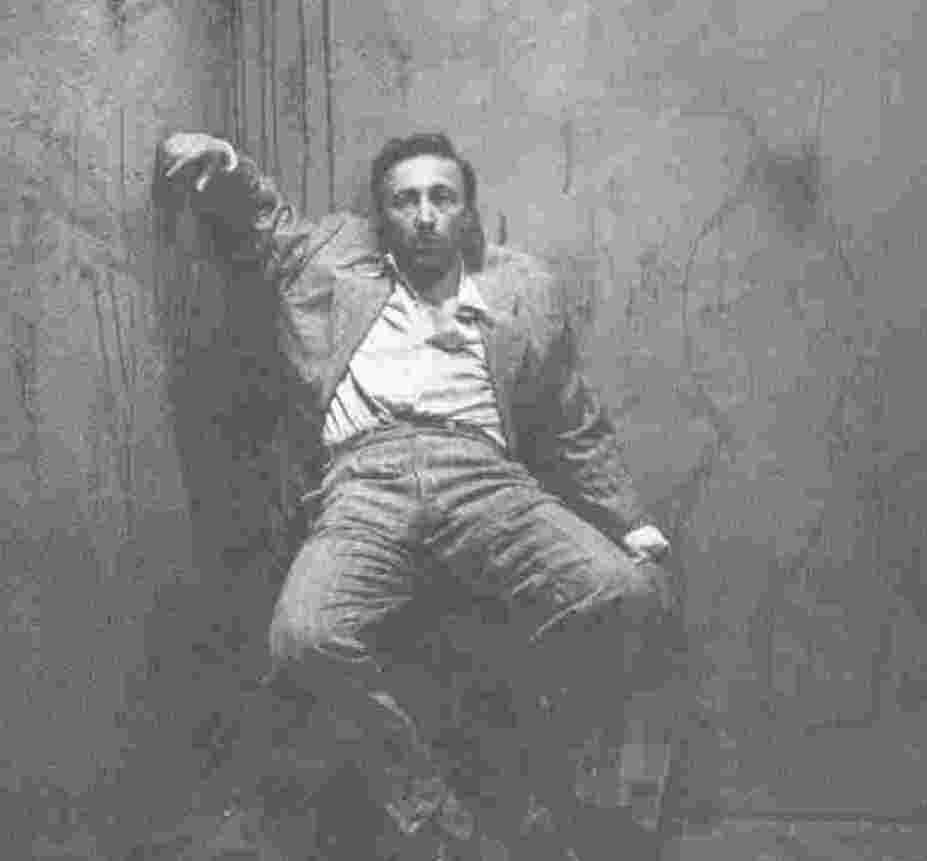
The
ambitious and seditious aim of this
important
Polish director's work was
the
destruction 0f false national myths.
This
ruthless, often Chaplinesque satire
on
bureaucracy, politics, and Stalinism
deals
wit a typical opportunist who
"adjusts"
to a succession of (opposing)
political
regimes in Poland.
_____________________________________________-_____________________________________________
BIRDS,
ORPHANS, AND FOOLS
(PTACKOVE,
SIROTCI A BLAZNI)
(Juro
Jakubisco, France, 1971) (F)
This
delirious tour de force of creative camera work and montage
progresses through a mad universe of
surrealist tableaux and
bizarre
actions, with every composition a poem in design and color.
Two fellows and a girl, war orphans and
dropouts from organized
society,
attempt to live a life of freedom and innocence in a world
of insanity and war, in an enchantingly
ramshackle house where
cupboards
hang from ceilings and birds, old men, and animals
wander
freely. But there is desperation barely below the surface
of this metaphor of Consciousness Three,
and innocence cannot
subsist
in our world. This unconventional fantasy blends dreams
and reality, tenderness and cruelty with
a rather spectacular use
of
distortion lenses, agitated camera, special tints, visual puns,
and variable screen sizes.
The production of such pessimisti-
cally
libertarian parables by Eastern directors -- in this case,
a Slovak, temporarily working in France
-- is symptomatic.
Jakubisco
is now back in Slovakia.
_____________________________________________-_____________________________________________
BE
SURE TO BEHAVE
(A
SEKAT DOBROTU)
(Peter
Solan, Czechoslavakia, 1968)
It
is one thing to make a fictional film in the West
about
unjust imprisonment in one of Stalin's jails;
it
was another matter to do so in Czechoslavakia,
even
under Dubcek, for who knew whether he would
last.
In this film a woman prisoner, harshly incar-
cerated,
is suddenly released as unpredictably as
she
had been imprisoned; "Stalin is dead," she is
told, and then, significantly, "Be
sure to behave."
_____________________________________________-_____________________________________________
THE
CHAIR
(FOTEL)
(Daniel Szczechura, Poland, 1963)
At a huge political gathering, a struggle
for an empty
seat on "The
Presidium" -- shot entirely from above --
shows
some of the audience in a running tackle for
the
honor, sabotaged by enemies, or helped by their
cohorts,
until one, through murder, succeeds to the
Chair,
immediately assuming the same protective
coloration
as the rest of the faceless leadership.
_____________________________________________-_____________________________________________
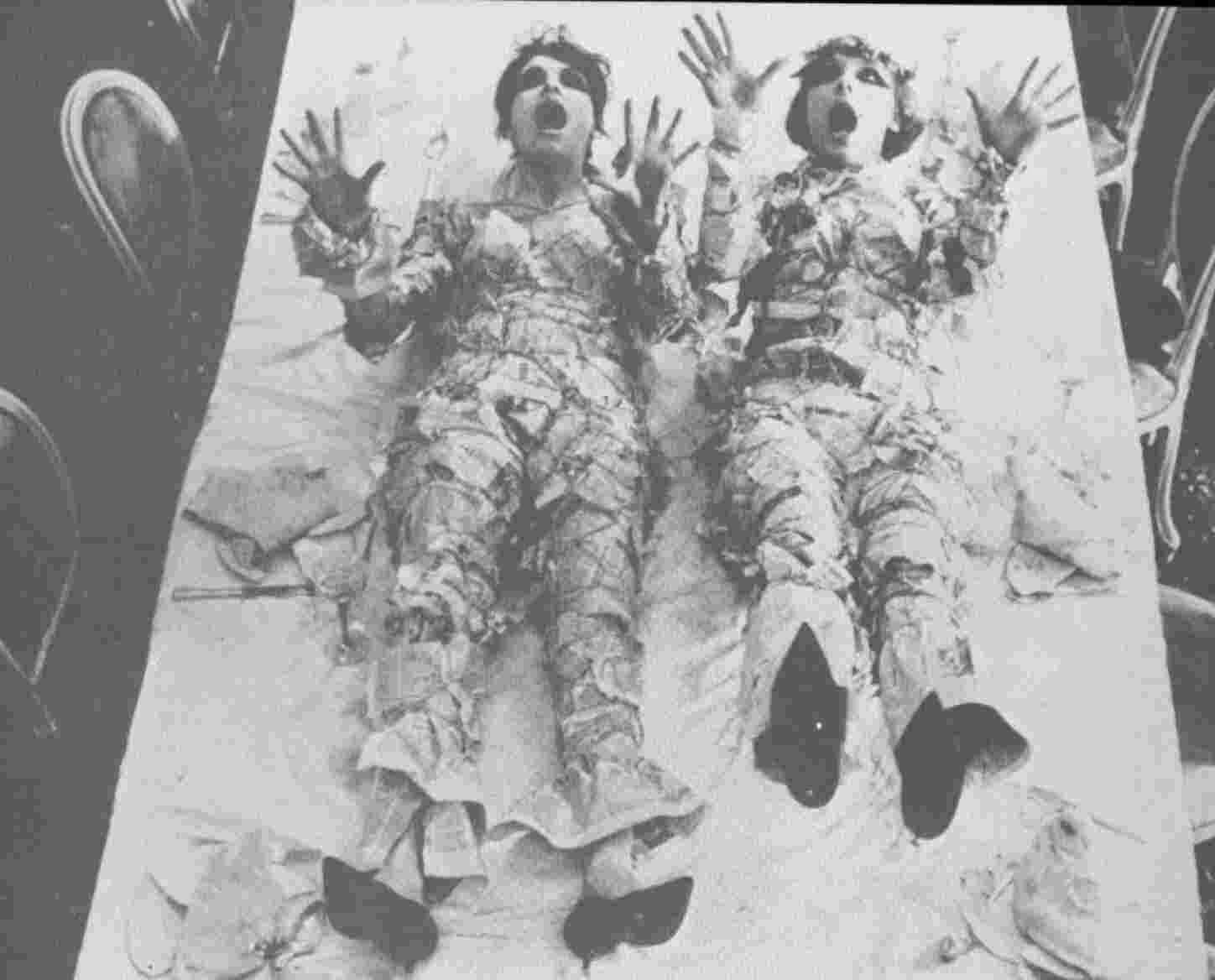
DAISIES
(SEDMIKRASKY)
(Vera Chytilova, Czechoslavakia, 1966)
(F)
The Czech film renaissance
-- subsequently killed
by the
Russians -- here celebrates one of its largest
surprises:
a mad, surreal comedy about two irrespon-
sible
girls living a life of anarchic freedom and indi-
vidualism in total disregard of
society; an amazing
subversion
of years of ossified "socialist realism"
______________________________________________
Visually
and structurally perhaps the most sensational film
of
the Czech film renaissance, this is a mad, stylish, dadaist
comedy, long banned by the censors.
It is an orgy of spectacular
visual
delights, sensuous decor, and magnificent color experiments,
making a philosophical statement in the
guise of a grotesque farce.
Two
dizzy young girls, bored and without any values, knowing neither
past nor future, stumble through a
bizarre series of change pick-ups,
wild
adventures, eating orgies, and pie-throwing acts. Below the
exag-
geration, sarcasm, and
exuberance lurks a serious comment on a frau-
dulent
style of life, played as a game in which protagonists become
victims. No work from the East has ever
been further removed from the
drab
sterility of so-called "socialist realism". The
stunning photography
is by
Jaroslav Kucera and the script by Ester Krumbachova, whose contri-
butions to almost all major Czech films
of the period denote her key role.
_____________________________________________-_____________________________________________
DEMONSTRATIONS
(STRAHOV)
(Vera Chytilova, Czechoslavakia, 1966)
(F)
A unique document from
Prague, this film is an illegally made
documentary
of the student demonstrations in Strahov for
better
living conditions and of their bloody suppression by
the
police. The interviews with student leaders, faculty,
and hospital personnel were all at
considerable risk to the
participants.
This first illegal work from the East (where all
film
production is controlled by the state) could, of course,
have been made only by a film
professional with ready
access
to 35mm cameras and collaborating laboratories.
_____________________________________________-_____________________________________________
DON
QUIXOTE
(DON
KIHOTE)
(Vlado
Kristl, Yugoslavia, 1961)
No
still can convey the hallucinatory speed, insane
rhythm,
and cacaphony of noise that accompany
the
strangely abstractified images of this historic
animation. Don Quixote has become
mechanized
and is threatened
by a technological society bent
on
destroying his individuality. He defeats it by ex-
poing
it to the power of art and poetry; but the art
work
is itself ironically distorted, raising a question
mark.
This film was never released in Yugoslavia;
its
director, unable to work freely, emigrated.
_____________________________________________-_____________________________________________
EARLY
WORKS
(RANI
RADOVI)
(Zelimir
Zilnik, Yugoslavia, 1969) (F)
Filmed
during the political ferment of 1968, this work explores the
radical impulses behind the unrest of the
young in a country where
the
revolutionaries of an earlier generation now form the Establish-
ment. Three young men and a beautiful
girl leave home and move
across
the country in search of a just society and true socialism,
only to discover tragically that an
unfinished revolution, while
changing
the face of power, has failed to change the nature of man.
Filled with black humor, frank sex,
and bizarre tableaux, the film
becomes
a revolutionary allegory of the European New Left. Though
it brought its director into conflict
with his country's authorities, the
Yugoslav
courts subsequently ruled in his favor in a landmark decision.
_____________________________________________-_____________________________________________
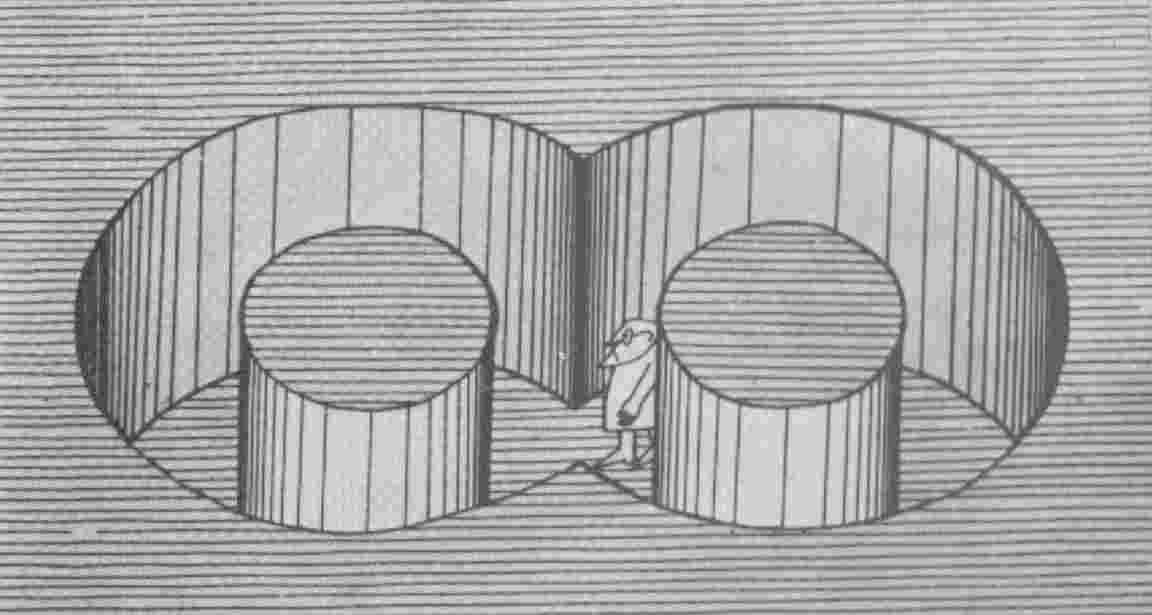
EVERYTHING
IS A NUMBER
(Stefan
Schabenbeck, Poland, 1967)
In
this play on numbers and philosophy, the "8"
becomes a gorge in an endless desert, an
object lesson
in creating
3-dimensionality on a 2-dimensional surface.
As
such, its plastic power is astonishing; and the presence of
a prisoner (whose potential escape can
only lead to further
frustration)
points beyond the film to existing realities.
_____________________________________________-_____________________________________________
FIREMAN'S
BALL
(HORI
MA PANENKO)
(Milos
Forman, Czechoslavakia, 1967) (F)
Such
is Forman's subversive artistry that some critics continue
to see in his subtle films only
light-hearted folk comedies, paying
loving
attention to naturalistic detail and the somewhat ridiculous
foibles of man. It was, however, quite
proper for the Czech right-
wing
and the neo- Stalinists to attack him, for beneath his robust
and sharp humor lurks a sardonic
criticism of the petty bour-
geois.
Nowhere was this clearer than in this film, a hilarious
and increasingly somber tale. In
Chaplinesque manner, it
kept
the audience laughing while displaying narrow-minded
provincialism, greed, petty theft, and an
unsavory over-all
impression
(quite consciously inculcated) that the so-called
new
society, not having produced a new man, was not new at all.
Yet Forman clearly lvoes his people and
was undoubtedly much
disturbed
when Czechoslovakia's 45.000 firemen officially threa-
tened to resign on the film's release.
They withdrew this threat only
when
Forman added an explanatory title to the opening sequence:
"This film is not against
firemen, but against the regime." SC
_____________________________________________-_____________________________________________
THE
FLY
(MUHA)
(Aleksander Marks and Vladimir Jutrisa,
Yugoslavia, 1967)
An ominous,
increasingly disturbing animation about a man and
a
continuously growing fly which first threatens him and then
systematically destroys his very
universe. Finally victorious, the
monster
accepts his dutifulk and resigned submission and then
assumes human facial characteristics in a
fraudulent ceasefire.
_____________________________________________-_____________________________________________
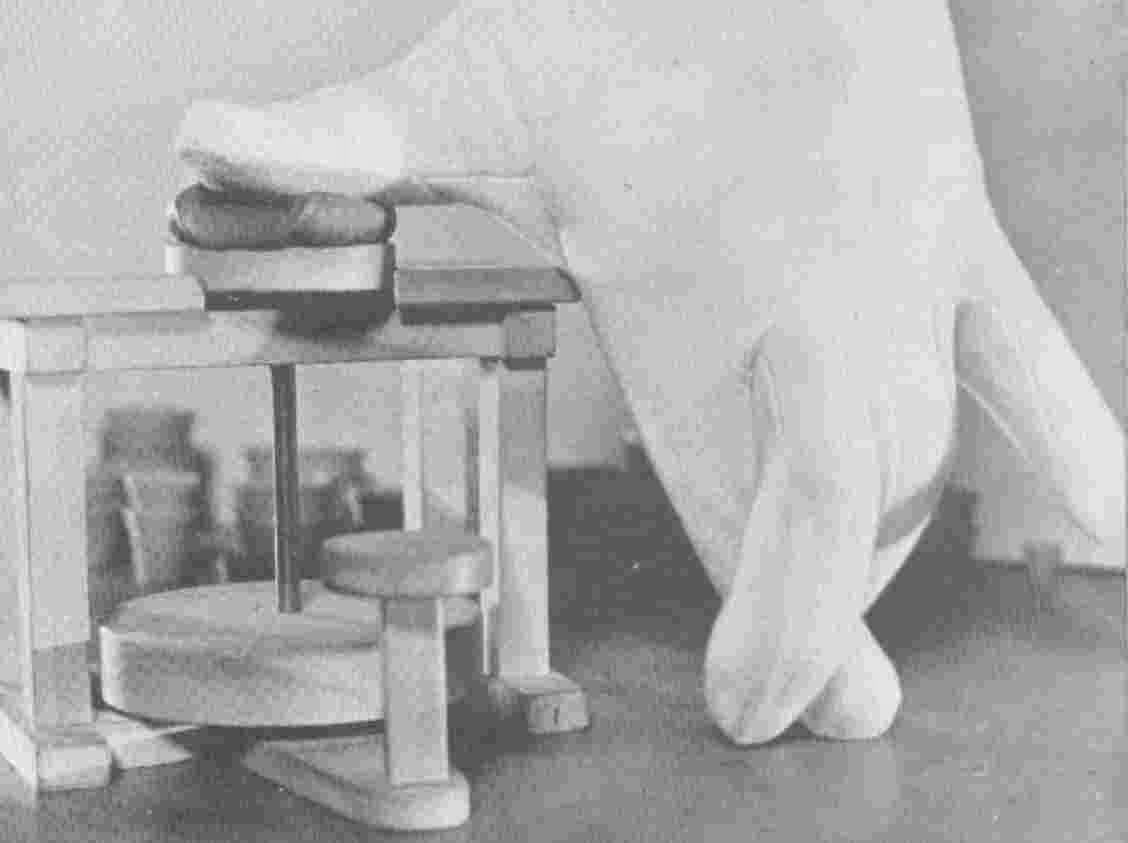
THE
HAND
(Jiri
Trnka, Czechoslavakia, 1966)
A
disembodied, "live" hand invades the life of an artist-
puppet, instructing him what to create,
bringing him TV
and newspapers
(filled with "Hand" activities), finally
compelling him to make sculptures of
itself. After
his death
in frustration, the Hand gives him an
ornate
State funeral as a great artist of the people.
A
courageous early work of the Czech renaissance.
_____________________________________________-_____________________________________________
IDENTIFICATION
MARKS: NONE
(Jerzy
Skolimowski, Poland, 1964) (F)
The
surprise this work caused upon its release in the West
heralded the emergence of a major new
talent, whose open
narrative
structures, rejection of simplistic realism, fluid
compositions, and mystifying, always
dynamic visual style
related
him strongly to the international modernist school.
The
film also confirmed again, unequivocally, the existence of
a new Eastern generation, free of the
lifeless "official" ideology,
but
which however had to pay the price of disorientation and
personal alienation. In this icy
portrayal of Polish youth, we
observe
how its anti-hero (or hero?) spends his last (or first?)
day of freedom before joining the army,
from which he has es-
caped
for years by pretending to study ichthyology. There is a
girl and casual sex, a beloved dog who is
destroyed, mysterious
incidents
that remain unexplained, aimless actions that serve
as
personal reaffirmations and a beating, until we realize that
life itself is here viewed as an
impenetrable, possibly meaning-
less
mystery. The film also deals with anger against enemies
only dimly perceived and against control
from above. Acciden-
tally
enmeshed in an inane street interview, the youth is asked
if he would like to be an astronaut.
"Yes," says this presumed
drifter,
in what could stand as the epitaph of the film or of a
generation: "I'd like to be
launched on something definite --
and
yet be able to control my own speed and direction ... "
_____________________________________________-_____________________________________________
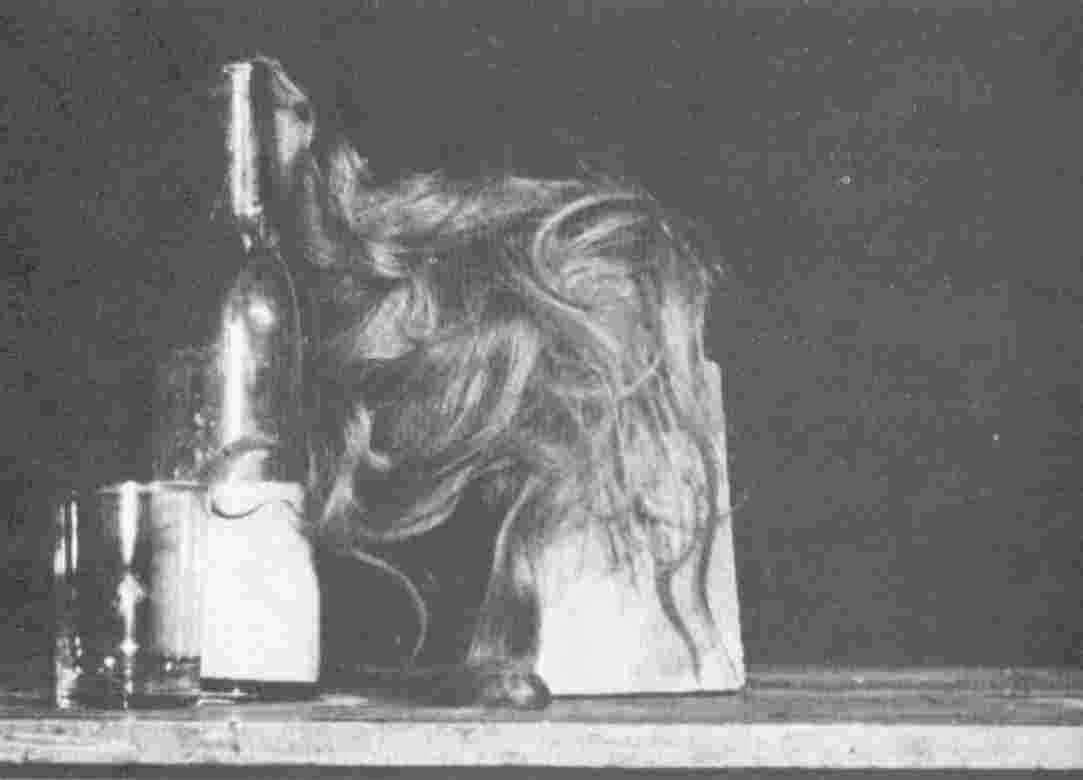
HOME
(DOM)
(Walerian Borowczyk and Jan Lenica,
Poland, 1958)
A mysterious wig
that slithers across a table,
sips
milk, and breaks a glass; a genuine
surrealist
image and, in 1958, the first inti-
mation
of a Polish film avant-garde entirely
free
of the sterilities of "socialist realism".
______________________________________________
"Images
and sequences express the thoughts and
feelings
of contemporary man, torn and confused
by
internal contradictions." Thus ran the oblique
(and cautious) program note supplied in
1958 by the
courageous young
Polish filmmakers who, with Dom,
brought
to the West the first intimation of a Polish
avant-garde
film movement opposed to prevailing
sterilities
of Polish socialist realism. Clearly in the
surrealist and dadaist tradition, the
"plot", utilizing
cut-outs,
live-action, and drawings, defied description.
An
animated wig slithers across a table, sips milk,
breaks
a glass, and devours an orange; shots of a man
entering
a room backwards and placing his hat on a
rack
and repeated compulsively, and an atmosphere
of
metaphysical anxiety is sustained throughout.
_____________________________________________-_____________________________________________
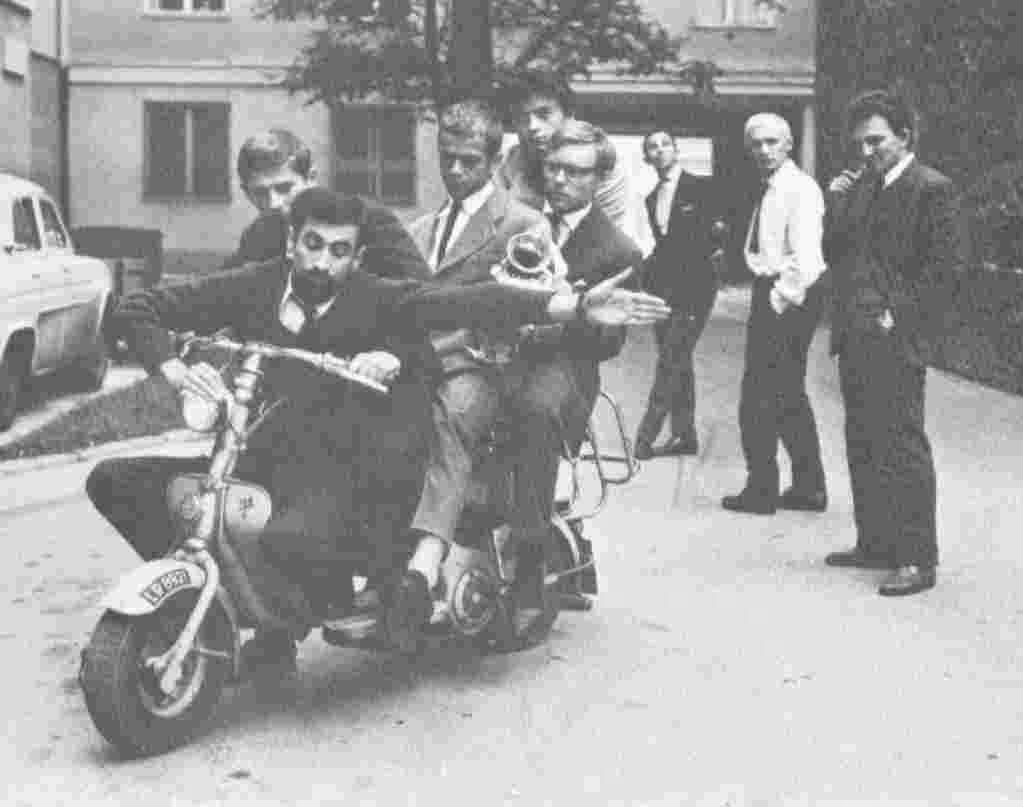
THE
INNOCENT SORCERERS
(Andrzej
Wajda, Poland, 1960)
Jazz,
sex, ennui, Western influences, a lack of values,
and
youthful anti-heroes in an important work of the
Polish
spring. Beneath the pseud0-intellectual postu-
ring
of its protagonist hide a very contemporary pathos
and
scepticism. The motorbike symbolizes ideology-
free
"modernity"; there is no communism in this
shot.The second man on the bike is Roman
Polanski.
_____________________________________________-_____________________________________________
JAN
PALACH
(Anonymous,
Czechoslavakia, 1969)
The
Czech student Jan Palach burned himself
in
Prague's Wensceslav Square in January 1969
in
protest against the Soviet occupation of his
country.
His funeral was attended by more
than
half a million mourners. Profoundly
moving,
it is a deep experience in silent
grief
and a testimony of mass opposition.
The
new Czech puppet government is vainly
attempting
to recall this film from abroad.
_____________________________________________-_____________________________________________
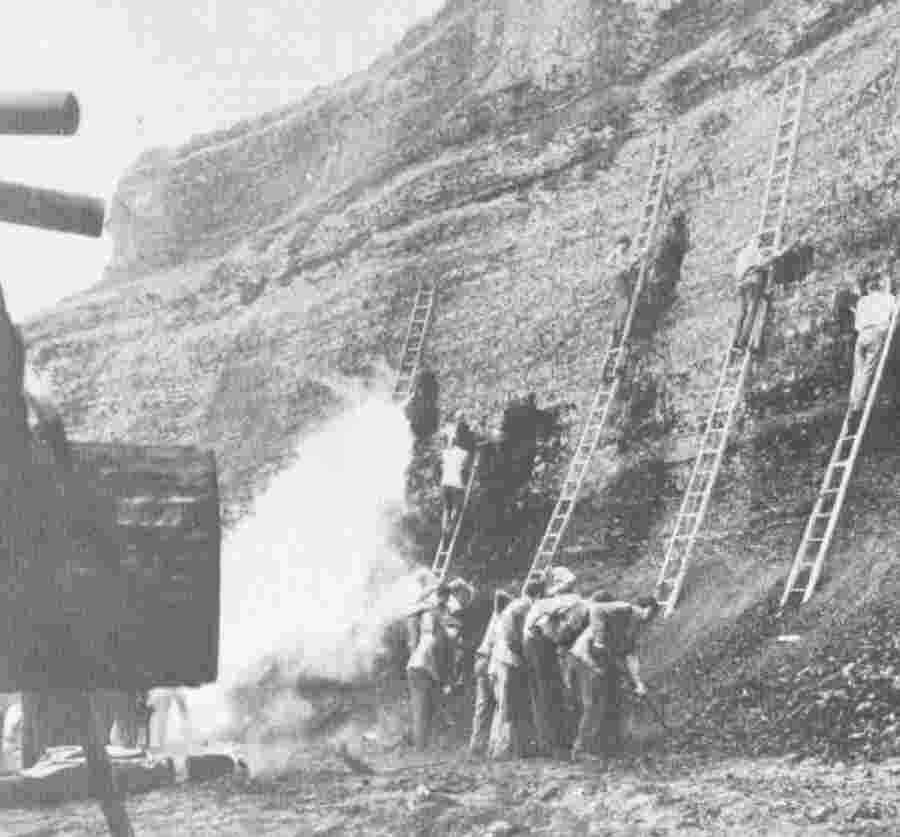
THE
JOKE
(ZERT)
(Jaromil Jires, Czechoslavakia, 1968) (F)
The portrayal of Stalinist concentration
camps
(whose very existence
had previously been denied)
in
a film from the East is a profoundly subversive
act,
for the unthinkable is now admitted to be true.
______________________________________________
Possibly
the most shattering indictment of total-
itarianism
to come out of a Communist country,
this
film was completed just after the Soviet tanks
rolled
into the streets of Prague in 1968. It is an
astonishingly honest and disturbing film
not only
for its devastating
attack on Stalinism, but also for
its
uncompromising view of the hypocrisy of poli-
tical
turncoats and the opportunistic new middle
classes.
Chronicling one man's journey from youth-
ful
frivolity through political imprisonment to final
awareness, it is a chilling examination
of a corrupt
society blighted
by fear as much as by the cynicism
that
pays lip-service to "humanitarian" ideals.
_____________________________________________-_____________________________________________
LABYRINTH
(LABIRYNTH)
(Jan Lenica, Poland, 1962)
One of the most important anti-
totalitarian statements to come
from the East. A tale of a future
fascist society, in which monstrous
bird-reptiles and efficient bureau-
crats brainwash the population by
drilling ideology directly into their
skulls. A stranger arrives, is caught,
tortured, and killed while
attempting
to escape; there is
no happy ending.
_____________________________________________-_____________________________________________
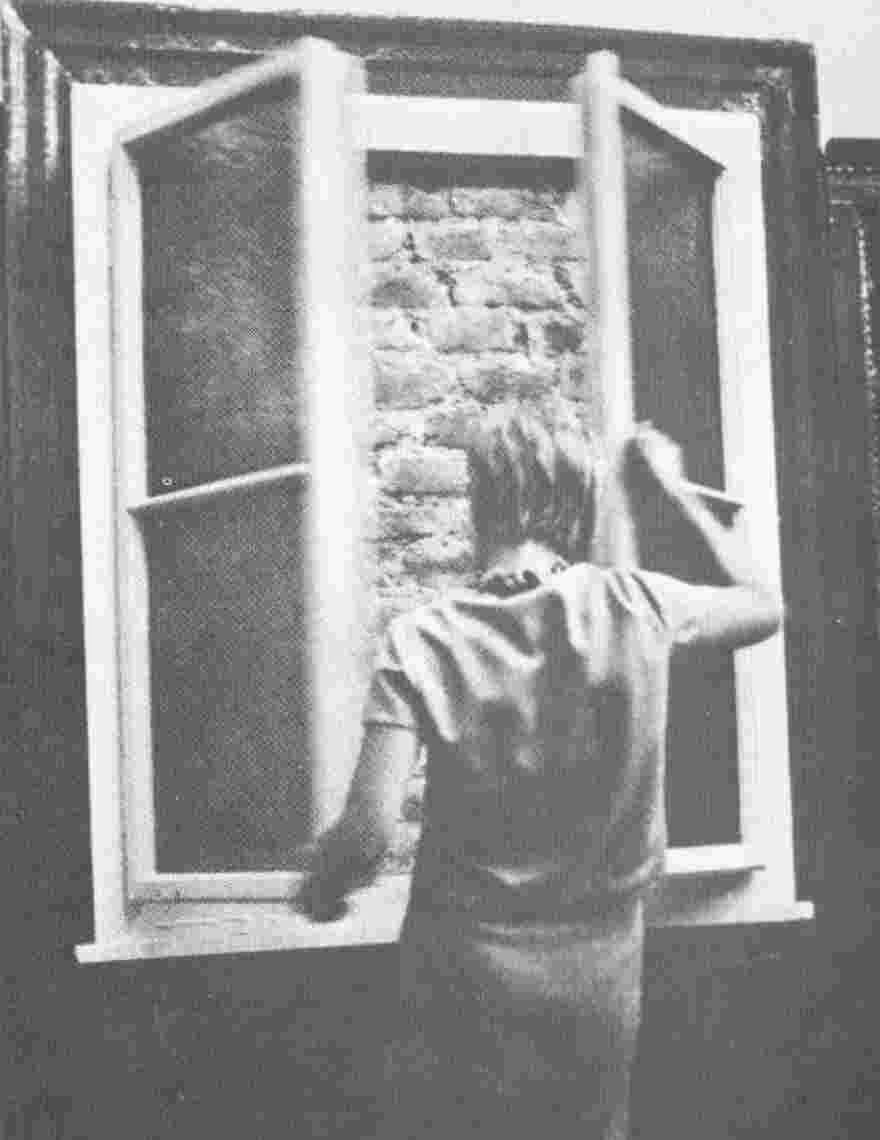
JOSEPH
KILIAN
(Pavel
Juracek and Jan Schmidt, Czechoslavakia, 1963)
Under
socialism, you are not supposed to face a brick
wall when you open a window. Forerunner
of the Czech
thaw, this
astonishing, Kafkaesque allegory of Stalinism
was
the first intimation of things to come. Mordant, so-
phisticated, and secret, it was
insidiously anti-Establish-
ment
in its comments on bureaucracy, alienation, and
the possible incomprehensibility of
all human endeavor.