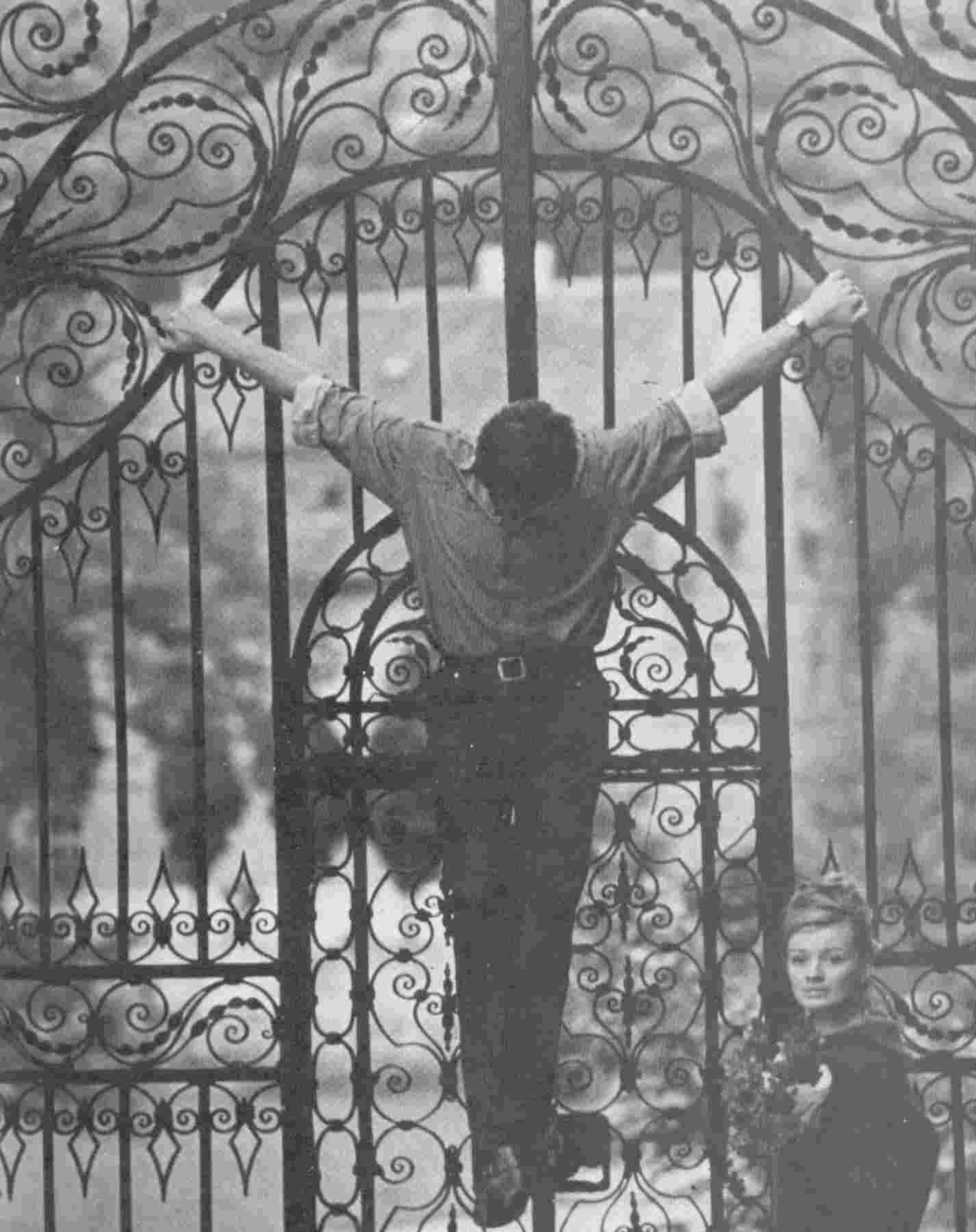
FILM
- AS A -
SUBVERSIVE ART
ORDINARY
COURAGE
(Evald
Schorm, Czechoslavakia, 1964) (F)
Possibly
the most influential and accomplished work of the
Czech
renaissance, this story of a disillusioned young Com-
munist increasingly at odds with his
environment touched
on themes
of alienation, opportunism, the exhaustion of
ideology,
and charted the progress of a secular crucifixion.
______________________________________________
Unquestionably
one of the most important antecedents
of
the Czech renaissance, long under censorship ban,
this
searing, passionate film is the first fully realized
work
from the East to deal with alienation and the
conflict
between revolutionaries and careerists in a
"socialist"
society. It was this film that established
Schorm
as the intellectual leader of a young Czech
film
renaissance. Stylistically influenced by Antonioni,
it tells the tragic story of a young
Communist activist,
who,
attempting to remain faithful to revolutionary
ideals
as he sees them, finds himself in increasing
conflict
with his environment. His speeches turn into
cliches, his political activities become
meaningless, his
love affairs
grow stale; all around are opportunists or
hard-drinking
worker-bourgeois. Audacious ideological
implications, unmistakeable visual
symbols, and incisive
comments
on post-revolutionary reality stamp this bitter
and
ironic film as a political work of great importance.
The
denouement is tragic and extremely moving.
"In
films we are always being offered the apparently
truthful, outer face of reality. This
naturalism, dependent
on an
often deceptive common sense, is misleading; it takes
us
to a realism of probably imitation, to elusiveness, ceaseless
explanations, clarifications and
substantiations, so that
nobody
will have any doubts. The strength of the raw fact,
of the fantastic vision disappears."
- Evald Schorm
SUBVERSION
IN EASTERN EUROPE:
AESOPIAN
METAPHORS
-
PART TWO -
FILMS
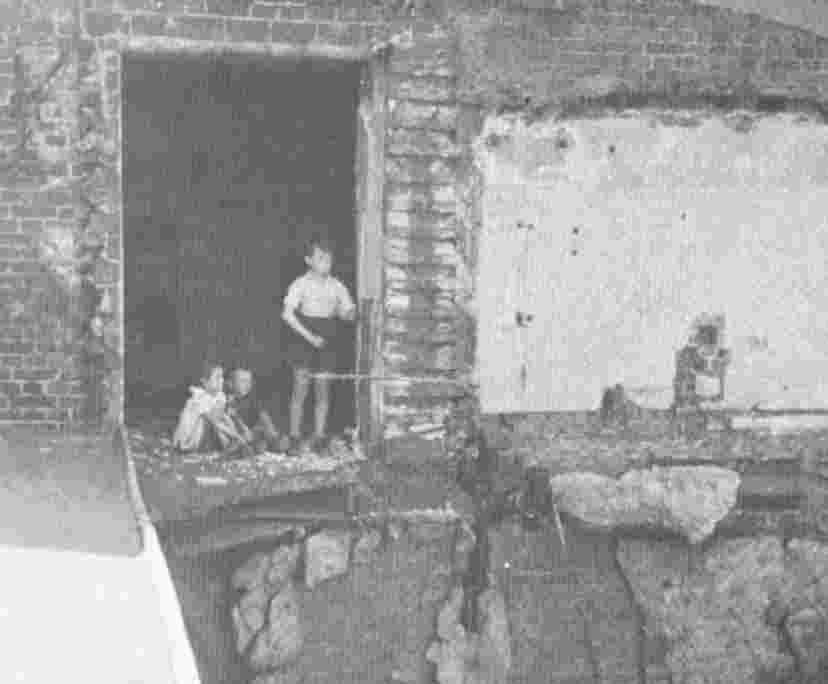
WARSAW
1956
(Jerzy
Bossak and Waclaw Kazimierczak, Poland, 1956)
Where
certain images are forbidden, even the most ordinary
shot
may assume extraordinary importance. This is a scene
from the unprecendented Polish "Black
Series" of the late 50s --
documentaries
critical of living conditions and social problems
in
Poland. Neither in Russia, its satellites, nor China has
the
cinema verite quality of
these films ever been even approached.
_____________________________________________-_____________________________________________
THE
MACHINE
(MASZYNA)
(Daniel Szchechura, Poland, 1963)
In this animation, a huge intricate
machine is
painstakingly
constructed out of many parts in
an
atmosphere of relevant adoration. Finally,
the
bureaucrat cuts the ribbon, the scaffolding
is
removed and the giant, filling the entire
screen
are, begins to -- sharpen pencils.
_____________________________________________-_____________________________________________
MERRY
WORKING CLASS
(VESELA
KLASA)
(Bojana
Marija, Yugoslavia, 196?)
A
clandestine political argument, pre-
sented
in the form of satirical songs
and
vulgar couplets about nutrition
and
sex, foreign policy, and the belief
in
the future. Instead of complaints,
there
are lyrics, music, and wine.
The
director is Makavejev's wife.
_____________________________________________-_____________________________________________
MY
DEAREST WISH
(Jan
Spata, Czechoslavakia, 1965)
Another
unique document from the Czech liberalization
period:
obviously unrehearsed interviews with over 100
young
Czechs from all walks of life who are asked about
their
greatest wish. The fascinated answers (and the un-
guarded, innocent faces accompanying
them) reveal the
absence of
official "socialist" ideology and the persistence
of bourgeois or human values:
consumer goods, marriage,
love,
personal freedom, the right to travel abroad, the end
of
parental or political tutelage. The film's honesty and
frankness remain unprecedented in the
Eastern bloc.
_____________________________________________-_____________________________________________
NOT
ALL THAT FLIES IS A BIRD
(NIJE
PTICA SVE STO LETI)
(Borislav
Sajtinac, Yugoslavia, 1970)
A
huge bird systematically terrorizes the world
until
it destroys mankind and itself. The result
is
a new evil force which continues as before,
spreading
terror and violence. In a particularly
horrifying
scene, it bores into a woman's vagina
and
devours her from within. This uncom-
promising,
unrelenting work has already
become
a contemporary animation classic.
_____________________________________________-_____________________________________________
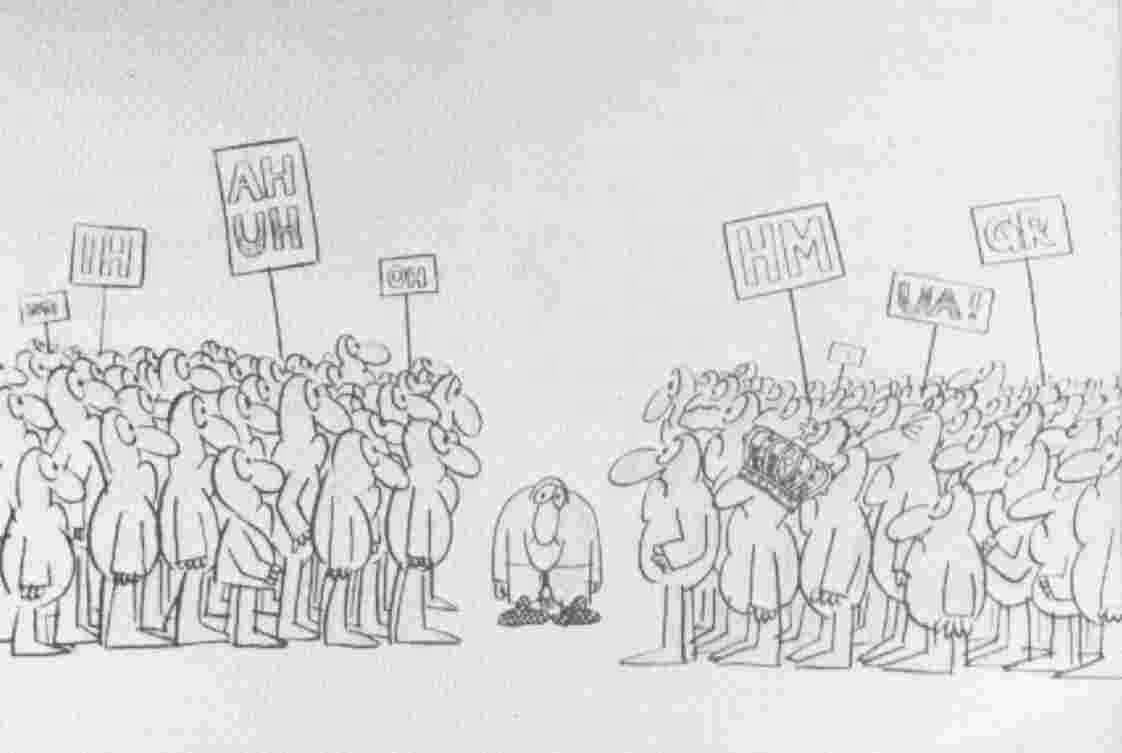
PASSING
DAYS
(Nedeljko
Dragic, Yugoslavia, 1969)
In
the course of ten minutes, one man's
home
and private life is invaded and
ultimately
destroyed by waves of secret
police,
rampaging soldiers, political
opportunists,
persuasive con-men,
and
opposing, equally nonsensical
mass
movements fighting for his
loyalty.
A black, symptomatic farce.
_____________________________________________-_____________________________________________
PER
ASPERA AD ASTRA
(Nedeljko
Dragic, Yugoslavia, 1969)
A
one-minute subversion: a man struggles vainly
to
get out of a toilet bowl, in which he is stuck
as
far as his neck. Finally, he is offered an ano-
nymous, helping hand. Grabbing it,
this serves
to activate
the mechanism and he is flushed down.
_____________________________________________-_____________________________________________
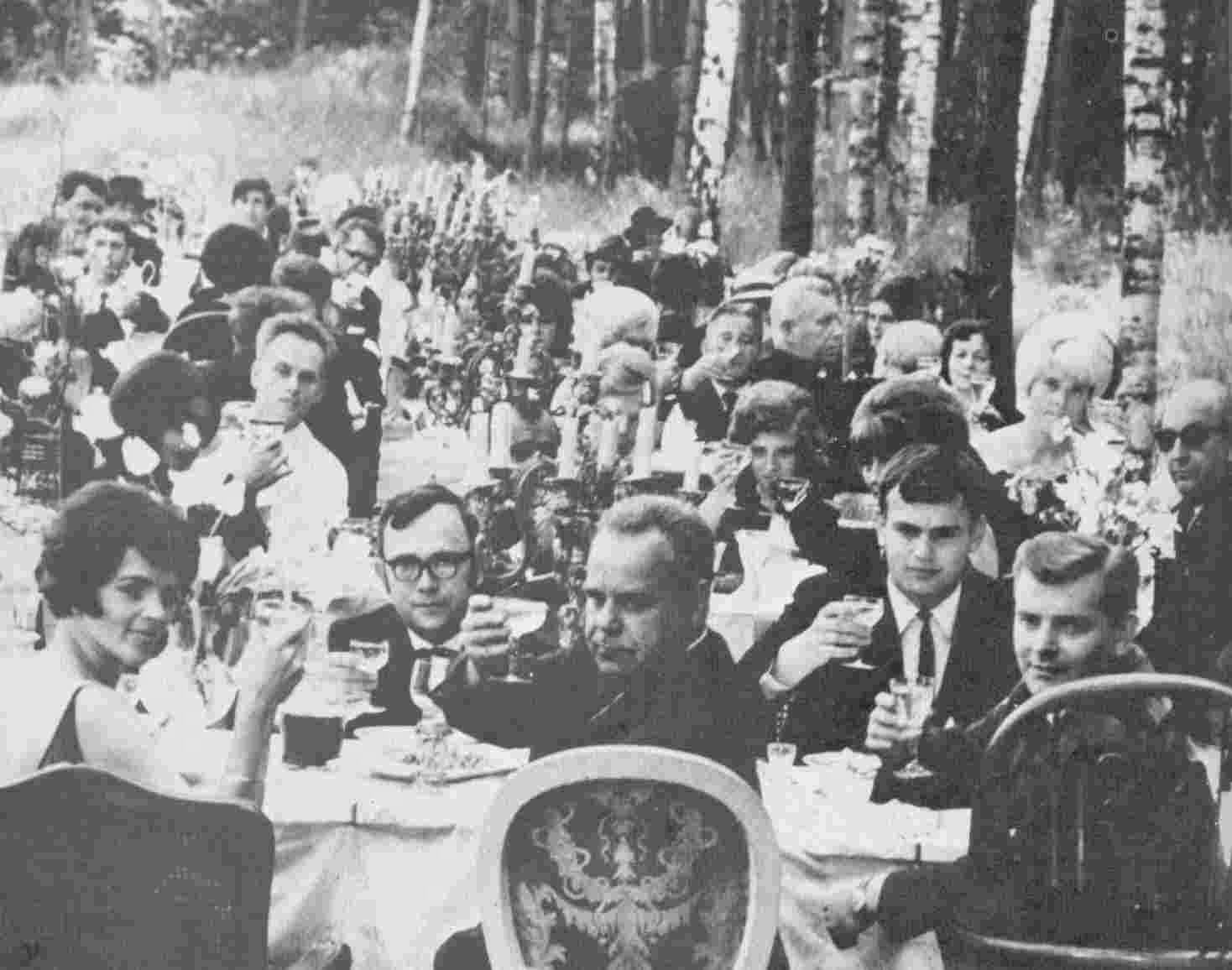
REPORT
ON THE PARTY AND THE GUESTS
(O
SLAVNOSTI A HOSTECH)
(Jan
Nemec, Czechoslavakia, 1966) (F)
Testifying
to the relativity of images, the latent meaning
of
this shot has undergone several changes; originally
part
of an audacious political parable produced under
Stalinism (and banned), it became a still
in a film hailed
under Dubcek,
and now is once again forbidden. Its final
poignancy resides in its case: Nemec
gathered leading
artists and
intellectuals to "perform" in this scene;
they
look at us, by now no longer in triumph but in
stubborn
determination and perhaps in accusation.
______________________________________________
The
most famous and certainly one of the most important
masterpieces of the Czech film
renaissance, this daring work
was
promptly banned on completion in 1966, defiantly
awarded
the Czech Critics' Prize in 1967 while under ban,
and
released only under Dubcek. As we watch its deceptive
progress, Renoir turns into Bunuel and we
discover a
scathing,
pessimistic statement about human conduct
under
totalitarianism, chilling, timeless, uncomfortably
familiar. The assorted
opportunists, camp-followers,
hypocrites,
willing victims, and vapid fpetty-bourgeois
are
courageously (now tragically) played by leading
Czech
artists, writers, filmmakers, and intellectuals,
all
involved in the short-lived Czech reform movement.
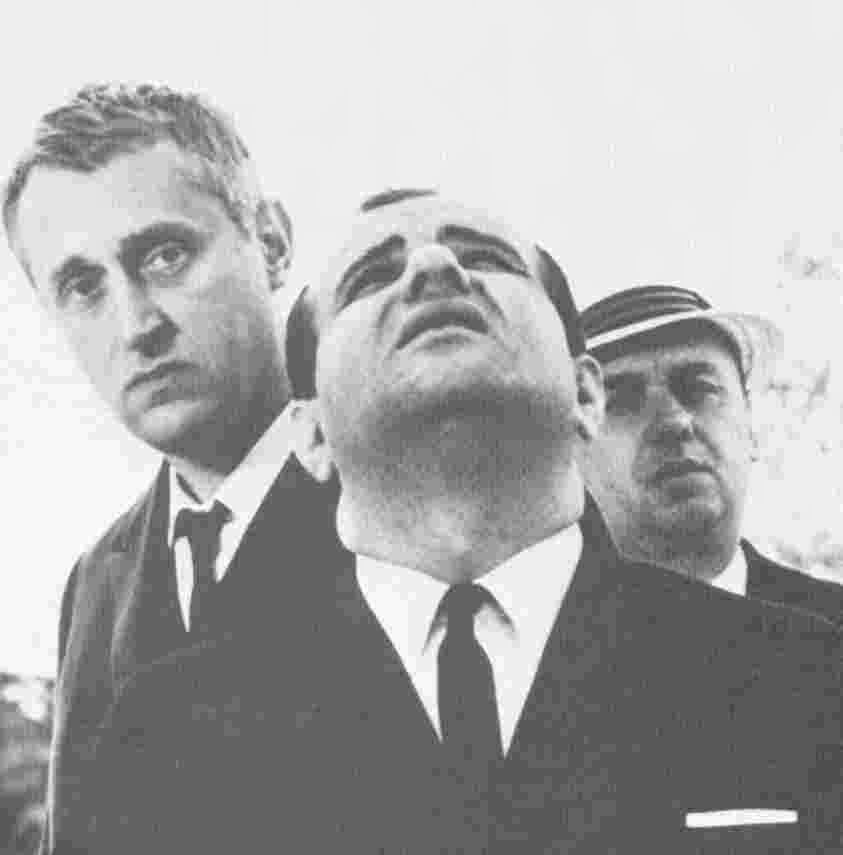
REPORT
ON THE PARTY AND THE GUESTS
(O
SLAVNOSTI A HOSTECH)
(Jan
Nemec, Czechoslavakia, 1966) (F)
An
historic shot from the same film shows, on the
left,
the only man unwilling to collaborate with
totalitarianism who is therefore hunted
down at
the film's end.
This "non-conformist" is played by
film
director Evald Schorm (Ordinary Courage),
one
of the intellectual leaders of the Czech film
renaissance. One needs to look at
his face carefully.
______________________________________________
Guests
have gathered for an outdoor party convoked
by
a mysterious host. Their merrymaking is rudely
disturbed by the arrival of Rudolph, a
stranger, and
his cohorts who
herd the group into a circle in a
clearing
for an interrogation regarding an unspecified
transgression and subject them to
insults, humiliations,
and
brute force. All comply, except one who finds that
his revolt earns him the enmity of his
friends who now
unthinkingly
collaborate, blindly following Rudolph's
orders
so as not to be excluded from the party. The
one-man revolt is overcome by force, just
as the genial
host appears,
smilingly apologizes for Rudolph's rude
behavior,
and explains that it has all been a joke.
Whereupon
the guests sit down at beautifully appointed
tables
to continue the festivities, forgetting what has
happened. But one of the group
refuses to play the game,
he
cannot forget. He leaves in protest, his act of free will
evoking great uneasiness among rulers,
active collabo-
rators, and
passive conformists alike. It is Rudolph
who
proposes that ("to re-establish the necessary equi-
librium") it is essential to hunt
the defector down with
dogs
and guns and return him to the fold at all costs.
The
hunt begins; the candles are snuffed out; and
dog
barks echo on the black screen as the film ends.
_____________________________________________-_____________________________________________
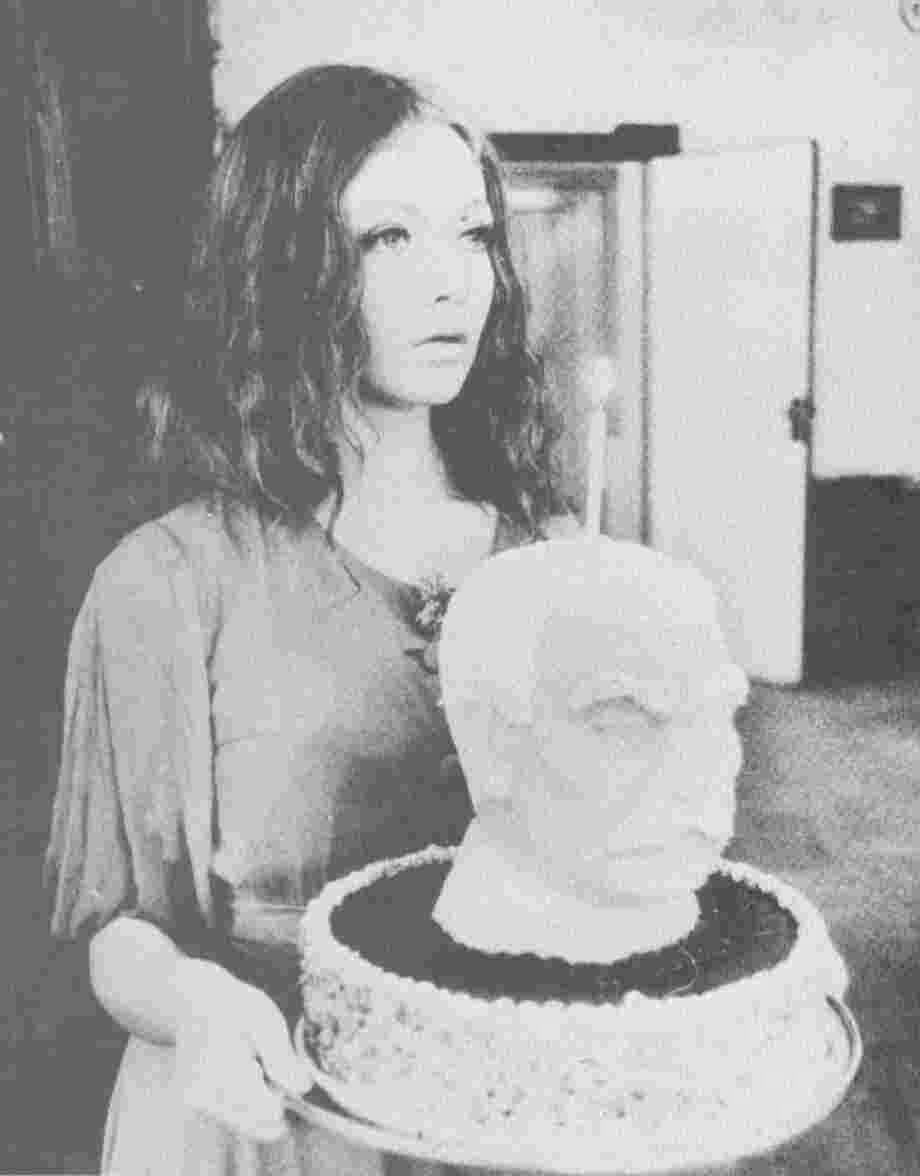
THE
ROLE OF MY FAMILY IN THE WORLD REVOLUTION
(Bata Cengic, Yugoslavia, 1971)
In its given historical context, one of
the most
subversive stills in
this book. Only in Yugoslavia --
and
only for a limited period -- could it have been
possible
to show (and then to eat) a Stalin-cake
with
a candle growing out of his head. From a
bizarre
political film farce that expressed the
ideological
disillusionment of a new generation.
_____________________________________________-_____________________________________________
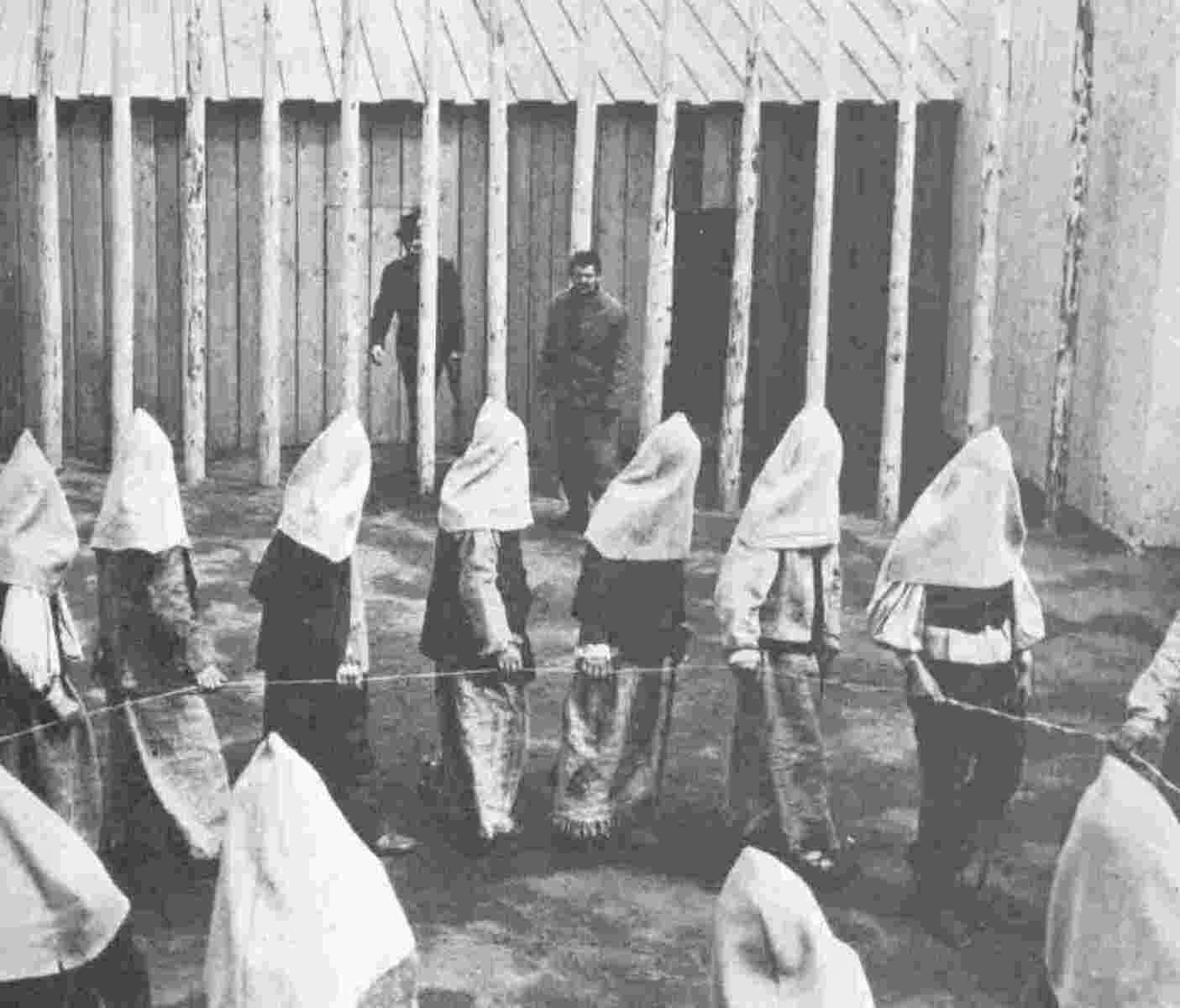
THE
ROUND-UP
(aka
THE HOPELESS ONES)
(SZEGENYLEGENYEK)
(Miklos Jancso, Hungary, 1965) (F)
Imprisonment, shown visually in
mysterious,
hooded figures,
moving across the frame in an
ellipse
against the vertical, forbidding bars in
the
back. A poisonous, anti-romantic lyricism --
reflective of 20th century realities --
permeates
the unique visual
style of this great artist.
______________________________________________
The
Hungarian Miklos Jancso is unquestionably
one
of the most original film talents to emerge
in
the last decade as a focal point of the East
European
film renaissance, where it intersects
with
growing tendencies in Western contemporary
cinema.
Jancso's thematic preoccupations and
visual
style are personal and unique. A poisonous
lyricism
-- anti-romantic and reflective of the truths
of
the 20th century -- permeates his inexplicable
charades
of inexorable cruelty, submission, betrayal,
and
repression, in which victims and oppressors
constantly
change places and no one remains
uncorrupted
by the exercise of violence.
Beginning
with Round-Up, his best, Jancso's
stylized
tragic-epic works have all concerned
themselves
with the problems of power and
oppression,
in images of searing plastic beauty
and
in sequences of implacable violence and
terror
set against ominous, brilliant landscapes
of
the most cruel black and white. These are
visual
metaphors of truths better expressed
obliquely,
the anguished statements of a pessi-
mistic
humanist, haunted by the problem of
totalitarianism,
war, and the corruption of power.
Jancso's
concern with these topics is obsessive
and
passionate; he returns to them again and again.
Round-Up
deals with the diabolic entrapment and
destruction
by psychological and physical torture
of
a group of 1848 Hungarian nationalists in revolt
against
the Austro-Hungarian empire The Red and
The
White with the endless mutual cruelties and
massacres
of the 1919 Russian civil war: Silence
and Cry with the hunting down of
adherents of
Bela Kun's
abortive Soviet regime in Hungary; and
Winter
Wind, with the story of a member of the
ustachis,
a Croatian anarchist group of the early
1930s,
who is destroyed by the corruption of his
group
and then is ironically turned into a hero.
Jancso's
style -- always terns, stylized, and
stripped
to essentials -- has grown more
vigorous
with every work, until he now uses
less
than 15 camera set-ups in each film,
filled
with constant choreographic move-
ment.
The deceptive simplicity of his
work
quickly reveals an almost archi-
tectonic
precision of structure and ideo-
logical
metaphor;his "improvisations"
are
those of an obsessive genius.
_____________________________________________-_____________________________________________
STUDENT
STRIKES
(LIPANJSKA
GIBANJA)
(Zelimir
Zilnik, Yugoslavia, 1968)
This
documentary of the widespread
1968
Belgrade student demonstrations
has
never been shown in Yugoslavia.
Hospitalized
students describe militia
beatings,
thousands sing revolutionary
songs,
and at a Karl Marx University (!)
mass
meeting a radical speech is delivered,
consisting
entirely (and without attribution)
of
a Robespierre anti-ruling class address --
as
applicable now as it was then.
_____________________________________________-_____________________________________________
THE
TECHNIQUE AND THE RITE
(LA
TECNICA E IL RITO)
(Miklos
Jancso, Italy, 1971) (F)
Even
working abroad (in this film for Italian
television),
the Hungarian Jancso pursued
his
basic themes. Performed in choreographic,
stylized
episodes of alternating violence and
repose,
the film investigates, in parable form,
the
gradual rise to power of a young idealistic
Attila
and the inevitable degeneration of
his
one-man rule amidst miasmas of mistrust
and
imaginary plots: this is Jancso's uncom-
promising
and courageous comment on
power
and totalitarianism.At the end,
Attila,
now in absolute control, proclaims
himself
"hammer of the world" and weeps.
_____________________________________________-_____________________________________________
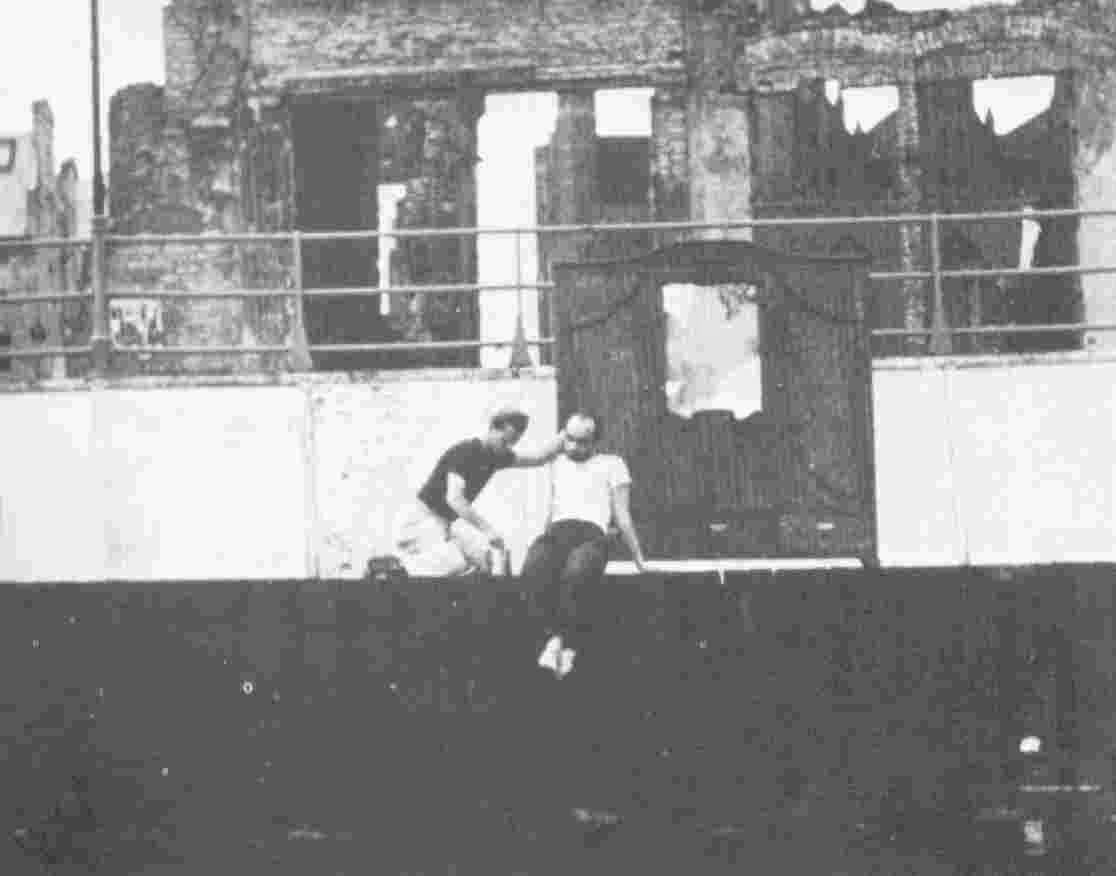
TWO
MEN AND A WARDROBE
(DWAJ
LUDZIE Z STAFA)
(Roman
Polanski, Poland, 1957)
Two
men emerge from the ocean with a mysterious
wardrobe
-- and are promptly rejected by "socialist"
society no longer in need of (possibly
dangerous)
miracles,
preferring corruption, indifference, and
crime.
A pioneering work of the Polish "thaw"
of
the late fifties by the then unknown Polanski.
______________________________________________
The
limited Polish reform movement that brought
Gomulka
to power in the late 50s also expressed
itself
in the cinema. At the 1958 International
Avant-Garde Film Festival in Brussels,
there sur-
faced, to
everyone's astonishment, seven 35mm
films
-- produced and financed by the Polish
State
Film Industry! -- ranging from surrealism
to
dadaism, from abstract to expressionist art.
Two
of the films -- Two Men and a Wardrobe
and
Dom, received the top awards at the festival.
Viewed in 1958 as heady harbingers of the possible
end
of sterile, "socialist realism", they now stand
as melancholy reminders of a short-lived
period
of reform;
significantly, their directors, Borowczyk,
Lenica,
and Polanski now live and work in the West.
Two
Men and a Wardrobe succeeds, by means of poetic
imagery and conception, in blending what
superficially
seems light
fantasy with social comment of the utmost
severity.
Two men emerge from the sea, proto-mythological
fashion,
however not with a fabled treasure but a dilapidated
wardrobe. Outsiders, they attempt to make
contact with
organized
society, to interest it in the symbolic value of
the
wardrobe, but to no avail; even their efforts at helping
others fail, nor can they sit with it in
coffee houses, ride
on buses,
or get involved with girls. As they pursue their
task, pickpockets, murderers, and drunks
crowd the
edges of the frame.
It seems that society has no room
for
ambiguous (and possibly dangerous) treasures,
preferring
to follow its own set and corrupt ways. In
a
provocative ending, the appropriate conclusion is
drawn by the two protagonists, the only
people shown
to be human: they
return to the sea and disappear.
In
retrospect, this and Polanski's other short
films
(An Angel Has Fallen, The Fat and The Lean,
Mammals), all made before he
turned to features,
emerge as
his most personal, most subversive works. SC
_____________________________________________-_____________________________________________
UNTITLED
(BEZ
NASLOVA)
(Borivoj
Dovnikovic, Yugoslavia, 1965)
This
three-minute film consists of nothing
but
credits -- director, producer, department
heads,
lawyers, consultants, accountants,
administrators,
executive administrators,
assistant
administrators -- and the end
title.
A perfect satire on bureaucracy.
_____________________________________________-_____________________________________________
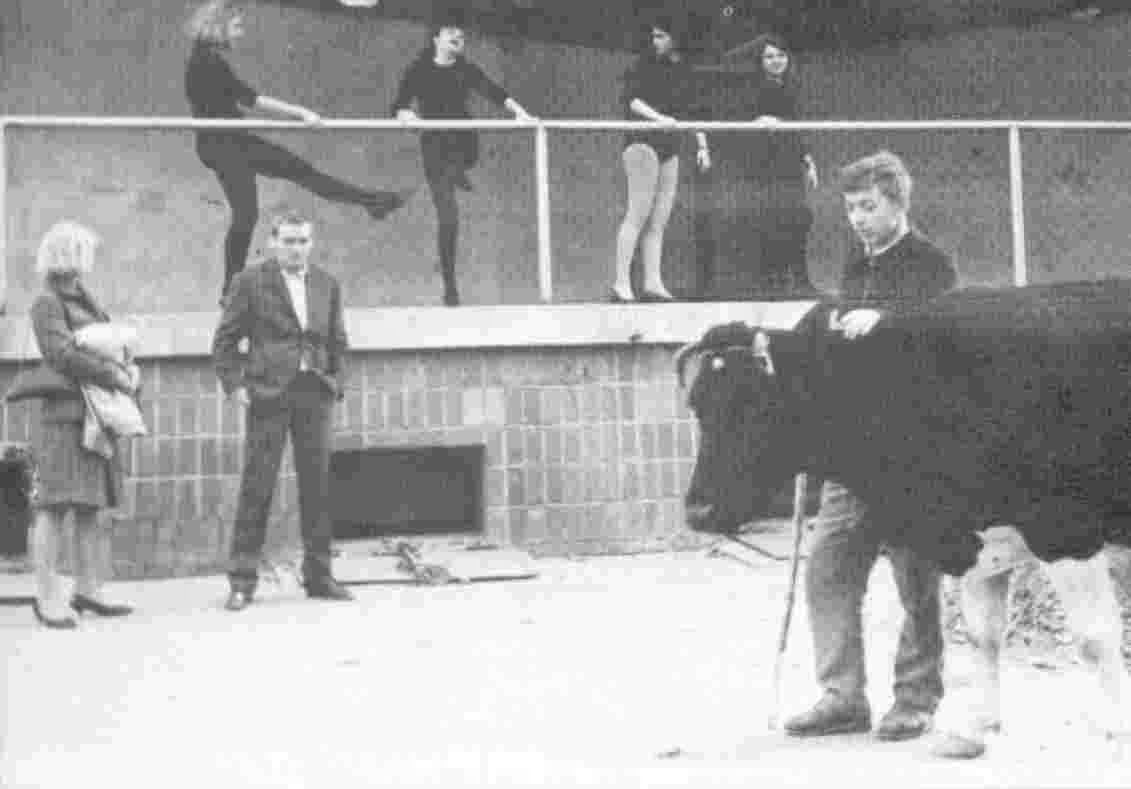
WALKOVER
(Jerzy Skolimowski, Poland, 1965)
Burdened neither by war experiences not
the post-war heroic period, the
protagonist --
played by the
filmmaker (hands in pockets) --
represents
the new young of the East, unable to
"connect"
with official ideology. The dynamic,
mysterious
composition of the still reflects
Skolimowski's
superb pictorial sense.
_____________________________________________-_____________________________________________
THE
WALL
(ZID)
(Ante Zaninovic, Yugoslavia, 1966)
Two men are stopped by a wall at which
one immediately gives up; the other,
despite endless failures, attack it in
various ways. Finally, in despair, but
without admitting defeat, he smashes
a hole in it with his head, paying for
victory with his life. The other
has only
to bend down a little
to pass through
the hole.
However, there is another
wall
beyond, and another man whom
he
can watch clearing his path for him.
_____________________________________________-_____________________________________________
WANDERING
(BLOUDENI)
(Jan Curik and Antonin Masa,
Czechoslavakia, 1965) (F)
This
densely idelogical, ambitious film is told in a sparse,
seemingly realistic, yet ultimately
mystifying style.
A
cryptic study in futility, the clash of generations,
and
the irrelevance of the past, it is a deceptive
political
allegory; contemporary and suffused with
images
and situations of magic realism. The story deals
with a crisis in the lives of three
people, which reflects
the
moral abyss between Stalinist and post-Stalinist
generations. The father lives in
the past, recalling his
few
achievements and many compromises. The son,
unable
to endure his hypocrisy and irrelevance, leaves
home.
To discover life for himself, he embarks on an
ambiguous
journey which ends in disillusionment and
deeper
awareness. With his already unstable life destroyed
by
his son's departure, the father follows him, but instead
of finding his son, discovers himself.
The thematic and
formal
subtlety of this work is astonishing, its meaningful
ambiguity reminiscent of early
Antonioni. Masa also
wrote
the even better screenplay for Ordinary Courage.
"Values
are relative, certainties uncertain.
We
move on thin ice. But is not the only
way
out, the only guarantee for human --
and
artistic -- values, precisely to be found
in
the search itself?" - Antonin Masa
_____________________________________________-_____________________________________________

WR
- MYSTERIES OF THE ORGANISM
(WR -
MISTERIJE ORGANIZMA)
(Dusan
Makavejev, Yugoslavia, 1971) (F)
Hilarious,
highly erotic political comedy from Yugoslavia
advances
sex as an ideological imperative for liberation;
an
outrageous, exuberant work of a new breed of interna-
tional revolutionists, spawned by
anarchist-communist
ideas,
anti-Stalinism, Consciousness III in America,
and
Wilhelm Reich's sexual and political radicalism.
The
total portrayal of sex is a "first" for the East. SC
______________________________________________
Banned
in Yugoslavia, hailed at international film festivals,
this is unquestionably one of the most
important subversive
masterpieces
of the 1970s: a hilarious, highly erotic political
comedy which quite seriously proposes sex
as the ideological
imperative
for revolution and advances a plea for Erotic
Socialism.
Only the revolutionary Cubist Makavejev -- clearly
one
of the most significant new directors now working in world
cinema -- could have pulled together this
hallucinatory
melange
of Wilhelm Reich, excerpts from a monstrous Soviet
film,
The Vow (1946), starring Stalin; a transvestite of the
Warhol factory; A.S. Neill of Summerhill;
several beautiful
young
Yugoslavs fucking merrily throughout;the editor of
America's sex magazine Screw having his
most important
private part
lovingly plaster-cast in erection; not to speak
of
a Soviet figure-skating champion, Honored Artist of the
People (named Vladimir Ilyich!), who cuts
off his girlfriend's
head with
one of his skates after a particularly bountiful
ejaculation, to save his Communist
virginity from Revisionist
Yugoslav
Contamination. It is an outrageous, exuberant,
marvelous work of a new breed of
international revolu-
tionary,
strangely spawned by cross-fertilization between
the
original radical ideologies of the East, Consciousness III
in America, and the sexual-politics
radicalism of the early
Wilhelm
Reich, who equated sexual with political liberation
and
denied the possibility of one without the other. In one of
the climactic scenes of the film, the
ravishing young Yugoslav
girl
star pronounces herself in favor of masturbation and all
sexual positions, and admonishes the
assembled Yugoslav
workers and
peasants "to fuck merrily and without fear! Let
the sweet current run up your spin, sway
your hips! Even the
smallest
child will tell you that the sweetest place is between
the legs! Children and youth must
be given the right of genital
happiness!
Intertwined lovers radiate a bluish light, the same
light
as was seen by the astronauts in outer space! FREE LOVE
WAS WHERE THE OCTOBER REVOLUTION
FAILED!" SC
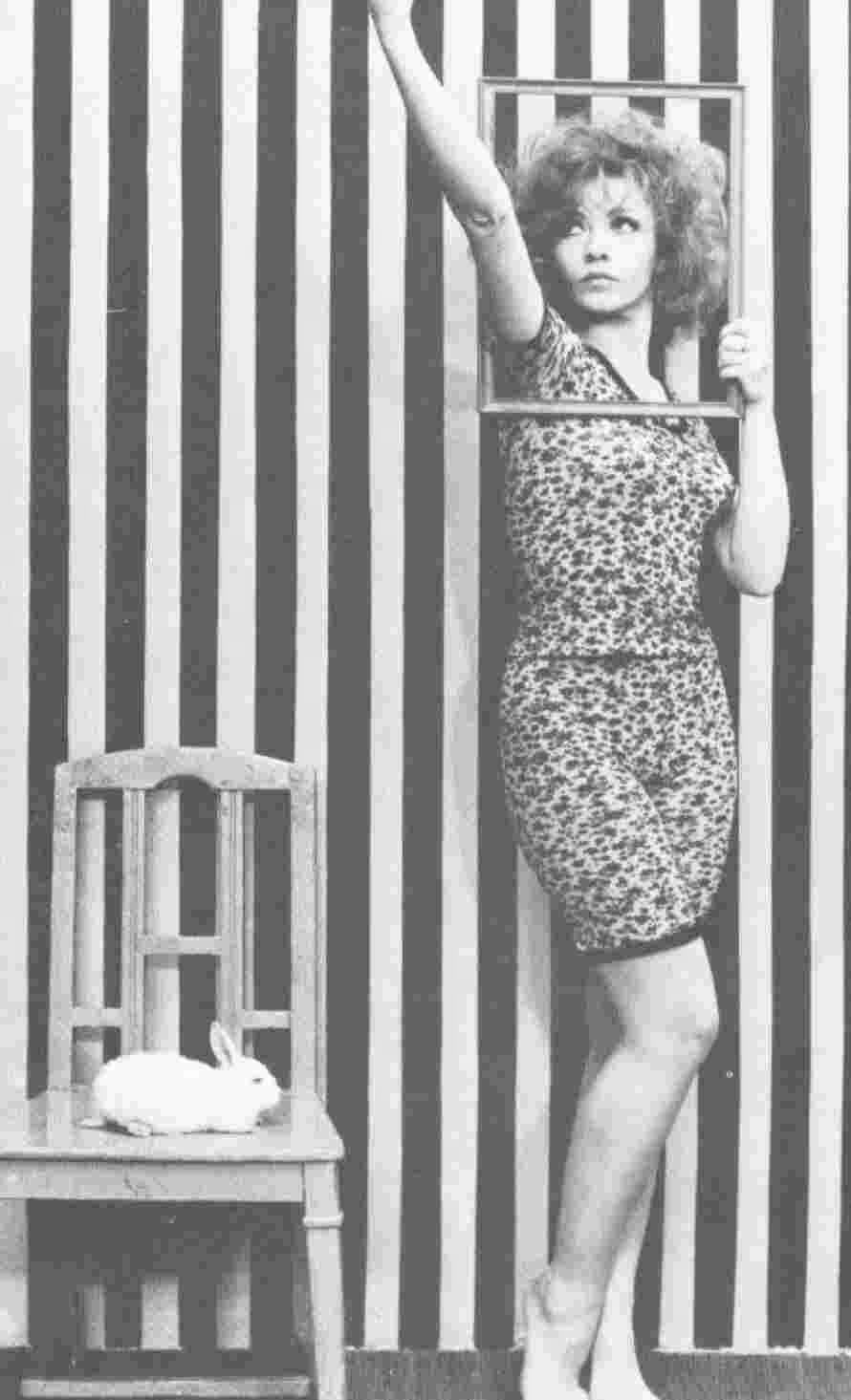
WR
- MYSTERIES OF THE ORGANISM
(WR -
MISTERIJE ORGANIZMA)
(Dusan
Makavejev, Yugoslavia, 1971) (F)
The
ravishing sex reformer and radical
in
a provocative pose; composing sex
and
politics, it also reveals Makavejev's
"aestheticism";
the unexpected rabbit, the
strong,
two-colored vertical stripes and
particularly
the inexplicable empty frame. SC
______________________________________________
Beneath
the film's lighthearted frivolity and marvelous
humor
lurks a more serious ideological intent: opposition
to all opressive social systems, East or
West, the removal
of prurience
from sex and a final squaring of accounts by
the
new radicals with the now reactionary Russian regime.
In
a poignant sequence that will live in film history, the
girl, Milena Dravic (in love with the
Russian skater, and
rejected
by him because of his fear of sex and ascetic
devotion
to a lifeless myth of revolution), starts beating
him
blindly, repeatedly, while delivering some of the sad-
dest, most disillusioned indictments yet
offered against
Stalinism
in any film, and denounces his revolution as
"a
puny lie disguised as a great historic truth". Thus
Makavejev is quite accurate in describing
his film as "a
black
comedy, a political circus, a fantasy on the fascism
and communism of human bodies, the
political life of
human
genitals, a proclamation of the pornographic
essence
of any system of authority and power over others."
The
film is also a tribute to the ultimate power of ideas over
institutions; the production of such a
work in Yugoslavia
contributes
to the regime's evolution. Its eventual showing
there
-- impossible at the time of writing -- would testify
to
the regime's self-confidence and its realization
of
the film's unquestionably revolutionary stand. SC
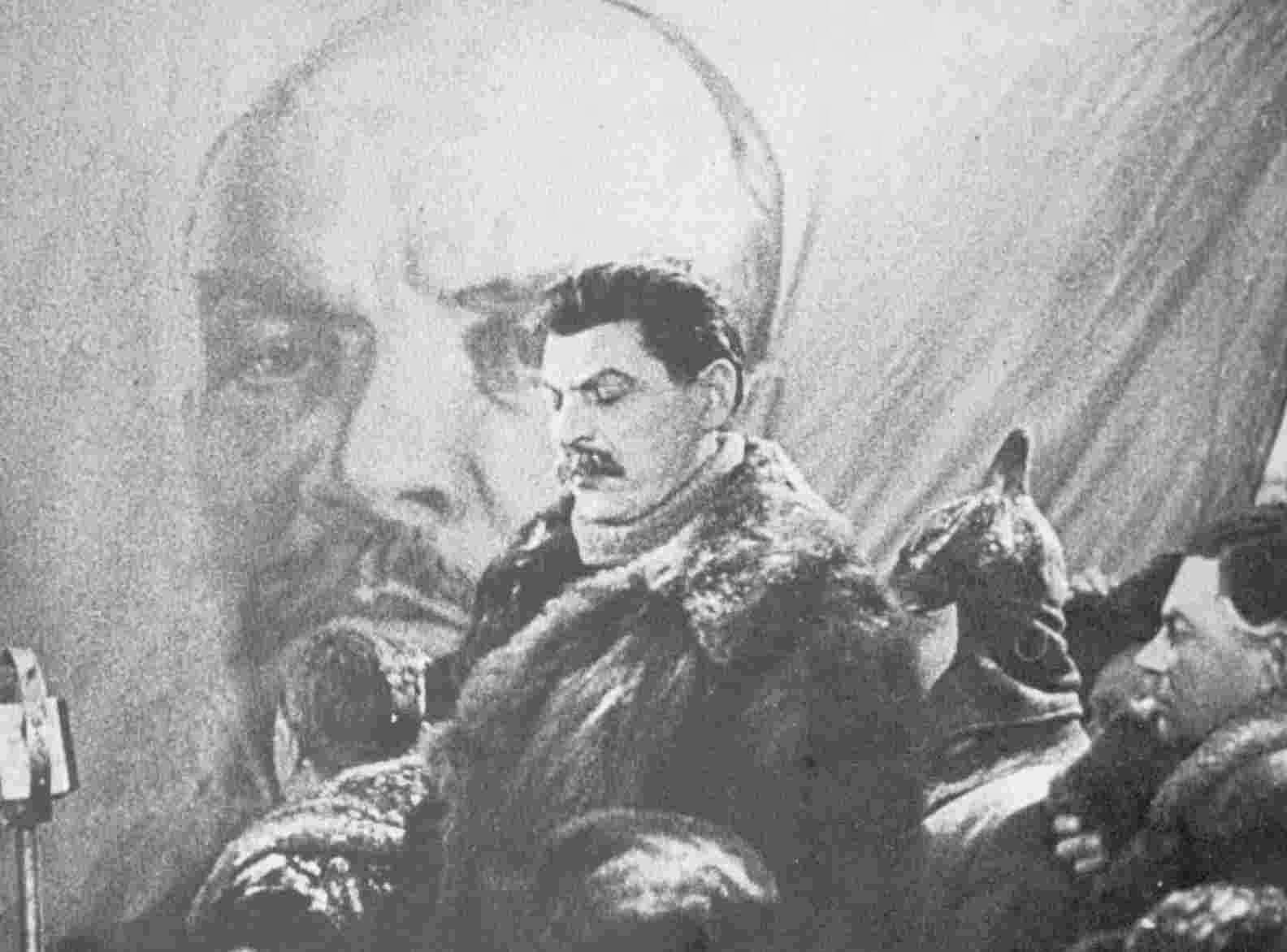
WR
- MYSTERIES OF THE ORGANISM
(WR -
MISTERIJE ORGANIZMA)
(Dusan
Makavejev, Yugoslavia, 1971) (F)
An
ominous, heinous still, taken from
the
famous Stalinist film, The Vow, and
incorporated
by Makavejev in his strongly
anti-Stalinist
work. In the film Stalin is
seen
first, speaking; then, a banner with
Lenin's
face is slowly unfurled in the
background
until it fills the screen,
hovering
over Stalin in (to Makavejev)
not
necessarily a benign manner. SC