
FILM
- AS A -
SUBVERSIVE ART
LOVES
OF A BLONDE
(Milos
Forman, Czechoslavakia, 1965)
The
East's first nude love scene; in the puritanical setting of
these societies, a step as radical as
the stylistic innovations
of
the other young Czech directors. Forman reintroduced
the humanistic element into its cinema,
exposing the viewer
(in
Chaplinesque alternations of laughter and held-in tears)
to the sweetness and awkwardness of
adolescence. SC
THE
END OF SEXUAL TABOOS:
EROTIC AND PORNOGRAPHIC
CINEMA
- PART ONE
As the
sexual conservatives used to warn us,
once
you allow one nude, a second (usually of the
other
sex) will soon join it leading to inevitable
trouble.
Beginning with the (albeit tentative)
victory
of nudity in film, this last decade has indeed
for
the first time raised the possibility of sexually
explicit cinema as a mass phenomenon.
Previously
confined to
brothels, stag parties, or illegal exhibitions,
a
series of court decisions in Scandinavia and America
has
now made public presentation of sex possible.
The old
view of sex was clear and consistent.
The
censors, in their abiding solicitude for our
moral
welfare, had always to contend with this
stubborn
subject, but the guidelines were reasonably
self-evident. In a typical and
famous decision, an
American
judge declared Max Ophuls' La Ronde (based
on
Schnitzler's play) obscene for the following reasons:
That
a film which panders to base human
emotions
is a breeding ground for sensuality,
depravity,
licentiousness and sexual immorality
can
hardly be doubted. That these vices
represent
a "clearand present danger" to
the
body social seems manifestly clear.
(1)
As
always, it was the sex drive (here coded
as
"sensuality") that was the basic vice;
it
represents a "base" emotion and leads
to
depravity, licentiousness, and immorality.
Similarly,
the pro-censorship minority of the 1967 Ameri-
can
Presidential Commission on Obscenity quite clearly
stated
its fundamental objectives in its final dissent
from
the official (unexpectedly anti-censorship) report:
The
obvious morals to be protected are chastity,
modesty,
temperance, and self-sacrificing love.
The
obvious evils to be inhibited are lust,
excess,
adultery, incest, homosexuality,
bestiality,
masturbation, and fornication.
(2)
The
basic evil is, again, the sex drive, from which all
other
vices derive. It is a significant restatement of
Calvinist ideology to find chastity so
directly counterposed
to lust,
modesty to excess, temperance to fornication;
not
to speak of bestiality, masturbation, and incest.
"Prurience"
-- the perennial itch of mankind -- is the
bete
noir of all censors. The arousal of lust is considered
evil; no justification for its prohibition
is therefore even
considered
necessary in law; it appears as God-given.
An
American court's decision banning Louis Malle's Les
Amants outlined its reasons (and,
unconsciously, its own
reactions)
quite specifically: "In a tantalizing and increasing
tempo, the sex appetite is whetted and
lascivious thoughts
and lustful
desires are intensely stimulated." (3) It is a
testimony to the staying power of an
atavistic taboo that
what is
perhaps the most sought-after emotion -- the
arousal
of sexual desire --is universally proscribed as evil.
Yet
prurience -- even if it were admitted to be evil -- seems
particularly
ill-suited to
legislation. For it appears that what actually constitutes
prurience differs for churchgoers,
sado-masochists, college graduates,
different
age groups, sexes, and classes. In fact, it would seem to
differ even wth the same person, depending
on his state of mind.
According
to the ruling of one American judge:
If
he reads an obscene book while his sensuality is low,
he
will yawn over it. If he reads the Mechanics Lien
Act while his sensuality is high,
things will stand between
him
and the page that have no business there.
(4)
And G.V.
Ramsey's study of sources of erotic stimuli of
291
young boys found these to include (among others!)
fast
elevator rides, sitting in class, sudden changes
in
environment, punishments, being scared, finding
money
-- and listening to the national anthem. (5)
Thus the
very term "obscenity" seems impossible to define
properly; it is, says Randall (an
authority on the subject),
the
most familiar and the most elusive of concepts in law
and
social life. The American Commission on Obscenity
found to its amazement that "none of
the federal statutes
prohibiting
'obscene' materials defines that term." American
civil rights attorney Charles Rembar, in
his book The End of
Obscenity,
declares, not so facetiously, that obscenity "is us-
ually defined as lewd, lewd is defined as
lascivious, lascivious
as
libidinous, libidinous as licentious, and licentious as lustful,"
Though
today a surreptitious substitute for "sexual taboo",
"obscenity" has the same origin
in myth and religion.
To those
who think of it as "eternal", it may come as
a
shock to realize that in Anglo-American law it has been
a
criminal offense for only a hundred and fifty years; and
that at first, anti-obscenity laws
pertained to anti-religious
materials
(with sexual references). It was institutionalized
religion and its puritan ethos that
created these laws.
Prior to
1958, when nudist magazines were still considered obscene
in America, a District Court offered its
own spectacular definition of
obscenity.
Declaring (after necessarily close inspection) a photograph
in the Sunshine and Health magazine
to be "obscene", it stated:
The
woman has large elephantine breasts that hang
from
her shoulders to her waist. They are exceedingly
large. The thighs are very
obese. She is standing in
the
snow in galoshes. But the part which is offensive,
obscene, filthy and indecent is the
pubic areas shown.
The
hair extends outwardly virtually to the hip bone.
(6)
While
the reasoning seems obscure -- is it the pubic hair that
makes the photograph obscene or its
extension to the hip bone? --
one
cannot escape the impression that elephantine breasts, obese
thighs, and last but not least, galoshes
were additional factors in this
judicial
condemnation. While in America, at one time or another,
even partial nudity and mildly suggestive,
posed couples were
declared
obscene, the recent past has witnessed the shrinkage
of
the term to "hardcore" sex (actual intercourse, the camera
emphasizing, rather than avoiding genitals
and their interaction.)
One of
the basic textbooks on American film censorship flatly
states that "the legal regulation of
stag films, of course,
falls
beyond the purview of this investigation. Such materials
are clearly pornographic and are never
shown publicly.
Naturally,
these films cannot be censored." (7) This was in 1966.
Four years later, stag films were publicly
shown all over America.
The
commercial motivation behind such exhibitions -- now proceeding
apace at advanced prices in well over 200
cinemas throughout the
United
States -- is obvious. Nevertheless, it is impossible to
disregard the ideological framework
provided by the sex reformers.
The
libertarian view of obscenity, pornography, and
sex
is forcefully expressed by the French sexologist
Rene
Guyon in his The Ethics of Sexual Acts:
1.
The convention which regards the sexual
organs
as shameful is without any foundation in
reason,
logic, or physiology; it would be just as
possible
and just as foolish to regard the nose,
the
tongue, or the act of swallowing, as shameful.
2.
The acts accompanying sexual pleasure find
their
only and sufficient justification in the pleasure
that
they bring; sexual pleasure is therefore just
as
admissible as any other natural satisfaction,
and
its exercise, in whatsoever form may be
preferred,
has nothing to do with the morality,
the
virtue or the dignity of either sex.
3.
Everybody has the right to exercise quite freely
his
own preferences in matters of sex, so long as
he
is guilty of no violence or deceit to others;
the
right to sexual satisfaction is just as
inalienable
as the right to eat.
(8)
The most
sensational support for the libertarian view un-
expectedly has come from the 1970 report
of the American
Presidential
Commission on Obscenity and Pornography.
Its
voluminous, heavily documented and researched,
650-page
report (9) was the result of a Congressionally-
initiated
$2,000,000 study covering definitions, effects,
extent,
existing, and proposed legislation for the control
of
pornography and obscenity. Entirely an "Establishment"
committee, its members included leading
judges, educators,
scientists,
attorneys, psychiatrists, and clergymen.
Their
conclusions, embodied in what is a historic document,
contradicted in every instance the popular
stereotypes
regarding
pornography. This was even more significant
in
the light of the fact that due to the lack of sufficient
experimental data, the commission had
initiated careful
studies,
tests, and research to arrive at its findings.
Entirely
unexpectedly, the report called for the repeal of all laws
against the showing and selling of
sexually-explicit films, books,
and
other materials to consenting adults. ("Sexually-explicit"
was chosen to avoid the pejorative term
"pornography".)
Declaring
it "exceedingly unwise to attempt to legislate individual
moral values and standards", the
recommendations were based
on
detailed findings that sexually-explicit materials do not cause
crime, juvenile delinquency, anti-social
acts, character disorder,
sexual
or non-sexual deviation. The Commission stated (10) that
national surveys of psychiatrists,
psychologists, sex educators, social
workers,
and counsellors show a large majority to believe that sexual
materials do not have harmful effects on
either adults or adolescents.
It did
find that exposure to erotic stimuli produced sexual
arousal in most men and women) (women
being not less
aroused than
men) and, not surprisingly, that the young of
both
sexes (especially if college educated, religiously inac-
tive, and sexually experienced) were more
easily stimulated.
This arousal
led to a temporary increase in masturbation
or
coital behavior for some, a temporary decrease for
others
(!) and no change in behavior for the majority.
Established
patterns of sexual behavior were not found
to
be substantially altered by exposure to eroticism,
though
pre-existing patterns may be temporarily activated:
another way of saying that one does not
become a sado-
masochist, a
homosexual, or a rapist by looking or by reading.
Substantial
numbers of married couples reported better and more
agreeable marital communication, increased
feelings of love and
closeness,
increased willingness to discuss sexual matters and to ex-
periment, and greater tolerance towards
other peoples' sex activities.
Most
importantly, no link whatsoever was found with sex crimes.
In fact, sex offenders were found to have
had less adolescent
exposure to
erotica than other adults, less sexual experience,
and
a more repressive and sexually deprived environment.
The conclusions of the Commission were very specific:
a.
The Commission recommends that federal, state
and local
legislation
prohibiting the sale, exhibition and distribution
of
sexual materials to consenting adults be repealed.
b.
Governmental regulation of moral choice can
deprive
the individual of the responsibility for personal
decision which is essential to the
formation of genuine
moral
standards. Such regulations would also tend to
establish an official moral
orthodoxy, contrary to
our
most fundamental constitutional traditions.
c.
Though there is no definite evidence, the Commission
favors, due to insufficient research,
that children not be
exposed
to pictorial eroticism (except by parents), this to
be
reconsidered every six years due to changing standards.
d.
The Commission does not believe that sufficient
social
justification exists for the retention or
enactment
of broad legislation prohibiting the
consensual
distribution of sexual materials to adults.
We
therefore do not recommend any definition
of
what is obscene for adults.
(11) (Author's emphasis)
Significantly,
the Commission's report (though further vindicated in
European sex studies) (12), was
immediately denounced by President
Nixon
who "categorically rejected its morally bankrupt conclusions"
and promised that "pornography which
can corrupt and poison the
wellsprings
of American and Western culture and civilization" would be
controlled if not eliminated under his
aegis. The first major step came
with
the stunning June 1973 Nixon Supreme Court decision significantly
broadening the obscenity concept and for
the first time leaving its def-
inition
to "local communities"; a film may thus be obscene in Utah
but
not in New York. The
consequences were immediate; widespread lawsuits,
capricious police action, and, more
ominously, self-censorship that tailored
works
to the most inoffensive common denominator. Explicit sexual
materials -- far from being eliminated --
were instead driven underground
once
more, leading to higher prices and organized crime infiltration.
But a full return to the old puritanism
may no longer be possible.
This is
particularly due to the new value systems
of
the young and the counterculture. In his classic
on
underground ideology, Jeff Nuttall lists eight basic
tenets as embodying its value; the last is
a demand
...
to eradicate utterly and forever the Pauline lie implicit
in Christian convention, that people
neither shit, piss nor fuck.
To
set up a common public idea of what a human being is that retains
no hypocrisy or falsehood, and
indeed, to reinstate a sense of
health
and beauty pertaining to the genitals and the arsehole. (13)
Carried
over into the realm of art, the new freedom
entails
a demand for eroticism as a positive good and
explains
why it was the international (particularly
American)
underground and avant-garde cinema which,
in
film after film, acted as its pioneer and catalyst:
Partly
as a result of prohibition, art which deals
with
the theme of sex satisfaction, recollected,
anticipated
or imagined, is probably the only
thematic
art for which, if it were available,
there
now would be a consistent and general
demand
in our society -- wide enough to
perform
the unimaginable and restore contact
between
artists and the general public
(14)
Due to
previous total supression, the sudden sexual
permissiveness in film has indeed brought
with it a quick
escalation from
"soft" to "hard-core" sex, allowing almost
no possibility for the development of a
truly erotic cinema.
The last
thing present-day hardcore films can be
accused
of is subtlety, lyricism, erotic tension, or what
the
Kronhausens quite properly call "erotic realism"
as against the "wish-fulfillment
fantasy of hardcore
pornography".
(15) This "skipped" chapter will
undoubtedly develop in a future more
relaxed about
sex; indeed, by
adding the dimension of feeling and
erotic
tension to that of physiological urge, the result
by
virtue of its power of provocation will be far more
subversive that present-day hardcore films
are.
(Both I Am Curious -
Yellow and Last Tango in Paris
are
indications of things to come, as are erotic works
made
from a woman's viewpoint.) This (together with the
entrance of women filmmakers into this
field) contributes
to the
elimination of the unquestionably "sexist" (because
male-oriented) aspects of present-day
hardcore cinema.
The
conquest of the final visual taboo -- the realistic,
poetic, or lyrical portrayal of the sex
act -- is the
undeniable goal
of subversive film artists today.
They
have already succeeded in portraying orgasm. This "sweet
death" is particularly threatening to
the bourgeois and the
censorious;
for it is disruptive and anarchic -- possibly the
only
ecstatic experience left to man -- a moment of total
self-surrender by dissolution into the
beloved and thereby
into the
world. Such destruction of all bonds of logic and
citizenship is a dangerous pleasure, to be
tolerated at
best; it is
certainly not to be freely displayed in public.
Yet even
in terms of the sex act, the cinema has come a long way
from love scenes with discreet cut-aways
to sunsets or the later,
more
"daring" use of wildly waving bushes, flowers bending
under wind thrusts, and suddenly gushing
waters. Starting
with
nudity, then motion, sound, and long shots of nude
coupling, the cinema is (unsteadily)
progressing towards
the
documentary portrayal of the sex act in all its forms.
For the moment (and even here not
necessarily permanently)
this
development seems limited to America, Scandinavia, and,
in part, West Europe. In the "hardcore"
films now publicly
shown in
these countries, even the erect penis -- to the
censor
the most dangerous image in the known universe --
and
its combination with the female organ during inter-
course are permissible. The growing
incursion of such
visuals (and
their sensational box office success) indicate
that
it may not be possible to revert to former norms,
unless
totalitarian controls are imposed. Given existing
international tendencies, this is entirely
possible.
If, in
today's sex films, the "pornographic" element predom-
inates, this is because they are produced
within the context
of a
sexually repressed society. The huge financial success
of
the hardcore films cannot be explained in any other manner.
Yet, even in this market,
significant attempts are being made in
the
direction of the erotic film, combining uncensored realism
with tenderness, humor, mishaps, and the
inevitable non-
erotic
components of every real act of human love.
One can
only hope that eventually arousal of erotic feelings
in
the cinema will take the place of the aggression and
violence, predominant in films today; but
this is part of the
larger
struggle in the world between Eros and Thanatos.
REFERENCES
(1)
Ira H. Carmen, Movies, Censorship and the Law, 1966
(2) The Report of the
Commission on Obscenity and Pornography, 1970
(3)
Richard S. Randall, Censorship of the Movies, 1970 (4)
Randall
(5)
Drs Eberhard and Phyllis Kronhausen, Pornography and the Law,
1964
(6)
Randall (7) Carmen (8) Rene Guyon, The
Ethics of Sexual Acts, 1934
(9)
Report (10) Report (11)
Report (12) Peter Gorsen, Sexual-aesthetic,
1972 (13) Jeff Nuttall,
Bomb Culture, 1968 (14) Alex Comfort,
Darwin and the Naked
Lady, 1961 (15) Kronhausen
FILMS
___________________________________________________________________________________________

THE
DECAMERON
(Pier
Paolo Pasolini, Italy/France/Germany, 1970)
This
dilapidated room -- invaded by vegetation
and
almost outdoors -- reinforces the romanticism,
sensuality, and earthiness of this visual
metaphor
for Boccaccio.
The man's balls are startling
additions
to the repertory of commercial cinema.
Light
and shadow add to the atmosphere. SC
___________________________________________________________________________________________
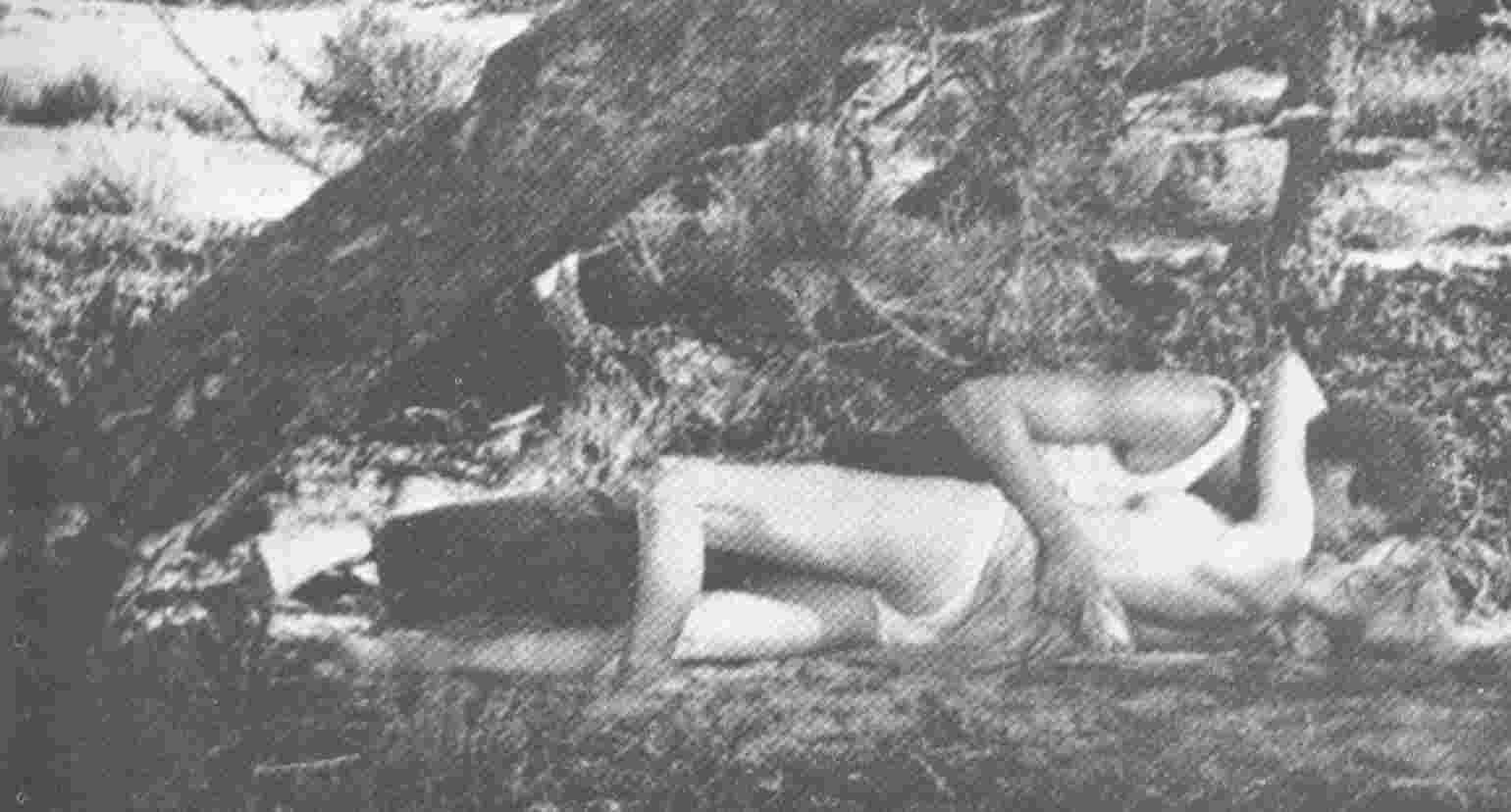
AND
GOD CREATED WOMAN
(Roger
Vadim, France, 1956) (F)
From
Ecstasy to I Am Curious - Yellow, every generation
has had its own scandalous "breakthrough"
film; in the
50s, it was And
God Created Woman; indeed, Bardot's
uninhibited
sexuality and, in this still, the display of
nude
breasts, panties, and male removing her clothing
was
quite unprecedented; the couple's legs, however,
were
still in "correct" (unentangled) position.
Note
rigid tree towering overhead.
___________________________________________________________________________________________

BARBARELLA
(Roger Vadim, France, 1968) (F)
Jane embedded nude in the undulating
torture-by-continuous orgasm machine,
surrounded by earlier victims.
Though
almost expiring amidst
delicious swoons,
Jane finally
blows the machine's fuse by her
orgiastic
potency. A good example of Vadim's
elegant,
perverse, and campy eroticism. SC
______________________________________________
The
flamboyant, perverse, and tongue-in-cheek eroticism
of
this work -- reinforced by its glossy pop-art colors and
camp decor, a Terry Southern script and
Jane Fonda's
pseudo-virginal
sensuality -- marks it as a highpoint of
sophisticated
commercial sex cinema. Titillatingly avoiding
frontal nudity (not permissive at the
time), it concentrates
instead
on continual suggestiveness (extending even to the
decor
and to sado-masochist and lesbian interludes), and
culminates in the fabulous
torture-by-continuous-orgasm
machine
in which Jane almost deliriously expires before
blowing
its fuse by her orgiastic potency; her lustful, pained
grimaces and moans, the undulating
movements of the ma-
chine (in
which she is embedded, nude) prove the ingenuity
of
commercial filmmakers intent on cheating the censors.
___________________________________________________________________________________________
"BEAVER"
FILMS
(USA, 1970
ff.)
Tribute must be paid to
an early variety of publicly
shown
pornography, the "beaver" films, so-called
because nude females display their
genitals in
a succession of
ultimately saddening pseudo-
erotic
contortions and come-on movements.
Characteristically,
the woman is posed on a bed,
alone;
there is no heterosexual activity, though
masturbation
and passion is frequently simulated.
A
sensation at first, these films quickly gave way
to
soft- and hard-core cinema sex. Their sudden
popularity was a perverse hymn to the
vagina (not
easily available
to lonely introverts) which had pre-
viously
been kept a mysterious secret by the censors.
___________________________________________________________________________________________
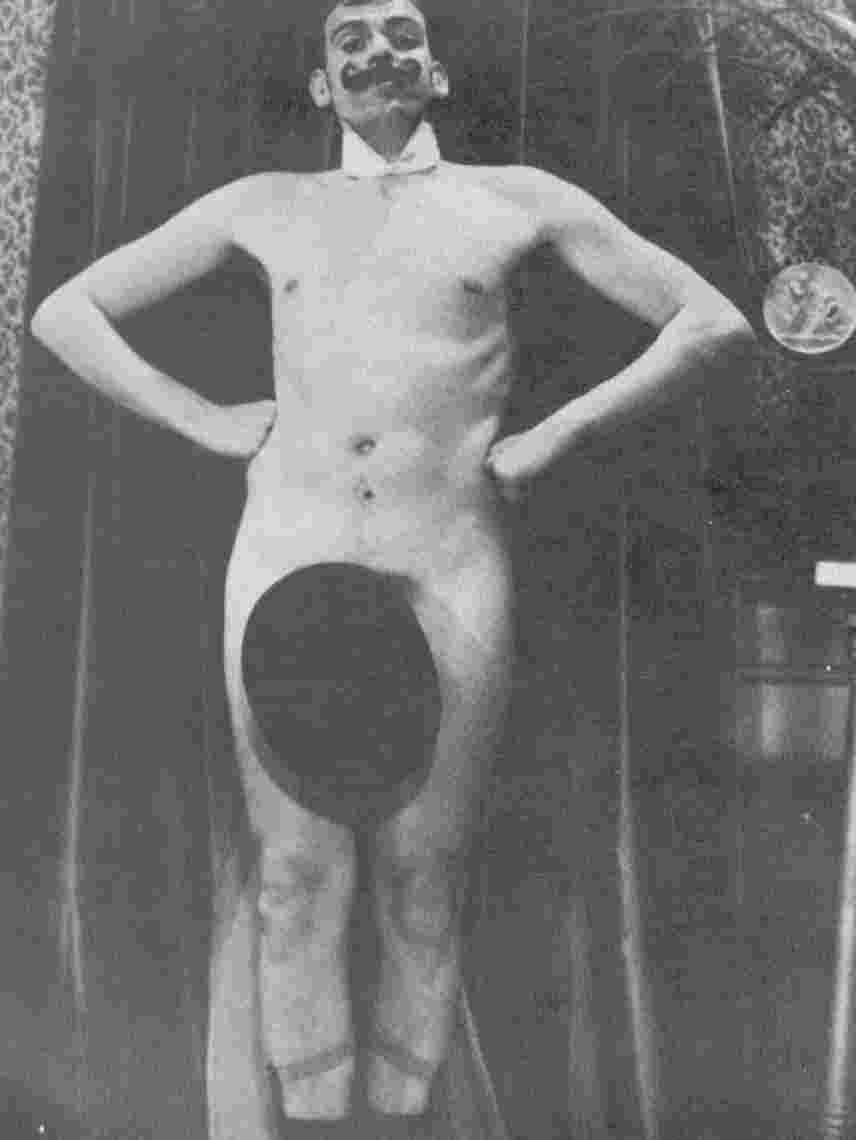
DANISH
BLUE
(Gabriel
Axel, Denmark, 1968) (F)
One
of the few pornographic comedies,
Danish
Blue takes a delightfully offhand
attitude
toward sexual mores. In this
shot,
the "forbidden" is clearly esta-
blished
without being shown, a rare
feat.
In addition, a visual pun is made.
___________________________________________________________________________________________
BLACK
PUDDING
(Nancy
Edell, Great Britain, 1971)
The
violent pornographic surrealism of
American
underground cartoon magazines
finally
invades film animation. In an
unfathomable
universe, huge vaginas
and
penises are protagonists of bizarre,
violent,
and pornographic events;
the
mixture of monsters and sexuality,
the
perverse and the apocalyptic
are
reminiscent of Bosch.
___________________________________________________________________________________________
THE
CONTINUING STORY OF CAREL AND FERD
(Arthur
Ginsberg, USA, 1972) (F)
This
"underground video soap opera" -- presented in an
astonishing eight-television screen,
closed-circuit, live-
performance
format, begins where commercial TV lets off.
A
"video-verite" study of a sometime homosexual junkie
and his girl (both former porno
filmmakers), it is accurately
billed
as a "videotape novel about pornography, sexual
identities, and the effect of living too
close to an electronic
medium."
The work is performed "live" before an audience
by the director manipulating the eight
monitors, mixing
different or
identical action on one, several or all of them;
the
"films" thus changes daily. Though attention is
usually
spread among all
monitors, the sudden appearance of sex on even
one
set immediately "distorts" the balance, a tribute to its
power.
___________________________________________________________________________________________
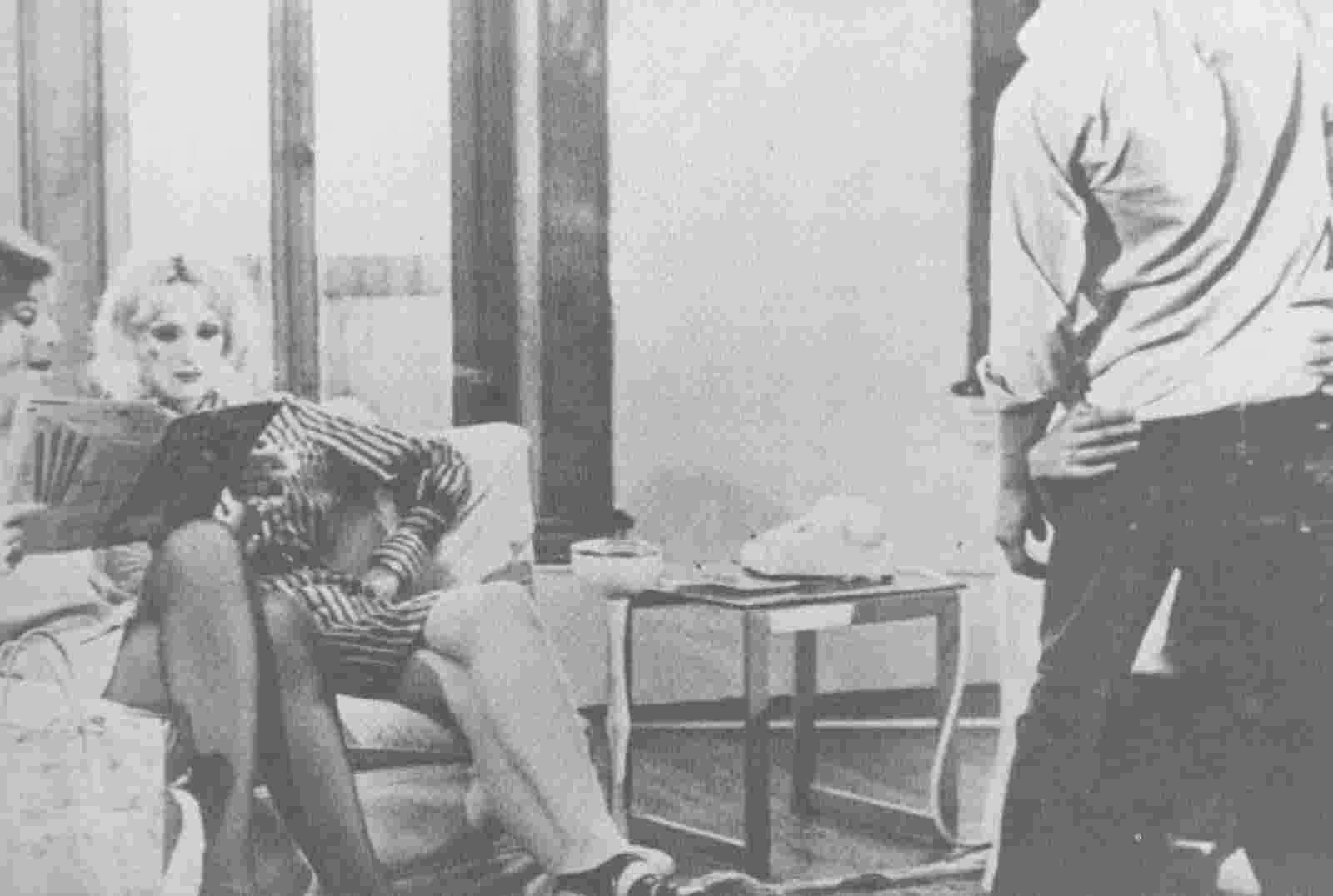
FLESH
(Paul Morrisey, USA, 1968) (F)
The outspoken yet entirely casual
sexuality
of the
Warhol-Morrisey films is conveyed in
this
scene of domestic bliss; fellation occurs
on-screen,
but in a manner difficult to censor,
its
protagonist almost as uninterested as
the
two people on the couch. Not everyone
in
this still who seems to be a girl actually is. SC
___________________________________________________________________________________________
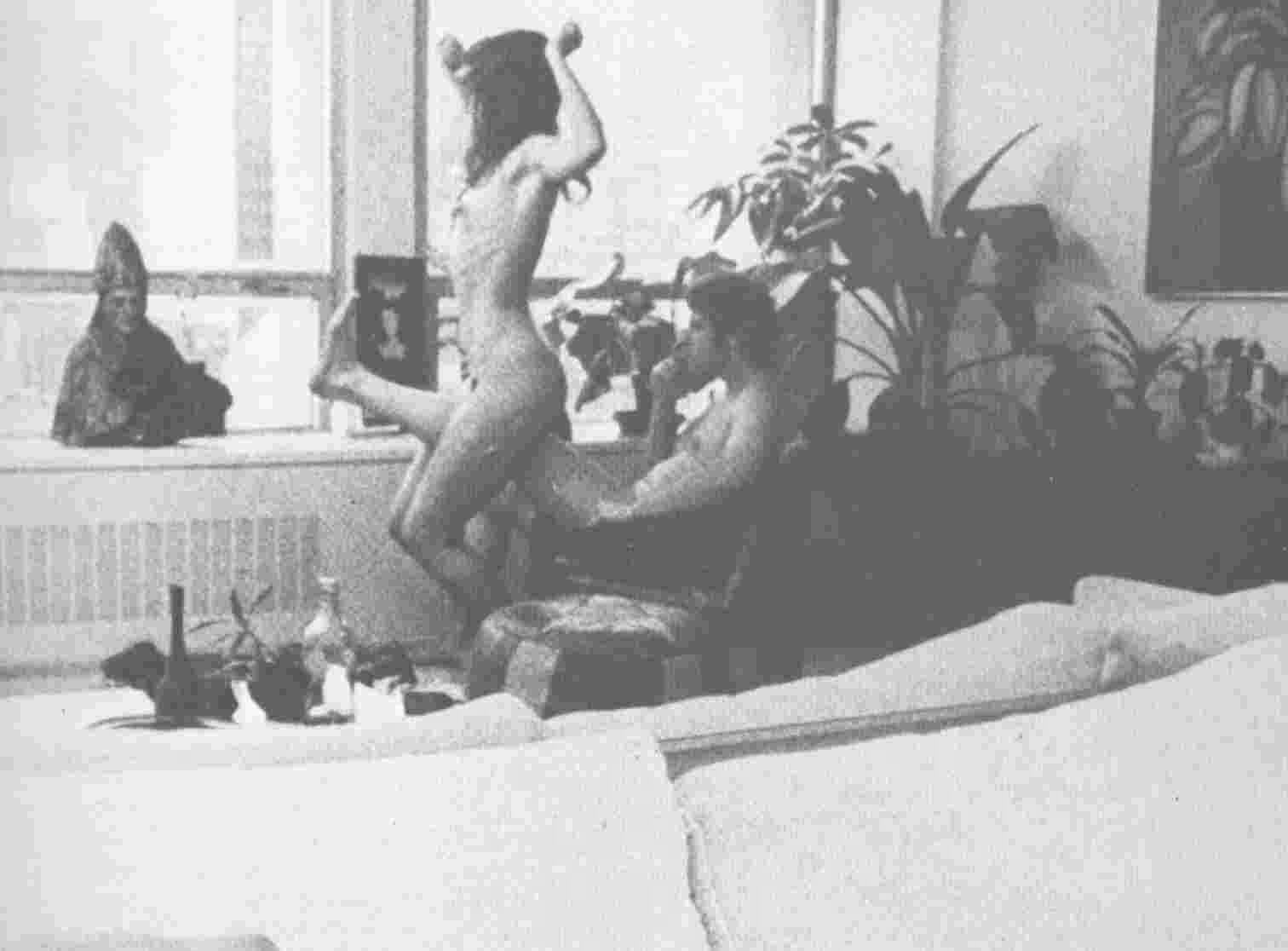
COMING
APART
(Milton
Moses Ginsberg, USA, 1969) (F)
A
good example of erotic realism; Hollywood could
never
have envisioned so off-beat and human a shot.
These
are two people who know each other very well
and
this is their little universe. The action is seen
in
a mirror by a concealed camera recording the
protagonist's increaingly problematic sex
life. SC
______________________________________________
This
powerful, unsettling film elevates voyeurism to
its
central element in a series of raw sexual encounters
reflected in an apartment mirror, from
which a hidden
camera records
its images. The lustful sex turns increas-
ingly
pathetic and the mirror is finally smashed in despair.
The "playing" on reality -- the
entire film is staged, the mir-
ror
thus reflecting a double illusion -- is eminently modern
and structural, as is the camera's
passive immobility, with
action
at times leaving the frame or the film "running out".
___________________________________________________________________________________________
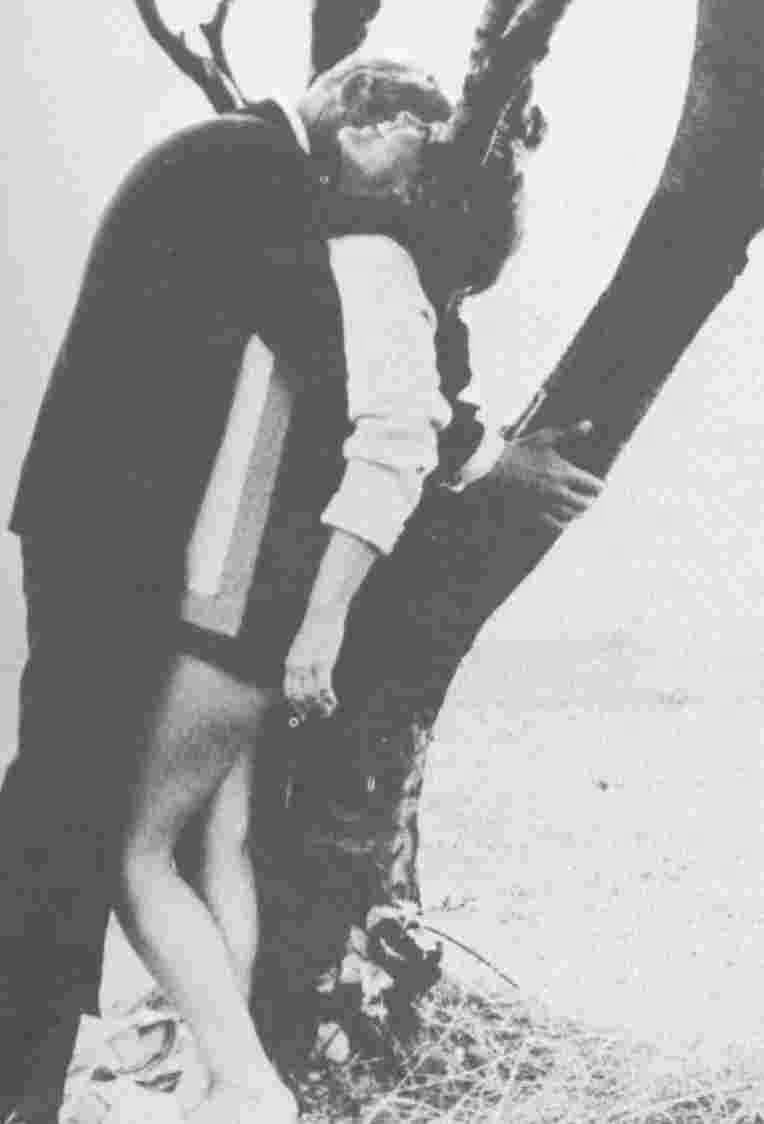
DEAR
JOHN
(Lars
Magnus Lindgren, Sweden, 1964) (F)
Nothing
particularly unusual about this shot
except
that the woman's panties have just been
removed.
In this frank early example of adult
sex
could be found an eroticism tinged with
tenderness
and the mishaps of daily life.
______________________________________________
Frankness
and honesty characterize this rare
and
early portrayal of adult sex in the context
of
a true love relation; as the past is remem-
bered
in a warm and loving bed, we discover
an
eroticism tinged with tenderness, laughter,
and
the mishaps of daily life. Dropped panties,
references
to penis size and contraception
make
their belated cinematic appearance.
___________________________________________________________________________________________
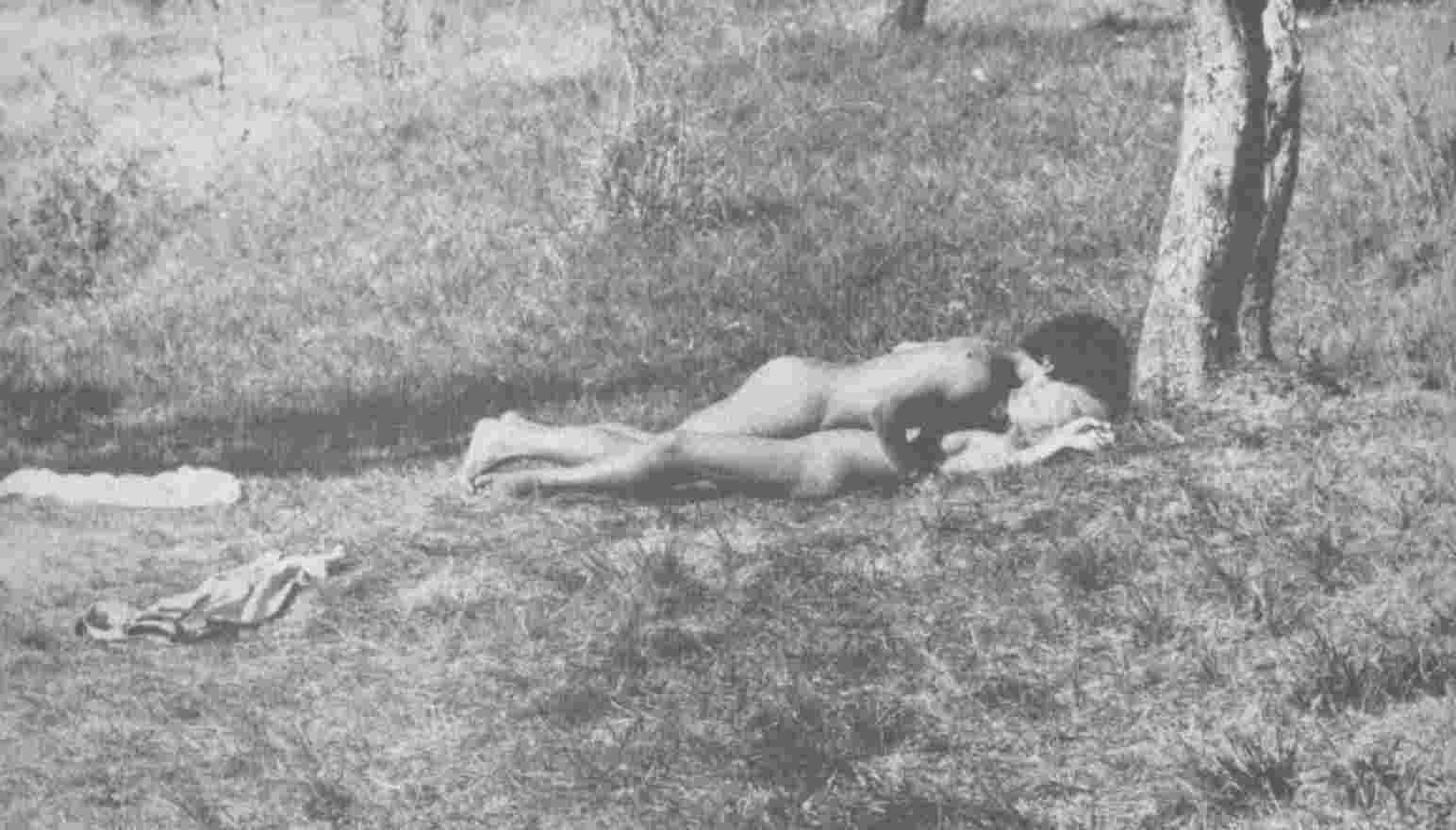
THE
LICKERISH QUARTET
(Radley Metzger, USA, 1970) (F)
Early attempts at commercial eroticism
avoided
long shots because
they were too stimulating
to
show nude bodies full-length during sex was
too
much for censors. Only in the later 60s did
commercial sex film pioneers begin to use
them. SC
___________________________________________________________________________________________
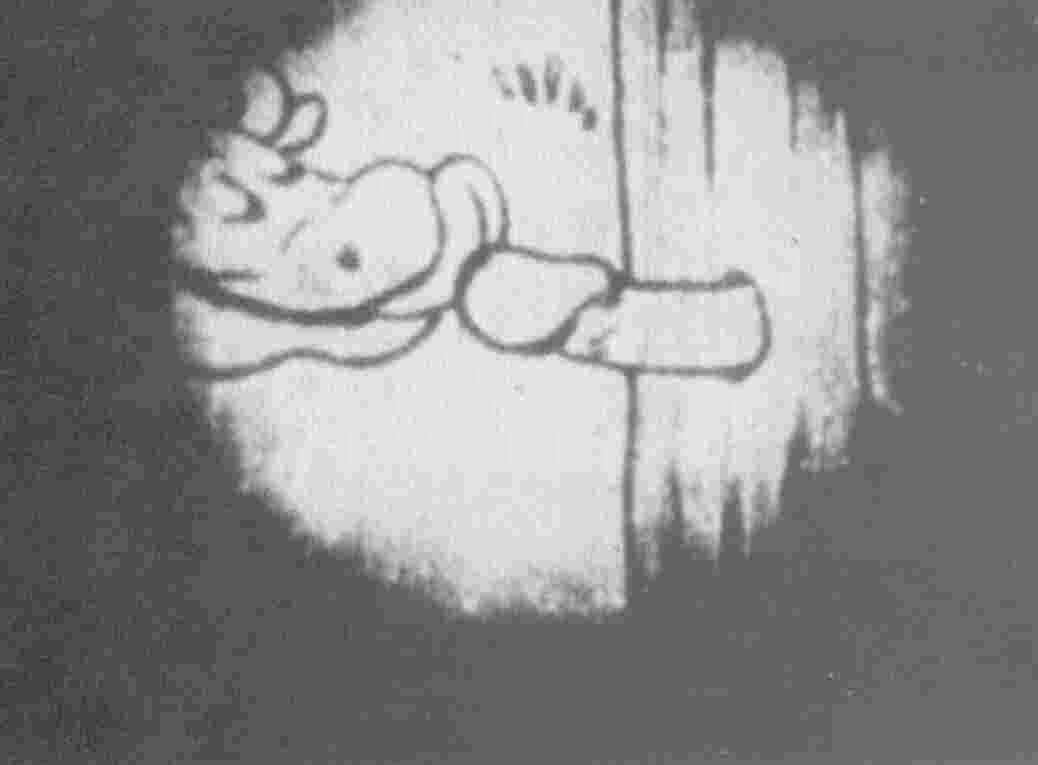
EVERREADY
(Anonymous, USA, circa 1925)
Pornographic cartoons are rarer than live
"hardcore" films, though
the freedom available
to the
animator allows more intricate action. These
cartoons
usually consist of a series of "dirty jokes"
and avoid the heavy- breathing solemnity
of the
"live"
films. The erect penis violates a basic taboo.
______________________________________________
Excellent
and rare example of a pornographic
cartoon,
skillfully drawn and edited for belly-laughs.
The
hero sports the world's largest and stiffest tool --
he
even requires a wheelbarrow to support it --
which
seems to have a mind of its own and involves
its
possessor in one pornographic adventure
after
another; even cows are not excluded.
___________________________________________________________________________________________
ELECTROSEX
(Anonymous, USA, 1970)
One
of the earliest and most successful of the new crop
of
hardcore American pornographic films. Its convenient
plot
introduces three female robots (played by nubile
young
ladies) who, upon command, can and do perform all
sex
acts known to man. After 40 minutes or so of athletic and
lustful cavorting, the male protagonists
tire; but, in a sombre
subversion
of the genre, the girl-robots cannot be stopped,
and
the men die in a fit of excrutiating sexual exhaustion.
___________________________________________________________________________________________
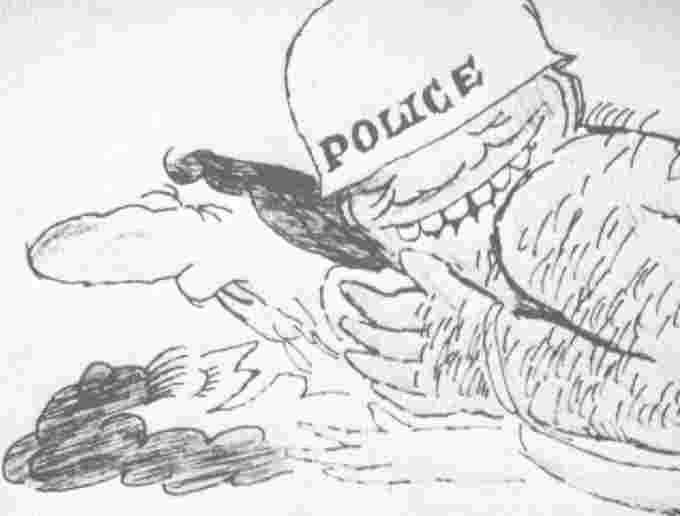
MAKE
LOVE, NOT WAR
(Zlatko
Grgic, Yugoslavia, 1971)
In
the course of this 60-second animation,
two
hippies, rather incongruously, make
love
during a political demonstration;
a
policeman, unasked, joins them from
behind.
A dirty joke from Yugoslavia.
___________________________________________________________________________________________
FUSES
(Carolee Schneemann, USA, 1964-67)
A unique film document by one of
America's
most original
intermedia artists. Drawing on docu-
mentary
footage of her and her lover's lovemaking,
it
builds a strongly poetic texture of feeling and
experience by subjecting the filmstrip to
the most
violent
experimentation (soaking it in acids and
dyes;
baking, painting, and scratching it) and
dissolving
narrative continuity into a continuum
of
non-sequential, polymorphous and strongly
"pornographic"
imagery. Nevertheless, as Gene
Youngblood
observes in Expanded Cinema: "This
is
a home, not a whorehouse" and the filmmaker's
sensitivity and authenticity never let us
forget it.
___________________________________________________________________________________________
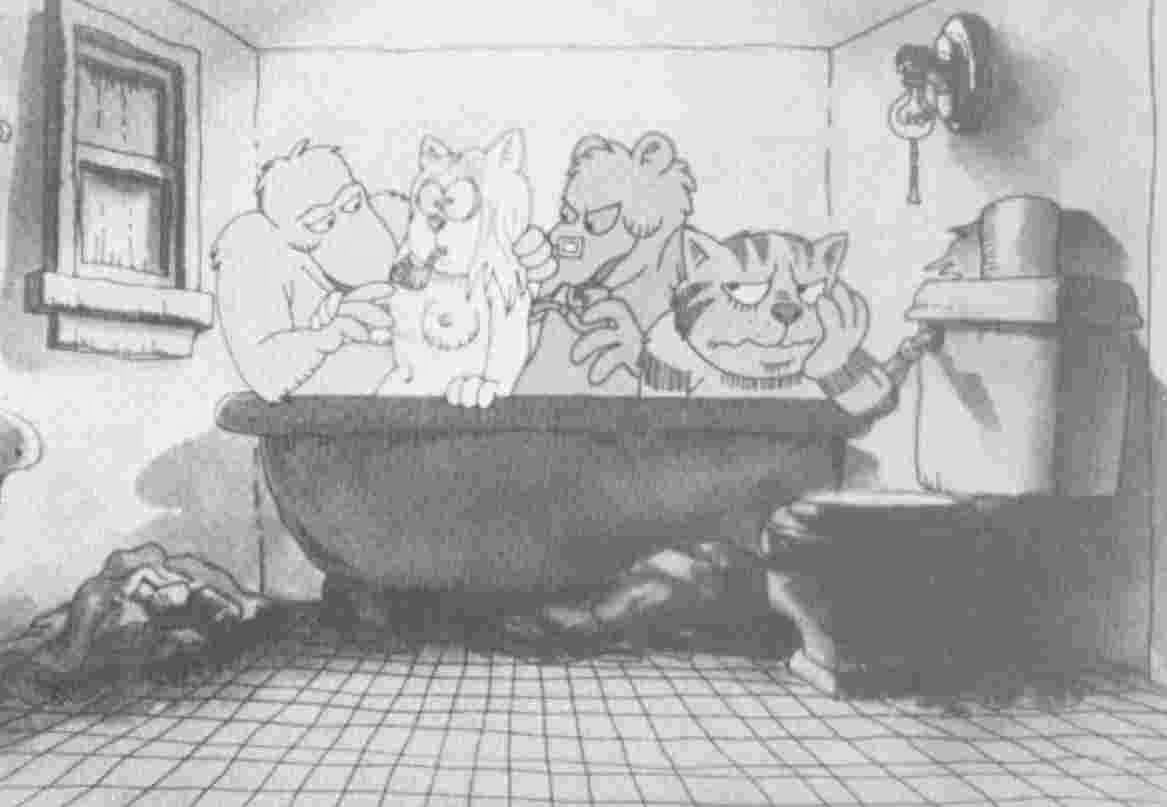
FRITZ
THE CAT
(Ralph
Bakshi, USA, 1972) (F)
The
erotic adventures of Fritz the Cat intro-
duce
actual intercourse to the animated film,
not
to speak of a certain grimy realism.
Here
some males with evil intentions intro-
duce
a young maiden to smoking pot. SC
___________________________________________________________________________________________
THE
GO-BETWEEN
(Joseph
Losey, Great Britain, 1971) (F)
An
interesting use of a taboo image furnishes the
climax
of this elegant, tense dissection of Edwardian
society,
its mores and rigidities at the turn of the
century,
based on a Harold Pinter script. The story
of
a boy who becomes a clandestine messenger in
an
affair between a daughter of the landed gentry
and
a virile tenant farmer, its images -- safe and
bourgeois
on the surface -- are punctuated by darker
hints,
until, in the denouement, the boy discovers
the
two lovers in the sex act. Only a glimpse is
shown
and there is no nudity; yet, the image of
the
man straddling the woman, enfolded by her
legs,
is unequivocal and -- given the restraint
of
the rest of the film -- intentionally scandalous.
___________________________________________________________________________________________
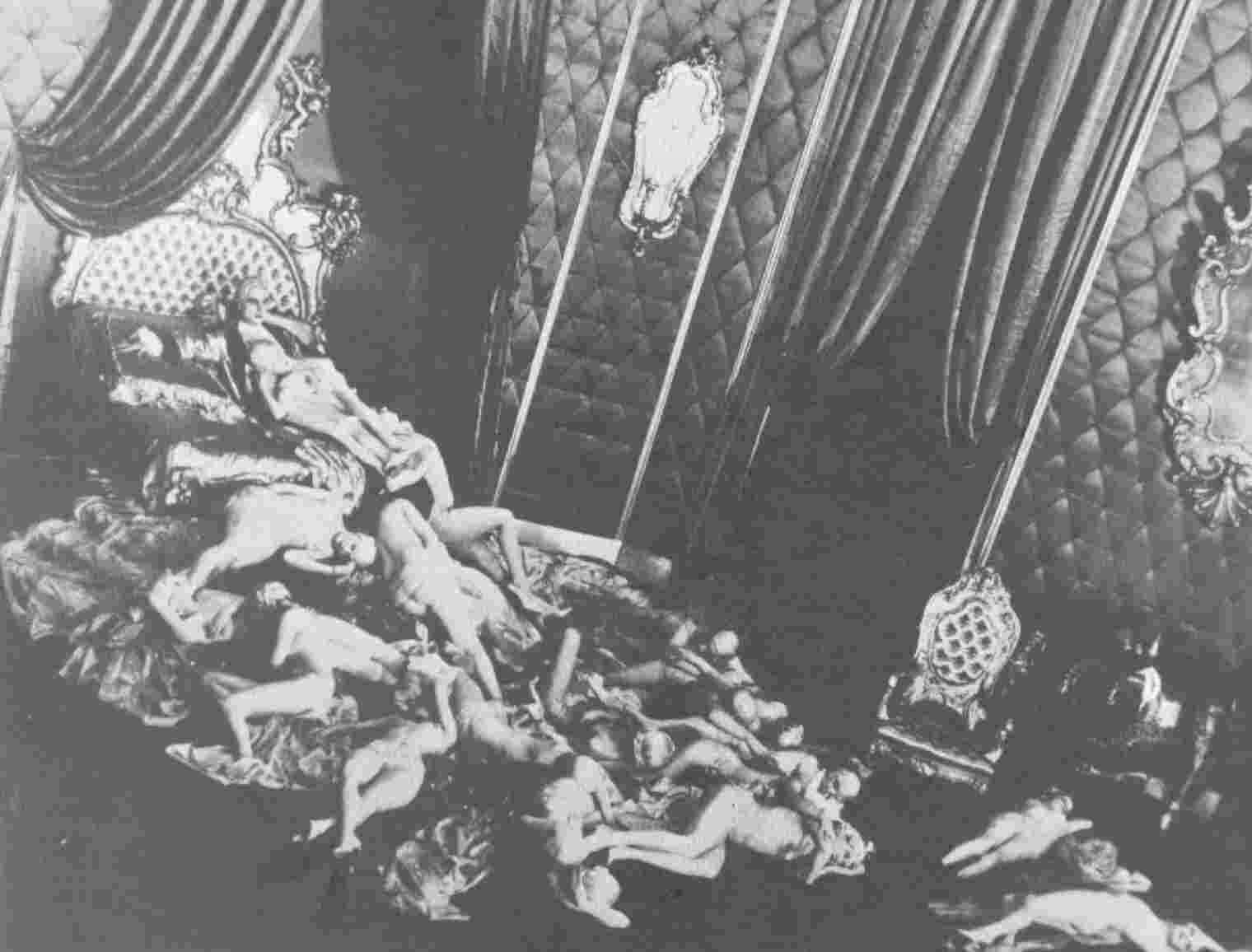
CASANOVA
(Alexander Wolkov, France, 1927)
Orgy Then: everybody is tired
except Don Juan who
surveys
the carnage in jaded satiation (just a day's
work
...), re-emphasized in his magnificently ex-
tended
right arm. Everybody is carefully draped.
The
use of strongly slanted lines introduces
a
perverse element in what otherwise would
have
been a dead, academic composition.
___________________________________________________________________________________________

BLOW-UP
(Michelangelo Antonioni, Great Britain,
1966)
Orgy Now: The
famous scene in Blow-Up --
carefully
excised in many countries -- in which
two
stray London "birds" finally involve the
photographer in casual sex on the floor.
The
glimpse of pubic hair was
unprecedented. SC