
FILM
- AS A -
SUBVERSIVE ART
L'OPERA
MOUFFE
(Agnes
Varda, France, 1958) (F)
Two
nude lovers experience sweet and smiling
pleasure
in each other's bodies. From a haunting,
impressionist
film poem by the well-known
French
director. The lines of the two bodies
seem
visually to fuse in fulfilled love.
THE
END OF SEXUAL TABOOS:
EROTIC AND PORNOGRAPHIC
CINEMA
- PART TWO
FILMS
___________________________________________________________________________________________
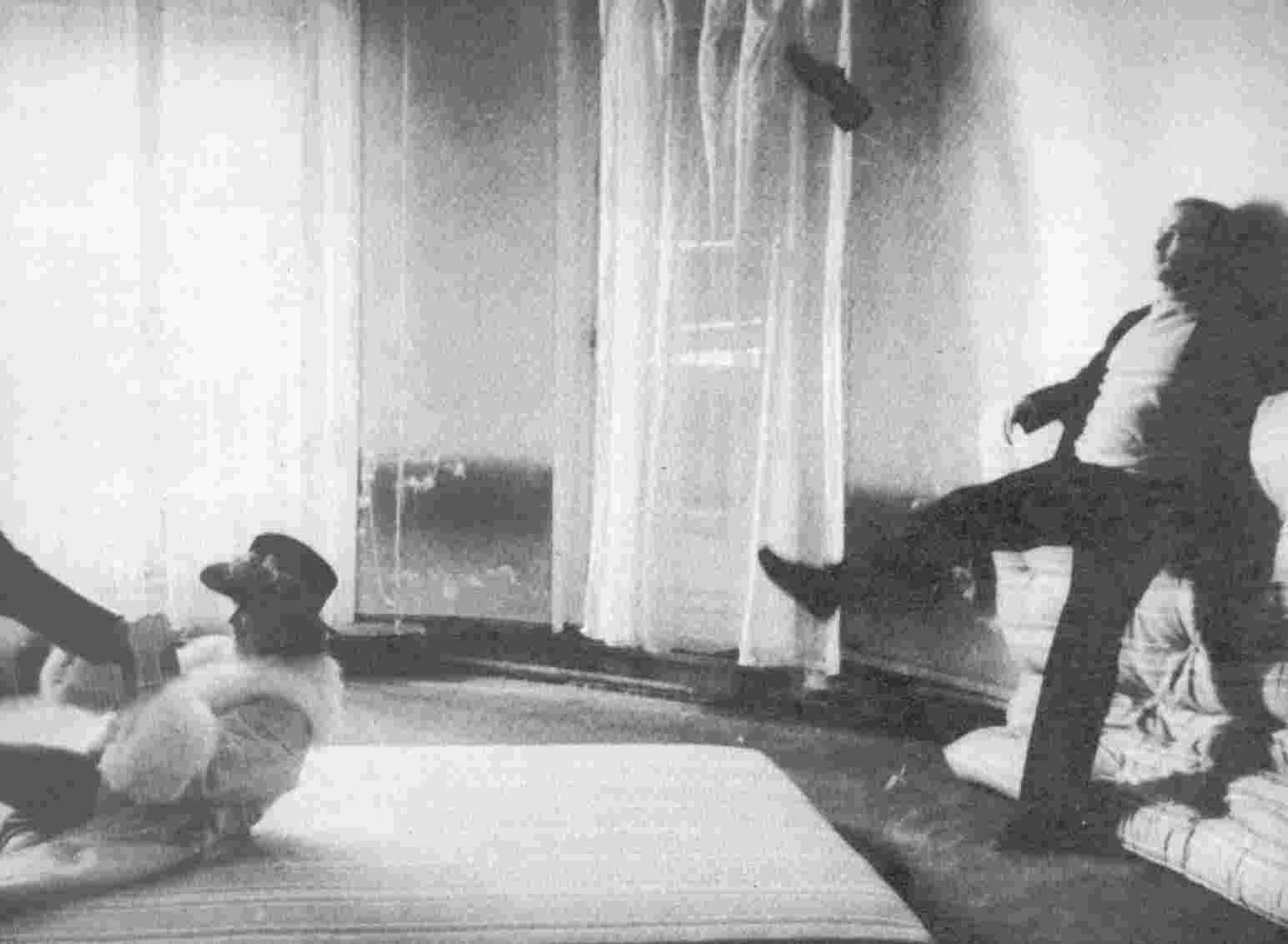
LAST
TANGO IN PARIS
(Bernardo Bertolucci, France/Italy,
1972) (F)
After years of
disregard, the international fame so suddenly
bestowed
upon Bertolucci for having created a "breakthrough"
film all but obscures the question of
just what this "breakthrough"
is
meant to be; for neither stylistically, thematically nor in terms
of erotic tension does it go beyond
Before the Revolution, his best
work.
In fact, the youthful excesses andvisual lyricism of this earlier
work seem preferable to the more
conventional and subdued style
of
Tango; and the intellectual weight and ideological subtlely of
Revolution are far more
substantial than the puzzling "message"
of
Tango. As for Tango's sex scenes -- its
most brilliant aspect --
their
explicitness neither goes as far as hardcore pornography
nor, if this comparison be considered
fair, beyond I Am Curious -
Yellow
/ Blue, the real pioneer of liberated cinema sex. SC
This
earlier work contained, just as Tango does, explicit
simulated copulation, sexual violence and
near-rape;
it also featured,
as Tango does not, frontal male nudity
and
joyful erotic tension quite different from the sado-
masochist violence of Bertolucci's film.
The "break-
through",
then, is in the production and distribution of
such
a film by a major Hollywood company, United Artists.
The
film's stark erotic realism is powerful, but not unique.
Extensive verbal "obscenity"
(fully anticipated in Joseph Strick's
Tropic
of Cancer, 1970) and an absence of sentimentality or
titillation are welcome aspects. But even
if one entirely discounts
the
hardcore films now available at least in certain countries,
only those who did not see Curious
will be shocked by coital
movements,
"unusual" positions, orgasmic sounds. And in
carefully avoiding certain images, such
as male frontal nudity,
Bertolucci
raises uncomfortable questions; for in Revolution,
his unfettered artistic passion never
allowed calculated
avoidance
of anything crucial; and penises are crucial to
a
film pivoting on sex, particularly as full female frontal
nudity makes its appearance.
Equally disturbing are
unannounced
post-premiere cuts involving an ironic
revelation
of what today is considered commercially
inadvisable
in America; not sex, but blasphemy.
Significantly,
the only kind of sex missing in Curious is
represented in Tango by the tragic
moment when the girl,
in order
to get rid of him, masturbates Brando,; but then
at
least the men in Curious had penises. Still more
sympto-
matic, what is
possibly the most "shocking" image in the film
may be the bar of butter Brando reaches
for in preparation
for anal
intercourse; it derives its shock quality solely
from
its association with the sex act that follows.
It is
ironic, but not without precedent, that Bertolucci, from the
beginning a superlative, original talent
who until recently could
find
neither financing nor distribution, should gain instantaneous
international fame with what is
essentially a work of transition
towards
either large commercial success or artistic maturity.
___________________________________________________________________________________________
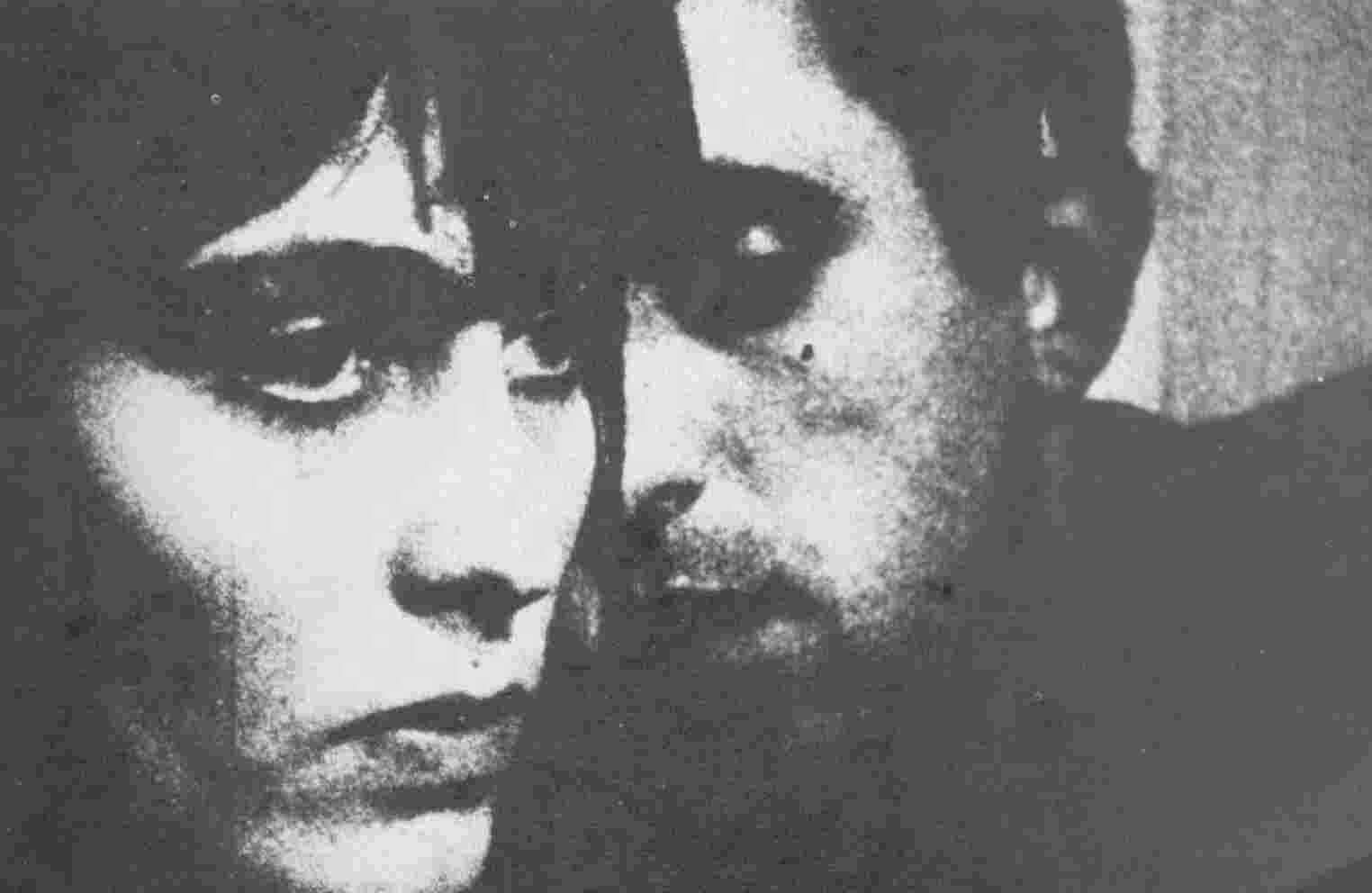
ECHOES
OF SILENCE
(Peter
Emanuel Goldman, USA, 1965) (F)
Desperate
sexuality, desperate emotions;
every
gesture and inflection an act of grave
import;
a film of young adults, infused with
a
new existentialist humanism, devoid of
certainty
or illusion. The sharp contrast
and
graniness of the still indicate the film's
distance
from slick commercial cinema.
A
major new talent.
___________________________________________________________________________________________
HISTORY
OF THE BLUE MOVIE
(Alex de Renzie, USA, 1971) (F)
Perhaps the most startling this about
this film -- prototype of a genre --
is
its legal and widespread presentation to packed student audiences
at American colleges. An excellent
compilation of old and new hardcore
"stag"
films (with an intelligent narration stressing historical aspects),
its production was probably inevitable
the moment it was realized that
no
one held a copyright of these illegal, anonymous works. Here we
see
one of the earliest stag
films, the 1915 A Free Ride; an unexpected item,
or it somehow still remains surprising to
see our forefathers (now dead)
actually
engaged in the same activities as we are. There are also
interesting
divergences from
the later, more standardized stag films: here both male
and female urinate, for laughs, on
camera; during sex, the man only drops
his
pants, looking very real, very ludicrous in his passionate
entanglement;
and the girls
seem literally exhausted at the end. There are other classics
in this anthology: the notorious
Smart Aleck, in which the then unknown
Candy
Barr introduces unintended "cinema verite" into a porno
film by
angrily refusing to
perform fellatio, only later passionately to "insert"
herself
into an oral sex act
between her partner and another girl; and the equally
famous The None Story, whose star,
at beginning and end, appears in a nun's
attire
(these sequences omitted from a later version retitled "College
Co-Ed".)
A 3rd notable
episode shows a nude model discussing her sexual preferences with
an unseen interviewer in sensitive,
arousing detail, the camera focusing mostly
on
her face in an example of verbal eroticism reminiscent of Godard's
Weekend.
As her talk
turns more passionate and fantasy-ridden, she becomes involved in
on-screen masturbation; and both she and
the interviewer fall silent until her
climax.
The film ends with an erotic 1970 sequence, in which a young couple
go to De Renzie's studio to act in one of
his films and then see themselves on
the
screen in a highly charged, professionally directed sex episode which
(delightfully) includes laughter, hugs,
and warmth; a portent of things to
come
when serious filmmakers, free of censorship or contempt for the
genre,
supplant the mechanical
pornographers by introducing erotic realism. SC
___________________________________________________________________________________________

I
AM CURIOUS - YELLOW / BLUE
(JAG
AR NYFIKEN - GUL / BLA)
(Vilgot
Sjoman, Sweden, 1967) (F)
A
cluttered room, a hastily made floor bed, an eager
young
couple: a scene from the legendary work
that
opened commercial cinema to eroticism and
pornography.
Sex is demystified, desentimentalized,
shown
as a part of life. Coital activity is frequently
and directly shown; but there are no
erections not
penetrations, as
there are in today's hardcore films. SC
______________________________________________
The
historical task of the leadership, said Rosa Luxemburg, is to make
itself unnecessary. This is precisely
what happened to this legendary,
much-maligned
work; prime catalyst of the new "permissive" cinema,
it was quickly superseded by works that
went further though not
necessarily
deeper. In retrospect, its primary virtue lies in its
erotic realism. Perhaps no other
film before it was as direct in
presuming
that everybody does it, knows about it, enjoys it; does
it at times with laughter, or
imperfectly, tenderly, or in rage, and
that
it is silly to exclude so human and beloved an enterprise from
the screen. Thus we see sex done on
a hastily cleared floor (though
the
bra at first will not unhook), in a lake (with a long-shot of heaving
buttocks periodically emerging from the
water), in a tree (a messy,
giggly
affair), from behind (in anger and lust), and while straddling
the balustrade of the Royal Palace in
Stockholm, with a guard in
attention,
sweating to keep his composure amidst dropping panties
and voluptuous movements. The
lovemaking throughout is neither
titillating,
mechanical, bourgeois nor "deeply significant"; but casual
and
free, filled with warmth,
strife, and experimentation. He is her "Number 30"
or so and there will be others (including
Sjoman, the film's director who
periodically
enters the action, and intentionally blurs reality and illusion).
The
portrayal of sex goes further than ever before. There is no
mistaking the spread legs, the man
between them, the movements,
the
outspoken dialogue. Yet, while sex organs are sometimes shown
and even (somewhat) manipulated, we see
no erection nor penetration.
But the
sex scenes (at least on first viewing) overshadow the film's
main theme: the attack on the
values (or lack of values) of the
Swedish
welfare state and contemporary society in general.
Alienation, cynicism, and boredom seem to
characterize the
people
appearing in its many political discussions and interviews.
The young heroine both investigates
and symbolizes the social and
sexual
mores of an affluent and fatigued welfare state, fearful of
revealing itself as a class society.
The sexual episodes are used
as
counterpoint to the alienation she feels towards her society and
appear as attempts (however superficial)
at human reaffirmation;
they
are essential components of an ideological statement.
The
final subversion of the work is in its form. Sjoman, as other c
contemporary filmmakers, aims at
immediacy and veracity by
constantly
breaking down the boundaries between fiction and
reality
(even to the extent of appearing within the film as its
director, commenting on its action, and
having the actress conduct
real
interviews with real passers-by). The spectator is thus
confron-
ted with the need to
redefine the concept of reality in his own life.
___________________________________________________________________________________________
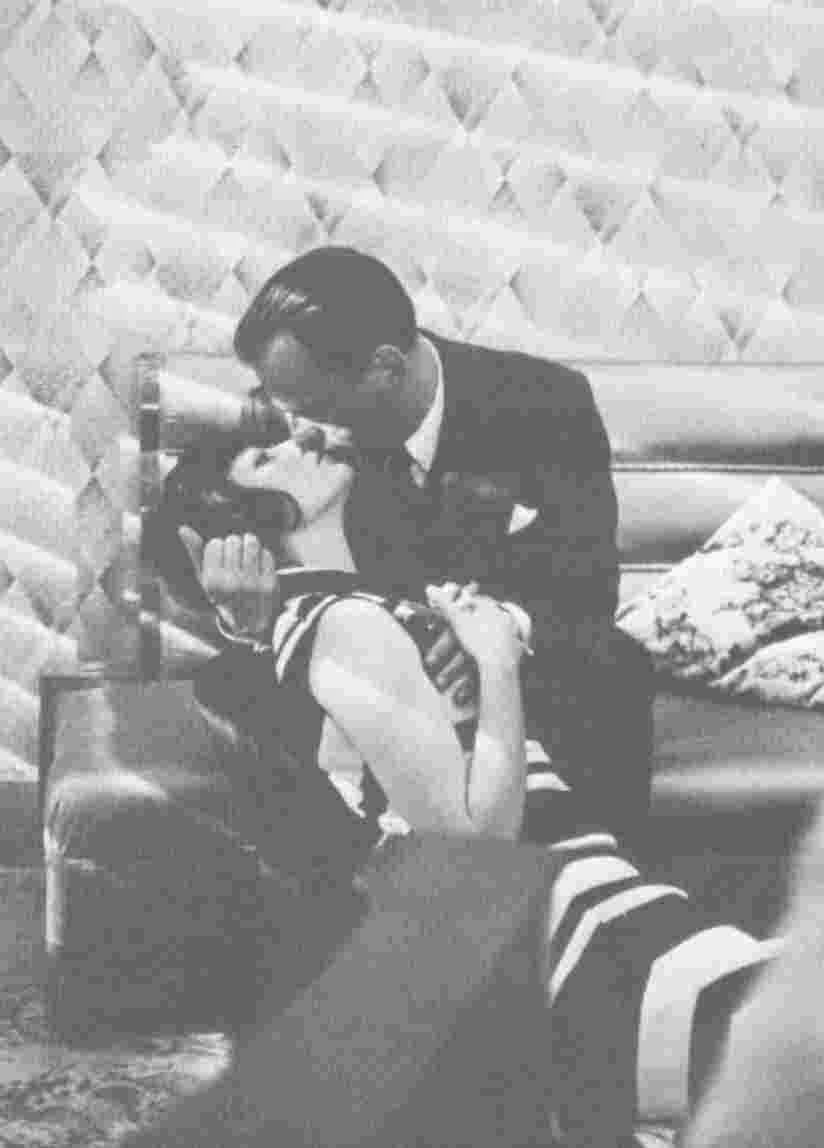
THE
CONFORMIST
(Bernardo
Bertolucci, Italy/France/West Germany, 1970) (F)
The subtlety of composition, decor, and
atmosphere within a single shot denotes
the presence of a master. The time
is the 30s,
revealed in dress,
wallpaper, style of couch.
The
slanting rays of the sun add to the
pent-up
erotic tension of a moment soon
to
erupt in a sexual encounter on the floor. SC
___________________________________________________________________________________________
KODAK
LOVE POEMS
(Andre
Noren, USA, 1970) (F)
Excellent
example of the autobiographical, "diary" type of
personal cinema, this is an intense
evocation, in rapid flash
frames,
of erotic episodes and memories. There is no continuity
except that of sex; nothing is withheld.
Pans, rapid cuts, zooms,
and
superimpositions further "complicate" these free-flowing
memory traces, following no ordered or
preconceived patterns.
Cats,
apartment interiors, passing pedestrians, a storm, mingle
with the many and mysterious occupations
of human love,
shown head-on,
in snatches; a record of acts and feelings on film.
Unlike commercial pornography, the
intention here is revelatory
and
personal; only censors will fail to notice the difference.
___________________________________________________________________________________________
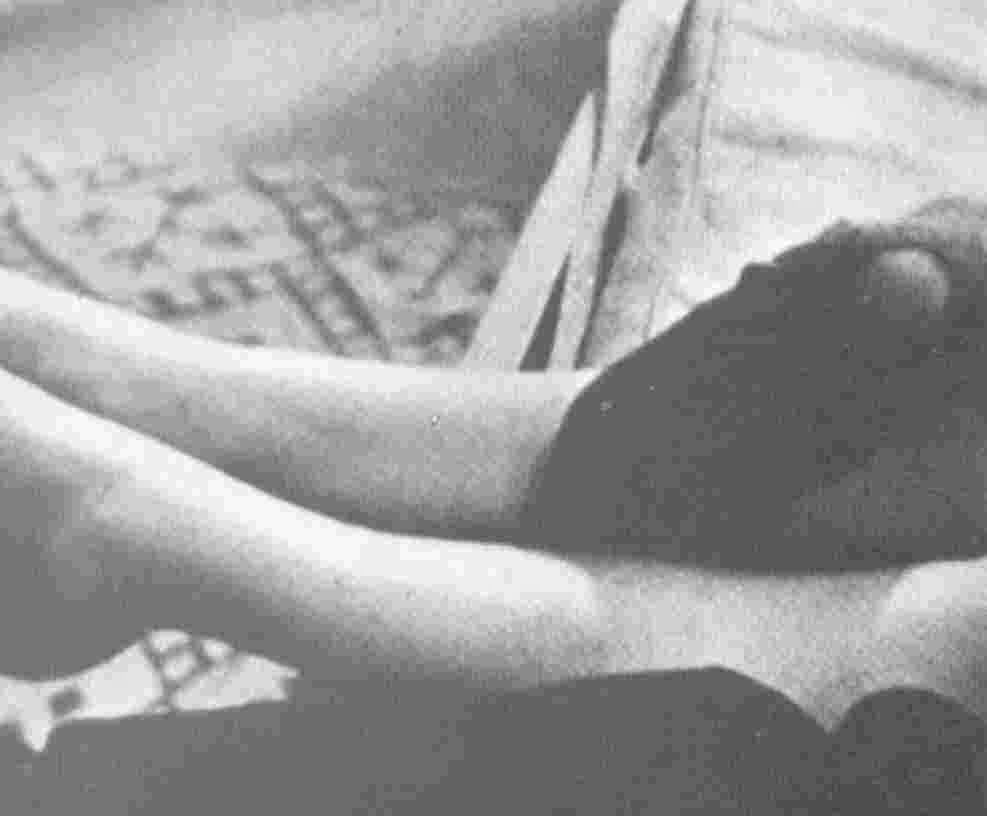
BELLE
DE JOUR
(Luis
Bunuel, France, 1966)
What a
master can show by showing almost nothing.
The
man's aggressive intention is clearly implied,
as
is the woman's "resistance" (her legs still closed,
though lying quietly). She seems
well-dressed,
he has a hole in
his sock. Compositional lines,
though
strongly geometric and at ninety degree
angles,
are tilted, increasing the shot's dynamism.
As
usual, Bunuel seems preoccupied with feet. SC
___________________________________________________________________________________________
ORANGE
(Karen Johnson, USA, 1969)
Quite appropriately a prizewinner at the
1970 International Erotic Film Festival,
this closeup of the peeling, sectioning,
licking, and eating of a navel orange
becomes
a sensuous, sexual
experience that disturbs
and
attracts by the ambivalence of its images;
erotic
associations constantly impinge.
___________________________________________________________________________________________
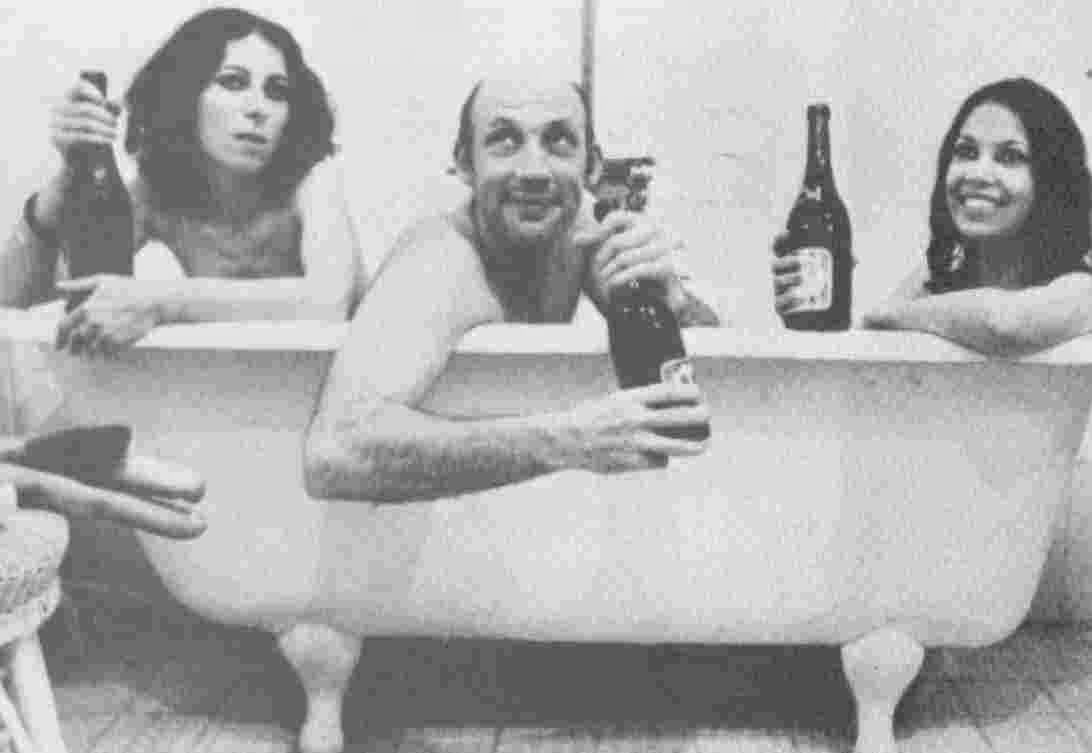
QUIET
DAYS IN CLICHY
(Jens
Jorgen Thorsten, Denmark, 1970)
Henry
Miller's memoir of friends, women, and cheap
wine
is a relaxed, very sexy outrage that manages
to
be both humorous and pornographic. Genitals and
"penetration" are shown and a
particularly anti-bourgeois
scene
has the starving Miller flavor a cookie from a
garbagecan
with odor derived from his anus. SC
___________________________________________________________________________________________
PSYCHOMONTAGE
(Eberhard and Phyllis Kronhausen, USA,
1960?)
Sexologists,
psychologists, and proponents
of
sexual freedom, the Kronhausens here
attempt
to induce erotic response in
the
audience by carefully chosen visual
stimuli
and juxtapositions (aimed at both
conscious
and unconscious). Phallic symbols
and
open orifices, a tongue licking an orange,
an
unexpected finger entering the frame:
almost
any object or act, no matter how
innocuous,
the Kronhausens show, can be
made
to appear erotic, and reveals our
predisposition
towards "shaping" visual
evidence
for purposes of erotic gratification.
___________________________________________________________________________________________
SCHOOLGIRL
(David Reberg, USA, 1971) (F)
American "hardcore" productions
turns on the "research" done
by
a California college girl for her paper on "sexual
sub-cultures".
Answering
kinky ads in the underground press, she meets a couple
for a menage a trois (and while
performing fellatio on the husband,
is
asked by the wife to "move her hair out of her face" so
that she
can watch better.
She then lets herself be told by a man on the other
end
of a phone how to masturbate and to describe it to him at the
same time; we see him masturbate as well,
until both simultaneously
come
"by telephone". Several adventures later, she finally
delivers
her paper:
"Their sex life is awful and alienated ... I never parti-
cipated but only observed from an
academic viewpoint." More
than
most, this film approaches erotic realism; despite its blatant
commercialism it shows red pimples on
buttocks, scratches on legs,
penises
that fall out amidst gales of laughter, chirping birds, eja-
culations into a girl's mouth on-camera.
The protagonists are "doing
their
thing" without hesitation. Significantly, the two constants are
the
telephone (dangerous tool
of a technological age) that here spins a web
of
corruption; and fellation, with which every sex act in the film
begins.
___________________________________________________________________________________________
SECRETS
OF LIFE
(Victor
Faccinto, USA, 1971)
Quite
properly, unsympathetic critics refer to this as
a
"filthy" cartoon. Using intentionally naive cut-out
figures and a crude, slashing style of
graphics and
action, this is a
sophisticated, garish work of
pop
art. A driving tempo propells the viewer
through images of violence and
pornographic
sex. The
underlying pain is unmistakable.
___________________________________________________________________________________________

SEX
(David Avidan, Israel, 1971)
The image is universal; the country of
origin is Israel,
confirming
that its young are not different from
others
elsewhere. The atmosphere is cool, modern,
Western;
the decor ulitarian, the style avant-garde.
Nothing
detracts from the soft abandon of the scene.
This
film is banned in Israel.
______________________________________________
And who
said that Israel cannot make sex films?
Yet
the contrasting myths of Israel as an idealistic
society
given to righteous self-improvement or a
militarist-orthodox state bent on
self-aggrandize-
ment are so
strong that this work comes as a surprise.
Its
manifold copulations, sophisticated stance, avant-
garde
modernity, and political thrusts stamp it as
the
testimony of a new generation. One sequence:
"A
vision of the Virgin Mary waiting for the Holy Ghost
to
do his thing, as Avidan's voice sings a tearful Yiddish
refrain and Joseph the Carpenter bangs on
the door,
before going to take
his vengeance by building a cross."
___________________________________________________________________________________________

ROOM
SERVICE 75
(Fred
Baker, USA, 1971)
The modern
"hardcore" film -- though light years
ahead
of the commercial cinema in terms of sex --
does
not consist of an unbroken series of coupling
organs;
elements of subtlety and aesthetics are
beginning
to invade it. The rug, the very anonymity
of
the performers, the camera angle, and profes-
sional
photography indicate that art is not far away.
___________________________________________________________________________________________
SHADOW
OF AN APPLE
(Robert
Lapoujade, France, 1965?)
We
owe the eminent French painter -- turned
filmmaker
-- this most lyrical and poetic portrayal
of
sex yet attempted in animated cinema. Based
on
the story of Leda and the swan, the constant
transmogrifications of subtle, erotic
images
project an atmosphere
of desperate, elemental,
endless
sex that is both liberating and disturbing.
___________________________________________________________________________________________
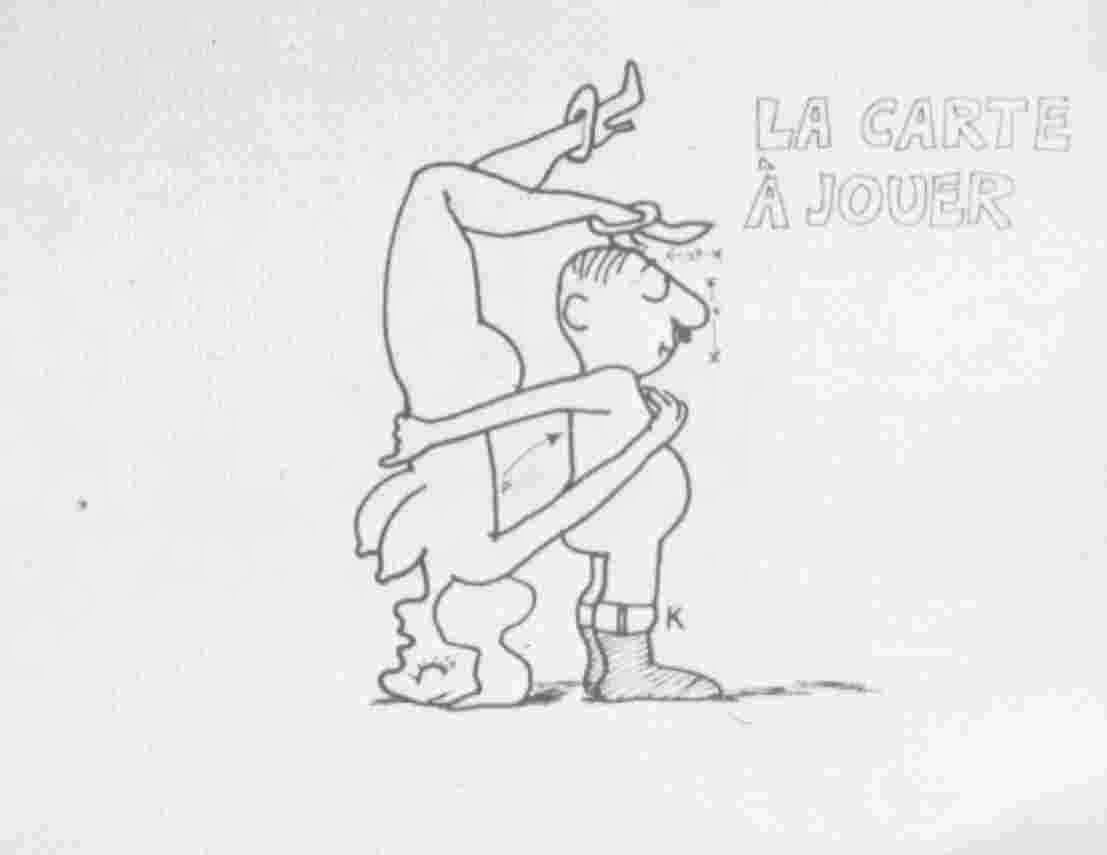
KAMA
SUTRA RIDES AGAIN
(Bob
Godfrey, Great Britain, 1971)
Certain
structural difficulties seem implicit in this
new
sex position (one of many), propounded
in
a tongue-in-cheek sex manual by one of
the
most talented international animators.
___________________________________________________________________________________________
TALES
(Cassandra Gerstein, USA, 1970) (F)
A curious, controversial film (produced
by an all-woman crew), consisting
entirely of
"tales"
of sexual adventures (or fantasies) told
by
a group of youngish New Yorkers gathered
in
an apartment. One story prompts the next;
the
atmosphere is informal; the result -- a
censorable,
liberating example of verbal
eroticism,
quite shocking in its impact.
It
is the very absence of descriptive image
and
the ability secretly to observe "real"
people
freely recalling erotic experiences,
that
accounts for the film's effect: but the
eroticism
unquestionably also flows --
non-verbally
-- from the faces, hesitations,
and
gestures of the individual participants.
___________________________________________________________________________________________
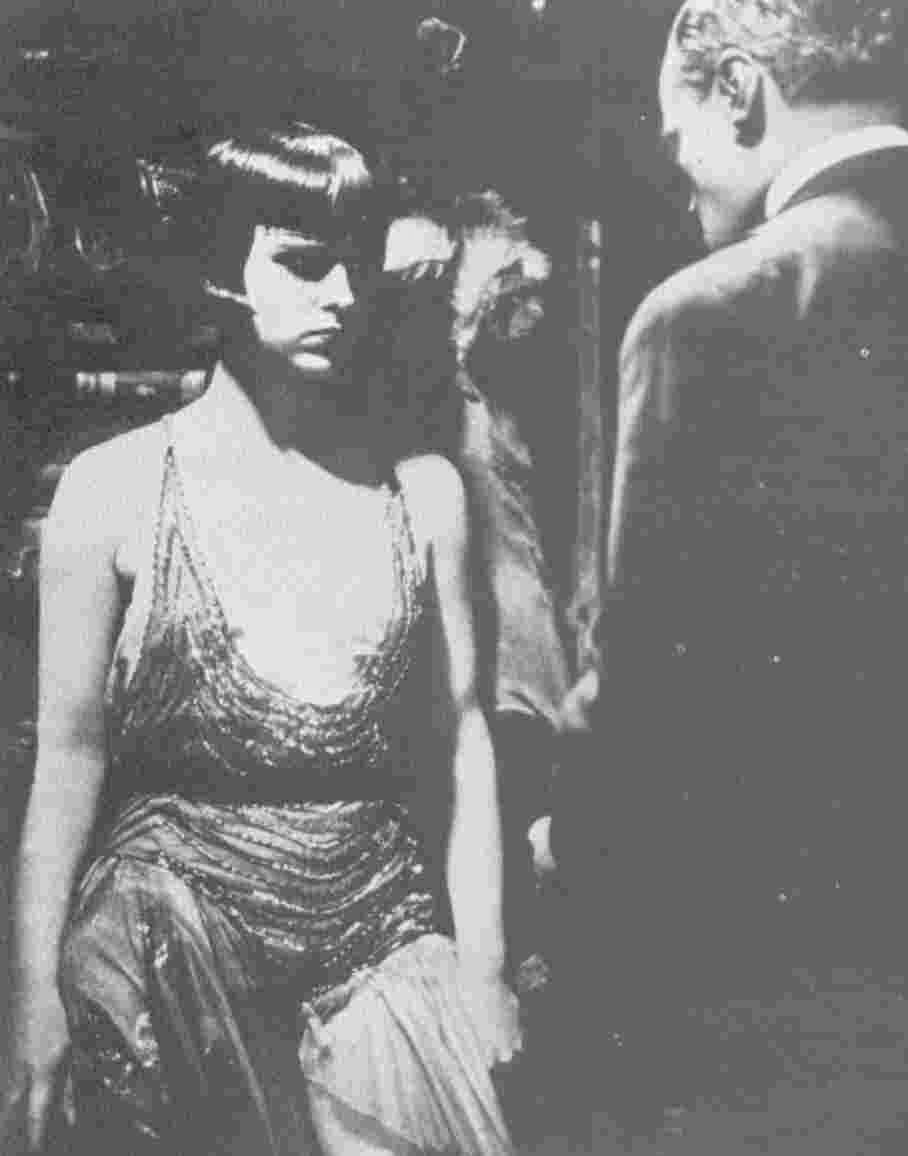
PANDORA'S
BOX
(G.W. Pabst,
Germany, 1928) (F)
Louise
Brooks, one of the most erotic actresses of
world
cinema in one of her most erotic roles. Her
sullen,
volatile sexuality is reinforced by the deep,
expressionist shadows on face and neck as
against
the provocative
lighting of her body. The entire
frame
area is crowded in tight compositional design,
reflecting
the erotic tension which this confrontation
of
(anonymous) male and arousing female exudes.
___________________________________________________________________________________________
A
STRANGER KNOCKS
(Johan
Jacobsen, Denmark, 1963) (F)
A
censorship landmark case: the entire plot pivots on an
act of intercourse, during which the
woman accidentally
discovers
the vital clue to the film's mystery. The complete
absence of nudity and total revelance of
the scene to the
plot posed an
impossible problem for the American
censors,
and led, upon appeals against its prohibition,
to
the abolition of the Supreme Court of the entire system
of American state censorship in 1967.
This development
contributed
significantly to the later era of sexual
permissiveness
in the American cinema.
___________________________________________________________________________________________
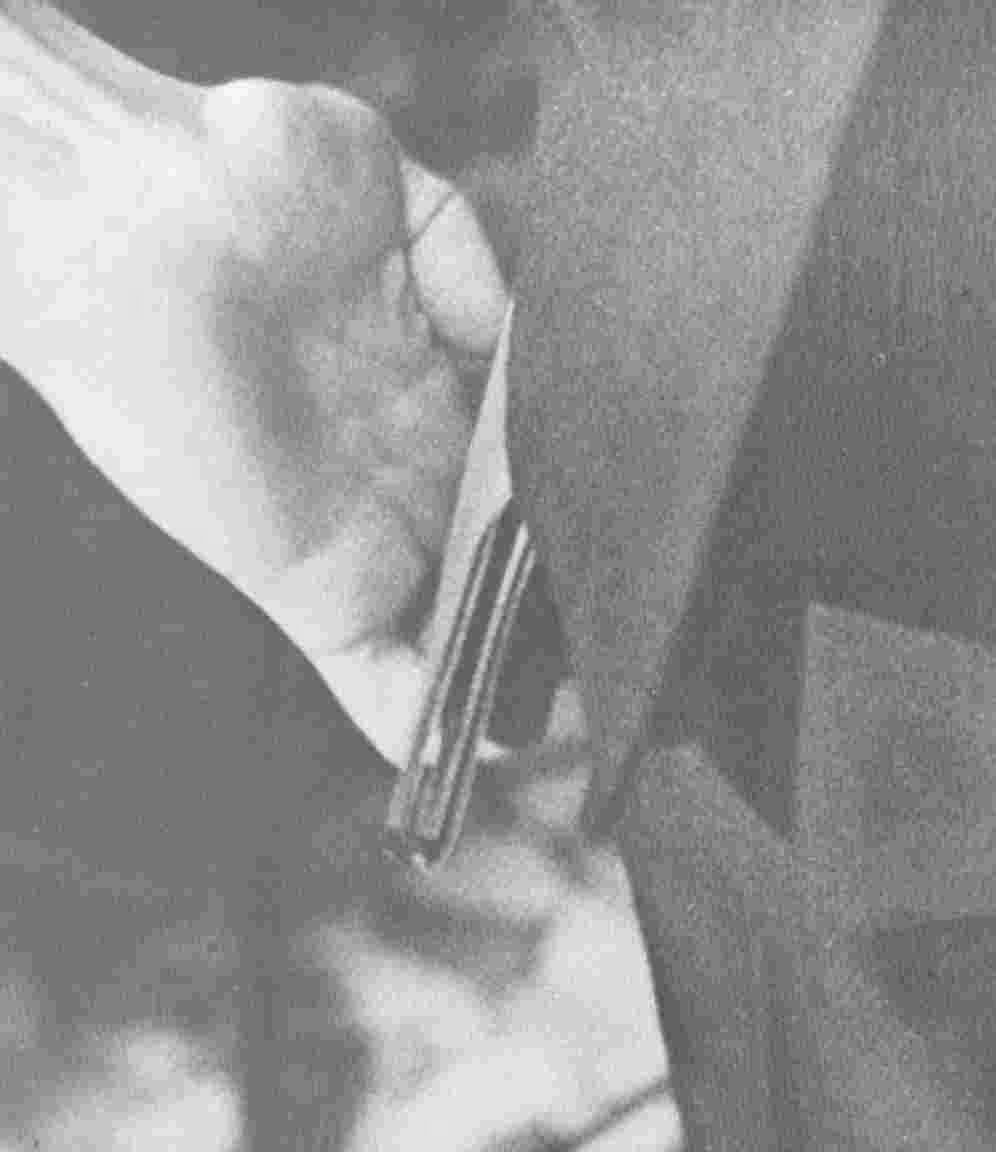
PICKPOCKET
(Robert Bresson, France, 1958)
The erotic intensity of the act of
stealing has never
been more
poignantly revealed than in this film;
the
poetic montages, outlining techniques of theft
in
wordless, fluid succession, are memorable
visual
triumphs. As usual, Bresson's extreme
visual
economy and directness hides a hallucina-
tory
reality; the sexual implications of forcibly
removing
another person's "valuables" by close --
yet,
significantly, only symbolic -- contact with him.
___________________________________________________________________________________________
TAKE
ME
(Stephen
Dwoskin, Great Britain, 1969)
For
thirty minutes, a girl attempts
to
seduce the viewer (the camera)
by
provocative movements and kisses,
becoming
progressively more covered
with
paint until the seduction "succeeds".
An
intense, sadly masturbatory tour de force
by
England's most iconoclastic independent.
___________________________________________________________________________________________

WEEKEND
(Jean-Luc Godard, France, 1968)
Verbal pornography as art -- by Godard.
The woman, her face deeply shadowed,
recounts very specific sexual memories
while the male (analyst?) listens impas-
sively. There is little movement or
action;
yet the sequence is
drenched in eroticism,
to
which the girl's pose and attire (and
the
presence of a male) contribute. SC
___________________________________________________________________________________________
WHAT
GOES ON AT SEX THERAPY CLINICS
(Community
Medical Cablecasting, USA, 1972)
An
example of the twilight status presently enjoyed by
American cable television: not yet large
enough to be a
"threat"
to law and order, yet sufficiently widespread to be
seen
by considerable audiences. On the same television set
on which the commercial networks impose
the most onerous
censorship of
visual materials. Community Medical Cablecasting
presents films for doctors which,
however, are available to all
cable-TV
subscribers. The film under discussion presents a
middle-aged, middle-class couple,
comfortably ensconced in
a
bourgeois doctor's office, listening to two smiling sexologists
outline a carefully graduated program to
correct the man's
premature
ejaculation; the wife is to masturbate him three times
a
night until immediately prior to ejaculation and then to stop;
only the fourth time should she bring him
to climax. Moans and
groans
are encouraged. Erection and penetration are freely dis-
cussed and an air of smiling gentility
and earnest rationalism never
disappears
from proceedings unprecedented for American television.
___________________________________________________________________________________________
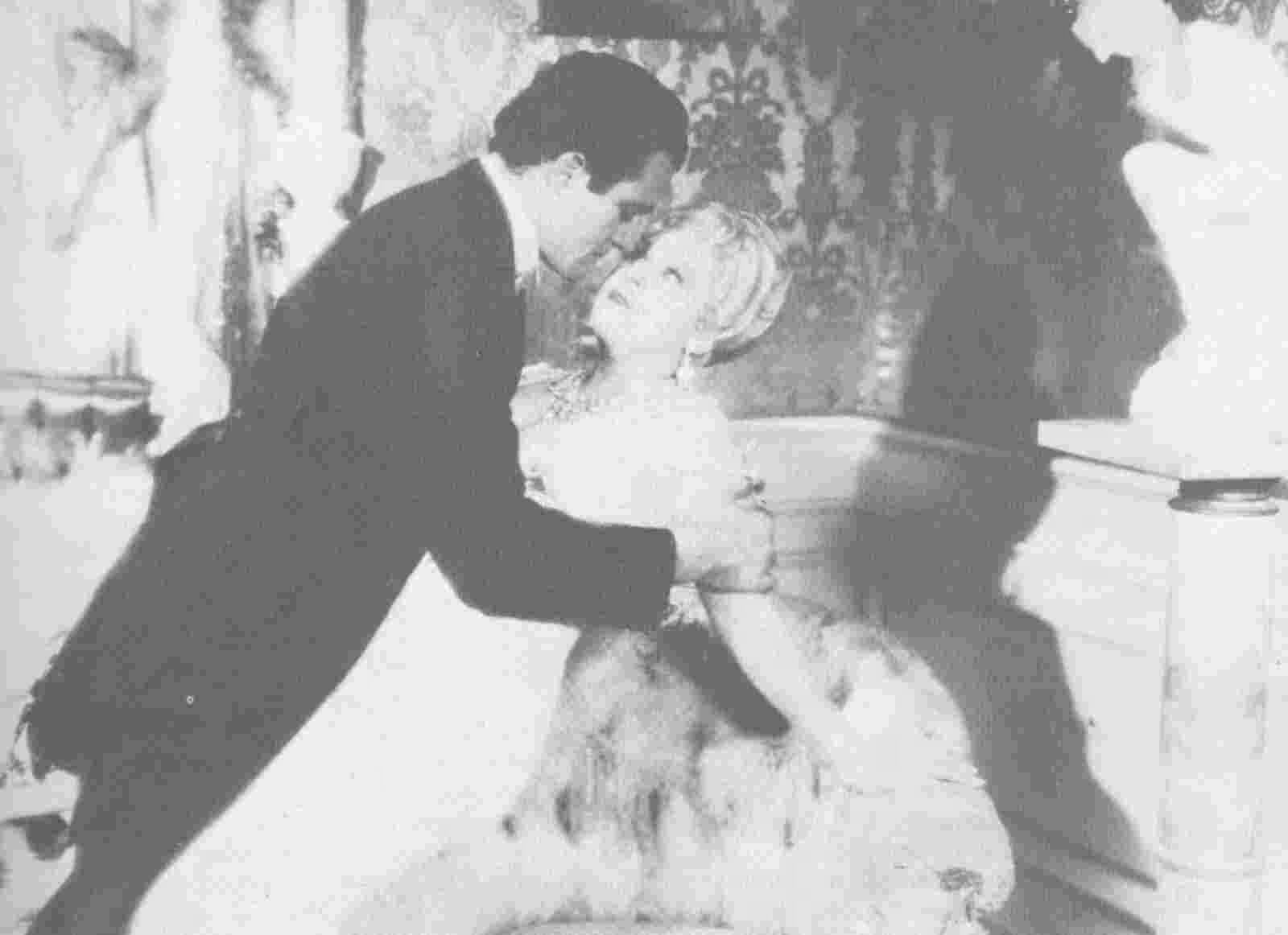
SHE
DONE HIM WRONG
(Lowell
Sherman, USA, 1933) (F)
Sex
Then: this shot was once considered daring.
It
touches upon the act and skirts it; titillation
is
rampant. The male appears as agressor, but
the
female (note calculating glance) has helped
induce
her sweet predicament. The sexes are
apart,
wear masks, and are submerged by heavily
"erotic"
decor; they are clearly defined as actors.
___________________________________________________________________________________________

UNFOLDING
(Constance Beeson, USA, 1969)
Sex Now: The masks are off, as are
the clothes;
these are people,
not actors; titillation is gone
and
lust is accompanied by warmth and tender-
ness.
Two pairs of hands create a circle. This
lyrical
work -- significantly, one of the few erotic
films
ever made by women -- progresses from
foreplay
to explicit sex, proving that even
"hardcore"
sequences can be subverted into
dealing
with feelings rather than mechanics.