FILM
- AS A -
SUBVERSIVE ART
THE
CABINET OF DR. CALIGARI
(DAS
KABINETT DES DR. CALIGARI)
(Robert
Wiene, Germany, 1919) (F)
The
insane asylum -- but is it? In a very modern
twist,
the lines between sane and insane shift while
reality
and rationalism are called into question.
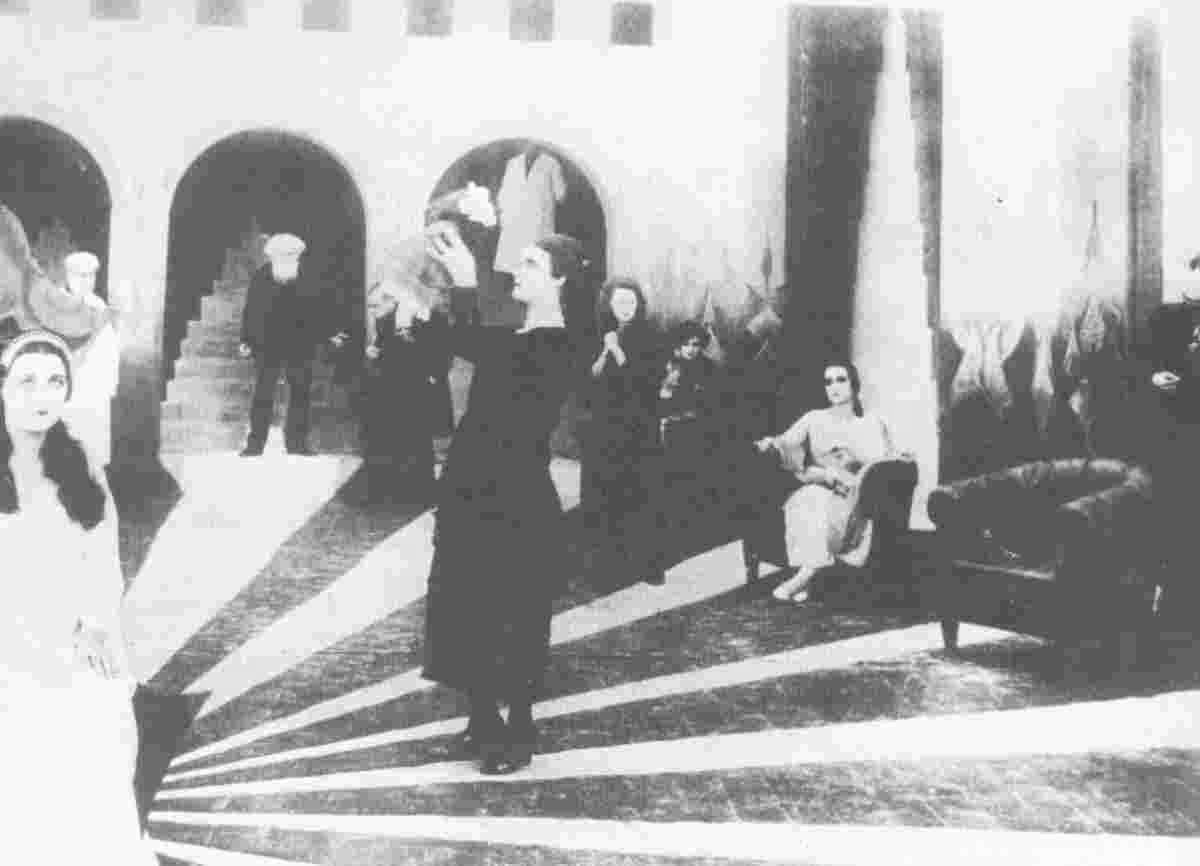
The
concentric ray pattern, converging upon the mad
heroine,
creates strong visual disturbance, reinforced
by
opposing geometric shapes in the background.
EXPRESSIONISM:
THE CINEMA OF UNREST
FILMS
___________________________________________________________________________________________
THE
CABINET OF DR. CALIGARI
(DAS
KABINETT DES DR. CALIGARI)
(Robert
Wiene, Germany, 1919) (F)
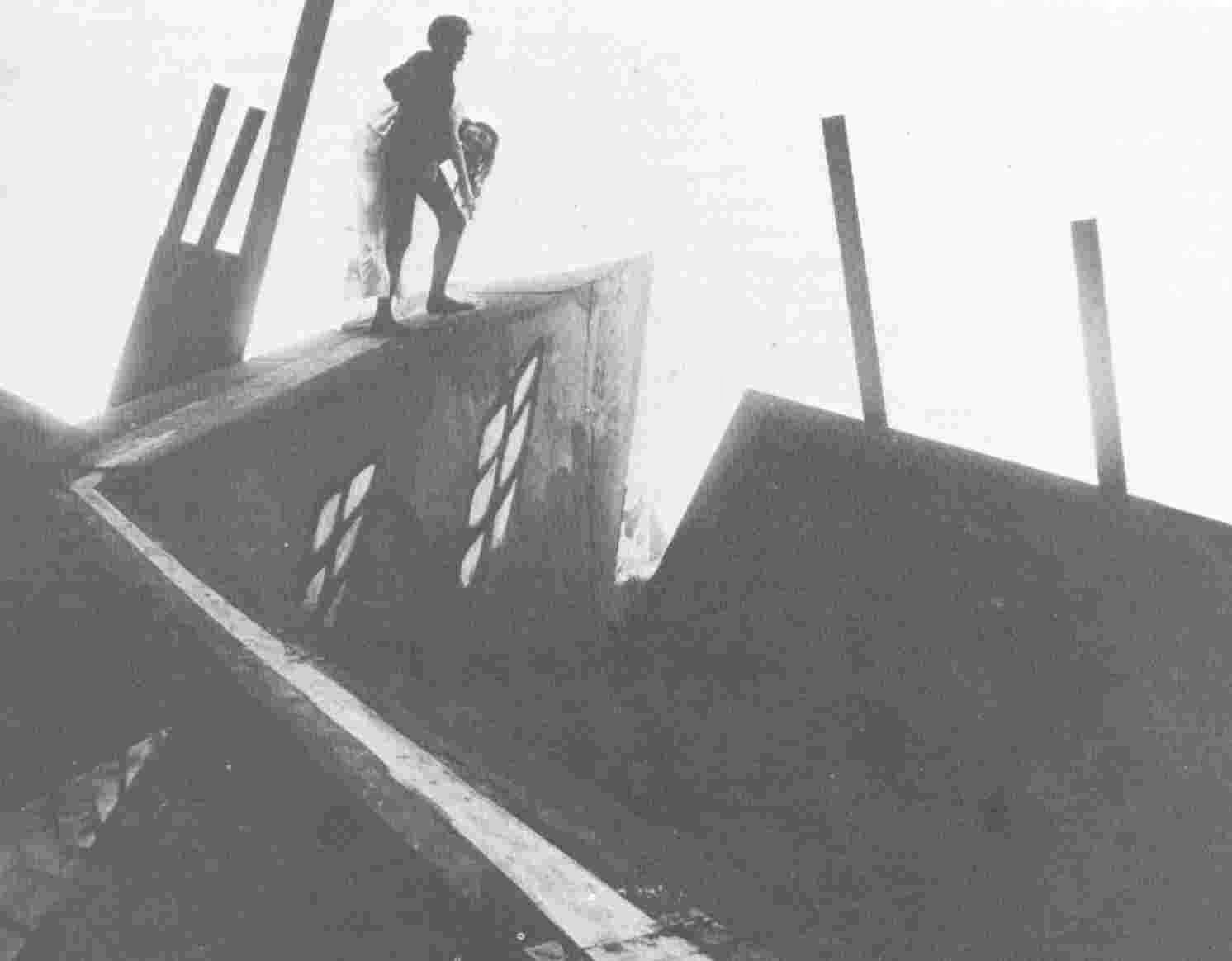
The
decor as integral part of the expressionist
statement.
Proudly artificial, it calls attention
to
itself by boldness and exaggeration. Not a
single
straight line is to be seen; instead, both
actors
and sets seem to collapse upon each
other
in a reflection of chaos and dread, as
the
murderous somnambulist abducts the girl.
______________________________________________
This
extraordinary work -- in terms of impact, one of the most
important films ever made -- is a
metaphysical construct disguised
as
a melodramatic thriller. Apparently the story of a mad
magician
who hypnotizes a
somnambulist into committing murder, it is recoun-
ted
by the protagonist in a setting revealed only at the end as part
of an insane asylum, in which protagonist
and actors are inmates,
while
the mad magician is actually their benevolent psychiatrist.
Suffused
with atavistic, nameless terror, the film evokes and exploits
unfocused, primitive anxieties in the
spectator. In the context of the
early
twenties its aesthetic daring and originality are extreme; it
creates its own magic universe, stressing
darkness and night as the
arena
of human dread and anxiety. The decor and scenery -- by well-
known expressionist painters -- are
totally integrated, subjective
components
of the action without which the film could not exist;
they are riddled with emotion and
entirely artificial (often merely
painted
on) and full of distorted perspectives and extreme dislocations.
Tottering streets, warped buildings
and ceilings, walls that tend to fall
toward
each other, even abstract patterns serve to emphasize claustro-
phobia and impending chaos. The
artificial, hand-drawn shadows
(antidating
Last Year in Marienbad) fall in disregard of natural laws,
increasing distortion and contrast;
fighting is selective, melodramatic,
arbitrary;
acting -- adapted to the metaphysical concept of the work --
stylized and robot-like,as if the false
curves and "movements" of the
decor
were being duplicated by the protagonists. Their faces distorted
into mask-like visages by exaggerated
makeup, they (and their stilted
dialogue
conveyed in inter-titles) convey no human dimensions.
The
film is sparse and works on the level of hints and intense,
distinct moments. Filmically, it
abjures the pyrotechnics of the
avant-garde;
the camera is largely immobile (except for a few
tracking
shots),in middle distance; there is barely any editing;
camera angles are conventional. The
only concession to film tech-
nique
is the use of a circular or diamond-shaped iris device at
start and end of sequences to act as
metaphors of a break between
outer
and inner world and poetically to slow the action in its meas-
ured revelation (or rendering invisible)
of a hallucinatory universe.
Caligari
is ideologically a most modern film. We are in a world of
chaos, terror, and non-understanding.
Existential coldness envelops
it,
implying the need for revolt, the probability of failure, the dilemma
of freedom subordinated to fate, the
realization (in 1919!) of something
frightful
in our midst. The world itself is seen as insane asylum and, with
Laing, we are never sure who are the
inmates and who are the physicians.
The
final irony of the film is that its "reality" is ultimately
revealed as
simply a madman's
fantasy. The fact that we have been duped is more
unsettling, hence more subversive, than
would have been the orig-
inally
envisioned ending, in which the story would have been "true"
--
with Caligari mad and the
hero sane. Instead, just as in The Man With
The Movie Camera and so many of
the most modern films, we confusedly
encounter
conflicting levels of reality. As one is revealed as spurious,
we enter a second, perhaps equally
dubious level. The subversion of
our
conscious, the dislocation of our sense of reality, is therefore tw0-
fold: first, the false revelation
of the madman Caligari as a fraudulent
psychiatrist;
and then, in a complete reversal, his reinstatement
as
benevolent doctor, with hero unmasked as madman in turn.
The result is that at the end there
remains an unsettling suspi-
cion
-- fed by no tangible clues except our own now continuous
sense of distrust -- that this may
not be "the truth" either.
___________________________________________________________________________________________
THE
CAT AND THE CANARY
(Paul
Leni, USA, 1927) (F)
This
extraordinary prototype of the horror film progresses
to
its climax in a suitably decaying manor. It utilizes
all devices of expressionism to induce,
as Matthews (1)
puts it, a
salutary state of anxiety through terror:
dark
rooms and hallways, heavy shadows, secret
compartments,
invisible enemies, billowing drapes,
a
constantly moving camera. The set and decor are
integral
parts of a story and, more importantly, a mood
that
captures us by remaining shadowy and unspecified.
(1) J.H. Matthews, Surrealism and Film, 1971
___________________________________________________________________________________________
THE
CREMATOR
(Juraj
Herz, Czechoslavakia, 1968) (F)
A
provocative attempt to penetrate the origins of sado-sexual Nazi
mentality is made in this oppressive,
strongly expressionist film
about
an inhibited petty-bourgeois family-man whose work with
corpses at the local crematorium -- "to
free them for the after-life" --
gains
unexpected proportions during the Nazi occupation. His
meek
wife agrees to let
herself be hanged by him, his son is murdered and
added
to someone else's coffin, and his final appointment as head of
an extermination camp -- once again to
dispatch people to freedom --
appears
as logical denouement to a bizarre, powerful story. Editing
and camerawork is strongly influenced by
the new cinema in the West.
Equally
surprising for the puritanical East is its clear, yet entirely
"hidden" portrayal of fellatio,
with the girl under a table and the
man
sitting behind it; at the end, she emerges, wiping her mouth.
___________________________________________________________________________________________
DEATH
BY HANGING
(KOSHIKEI)
(Nagisa Oshima, Japan, 1968) (F)
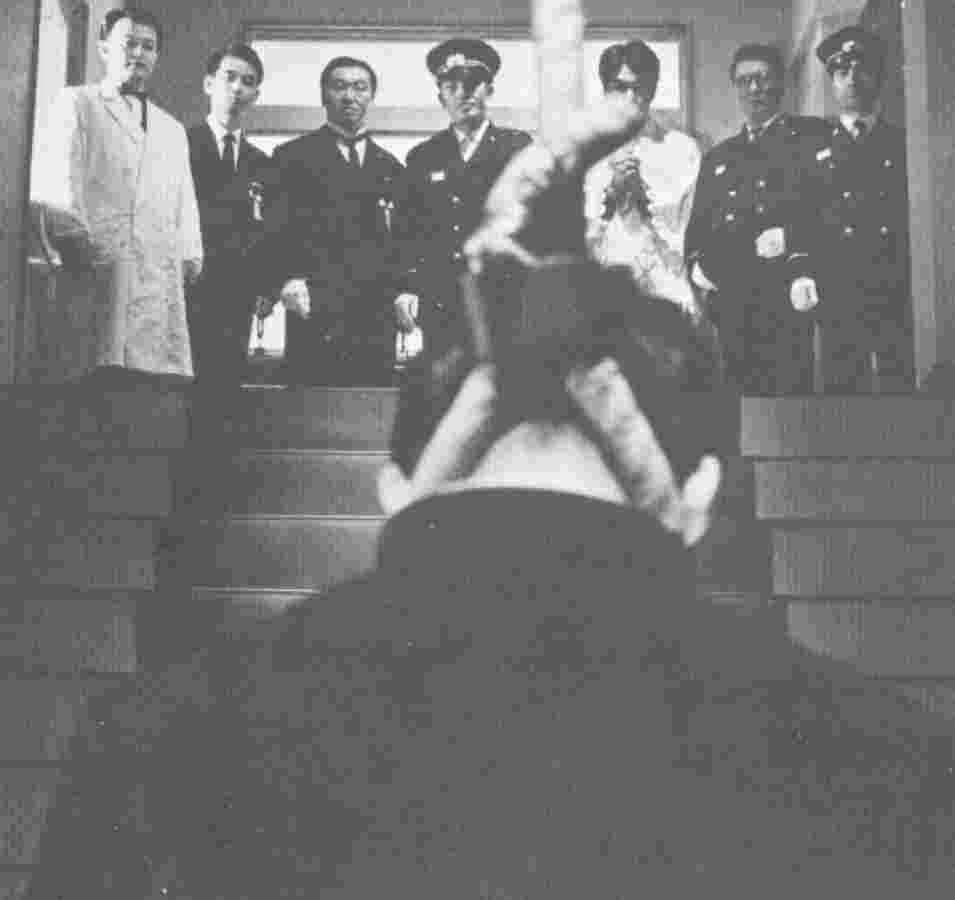
The Establishment and its Victim. Opposed
to
caputal punishment, the
filmmaker meticulously
places
rope and victim in the center; the execution
fails
and the victim must be executed a second time.
______________________________________________
A
bizarre and alien masterpiece by an indefatigable experimentor,
based on a true story of a Korean
unjustlyaccused of murder and rape
and
subsequently executed. This is a brilliantly achieved
expressionist
drama, during
which the condemned man ironically must be executed
twice
and the police, re-enacting his crime to convince him of his guilt,
are carried away by their role-playing
into committing a second rape
and
murder. It is an extraordinary study of personal identity and
social guilt, of reality and illusion, of
the law's need for crime to
exist
and of capital punishment as the supreme crime. The work,
while reminiscent of Commedia dell'Arte
and of Brecht, emerges as
possibly
the most genuinely Japanese work to be seen in the West.
______________________________________________
DEATH
BY HANGING
(KOSHIKEI)
(Nagisa Oshima, Japan, 1968) (F)
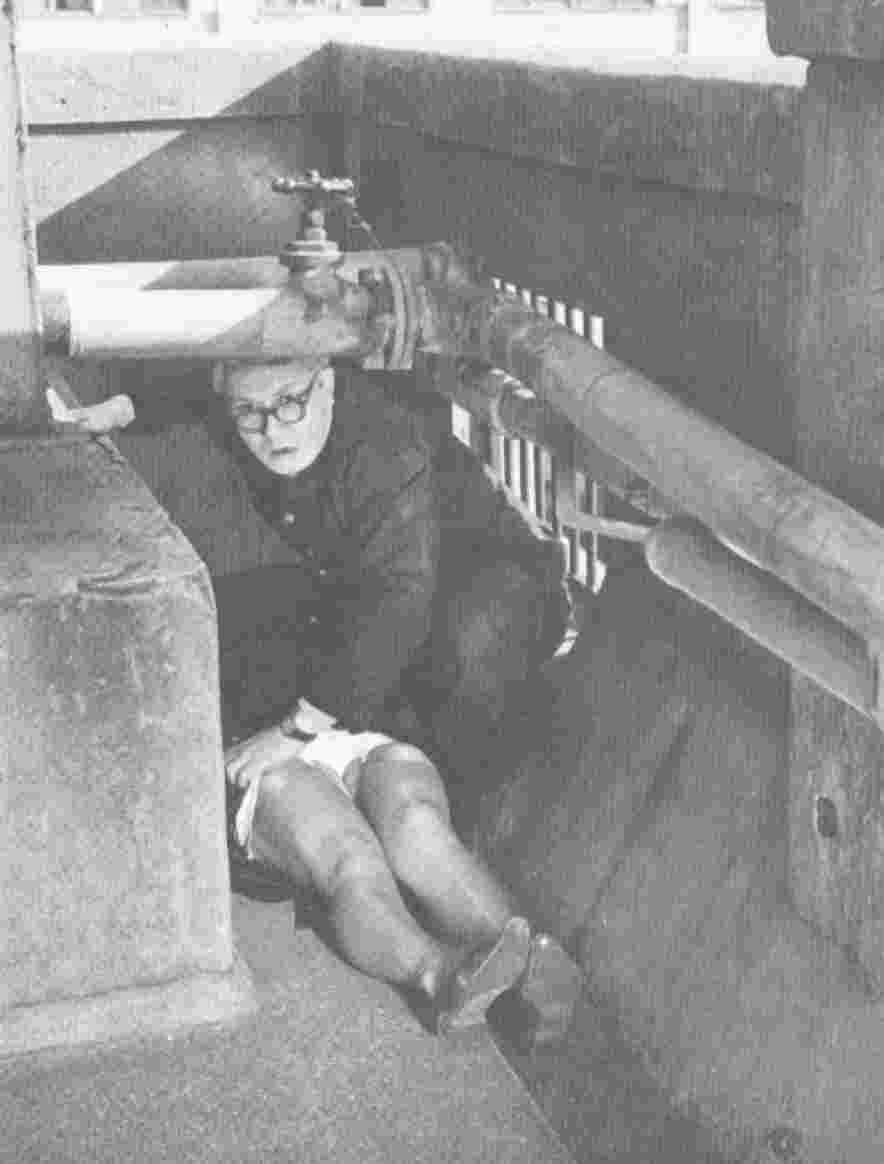
In a Brechtian sequence, the police,
attempting to convince
the
condemned man of his guilt, re-enact his crime with
such
gusto that they actually commit it; subversive proof
that
law needs crime to exist. The policeman, exhibiting
the
fear of the criminal caught in the act, already seems
incarcerated by the composition, but is
unable to remove
his
incriminating hand from the suddenly desired object.
The
positioning of the woman's body is visually provocative.
___________________________________________________________________________________________
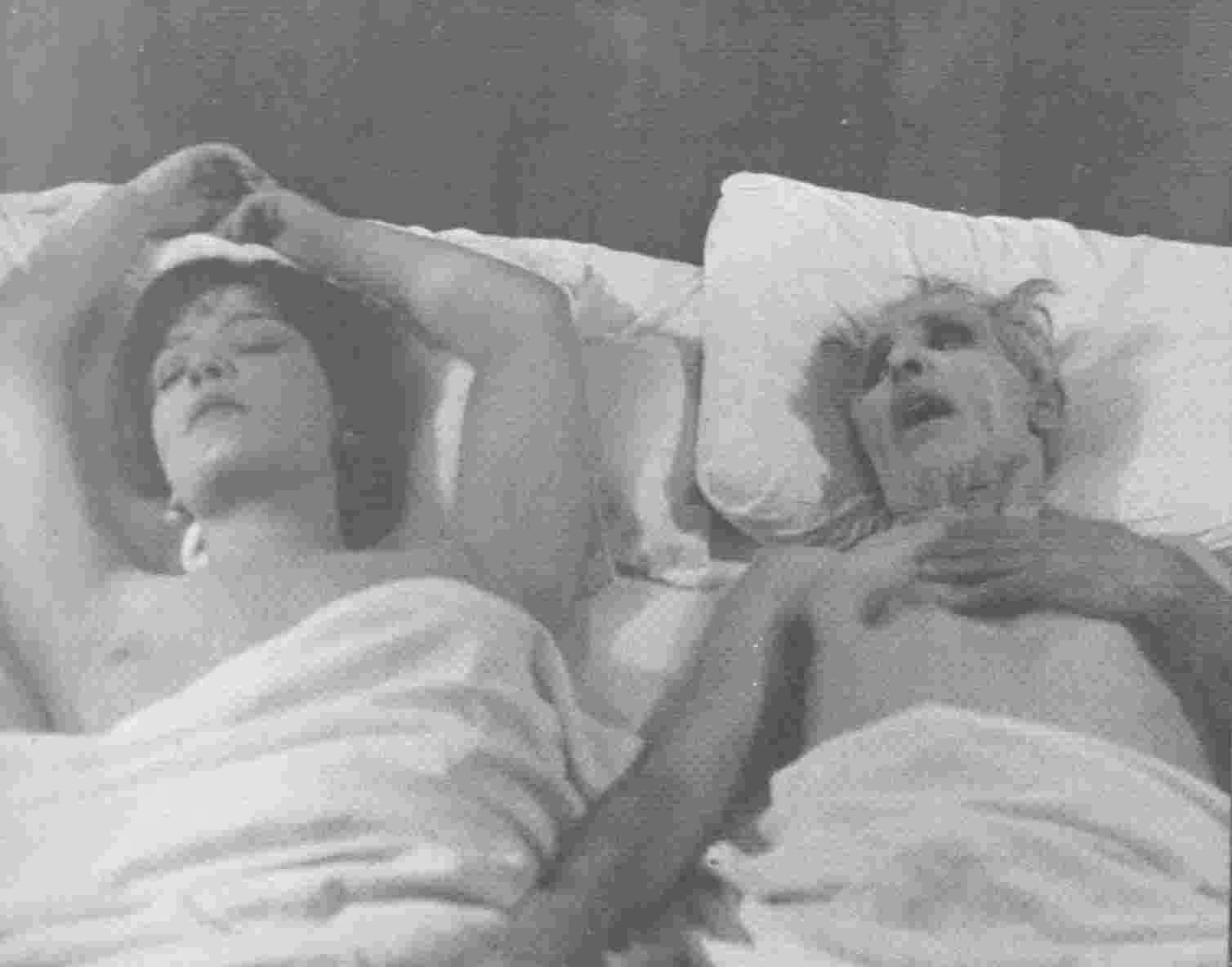
CAPRICCI
(Carmelo Bene, Italy, 1969) (F)
The wretched, gasping attempts by this
near-
corpse to make love to
the nubile young
woman
exemplify the expressionist, black
humor
and melodrama of an exorbitant work.
______________________________________________
Founder
of one of Italy's most famous experimental theatres,
poet, actor, author, playwrite, and
leading avant-gardist.
Carmelo
Bene is an unknown genius of contemporary cinema.
This
is one of his masterpieces. Bene's films are visual, lyrical
and auditory cataclysms, whose lava-like
outpourings are of
unequalled
hallucinatory perversity. Their visual density and
creative exuberance defy description.
Capricci -- melodramatic,
wildly
expressionist, and opaque -- includes a bloody, endless
fight between two men brandishing hammer
and sickle, poisoned
Christ
paintings that kill the beholder, impotent sex by a lecher-
ous old man coughing his lungs out over a
tantalyzingly nude
woman,
killings, car crashes, explosions, and raging fires, all
accompanied by operatic arias, constantly
moving cameras,
and violent
montage. Vulgar black humor, eroticism, and
anarchic action mingle in this swirl of
color and incessant
motion --
a tour de force of expressionist filmmaking.
___________________________________________________________________________________________
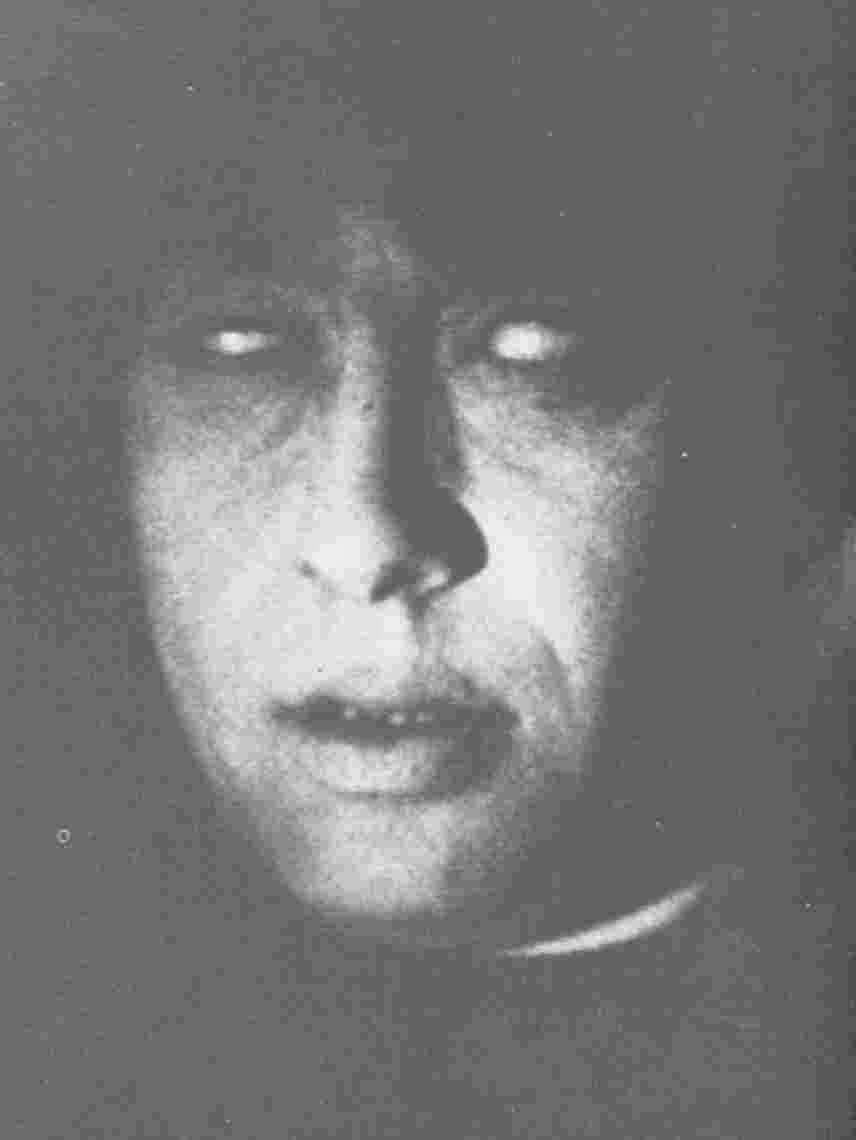
OUR
LADY OF THE TURKS
(NOSTRA
SIGNORA DEI TURCHI)
(Carmelo
Bene, Italy, 1969) (F)
The
filmmaker himself as expressionist hero;
selective
lighting, interplay of whiteness and
shadow,
frightening, irregular positioning of
eyes
and pupils create an uncanny ambience.
______________________________________________
With
Capricci, this is the most hallucinatory and original
masterpiece yet created by Bene; an
explosion of neo-
expressionism
(with surrealist overtones) unequalled on the
contemporary screen. The inspired,
exasperating madness
of this
possessed moralist carries him beyond rage into black
humor and grotesque burlesque,
aimed at the deadweight of a
reactionary
cultural matrix. This appears here as the heritage
of sumptous, crumbling churches,
miraculous Madonnas, and
melodramatic
operas, the excesses of the Baroque in art and
life-elements of an Italy from which Bene
wishes to free himself.
Moravia
refers to Bene's work as "desecration by dissociation,
pushed beyond the point of schizophrenic
delirium" and to
the
over-all effect of this film as that of a grotesque, delirious
lynching. How else "explain"
scenes such as Bene, a knight
in
full armor, stubbornly attempting to make love to a nude
woman (still involved with dishes) to the
accompaniment of
great
clanking; or of Bene compulsively getting enmeshed in
bandages until covered head to foot while
injecting his butt-
ocks in a
public cafe, and repeating nonsensical phrases;
or
Bene, driven insane perhaps by obsessions and visions,
permitting himself to be raped by an
eager Madonna who
afterwards
smokes in bed while reading magazines, halo
in
place. There is jungle vegetation, a car that parks next
to a bed, indoor barbed wire, an
ambiguous duel danced
with a
publisher, and constant aural bombardment by
the
most famous, most sentimental arias of Italian opera.
___________________________________________________________________________________________
THE
LATE MATTHEW PASCAL
(FEU
MATHIAS PASCAL)
(Marcel
L'Herbier, France, 1924) (F)
Bizarre
adaption of Pirandello's story of a man who --
searching
for absolute freedom -- is unexpectedly
given
an opportunity to exercise it. Alberto Caval-
canti's expressionist distortions of
decor and archi-
tecture
underscore the meta physical rhythms of this
strange,
disordered tale. Filled with black humor
and
semi-surrealist melodrama, this unpredictable
adventure
in ambiguous freedom, conceived by an
arch-sceptic,
erupts in a paradoxical denouement.
___________________________________________________________________________________________
THE
LIBERATION OF MANNIQUE MECHANIQUE
(Steve
Arnold, USA, 1971)
A haunting,
genuinely decadent work
about
mannequins that may be real and
girls
that may be models, journeying through
strange
universes towards possible self-
discovery.
An exorbitant, perverse sensibility
informs
the ambiguous images and events.
___________________________________________________________________________________________
THE
REALITY OF KAREL APPEL
(DE
WERKELIJKHEID VAN KAREL APPEL)
(Jan
Vrijman, Holland, 1962)
The
Dutch abstract-expressionist Appel shown "at work"
in a film that aims to reveal his
philosophy of art:
"I
paint like a barbarian in a barbarian age" -- and so
he hits, attacks and slashes the canvas,
flinging pigments
against it.
Passionate and violent, the act of painting
is
shown as an act of aggression against an insane world.
__________________________________________________________________________________________
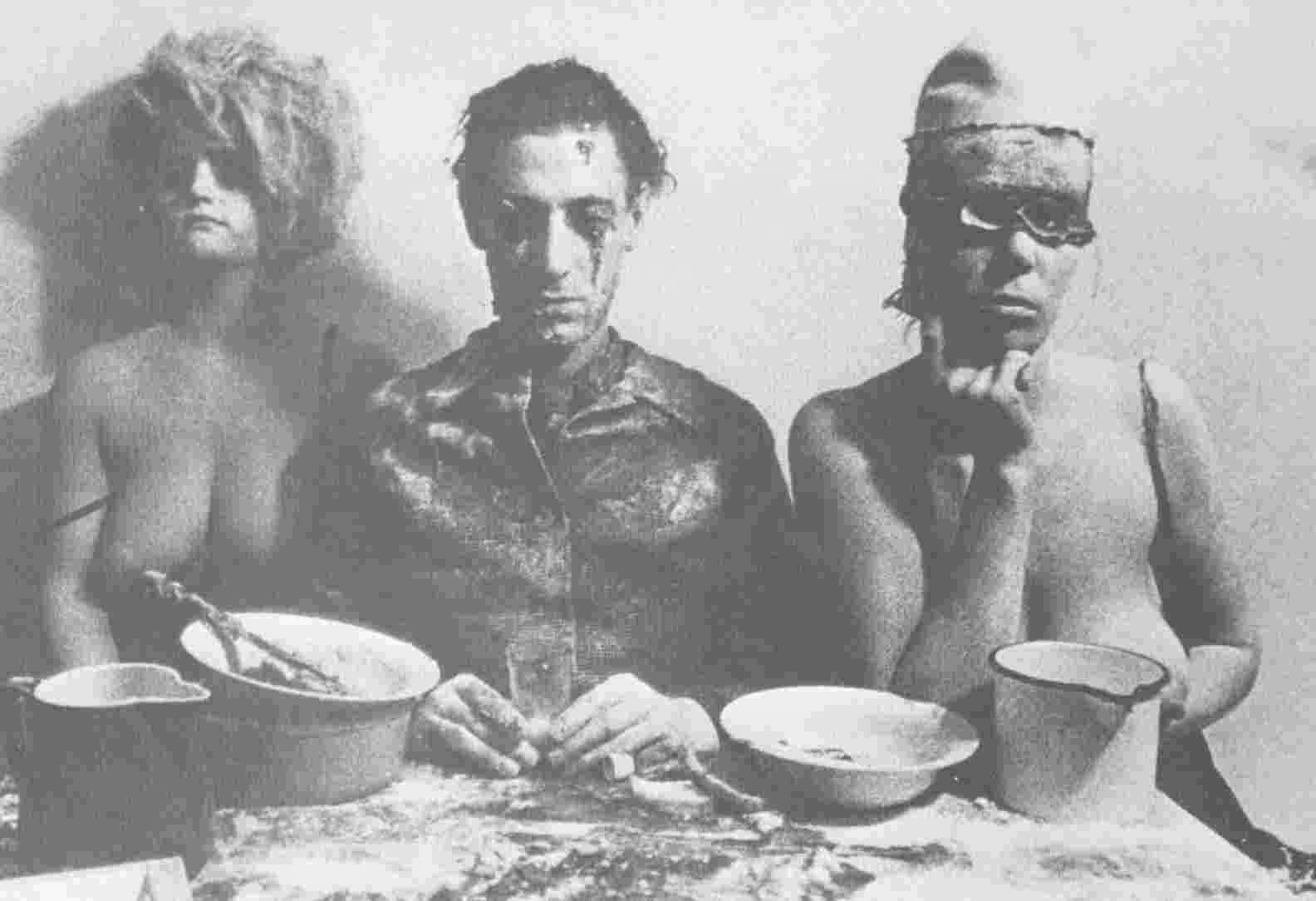
VISUAL
TRAINING
(Frans
Zwartjes, Holland, 1969)
Zwartjes'
films are haunting excursions into
desperate
universes of alienation, in which
male
and female, while extricably bound to each
other,
never "connect". Here an impassive Keaton-
like
male engages in supremely sexual, ominous
food
orgies with voluptuous, half- nude women
whom
he paws impotently. Texture of image,
crass
make-up, and selective lighting further
emphasize
the expressionist character of the film.
______________________________________________
A major
new talent in international avant-garde cinema,
Zwartjes
creates hermetic, obsessive, and "decadent"
universes, in which desperate,
dissociated males and females,
though
inextricably bound to each other, never "connect".
Here an impassive, Keaton- like figure
engages in a sexual, omi-
nous
food orgy with voluptuous, half-nude women whom he paws
impotently. A mysterious, powerful
tension informs the action.
Despite
non-communication and mutual defilement of the grossest
kind, a profoundly humanist
statement emerges; compassion for
these
victims, "partners" in loneliness. Expressionist
style, make-up
and
lighting as well as complex montage heighten the effect of the
tragic tableaux, in which tortured
non-heroes operate impotently
in
hostile space, facing us blindly, nakedly, with all defenses down;
compelling us, perhaps, to confront
ourselves in like manner.
___________________________________________________________________________________________
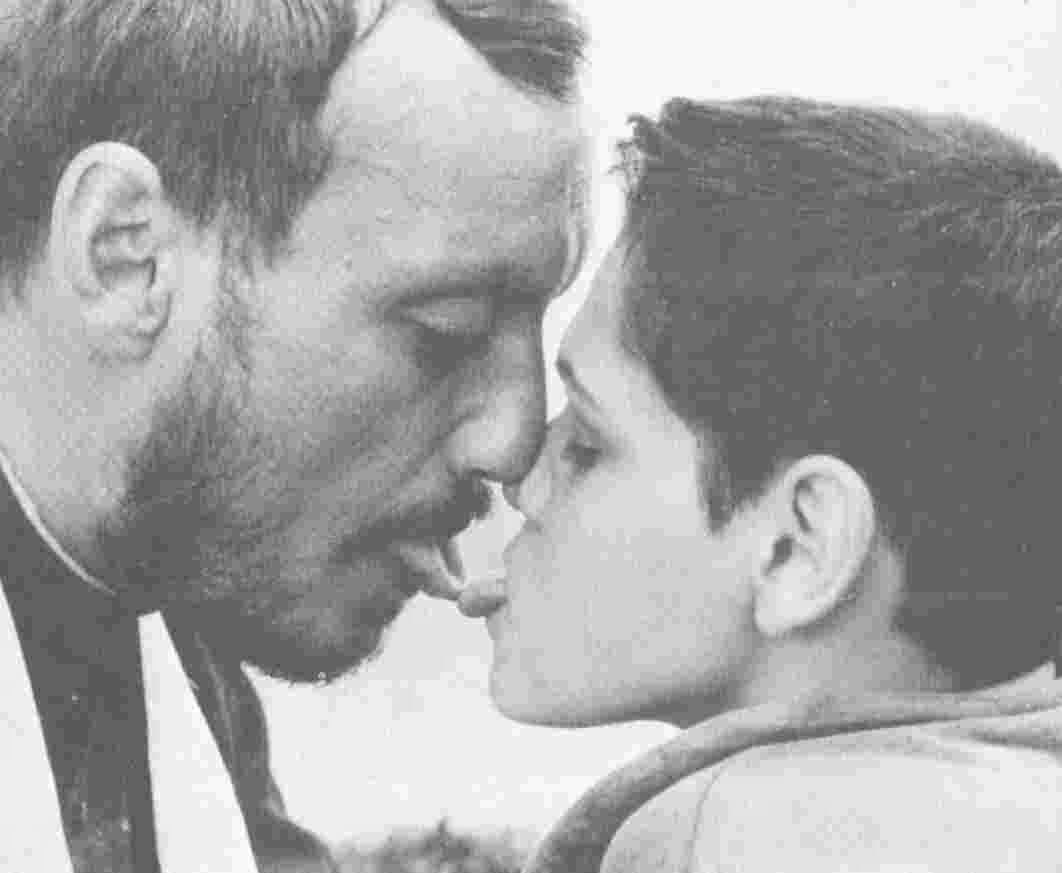
VIVA
LA MUERTE
(Arrabal,
France, 1971) (F)
The
juxtaposition of two tongue-kissing males
(one
the spiritual and actual father to the other)
denotes
Arrabal's insistence on going "too far"
to
shock us into awareness. The film is a brutal,
searing indictment of totalitarianism, as
seen
in the sado-masochistic
nightmares of a young boy
growing
up at the moment of Franco's victory;
horror
and purification are achieved by appealing
to
the spectators subconcious fears (and desires). SC
______________________________________________
This
sensational first film by the famed avant-garde author employs
violence and sex as a means of
revolutionary purification and liberation.
Only
recently released from its French censorship ban, it is a paroxysm
of anguish, a scream for liberty, and
probably one of the most ferocious,
violent
films ever made, Reminiscent of Bunuel and Kozinsky it mingles,
in hallucinatory images, the realities
and nightmares of a 12-year-old boy
growing
into manhood at the moment of Franco's victory. (The film's
locale --
though never
identified -- is clearly Spain, while its intent is anti-totalitarian
in an international, contemporary
sense.) Every few minutes it veers from
uncertain
realism into the boy's imagination, beset by monstrous tortures,
violence, death, and a primitive sadism
that engulfs the spectator precisely
because
it does not impose upon, but merely activates his own subconcious
fears and desires. The unspeakable
mystery of adulthood, the secret tempta-
tion
of the sin of sex, the inexplicable terror of government, and the
mon-
strous suspicion of the
mother's denunciation of the father to the authorities
are fully revealed in the boy's anguished
hallucinations. This is a document
of
a Catholic adolescence at a time of civil war, replete with
blasphemous,
scatological, and
incestuous incursions. Its nightmare sequences involve
photographed television images and
manipulated color negatives, creating
an
unearthly, expressionist ambiguity that makes the horror more
pervasive
for being
indistinct; our subconcious immediately, obligingly supplies our
own phobias to render the nightmare
effective. Particularly horrifying is
the
repeated use of a melodic Dutch children's song; given the context,
it
assumes unsuspected
hideousness, changing into an ominous metaphor
of
innocence soiled by corruption. That the film is filled with
Arrabal's
own obsessions is
both undeniable and inevitable. Some therefore
have been tempted to write it off as a
narcissistic, pathological doc-
ument;
in reality, however, having passed through the monstrous
turbulence of his imagination, we are
restored, through violence,
to
a possible hope, a steely new humanism of the 70s, informed
by Franco, concentration camps, A-bombs,
and Vietnam. SC
______________________________________________
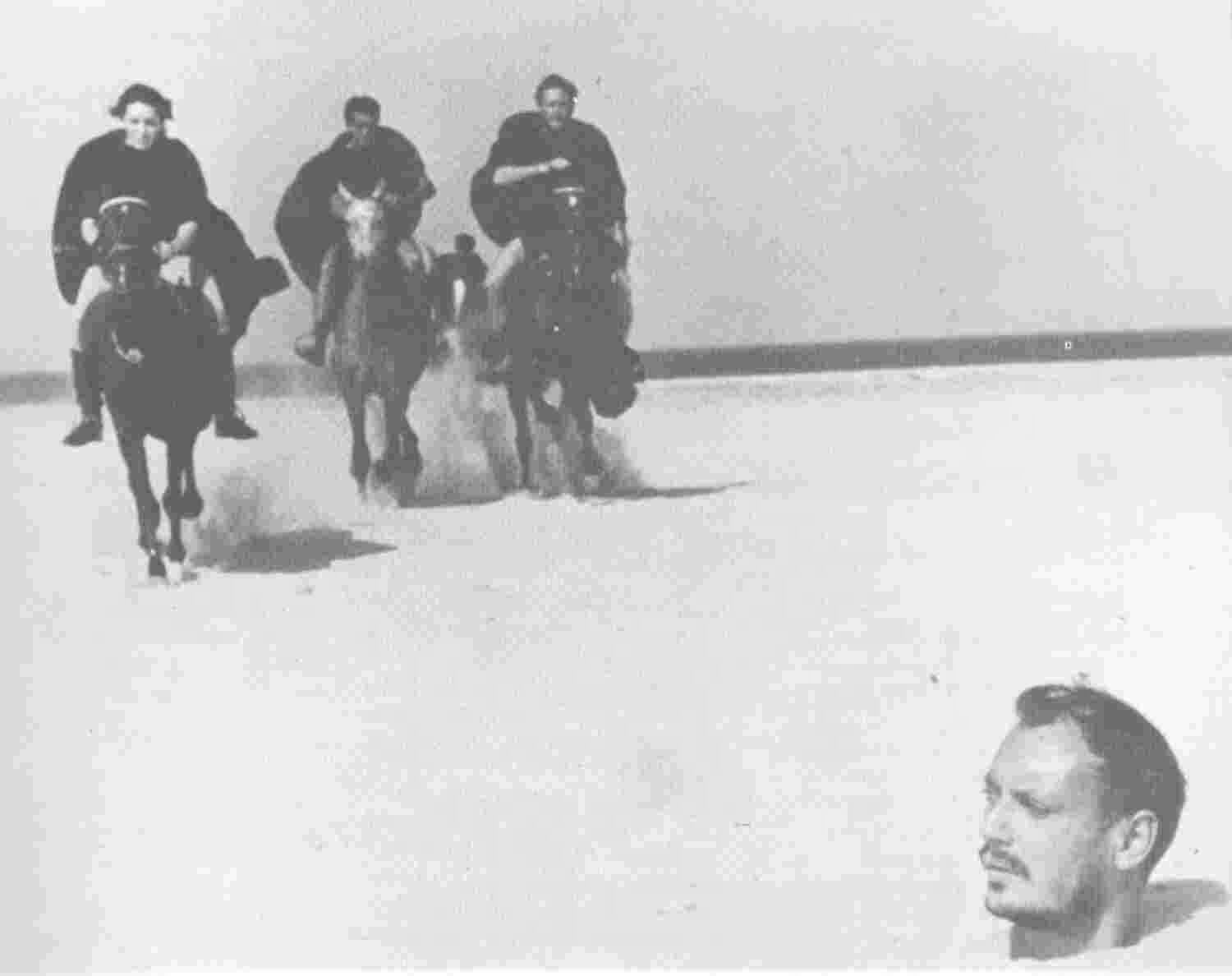
VIVA
LA MUERTE
(Arrabal,
France, 1971) (F)
This
unexpected, feared sight evokes subconcious fears
of
being buried alive; the more so when an additional
danger
threatens. Reminiscent of Eisenstein's similar
shot
in his unfinished Mexican epic, this is a grim
reminder
of a film of torture and oppression. SC