FILM
- AS A -
SUBVERSIVE ART
LA
RICOTTA
(episode
in ROGOPAG)
(Pier
Paolo Pasolini, Italy, 1962)
Pasolini's
acid satire on pseudo-religion, banned by the
Italian
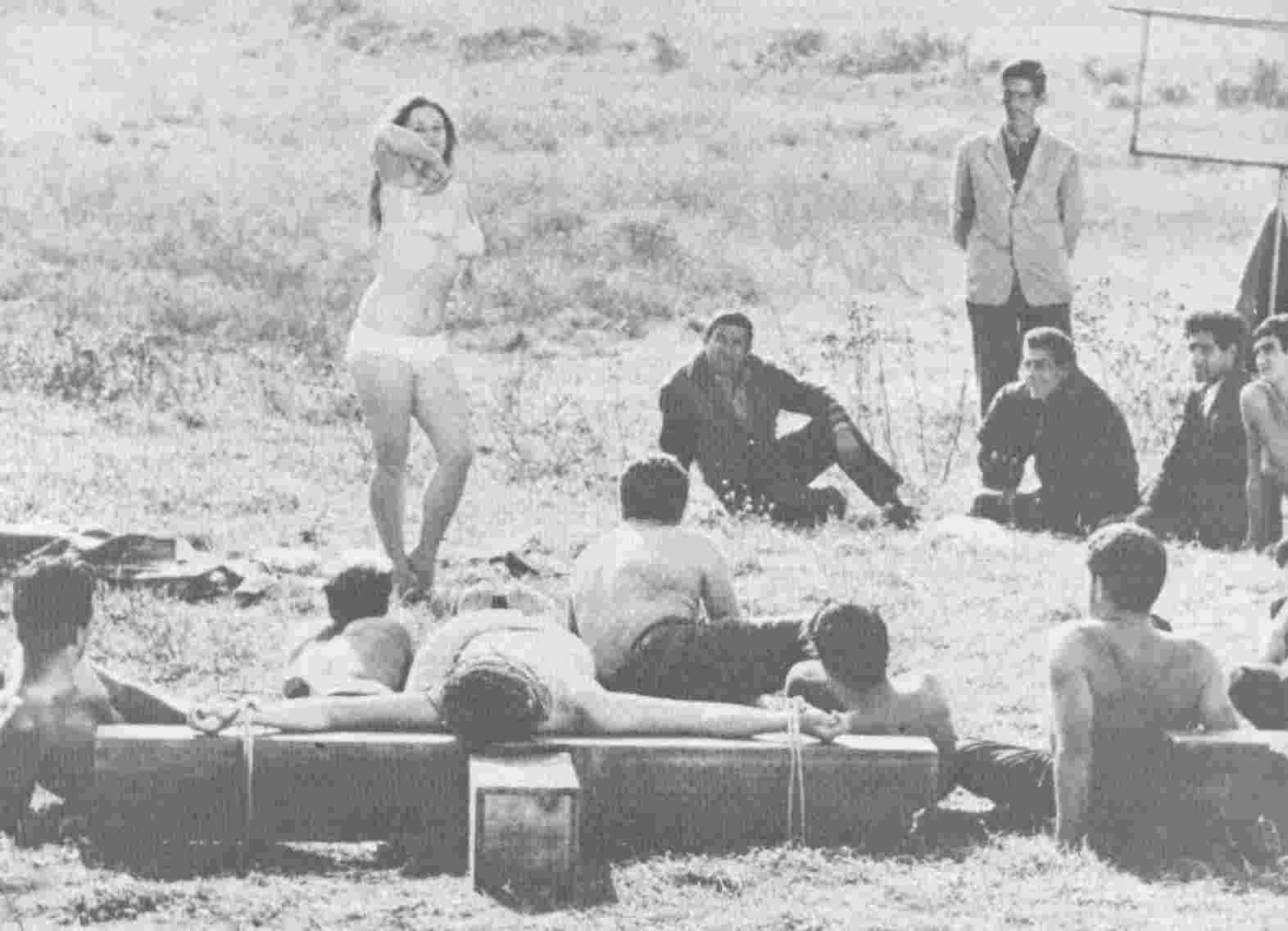
government. As we participate in the production of
a typical Italian religious "epic",
the cast, during a break,
watches
a strip by the actress who plays Mary Magdalene
while
a crucified Christ lies in the foreground. Stripper and
Christ are themselves placed into a
cross-like composition,
forcing
our glance to waver between one and the other. SC
THE
ATTACK ON GOD:
BLASPHEMY
AND
ANTI-CLERICALISM
Paradoxically,
the relative absence of blasphemous films is due
both
to the strength of the religious taboo and to its irrelevance.
Film is
so public and pervasive a medium that it operates under the
closest supervision of state and clerical
censorship systems (often
abetted
by the film industry's self-censorship regulations.) These
laws -- aimed at protecting a status
quo that is an intricate web
of
secular and clerical power relationships -- effectively prevent
attacks on religions for reasons
either of faith or commerce (the
fear
of antagonizing powerful pressure groups). Blasphemy is thus
eliminated either after production (by
prohibition or organized boy-
cotts)
or, preferably, before (the film industry's well-developed sense
of financial self-interest magically
coincides with religious propriety).
In
America, the immensely powerful Catholic Legion of Decency --
until the 1960s virtually controlling
exhibition patterns of certain
films
-- effected this by its own rating system. Its condemnations
of certain works (constituting virtual
excommunication of producers
and
exhibitors) appear, in retrospect, even more significant than they
did originally and afford, by their sweep,
a view of the clerical mind
in
action: one can imagine how anti-religious films would have
fared,
if one considers the
nature and quality of some of the titles officially
condemned: L'Avventura, Virdiana,
Smiles of a Summer Night, Los
Olvidados,
La Notte, Blow-Up, Knife in the Water, Repulsion, Breath-
less, The Married Woman, Jules et Jim,
The Silence, The Pawnbroker,
Woman
of the Dunes, and Martin Luther. La Strada was
classified as
"morally
objectionable in part for all" because "it tended to arouse
undue
sympathy for immoral
characters"; and The Bicycle Thief was classified
as "containing material unsuitable
for entertainment motion pictures."
Judging
by the almost complete absence of sacrilegious films
(particularly when compared to the
manifold infringements
on the
sex taboo) one must conclude that the taboo on blas-
phemy is one of the most pervasive now
operating in cinema.
But the
situation is more complex, for at the same time another
factor comes into play; the relative lack
of interest in the subject
among
both audiences and filmmakers. Religion is simply not
the order of the day as far as
contemporary cinema is concerned.
There
is, of course, no dearth of charming family comedies (espe-
cially from Catholic countries such as
Italy and France) in which
priests
are portrayed lovingly or with good-natured derision;
but
this "humanizing" of the representatives of dogma, far from
being subversive, merely makes the church
more acceptable.
Films
that deal with religion seriously (such as Bresson's Diary of a
Country Priest, Dreyer's Day of
Wrath, films by Bergman and Fellini)
are
as rare as blasphemous works; the latter seem to have been
almost exclusively limited to the
classical surrealist movement.
Significantly,
they are almost entirely absent from the works
of
an avant-garde otherwise much concerned with questions
of
consciousness and values. Since financial or censorship
restrictions do not exist here, the
subject clearly lacks interest.
If there
exists one persistently anti-clerical subversive in the cinema
it surely is Bunuel; his continued
insistence on this theme -- from
L'Age
d'Or to Nazarin, Viridiana, The Milky Way, and The
Discreet
Charm of the
Bourgeoisie -- dialectically indicates a continued invol-
vement with his Jesuit childhood.
The contemporary avant-garde,
however,
lacking the experience of a similar, intensely religious
formative period, continues, with a few
exceptions (Lethem,
Marien,
Nitsch), to be entirely unaffected by anti-clericalism.
There is
one aspect of the problem that ought to be of concern to
documentarians and avant-gardists alike,
which has, perhaps not
so
mysteriously, remained uninvestigated; a study of the wealth
and social power of the Church in the
world today. Here the silence
is
deafening. One of the most powerful institutions of our day has
remained, in cinematic terms, one of the
most secret. Whenever
hesitant
steps were taken to investigate (such as Jack Willis' Every
Seventh Child), they immediately
led to effective counter-action
or
suppression. Documentary filmmakers, largely dependent on
institutional, industrial, or governmental
financing have been
kept from
such studies by informal pre-censorship (the killing of
projects before they are born) or by
self-censorship for reasons
of
self-protection; the avant-garde, erroneously considering the
subject matter dated, has bypassed it; and
neither Stalinists nor
Maoists
or Third World Communists have found it expedient -- for
reasons of political strategy or lack of
concern -- to make such films.
The
reticence of these groups as regards God and His works
remains the more surprising since,
considering the state of
the
world in this 20th century, it seems advisablee to call
into question either His omnipotence or
His benevolence.
FILMS
___________________________________________________________________________________________
L'AGE
D'OR
(Luis
Bunuel, France, 1930) (F)
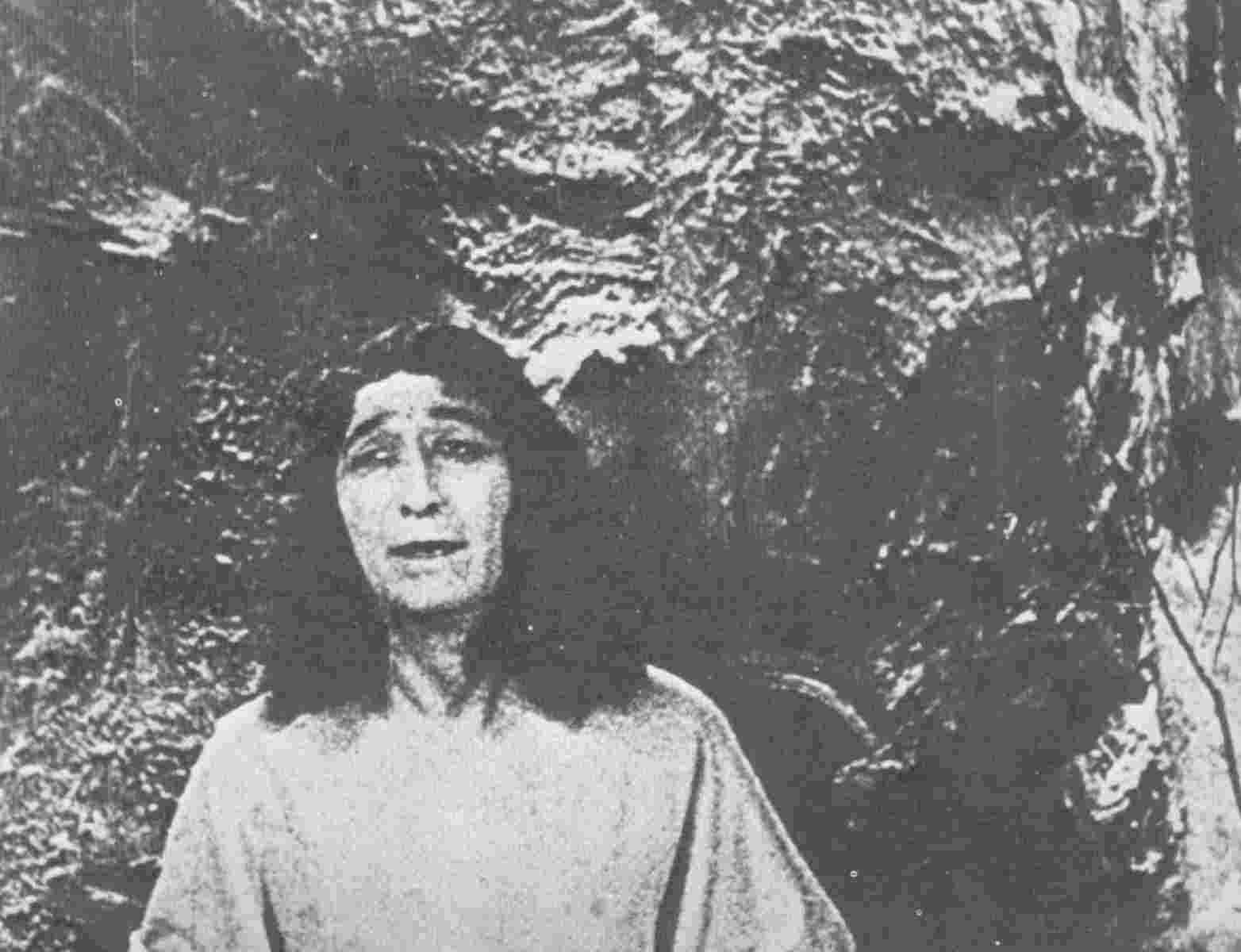
The
continued power of the religious taboo makes this
"dated", slightly ridiculous
image important by withhol-
ding
it from public view; for here, at the end of Bunuel's
anti-bourgeois and anti-clerical shocker,
we are introduced
to the
"depraved monster" and "main instigator" of
a
120-day orgy of debauchery
and perversion: Jesus Christ. SC
______________________________________________
The two
most famous surrealist works of world cinema, Un Chien
Andalou and L'Age d'Or,
were made by Bunuel at the start of his
career
in the space of one year. The second film, L'Age d'Or,
is
largely unavailable; its
producer the Vicomte de Noailles, a convert
to
Catholicism in his later years, withdrew it from circulation as blas-
phemous. It is a work of poetic
sensibility, mordantly anti-bourgeois
and
anti-clerical. Although, as Bunuel put it, its incidents have
been
freed of the corruption
of plausibility, they do counterpose love to
the
fossilized institutions of bourgeois society. Among various
incidents one recalls a raging fire at a
manor party, with hosts and
guests
entirely unaware (comparable in Bunuel's latest, The Discreet
Charm of the Bourgeoisie), an
angry man throwing a giraffe and a
cardinal
out of the window, a passionate woman sucking the toe of a
statue, a hero who kicks dogs and knocks
down the blind, a gamekeeper
who
shoots his son, and invading bishops, soon seen as skeletons.
In
accord with surrealist
ideology, only love -- wild, anarchic, irrational
love
-- is acceptable. Everything else is subverted; the rich, the
church,
the state, the
military, as well as those pervasive bourgeois vices
of sentimentality and romanticism, so
offensive to Bunuel through-
out
his life. In the final scene, a title introduces "the four
utterly
depraved scoundrels
who had just gone through 120 days of the
most
unspeakable orgies, led by their Principal and chief
instigator:
de Sade's
Duke of Blangis" -- who is none other than Jesus Christ.
___________________________________________________________________________________________
ARCHANGEL
GABRIEL
(ARCHANDEL
GABRIEL A PANI HUSA)
(Jiri
Trnka, Czechoslavakia, 1965) (F)
Taken
from Boccaccio's Decameron, this lovely
puppet
film tells the bawdy story of the beautiful
young
Venetian lady who confesses her sinful
passion
for the Archangel Gabriel to a lustful
monk,
who promptly impersonates him in her
bedroom
with predictable results. Amidst
the
film's ribaldry, the hypocrisy and false
piety
of the monk are mercilessly mocked.
___________________________________________________________________________________________
GOLDEN
SHOWERS
(James
Broughton, USA, 1970)
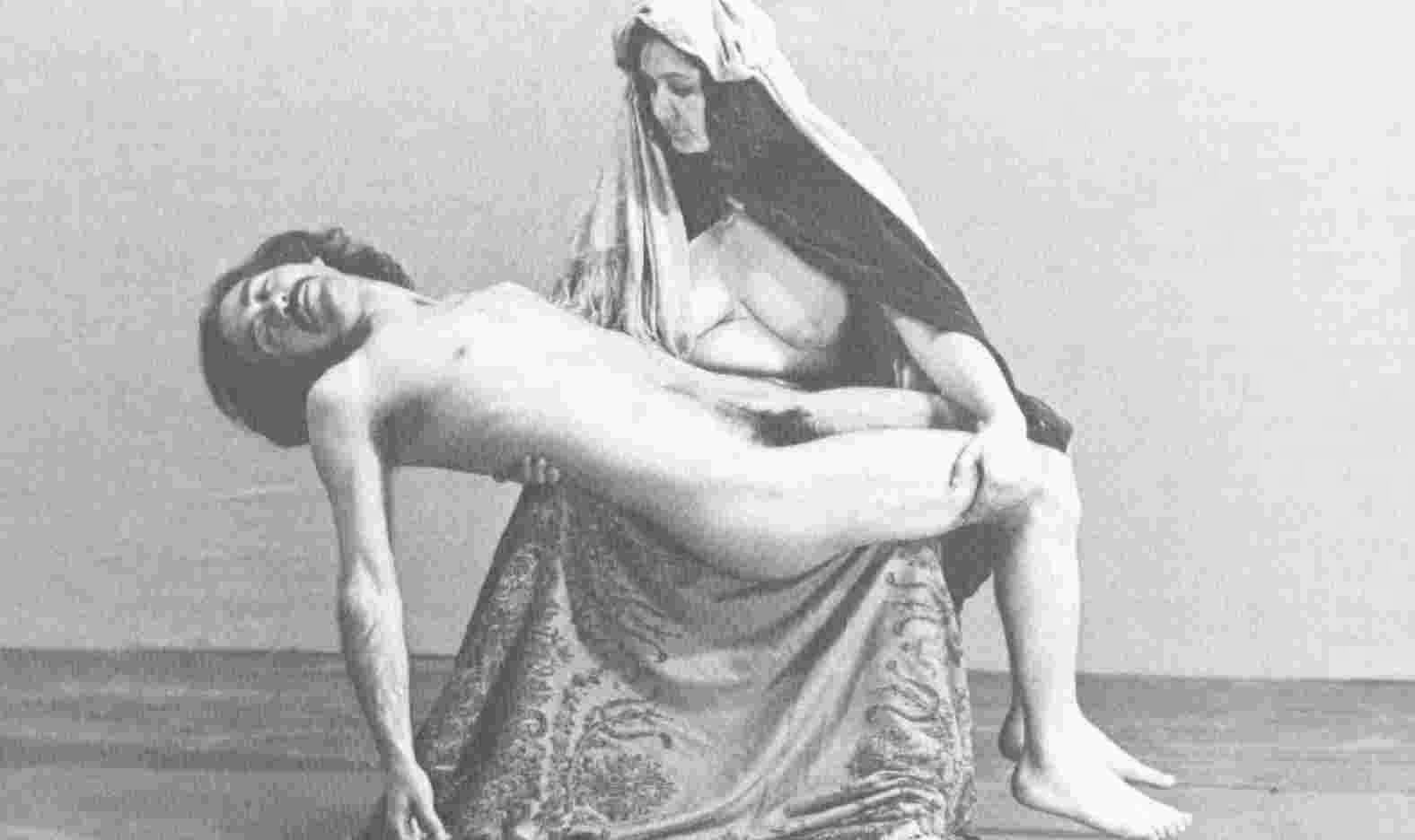
A new,
however gentle desecration of the Pieta.
The
male could have come straight out of a pain-
ting,
but the concreteness of the photographic image
makes
his complete nudity more controversial. The
woman's
pendulous breasts introduce a note of sly
irony
within the context of documentary accuracy.
___________________________________________________________________________________________
CONSTITUTION
AND CENSORSHIP
(Stephen
Sharff, USA, 1953)
A very
useful historical documentary of the American court
proceedings against Rossel lini's
allegedly blasphemous
The
Miracle, which resulted in the Supreme Court
affirmation of film as being covered by
the constitutional
"free
speech" protection clause and the elimination of
"blasphemy" as cause for
censorship. The protagonists --
civil
liberties attorney Ephraim London, single-handedly
responsible for this anti-censorship
victory, and Hugh
Flick, head
of the censor board -- appear in person.
___________________________________________________________________________________________
VIVA
LA MUERTE
(Arrabal,
France, 1971) (F)
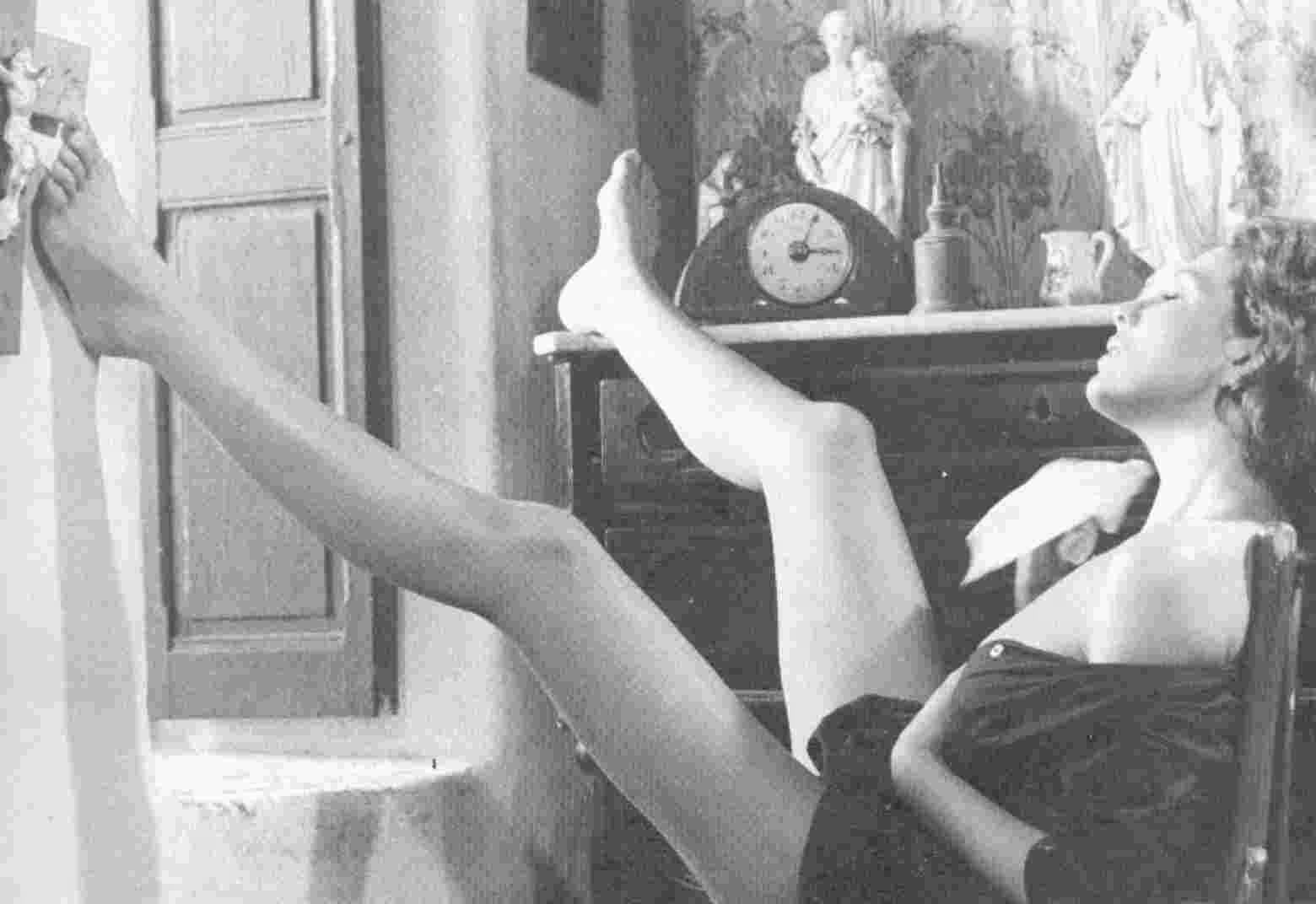
In
very religious Spain, a woman masturbates in front of
an
open window; her foot almost touches, as if in defiance,
the ever-present crucifix; were it not
considered powerful,
it would
not be part of this composition. Other sacrile-
gious
elements permeate Arrabal's hallucinatory film. SC
___________________________________________________________________________________________
EVERY
SEVENTH CHILD
(Jack
Willis, USA, 1967)
It is
significant that following its first and only appearance
on educational television, this important
documentary --
a discussion of
the viability and relevance of Catholic
education
in the United States -- immediately became
subject
to strong, organized attack by pressure groups
and
was withdrawn from distribution. It has remained
unique: no other film involving
reasoned (or even, pos-
sibly,
critical) appraisal of Catholicism has appeared
on
television. The most fascinating (cinema verite)
sequences show the specific
indoctrination of 5-year-
old
children (!) with the concept of sin, coupled
with
exhortations to avoid sex and suicide as sinful.
___________________________________________________________________________________________
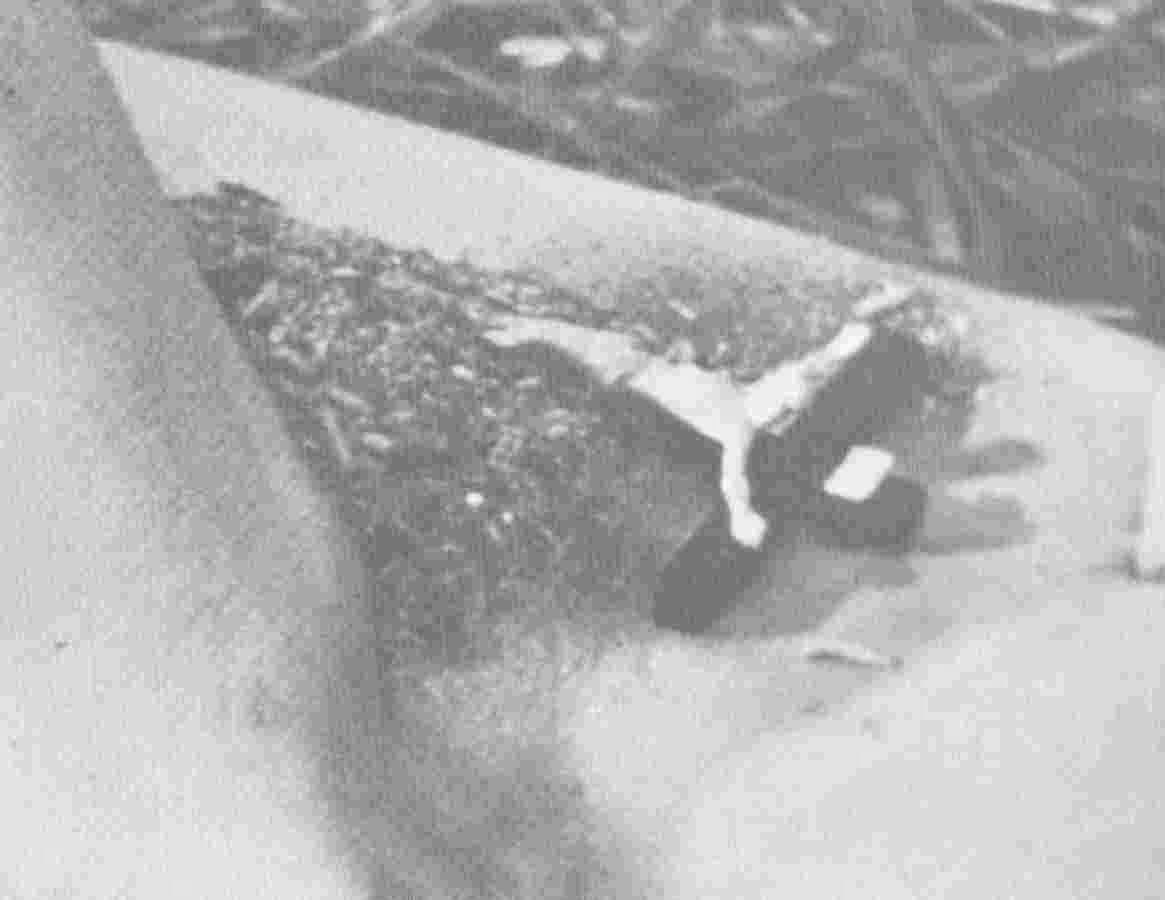
LES
SOUFFRANCES D'UN OEUF MEURTRI
(Roland
Lethem, Belgium, 1967)
By
juxtaposing several "hot" symbols -- female
pubic area, crawling maggots, and
crucifix --
a subversive
filmmaker simultaneously vio-
lates
three taboos in a visual comment on
the
conflict between Catholicism and sex.
___________________________________________________________________________________________
L'IMITATION
DU CINEMA
(Marcel
Marien, Belgium, 1959)
This
Belgian surrealist work consists of two films,
one
commenting on the other, concerning a young
man
with a crucifixion complex. Imagining crosses
everywhere, he even cuts his fried
potatoes in the
shape of a
cross. Unable to buy a large cross, he
settles
for sixty francs worth of small ones, which
he
carries of in a paper bag. When the cross he finds
to crucify himself on proves too small, a
kindly
priest volunteers to
nail his feed to the floor. -
J.H.
Matthews, Surrealism and Film, 1971
___________________________________________________________________________________________
MARJOE
(Howard Smith and Sarah Kernochan, USA,
1972) (F)
This
deceptively humorous cinema verite study of a
travelling
evangelist emerges as a ruthless expose of an
aspect
of America's national psyche, with implications
far
beyond its immediate subject matter. Marjoe began by
performing marriage ceremonies at the age
of four (seen in
marvelous
newsreels of the time) and graduated to fame
on
the "Holy Roller" Pentecostal circuit, throwing women
into convulsions, performing miracles,
providing sex sub-
stitutes
and mass therapy to the countless victimized poor
and
ignorant who flock to his meetings with their offerings.
While the sequences of a prancing
Mick Jagger imitation
(complete
with rock rhythms and brimstone) and of his
huge
and suffering audience in themselves constitute an
impressive achievement of non-fiction
cinema, simulta-
neous private
interviews reveal the fiery evangelist to
be
a cynical atheist and hedonist, with contempt for his
"work" and at best an ambiguous
solicitude for his flock.
The
revelation of mass manipulation by a charismatic,
smiling
con-man, the fervor and conservatism of the
duped,
the intrusion of questions of money and power
over
others -- these American preoccupations are brilliant-
ly
reflected in this outrageous, disturbing black comedy. SC
___________________________________________________________________________________________
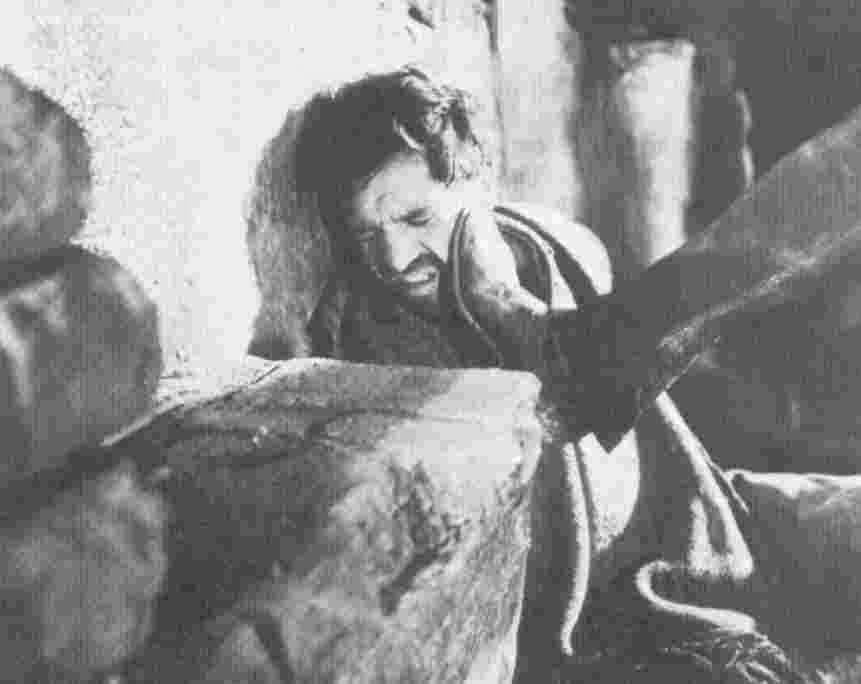
NAZARIN
(Luis Bunuel, Mexico, 1958) (F)
A new, contemporary attempt at acting
like
Christ, turning the other
cheek, and doing
good unto
others, does not fare well at the
hands
of man, as seen in one of Bunuel's
most
philosophical and clear-eyed works. SC
___________________________________________________________________________________________
THE
MIRACLE
(LE
MIRACOLO)
(Roberto
Rossellini, Italy, 1948)
Anna
Magnani as a dimwitted peasant girl who allows
herself
to be seduced by a stranger because she believes
him
to be Saint Joseph; pregnant, she decides to have the
child, since he must be the Messiah.
A serious and mo-
ving work,
its American release led to condemnation by
the
Legion of Decency, a virulent and organized campaign
against it, which included picketing,
bomb threats, and
Cardinal
Spellman's diocesan condemnation lumping
the
film with "the greatest enemy of civilization, atheistic
Communism". It is ironical
that this campaign, by leading
to
the banning of the film by the New York censors, sounded
the death-knell for censorship in the
United States; for in
1952,
the Supreme Court rescinded the ban, declaring that
films, as significant media for the
dissemination of ideas,
were
covered by constitutional free speech guarantees.
___________________________________________________________________________________________
MOTHER
JOAN OF THE ANGELS
(MATKA
JOANNA OD ANIOLOW)
(Jerzy
Kawalerowicz, Poland, 1961) (F)
Considering
its source, this film's attitude towards reli-
gion
is surprisingly sophisticated and non-propagandistic.
Portraying events in a 17th century
nunnery supposedly
possessed
by devils, it subtly reveals sexual urges, guilt and
sado- masochism as strongly related to
concepts of sin and
exorcism.
A prototype of intelligent anti-clerical filmmaking.
___________________________________________________________________________________________
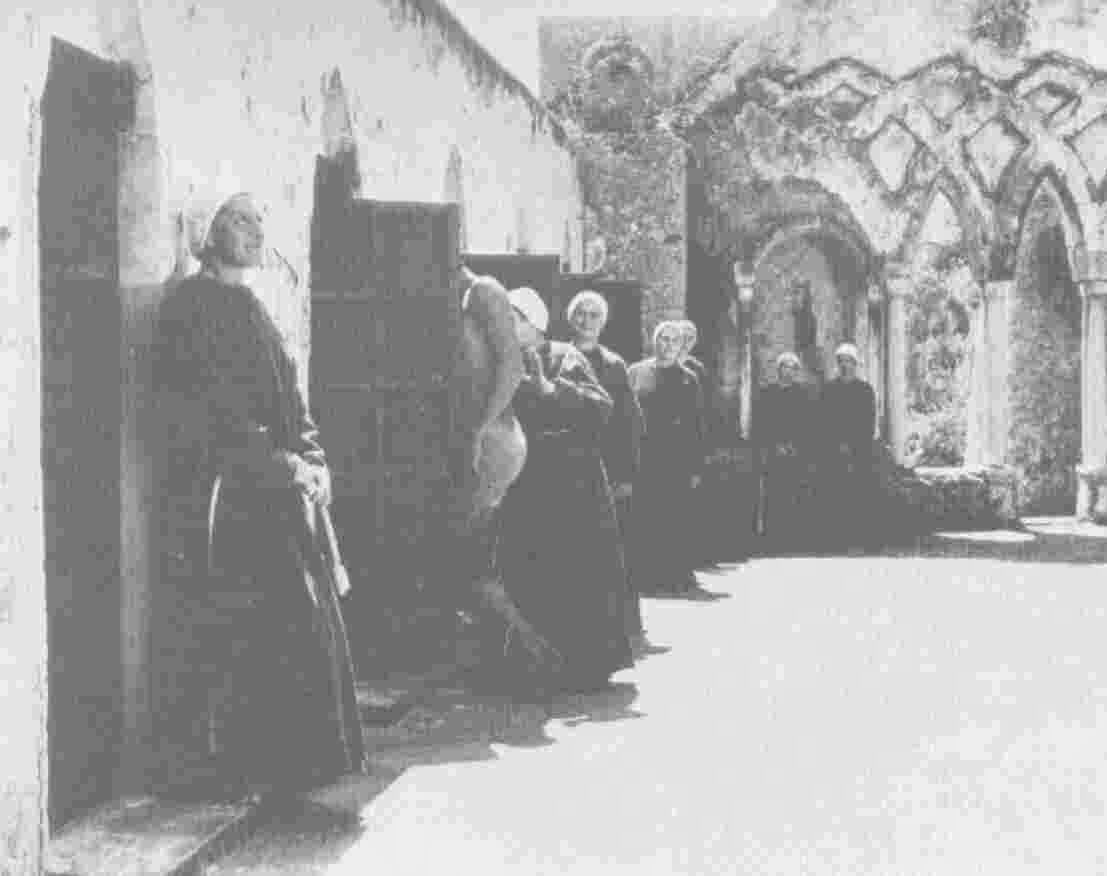
THE
DECAMERON
(Pier
Paolo Pasolini, Italy/France/West Germany, 1970)
A
young handyman, pretending to be deaf and dumb,
allows
himself to be utilized by assorted nuns in
various
interesting ways. Italian sunlight, country-
side,
and actors reinforce authenticity in this
vigorous
retelling of Boccaccio's stories; bawdiness
and
past tense soften the sacrilegious aspects. SC
___________________________________________________________________________________________
A
NOTE FROM ABOVE
(Derek
Phillips, Great Britain, 1969)
A
false message and its consequences: the ten commandments
(received from God) are unthinkingly
acted out to the letter
in an
ominous animated film. Unfortunately, the last
commandment, by mistake, reads "Thou
Shalt Kill".
___________________________________________________________________________________________
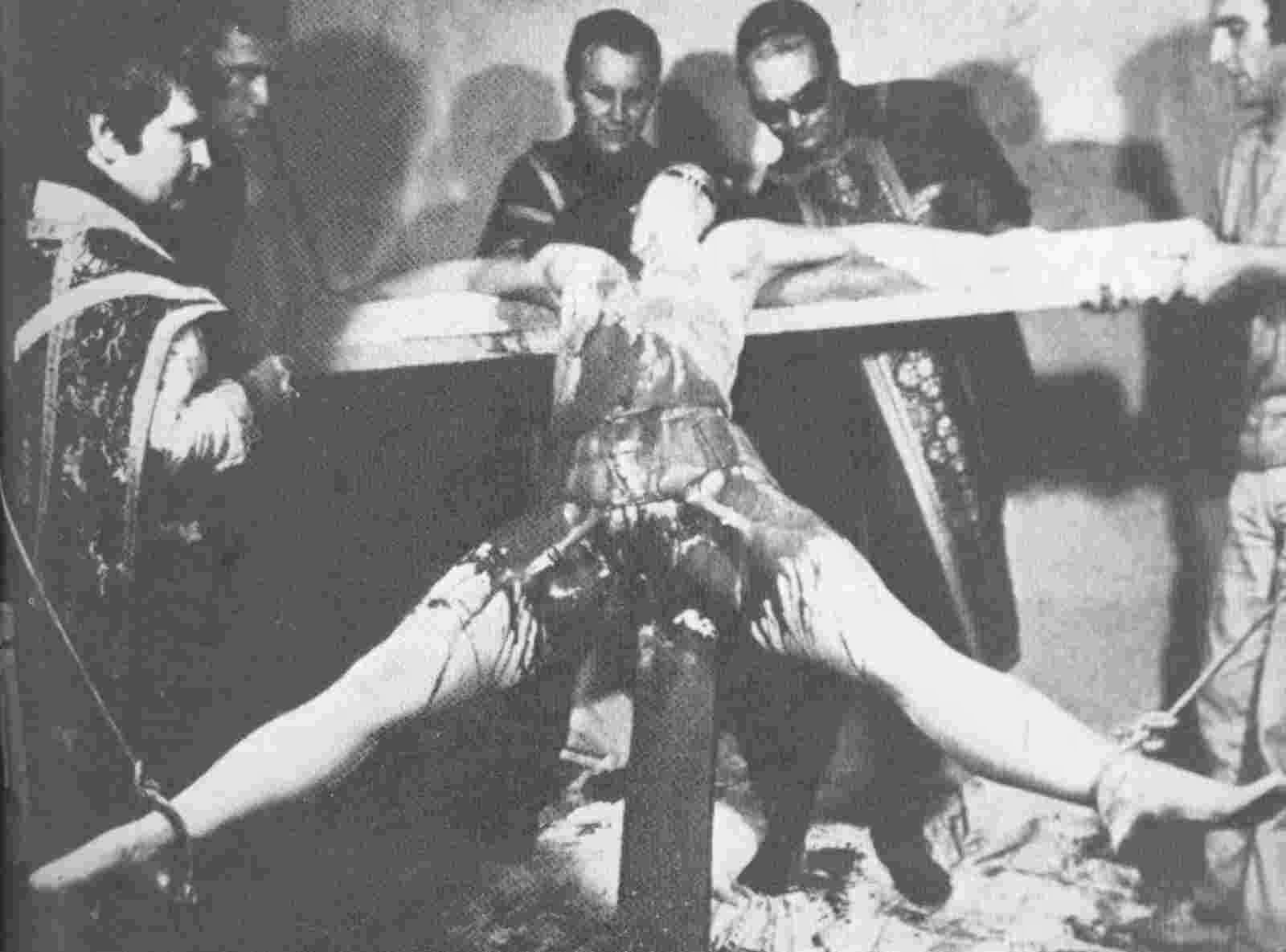
MARIA-CONCEPTION-ACTION-HERMANN
NITSCH
(MARIA-EMPFANGNIS-AKTION-HERMANN
NITSCH)
(Irm and
Ed Sommer, West Germany, 1969)
A
scene from Herman Nitsch's sacrilegious happening which
combines cruelty, sexuality, and visual
shock for ideological
purpose;
here a young women is "crucified" and defiled with
a lamb carcass that has been
disembowelled. The idea of re-
demption
is intensified into pornography to offer a forbidden
glance into our prohibited
sado-masochistic impulses.
______________________________________________
Since
1963, the German avant-gardist Hermann Nitsch has
created
a series of live happening, which (like Otto Muehl's
Sodoma) combine cruelty,
sexuality, defilement, and visual
shock
for purposes of purification, and "ab-reaction" of sado-
masochist impulses. This is a film
record of his most contro-
versial
creation: the crucifixion of a young woman, the dis-
embowelling of a lamb carcass, and her
defilement with it.
"By
the act of crucifixion, disembowelment, defilement, and
dismemberment of a lamb carcass the
sadistic urge to kill
and
masochistic wish for self-sacrifice are substituted.
Historically, these drives have
found no outlet in culture and
religion,
the potentialities of the sado-masochist instinct
being
guarded by secret and prohibition. The substitute act
of the lamb crucifixion is a brief,
forbidden, lustful glance into
this
potential and serves as partial resolution of that connec-
tion with displacement which Nitsch also
calls ab-reaction."
In the
Maria-Conception-Action, the eroticisation and desubli-
mation of the idea of redemption is
intensified into pornography ...
it
complements the flesh of the lamb carcass with that of the
female nude and is crucified
allegorically like the lamb and
together
with it. The slitting open and evisceration of the
lamb carcass corresponds visually to the
opening and pushing
apart of
the vagina; the defilement and dismemberment of
the
lamb corresponds to the pouring over or covering of
the
nude female body with blood and entrails, and finally,
to
the sex act itself, which Nitsch -- again in an allegorically
obscene substitute act -- completes with
a godemiche."
- Peter
Gorsen, Sexualaesthetik, 1972
___________________________________________________________________________________________
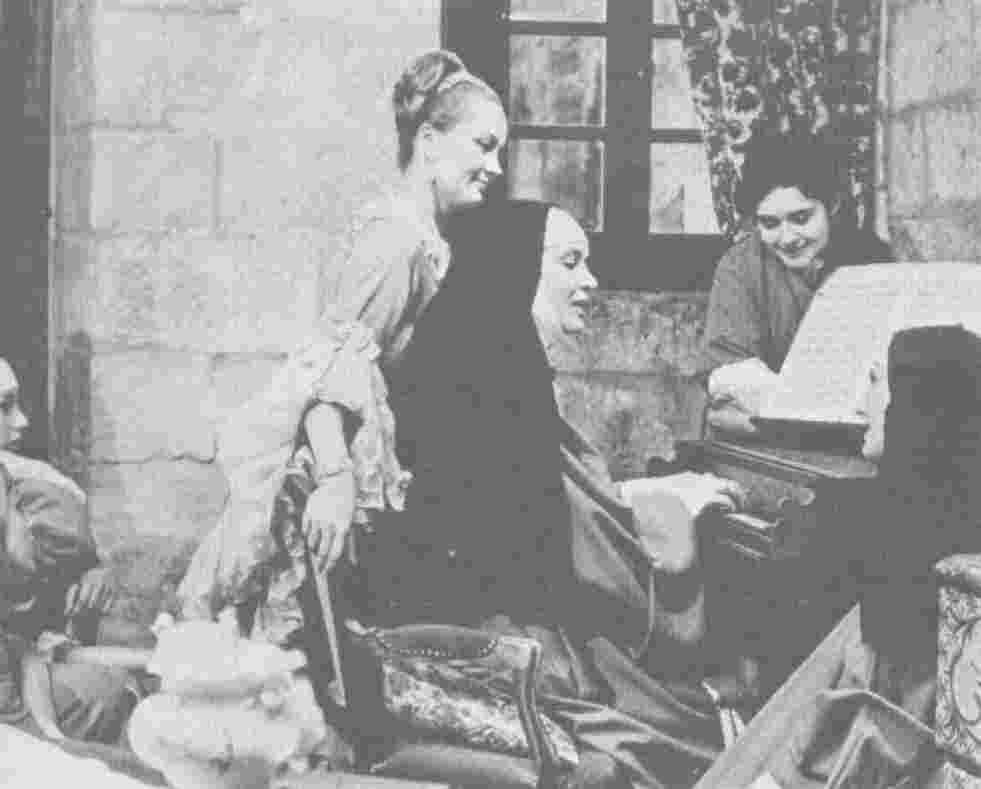
THE
NUN
(LA
RELIGIEUSE)
(Jacques
Rivette, France, 1965) (F)
This
blissfully domestic scene actually portrays
an
equally blissful all-Lesbian convent. By its very
neutrality, it conveys the "secrecy"
of this artist's
style.
Diderot's anti-clerical classic provides the
basis
for one of the few and certainly one of the
most
sophisticated anti-Catholic films yet made.
______________________________________________
Banned
by the censors, and cause celebre of post-war
French cinema, this chilling melodrama is
based on
Diderot's famous 18th
century anti-clerical classic.
It
traces the life of a young girl forced to take the veil,
equating, ironically, the tyranny of
sadistic cruelty
with that of
erotic love; the corruption of the convent
with
that of the outer world. A calculated artificiality
marks the film's progression from austere
cruelty to
luxuriant
decadence. In its relentless portrayal of
the
doom of the innocent, it becomes a plea for free-
dom
and tolerance far transcending the church
issue.
The supreme irony comes with the nun's final
"escape"
to a hostile world, prostitution, and death.
___________________________________________________________________________________________
RAPE
(Wim van der Linden, Holland, 1966)
This beautiful example of far-fetched
blasphemy accompanies
a happy,
ugly nun into the woods for her constitutional, replete
with charming bird noises. Praying
to and fondling a priapic
mushroom,
she is unaware of the evil rapist shadowing her.
When
the rape occurs, it is in long shot, hidden from view,
under a huge tree. Articles of
clothes and her cross sail
through
the air; the tree -- entirely dominating the screen --
sways rhythmically and repeatedly.,
A few minutes later
it stops;
then another tree, a few feet away, begins to sway
in
identical fashion. The rapist finally emerges, exhausted.
___________________________________________________________________________________________
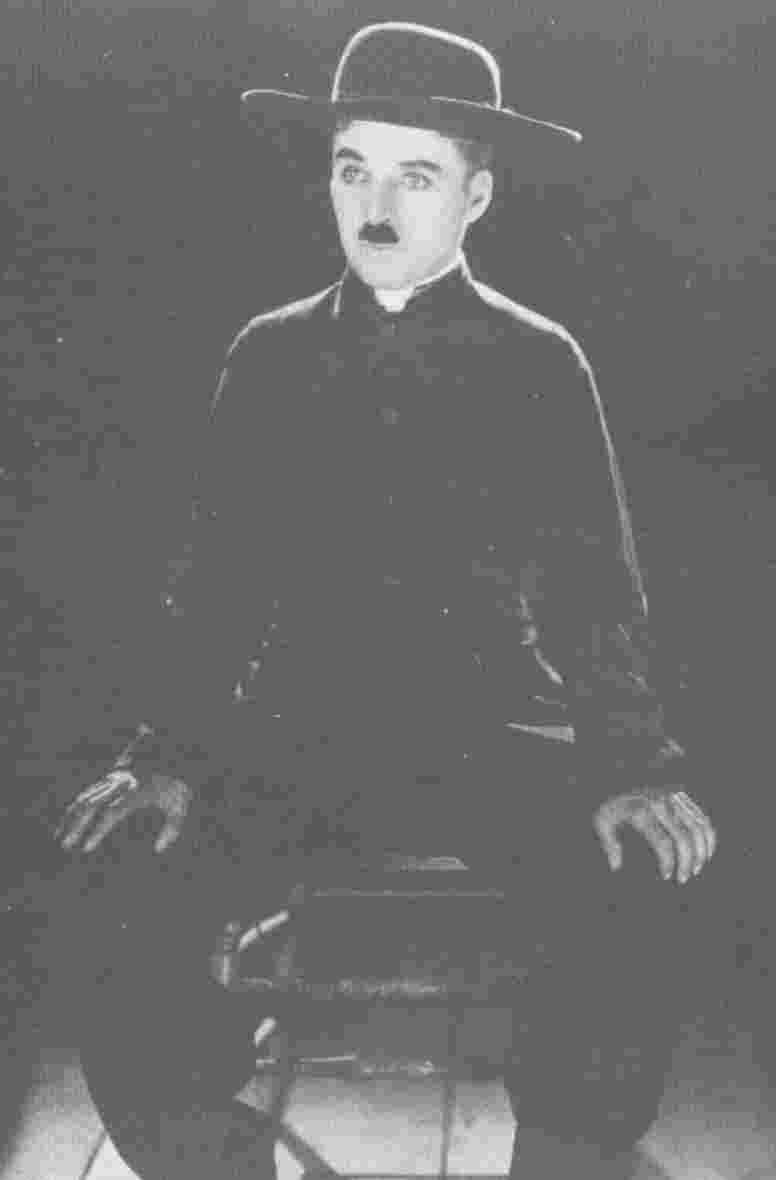
THE
PILGRIM
(Charles
Chaplin, USA, 1922)
The man to
whom nothing human is alien,
perforce
had at some point also to subvert this
attire,
as he subverted anything that smacked
of
officialdom, pomposity, hypocrisy, and self-
righteousness. An escaped convict
in this film,
he promptly
becomes the arch-cleric; but his
orthodox
seating position visually telegraphs
his
true feelings about the ministry.
___________________________________________________________________________________________
THE
SIN OF JESUS
(Robert
Frank, 1961)
A poor, pregnant
woman, abandoned by her
lover,
is given a young angel by Christ in his
stead,
but she destroys him on their wedding
night
by the violence of her sexual embrace.
Christ
refuses to help again, thus sinning
against
her fated humanness, and is refused
forgiveness
by her. A blend of stark realism
and
lyrical fantasy, this controversial work
was
adapted from an Isaac Babel short story.
The
humanization of Jesus is achieved in a
casual,
direct manner; the film's view of man's
world
is bleak. As in his still photographs
("The
Americans"), Frank reveals mysteries.
___________________________________________________________________________________________
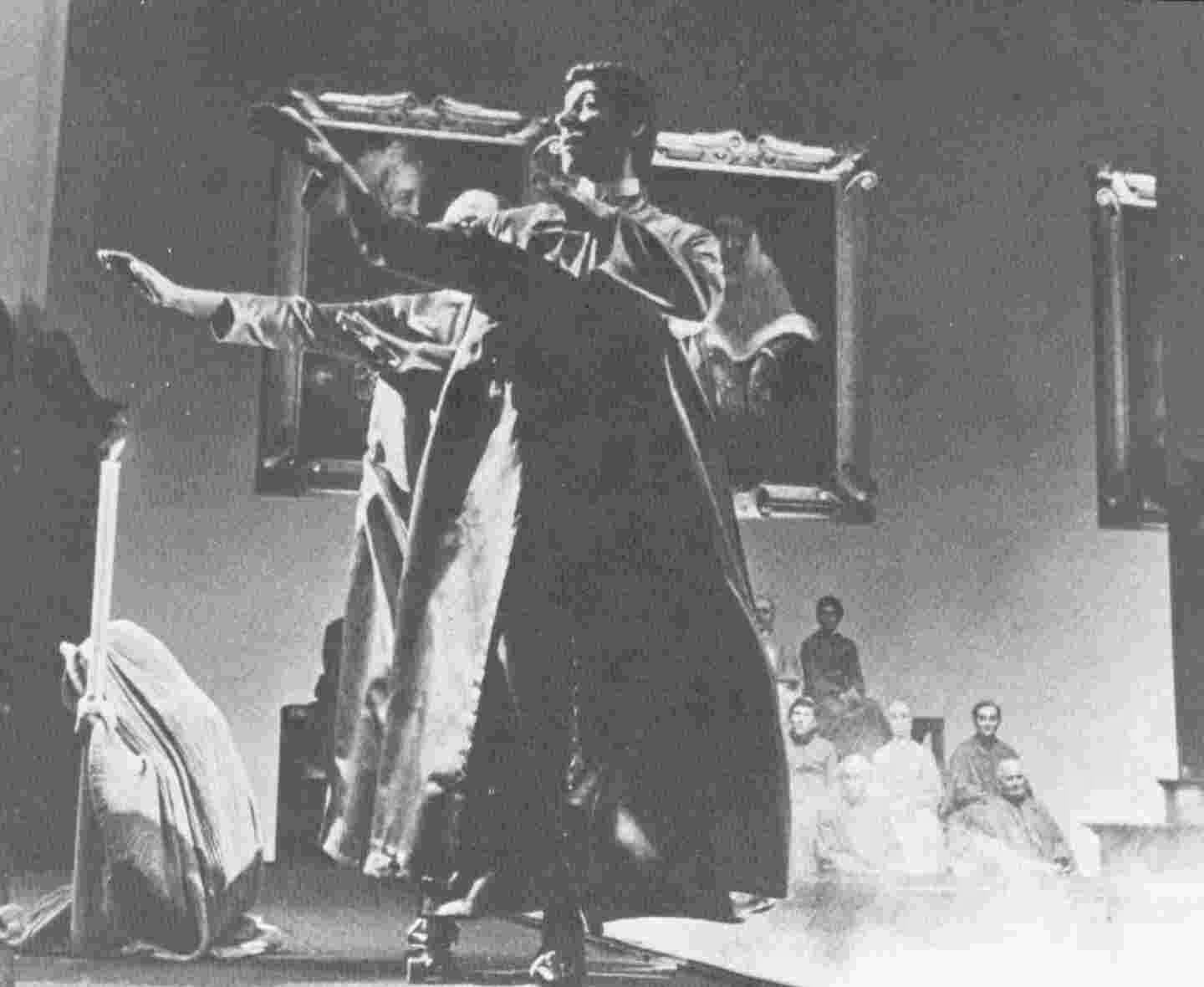
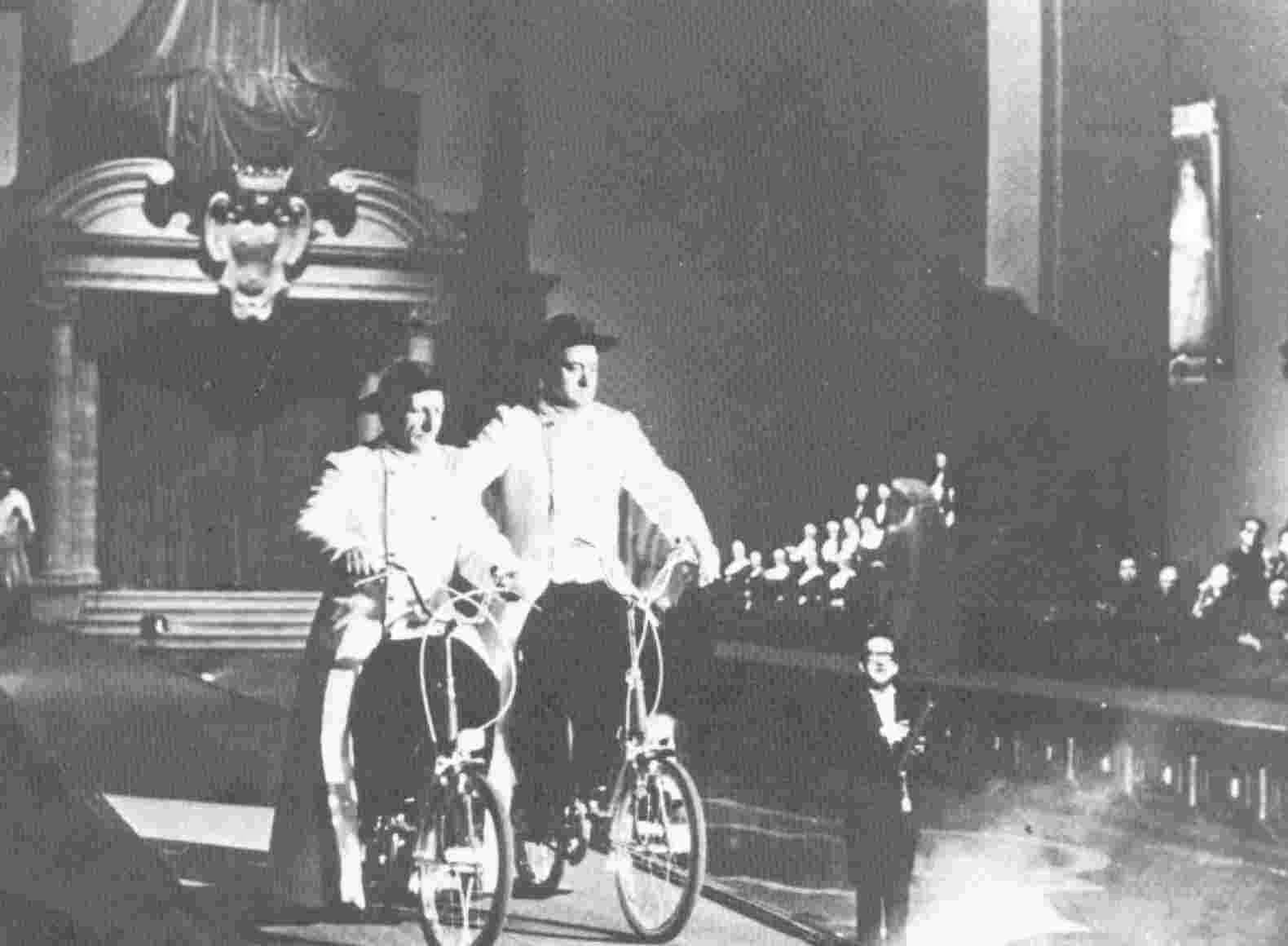
ROMA
(Federico Fellini, Italy, 1972) (F)
A "swinging" clerical fashion
parade becomes an expressionist
parody
of the commercialization and wealth of the Church,
as
Fellini, in his own flamboyant, baroque way, takes a very
decided swipe at institutionalized
religion. Compositional
effects,
as usual, are carefully controlled; note difference
in
size between the two cyclists, their perfect alignment
and serious mien, all contributing to the
satirical effect. SC
______________________________________________
Though
neither one's knowledge nor understanding of the city
is
in any way deepened by this film, Fellini has nevertheless
created a dazzling display of visual
cinema, an impressionist
poem
of Rome past and present, as seen through the eyes of
an
amorous observer. Hundreds of extravagant images are
edited into a rhythmic crescendo. One of
the most startling
sequences
is a satirical fashion parade of the most extraor
dinary
ecclesiastical robes, an expressionist parody of the
wealth, commercialization, and corruption
of the contempo-
rary Church.
There are priests on rollerskates, sports clothes
for
clerics, choreographed movements of the models, golden
vestments and flashing neon robes
(revealed to be empty),
a
fantastic procession of skeletons and finally, the Pope --
"as if God", with music and
light effects -- revealed as a
puppet.
Only a "religious" Italian humanist like Fellini
could have dared create this sacreligious
spectacle.
___________________________________________________________________________________________
SIMON
OF THE DESERT
(Luis
Bunuel, Mexico, 1966) (F)
Another
in Bunuel's endless attempts to come to terms
with
what he abhors yet cannot completely abjure;
religion
and God. Here a modern saint, ensconced in
penitance on a 30-foot-high pillar in the
desert for
27 years, is
repeatedly tempted by a delicious devil.
Finally,
he descends, and discovers a contemporary hell:
present-day America in the last
stages of its decline. SC
___________________________________________________________________________________________
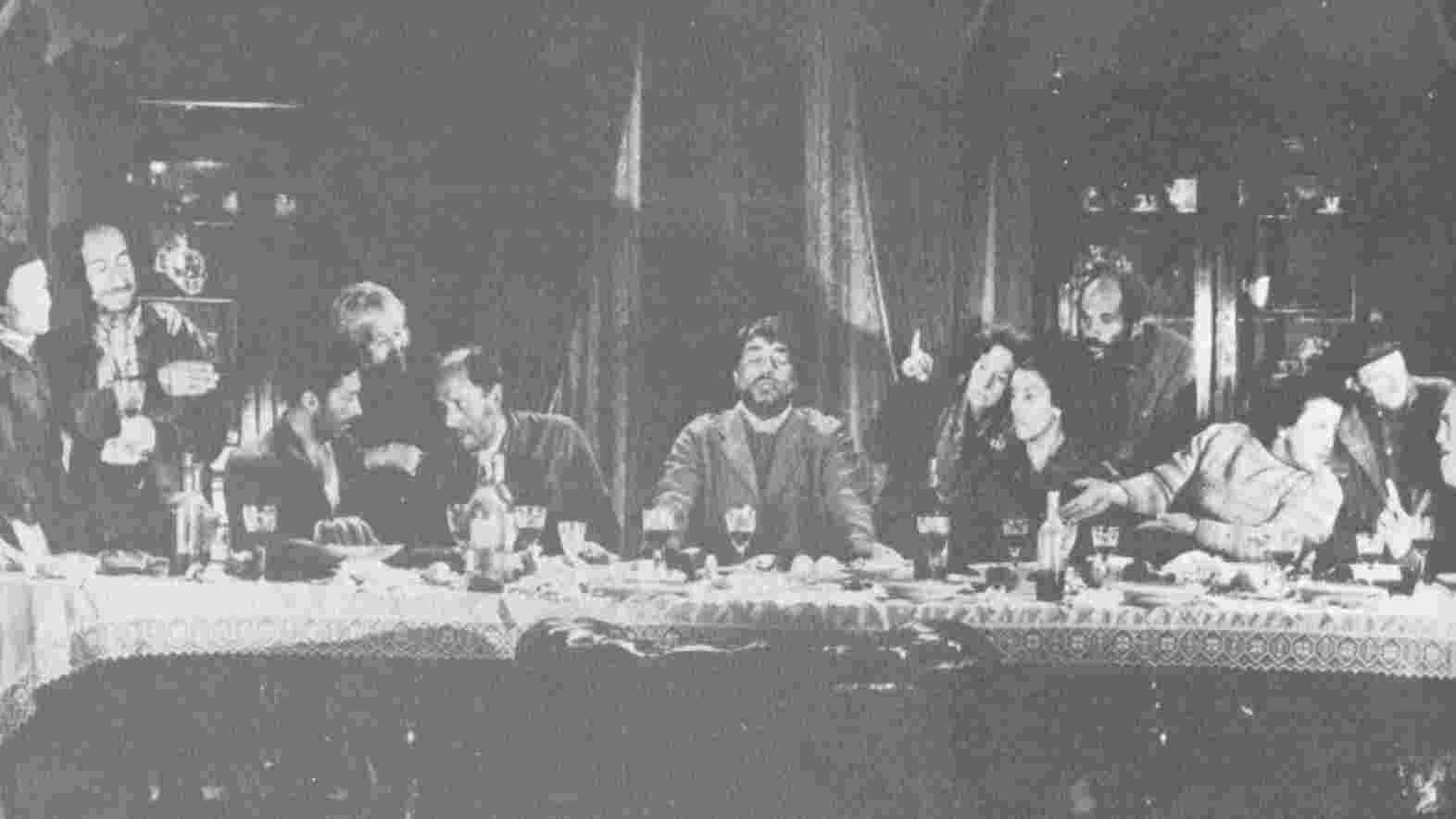
VIRIDIANA
(Luis Bunuel, Mexico, 1961) (F)
An immortal moment in film history;
Bunuel's scathing
satire of
The Last Supper, enacted during a food and sex
orgy of beggars and lumpen, invited by
the ineffectual
do-gooder
Viridiana. Instead of saving their souls, she
loses
her own and becomes part of a seedy menage a trois. SC
______________________________________________
Viridiana
is a chilling and scandalous blasphemy perpetrated by
a
master subversive, one of the great directors of world cinema.
This black and sardonic "comedy"
recounts the undoing of
apriggish,
"Good Samaritan" nun who attempts to live out
(and instill in others) values of decency
and purity. She is duly
elevated
to a state of ambiguous liberation -- as participant in
a
menage a trois -- after her brutal rape by a lecherous beggar.
"The
spiritual potentialities of this rape
are
incalculable, and given a libertarian-
surrealist
viewpoint, very promising." (1)
The
film is suffused with subtle, forbidden
images,
often only hinted at to increase
our
participation in the act of desecration.
Leaving
the security of the convent at the misguided prodding
of
her Mother Superior "to be nice" to her uncle, Viridiana
arrives at his house with a frightening
array of Christian
tools of
worship and purification that -- typical for Bunuel --
include cross, chain, crown of thorns,
nails, and hammer.
Their
actual use is never shown; but the implication of
religious masochism is clear, and further
emphasized in a
close-up of
the uncle's personal cross: it opens into a knife.
The
most ferociously blasphemous scene depicts beggars, brought
to the estate by Viridiana to save their
souls, using her absence
for a
food and sex orgy. Filled with grotesque, Goyaesque touches,
it ends in the tongue-in-cheek "taking"
of a group photograph by
a
woman beggar obscenely raising her skirt to "snap" the
picture.
At this moment,
the film freezes into a still shot of the beggars
grouped
around the table in exact imitation of da Vinci's Last
Supper, with Handel's Hallelujah
on the track and a blind, hideous
beggar
in the position of Christ; an immortal moment in film history,
combining pornography and blasphemy
in scathing comment
on the
sterile "humanitarianism" of the simplistically religious.
The
stupidity of the Spanish censors, Ado Kyrou points out,
changed a mediocre ending into a sublime
one. Following
the rape,
Viridiana, distraught, comes to her cousin's room
in
a confused, almost subconscious attempt at sexual
surrender, only to find him with his
servant-mistress, this
time
ensconced in a card game. Both women are taken
aback; the man relishes the situation and
invites Viridiana
to join
them. "I always knew we would have a game together",
he says; and as the camera pulls back on
a longshot of the
three
playing cards in a cosy family scene, we hear a blatantly
vulgar, erotically charged rock-and-roll
piece -- the first of
its kind
in the film -- commenting on Viridiana's final "li-
beration" into the pragmatism and
corruption of bourgeois
society.
In the original scenario, banned by the censors prior
to
production, Viridiana surprises the pair in bed; the cousin
has the maid leave the room, remaining
with Viridiana while
the maid
spies through the keyhole. More power to the censors!
"Once
upon a time", says Kyrou, "it was anti-clericalism
and blasphemy; in Viridiana, it is
atheism, total tender-
ness,
lighting-like sympathy for men and things; this
second
attitude -- which does not contravene the first but
simply goes beyond it -- is the more
revolutionary." (2)
Originally
heralded by the Franco regime as the oppositionist Bunuel's
"return" to Spain, the film was
banned upon completion, but some
copies
reached France and its 1961 showing at Cannes -- despite
Catholic opposition -- saved this
masterpiece for film history.
___________________________________________________________________________________________
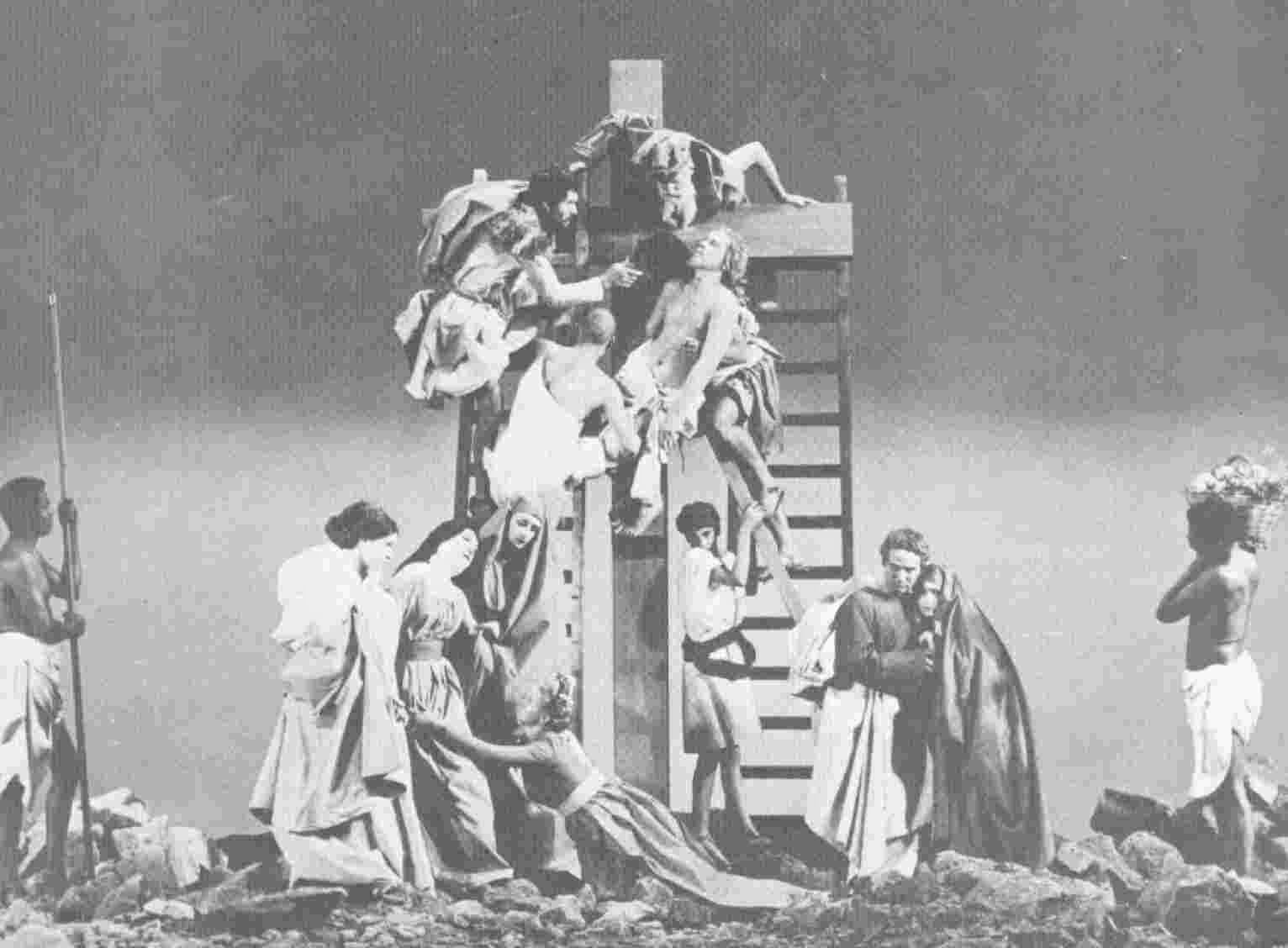
LA
RICOTTA
(episode
in ROGOPAG)
(Pier
Paolo Pasolini, Italy, 1962)
A
scene from the religious super-epic being made:
Pasolini's loving and meticulous
recreation of
the high-camp of
Italian religious postcard art. SC
REFERENCES
(1)
Raymond Durgnat, Luis Bunuel, 1968
(2)
Ado Kyrou, Luis Bunuel, 1963