FILM
- AS A -
SUBVERSIVE ART
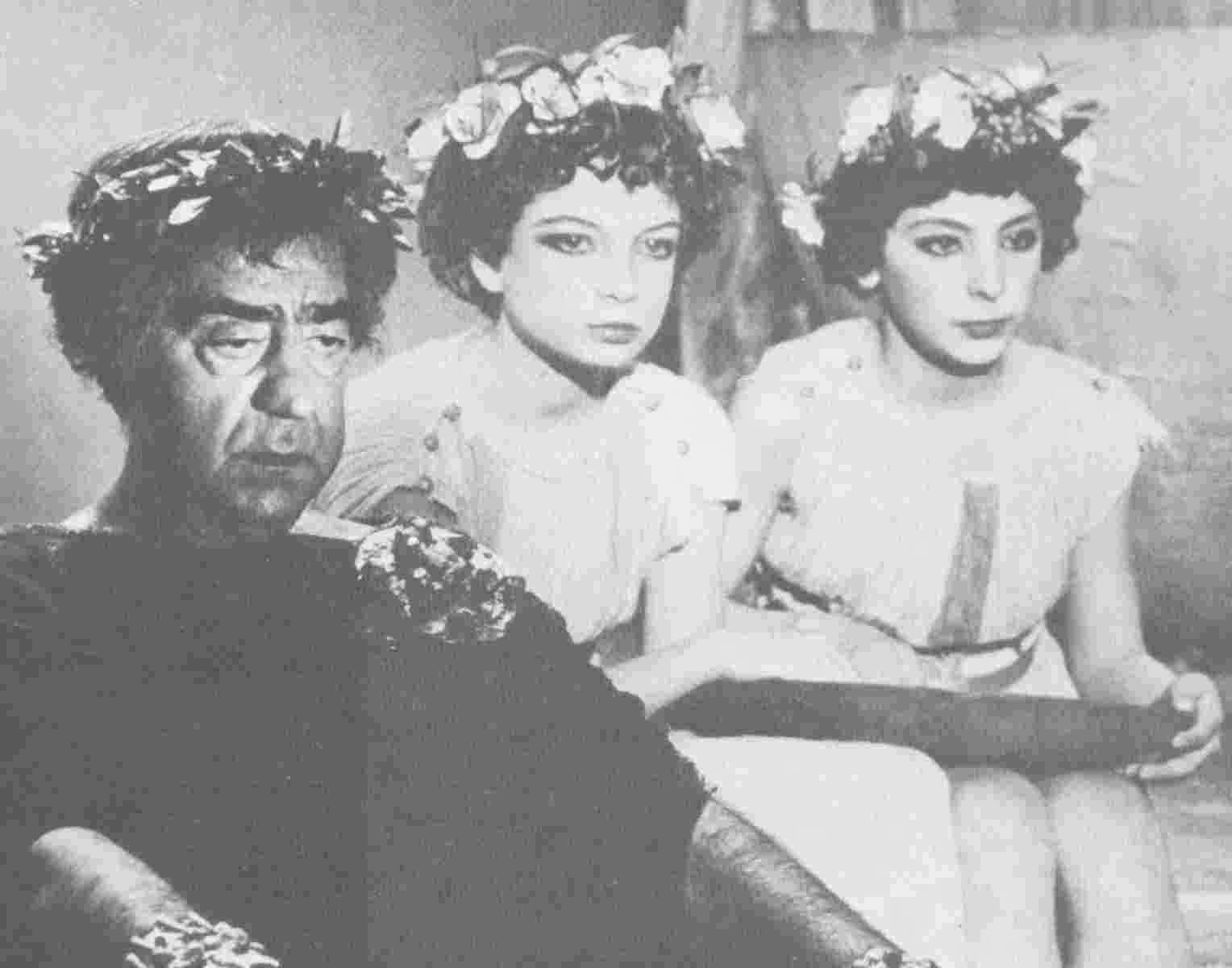
SATYRICON
(Federico Fellini, France/Italy, 1969)
(F)
Fellini's uncanny ability
to establish character
visually:
the jaded world-wise corruption of one
who
has seen all and will soon die, the child-
like
perversion of boys used as sex objects.
Though
not looking at each other, the three
are
visually and psychologically linked. SC
THE
END OF SEXUAL TABOOS:
HOMOSEXUALITY
AND
OTHER
VARIANTS - PART ONE
However
taboo-ridden conventional heterosexual practices may be
in cinema, the portrayal of sexual
variations -- homosexuality,
sado-masochism,
masturbation, bestiality, oral sex, coprophilia --
has
been even more difficult. Though their range is as wide as
psysiological structure and psychological
preference permit, and
their
existence from the dawn of time a tribute to the power of sex,
even film "liberals" commonly
consider them to be beyond the pale
of
pictorial representation. This is because unconsciously, they
--
like the conservatives -- do
not accept these variations but still view
them
as aberrations or corruptions and refuse to remove the guilt
imposed upon those who enjoy them.
The only valid criterion in
sexual
matters, however, would seem to be an injunction against
hurting others; otherwise, the sex
instinct is indifferent to the
particular
"mechanical" process employed, the choice of partner
or sex. Hence the "hedonistic"
(that is, human) conclusion, that
everything
is permissible, provided it pleases. This sexual permis-
siveness -- certainly destructive of
established mores -- has been
an
aspect of the ideology of the avant-garde from its inception.
For this movement is forever at war
with society and its values.
___________________________________________________________________________________________

HOLDING
(Constance Beeson, USA, 1971)
As in her earlier Unfolding, this
woman filmmaker
stresses
feeling and emotion within the sexual
experience.
Here the sweet charm and almost child-like
innocence
of two young lesbian girls is revealed in an
unforced
and informal pose. All sexual experiences are
here
accepted as valid, subject to the same joys and trials.
___________________________________________________________________________________________
HOMOSEXUALITY
This is
why "serious" homosexual cinema begins with the
underground, forever ahead of the
commercial cinema and
setting
it goals which though initially viewed as outrageous,
are
later partly absorbed by it. Kenneth Anger, Curtis
Harrington, Jean Genet, Stan Brakhage,
Andy Warhol,
and Paul Morrissey
are pioneers in indicating the possibility
of
sex, tenderness, or love between members of the same sex.
In the
commercial cinema, the portrayal of the homosexual
has
moved through well-defined, if ridiculous, stages; his
invisibility, his elimination, his
transformation into something
slightly
less offensive (such as a Jew), his having to die a difficult
death or commit suicide, and later, actual
hints of his "odious"
activities
and sniggering or circumscribed acceptance.
With the
passing of Hollywood's pre-eminence, not only are
homosexuals more freely portrayed in
commercial films, but
a large
number of explicit homosexual films are made for public
showings, some by hacks, others by
artists. In 1973, there existed
in
New York at least a dozen hardcore homosexual cinemas.
Significantly,
lesbian hardcore films continue to be made by men
and
are designed for the male sex market. Except for those of
Constance Beeson, hardly any lesbian films
are made from a
woman's
viewpoint. This lends credence to Kinsey's findings that
women are generally less involved with
pictorial sex than men,
though
this would appear to be conditioned by cultural factors.
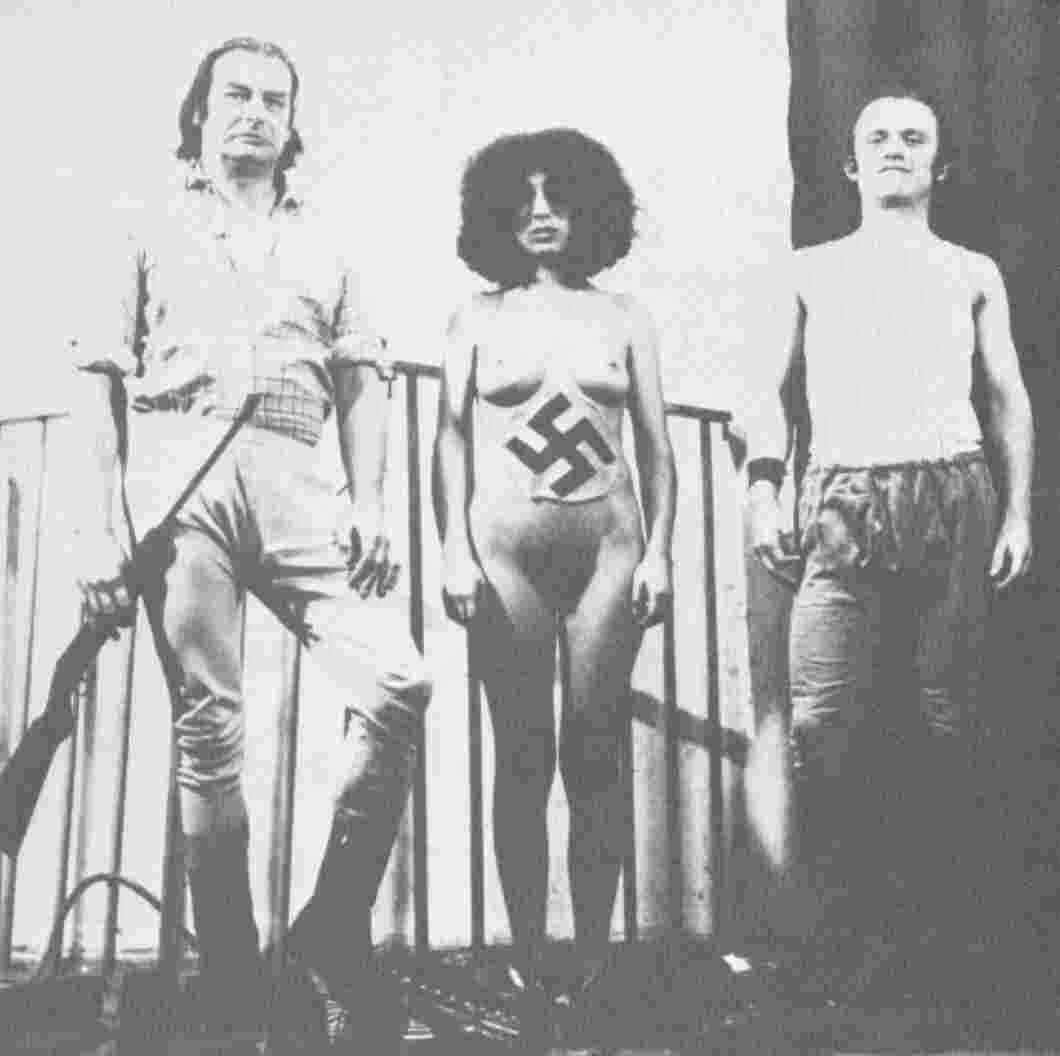
"AKTION
SS AND STAR OF DAVID",
from
THE LASCIVIOUS WOTAN
(Otto
Muehl, Austria, 1971)
The bad
conscience of the German displayed
in
the ultimate sexual fantasy, combining the
brutality
of the Nazi SS (significantly enacted by
Muehl
on the left and helper) with the defenseless
attractiveness of the victimized Jewess
already
tattooed with the
symbol no German can exorcise.
OTHER VARIATIONS
Judging
by current commercial exhibition -- and omitting
only
the hardcore houses operating in a few countries --
hardly any of the sexual variations exist
in film at all.
Oral sex
-- though engaged in, according to Kinsey, by more
than
half the population (with others undoubtedly not admitting
to it) -- is not yet portrayed in regular
commercial cinema,
though
cleverly implied. It forms the largest single item in the
entire output of world hardcore cinema,
ranking ahead even
of
intercourse: a tribute to the power of this particular taboo.
As of
1973, intercourse with animals remains the one variety
of
sex hardly ever seen in America, even in the "hardcore"
movie
houses, due to fear of
police action. Scandinavian films of this
type,
though freely shown in their countries of origin, cannot, at
the time of writing, be imported into the
United States due to
customs
censorship. This did not, however, prevent at least half
of the adolescent rural population of
America from engaging
in this
practice, according to Kinsey, that master subversive.
Since
devotees of necrophilia, by all indications, constitute only a tiny
portion of the populace, the commercial
film industry sees no reason
to
cater to them and is prepared to forego their patronage for fear
of retaliation by its regular customers.
While this does not eliminate
fictional
necrophilia (particularly in certain low-grade horror films),
"cinema verite" necrophilia has
been impossible to record. Unlike
"straight"
hardcore productions, no volunteers come forward to appear
as actors, inert partners are difficult to
find, while bright lights and
unruly
camera crews would certainly "distort" the realism of the
act.
This, then, remains
one of the unconquered areas of liberated cinema.
Late
arrivals even in sexually permissive films have been ejacula-
tion and sperm. Previously available
only as microscopic samples in
scientific
films -- where they were less threatening and easier to
"contain" -- their explosive
reality has only lately invaded hardcore
films,
with coitus intentionally interrupted to display to the audience
the true passion of the actor.
Messy-looking and somehow "deplorable"
even
to many sexual liberals, the ejaculate is altogether too fundamental
for comfortable viewing; its color and
size make it difficult to photograph
under
the primitive lighting conditions usually prevailing in such films;
and the total output (when objectively
viewed on the screen) has always
been
negatively disproportional to the great passion and exertion
displayed
in the earlier stages
of the act. Except for special palates, then, the cinema-
tic portrayal of ejaculation has not
proven to be a potent sexual stimulant.
FILMS
___________________________________________________________________________________________
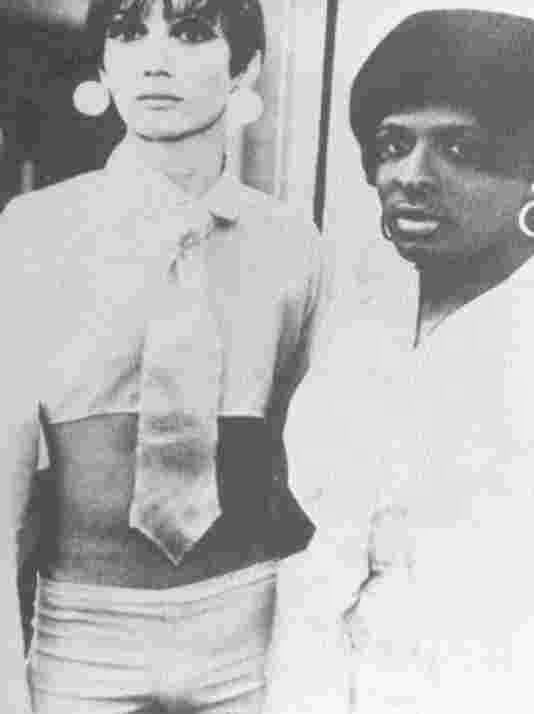
THE
QUEEN
(Frank
Simon, USA, 1968)
Haunting and
knowing looks, a bulge in
the
wrong place: contestants in the annual
Miss-All-American-Drag-Queen competition,
as seen in a sharp, often moving cinema
verite
film that accepts its
protagonists for what
they are
and what they want to be, instead
of
deploring, glorifying, or ridiculing them.
___________________________________________________________________________________________
THE
ABONIMABLE DR. HITCHCOCK
(L'ORRIBILE
SEGRETO DEL DOTTOR HITCHCOCK)
(Riccardo
Freda aka Robert Hampton, Italy, 1962) (F)
Cult
film for the neo-surrealists,
this
gory and shadowy work recounts
the
adventures of a proud necrophiliac,
accepting
the practice as "given" and
passing
no moral judgement except
that
implicit in his fiery death.
___________________________________________________________________________________________
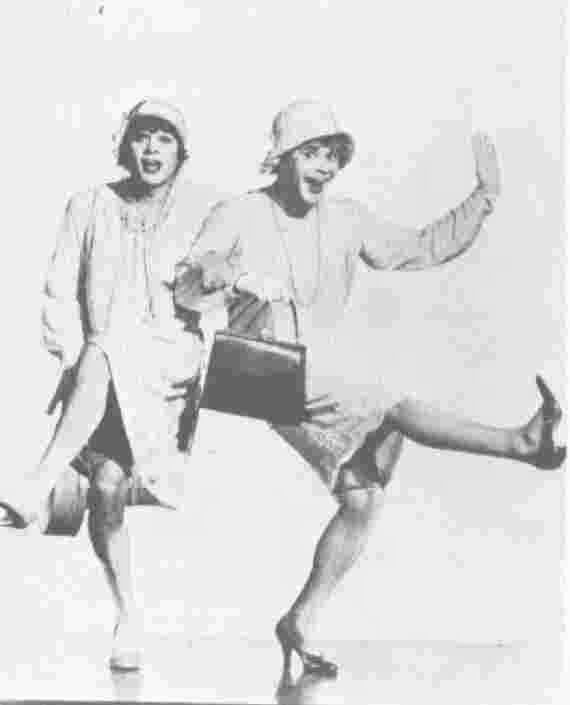
SOME
LIKE IT HOT
(Billy
Wilder, USA, 1958) (F)
The
Hollywood view of transvestitism: it
must
be portrayed flippantly or in jest to be
acceptable.
The titillation is built-in and
sells
tickets. Any serious portrayal would be
considered
"in poor taste" and beyond the pale.
___________________________________________________________________________________________
BELLE
DE JOUR
(Luis
Bunuel, France, 1966) (F)
While
the very premises of this work are doubly
subversive
-- the inhibited bourgeois woman's
secret
wish to prostitute herself, the repeated
shattering
of the film's illusionism -- it is, in
addition,
deliberately shot through with shock
images
hinting at sexual abberations: sad0-
masochism,
necrophilic masturbation, blood
on
a sheet after sex, a Japanese "customer"
with
a mysterious box, of which the whores are
afraid.
All of these are the more disturbing for
being
left unexplained. Bunuel, the master
subversive,
thereby compels us to supply
our
own sexual tension, desires, and fears. SC
___________________________________________________________________________________________
THE
BLOODTHIRSTY FAIRY
(LA
FEE SANGUINAIRE)
(Roland
Lethum, Belgium, 1968)
A
voluptuous nude fairy attacks law, order, and
religion
by choking a nun with her cross (first
arousing
her by fonding her breasts), beating
a
uniformed official, gouging out a boy's eyes
for
threatening her with a toy gun (she licks
off
her bloody fingers afterwards), and, finally,
methodically castrating a student because
he
studies law. A
pan along a shelf reveals the
meticulously
bottled penises of Diem, Martin
Luther
King, Kennedy, Johnson, and De Gaulle.
At
the end, two angels deliver her in a barrel to a
new
destination: the Belgian Royal Palace. The
swastika that opened the film changes
into Nixon.
___________________________________________________________________________________________
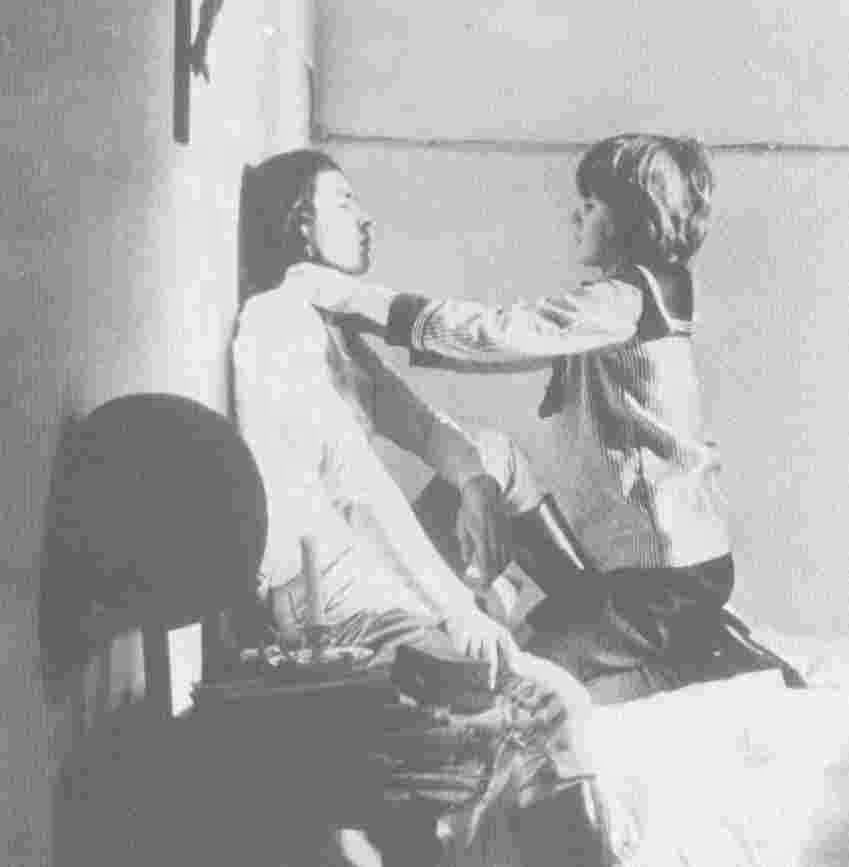
THE
CONFORMIST
(Bernardo
Bertolucci, Italy/France/West Germany, 1970)
The
protagonist, shown as a young boy, remembers a near-
homosexual encounter. The bed, the
innocence (?) of
the
near-child (arousing the man by his playful touch), the
watchful, sensual anticipation of
Clementi, the positioning
of
the boy between the man's legs create an air of incipient
sexuality. Decor and boots
(contrasted with the boy's
snappy
school uniform) stamp Clementi as lower class. SC
______________________________________________

THE
CONFORMIST
(Bernardo
Bertolucci, Italy/France/West Germany, 1970)
A
strangely funereal lesbian scene. Enough acceptable nudity
is shown to make it enticing, though
strategic areas are
blocked
out to avoid censorship; it did not help -- this
scene
was widely cut. A slight camera tilt shifts the com-
position to the right where its
main interest indeed lies. SC
___________________________________________________________________________________________
BLOW
JOB
(Andy
Warhol, USA, 1963/64)
Daring
in subject matter and technique,
this
early Warhol film records a 36 minute
closeup
of a handsome young man's face, as
an
invisible "other" (out of camera range)
performs fellatio on him. Nothing
is seen
except the face and a
brick wall beyond; as
we study
it, mesmerized, we feel the pain of
passion,
the on-off tease of lust, the quickening
tempo,
the orgasm, the sad, somehow empty
afterglow.
The camera does not move; the act,
reflected,
exists for itself; there is no message. SC
___________________________________________________________________________________________

UN
CHANT D'AMOUR
(Jean
Genet, France, 1950)
In an
erotic fantasy, a frustrated prison guard
rams
his gun down a prisoner's throat. The
strong
visual concentration on gun and mouth
by
close-up, lighting, and positioning within
frame
(including the gun's dynamic downward
tilt)
reflects Genet's emphasis on oral sex.
______________________________________________
Genet's
only film -- hounded by the censors, unavailable,
secret
-- is an early and remarkably moving attempt to por-
tray homosexual passions.
Already a classic, it succeeds
as
perhaps no other film to intimate the explosive power
of
frustrated sex; male prisoners in solitary confinement
"embracing" walls, ramming them
in erotic despair with
erect
penis, swaying convulsively to aut0-erotic lust,
kissing
their own bodies and tattoes in sexual frenzy.
In
a supremely poetic (and visual) metaphor of sexual
deprivation, two prisoners in adjoining
cells symbolically
perform
fellatio by alternately blowing or inhaling each
other's
cigarette smoke through a straw inserted in a
wall
opening, while masturbating. Like all of Genet's
early work, the entire film is, in
effect, a single onanistic
fantasy,
filled with desperate frustration and sensuous
nostalgia. In the end, and after
many failures, some
flowers --
painfully passed from one barred window to the
next
-- are finally caught by the prisoner in the adjoining
cell in a poetic affirmation of love in
infinite imprisonment.
___________________________________________________________________________________________
BUT
DO NOT DELIVER US FROM EVIL
(MAIS
NE NOUS DELIVEREZ PAS DU MAL)
(Joel
Seria, France, 1971) (F)
This
bleak work has been banned in France as
"catering
to perversion and fomenting moral
and
mental destruction". It is the story of
two
upper-class nymphets awakening sexually
in
the oppressive atmosphere of a parochial
French
school who decide "to do evil, just as the
others,
the imbeciles, do good." They pass from
denouncing
lesbian nuns to torturing animals
to
casual murder. Finally, onstage to recite
poetry
during a school ceremony, they douse
themselves
with gasoline and go up in flames.
___________________________________________________________________________________________

CYBELE
(Donald Ritchie, Japan, 1968)
Having bitten off some penises and
asphyxiated
their owners, the
young woman rests happily.
Birds
sing. A scene from a "pastoral ritual", dir-
ected by a noted film authority much
influenced by
Western
avant-garde and Japanese erotic cinema.
______________________________________________
"A
pastoral ritual in five scenes", set in a deserted Japanese
tomb-ground: convocation of the
nude males, invocation of
the
nude female, abjuration (in which she places burning
incense sticks between their buttocks and
is fucked),
retribution (she
ties their erect penises with a string
and
pulls them behind her), and apotheosis, in which
she
bites them off, asphyxiates their owners by strad-
dling
their heads, and introduces sticks into their anuses
until they emerge from their mouths.
Finally, she lies
down on the
bodies and smiles happily. Birds sing. An
extraordinarily uncompromising
avant-garde film.
___________________________________________________________________________________________

EMPEROR
TOMATO KETCHUP
(Shuji
Terayama, Japan, 1972) (F)
The
use of children in (however simulated) sex acts
with
adults is always shocking; in this "scandalous"
avant-garde film, magical women act as
their initiatory,
yet
protectively maternal partners. The children,
in
revolt, have condemned their parents to death for
depriving them of self-expression and
sexual freedom;
they create a
society in which fairies and sex education are
equally
important and, as seen here, literally combinable.
___________________________________________________________________________________________
A
CLOCKWORK ORANGE
(Stanley Kubrick, Great Britain, 1971)
(F)
Despite its stylized
penises and vaginas, its attack on a
future
fascism, its raw and kinky sex, the actual subversion
of
this curious work is weakened by ideological ambiguity,
an inexplicable failure to "carry
through" its ironic sur-
realism,
and an unconscious attitude towards violence
so
complex that it serves to glamorize what it means to
deplore. By his unexpected
post-release agreement to
remove
sexually- too-explicit material (in order to change
the
Hollywood film industry's "X" rating and thereby gain a
larger audience), Kubrick unintentionally
poses the ques-
tion whether
these scenes had been put into the original
film
for shock value rather than out of artistic necessity
and
undercuts the ideological basis of the film. SC
___________________________________________________________________________________________
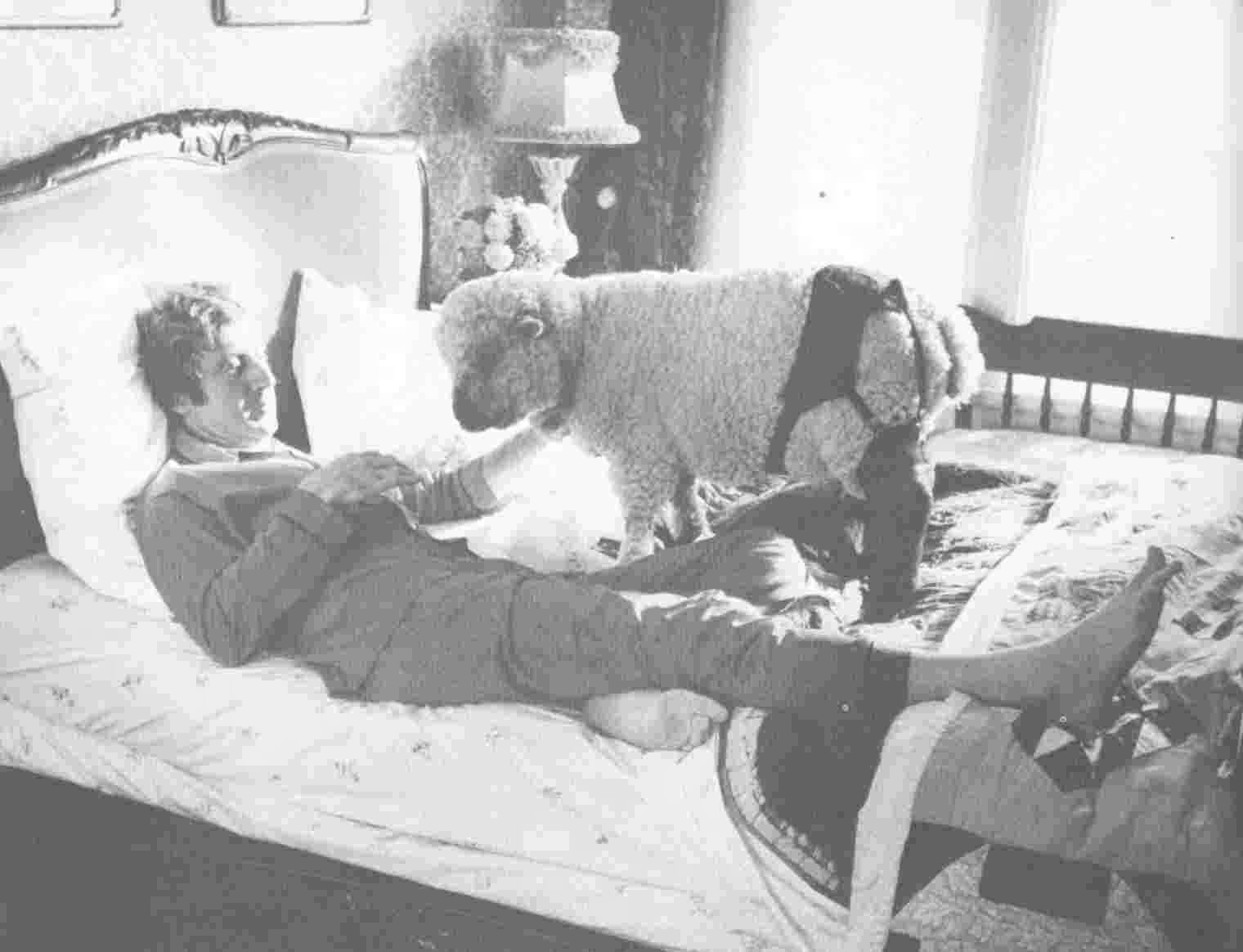
EVERYTHING
YOU ALWAYS WANTED TO KNOW
ABOUT
SEX, BUT WERE AFRAID TO ASK
(Woody
Allen, USA, 1972) (F)
The
"gentle" genius of Woody Allen -- one of the few major
comic talents to emerge in the last
decade -- masks an
insidious
and sardonic imagination that continually
chips
away at taboos. Only he could get away with
portraying a sexual relationship
between a man and
a sheep in a
commercial film, and then heighten its
"perverse
obscenity" by making it appear entirely
"normal".
Here a hotel room has been rented for a
tete-a-tete
with the sheep. The most notorious aspect
of
the still is, of course, the sheep's "seductive" attire.
___________________________________________________________________________________________
LE
DEPART
(Jerzy
Skolimowski, Belgium, 1967) (F)
It
seems easier to outwit the censors with fellatio than
with intercourse. In this visually
brilliant comedy of
sexual
initiation, Jean Pierre Leaud is seen through
the
windshield driving a car, while an eager middle-
aged
woman next to him suddenly slides from her
seat
and disappears for a considerable time. As he
tries
hard to drive in a straight line, she nonchalantly
reappears and resumes conversation.
Absurd and
surrealist
situations abound in this Godardesque work.
___________________________________________________________________________________________
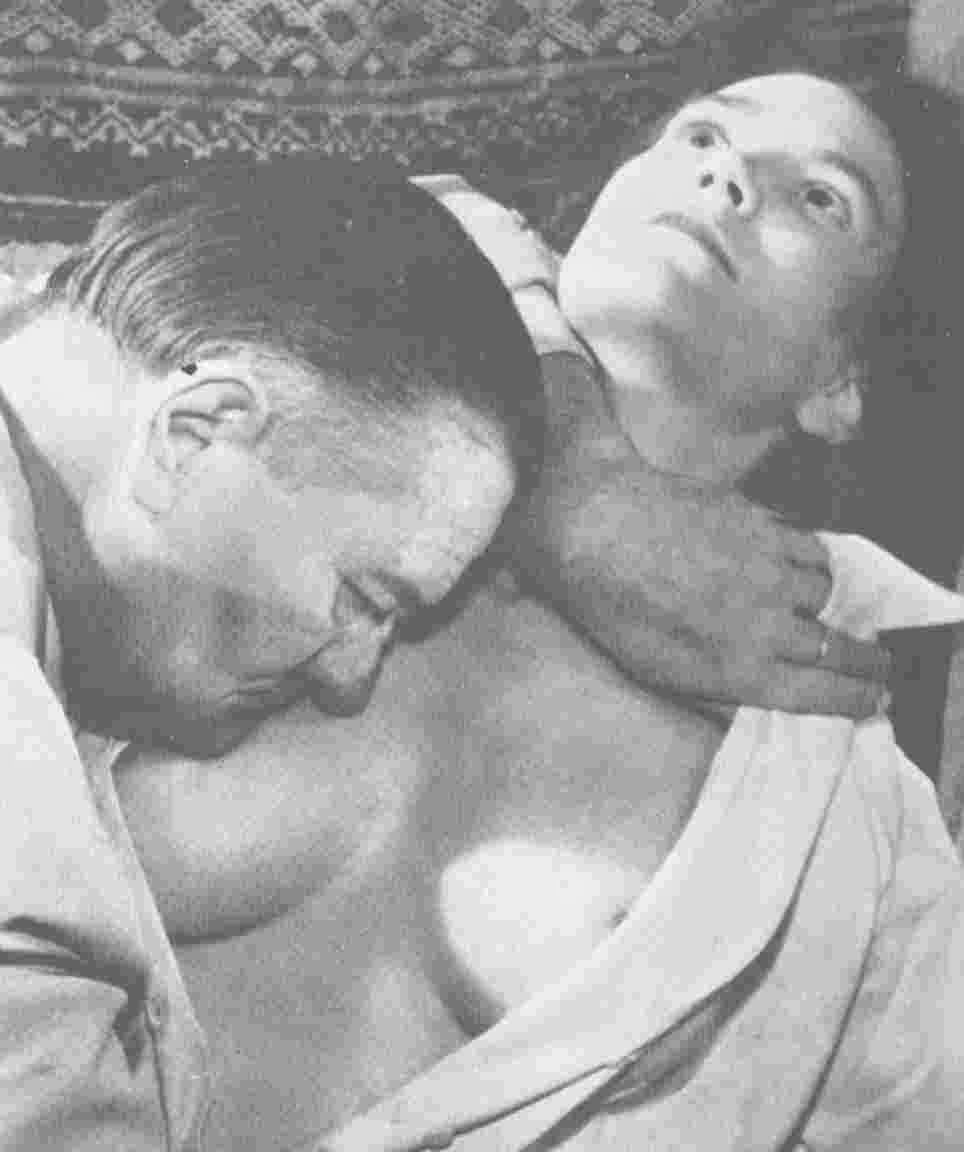
LES
IMPURES
(Pierre
Chevalier, France, 1954)
In
our day, there is nothing particularly wrong
about
the action in this still -- except that the
woman
is dead. Both the man -- now seen in
tragic
resignation, not merely lust -- and the
position
of the woman's body draw us from the
breasts
to the real center of the action: her eyes.
___________________________________________________________________________________________
DIARY
OF A SHINJUKU BURGLAR
(SHINJUKU
DOROBO NIKKI)
(Nagisa
Oshima, Japan, 1968/69) (F)
A
grotesque, erotic, ultimately phantasmagorical avant-
garde work, in which a young couple
engage in a bizarre
search for
sexual ecstasy, while Tokyo explodes in student
riots.
In several scenes, cinematic taboos are casually
dispensed with: the capitalist
wiping his hand after fon-
dling
his secretary, the thief who almost ejaculates while
shoplifting, the couple walking down a
night-lit Tokyo
street with a
dildo swinging from a string between them,
until
she, imploring, lies down on the pavement for him.
___________________________________________________________________________________________

THE
EMBRYO
(Koji
Wakamatsu, Japan, 1966) (F)
Japanese
sex cinema seems somewhat more oriented
toward
"kinky" sex and sado-masochism. This shot
disturbs because of its emphasis on rope
and the
girl's well-lit, bound
wrists: we distrust the man's
gentle
ministrations. A surrealist anti-American
demonstration at the 1968 Knokke
Experimental
Film Festival
combined huge, Cinemascope-width
images
of this girl systematically violated by a
razor
with 50 live Maoists on stage screaming
that
this is what America is doing to Vietnam.
___________________________________________________________________________________________
FIREWORKS
(Kenneth Anger, USA, 1947)
An
early classic of the homosexual cinema and probably
one
of the most famous American avant-garde films.
A
painfully honest, deeply-felt episode of sado-masochist
homosexuality, experienced as nightmare
and wish-
dream, in which the
protagonist (played by Anger) is
brutally
attacked and disembowelled by a group of sailors.
In
the last scene, he opens his fly and "lights" his penis
which
explodes in firework
fashion. Intensity, pain, and poetic
imagery
transform autobiographical elements into art. SC
___________________________________________________________________________________________
FLAMING
CREATURES
(Jack
Smith, USA, 1962)
Frequently
banned, this notorious American avant-garde work
is
a curiously joyless compendium of uncertain, polymorphously
perverse sex episodes -- a succession of
penises, rapes, orgies,
masturbation,
and oral sex. The style, quite intentionally, hovers
between "camp" satire and
genuine pain, as a cast of flaming
transvestites
and voluptuous women cavort in exaggerated
costumes
(or none) amidst luxuriant, over-exposed sets,
fondling
each other's large breasts and limp penises to the
doleful accompaniment of scratchy
bull-fight or Chinese music,
"Siboney",
and assorted sentimental hits. Perhaps a nostalgic,
subjective dream evocation of a
mythological Hollywood, it
succeeds
in being both intentionally amateurish and shocking. SC
___________________________________________________________________________________________
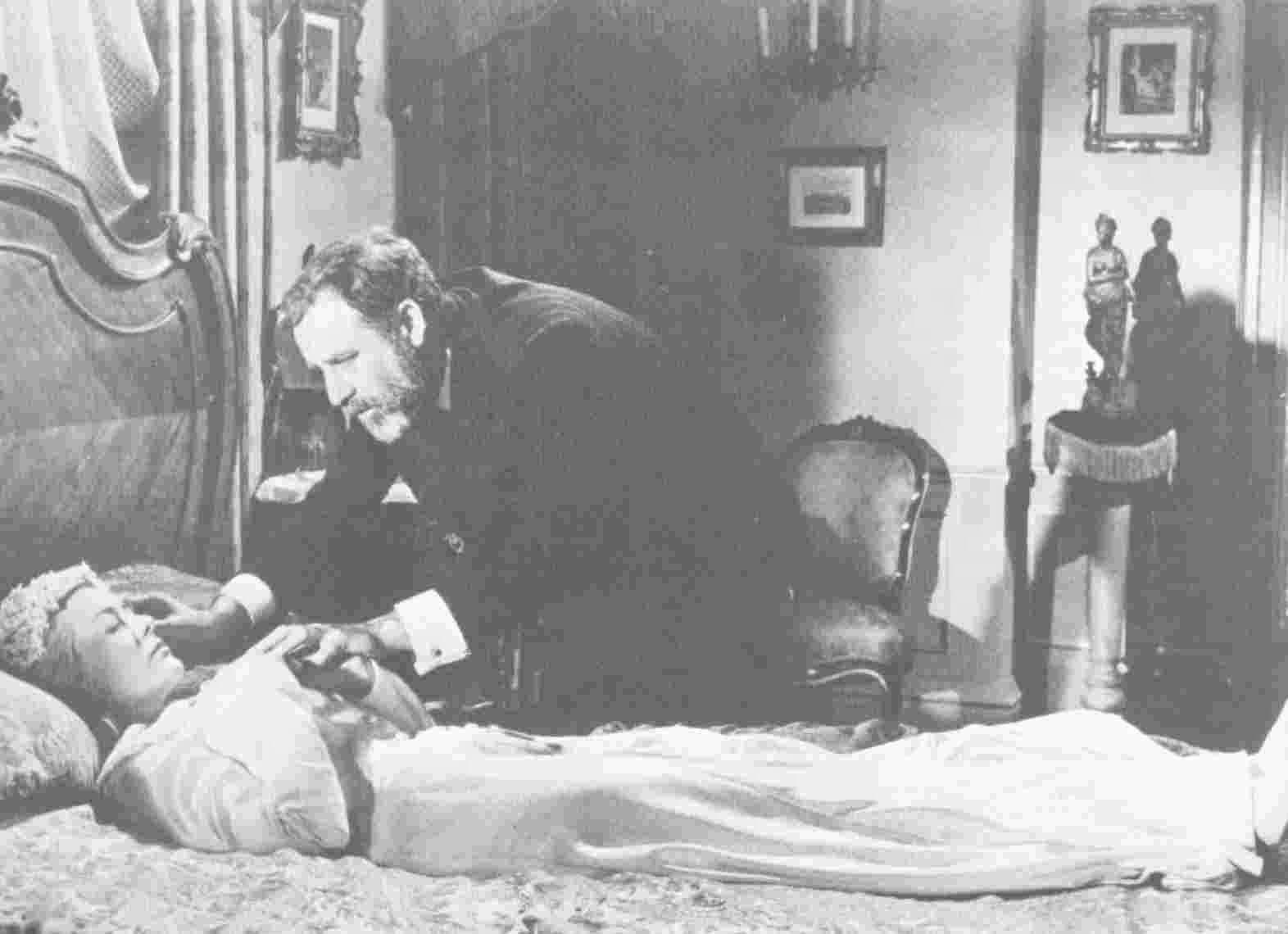
VIRIDIANA
(Luis Bunuel, Spain/Mexico, 1961)
A scene of sadness and death amidst
orderly sur-
roundings.
But this is Bunuel, and this charmingly
cultivated
bourgeois necrophiliac is about to have
intercourse
with a fantasy: the former nun he has
dressed
as a bride, drugged, and now aranges
like
the corpse he wants her to be for sex. SC
___________________________________________________________________________________________
FLESH
OF MORNING
(Stan
Brakhage, USA, 1956)
The
"subversion" of this film lies in its
use
of masturbation as central plot device.
Visually,
however, the act is not fully shown,
though
the passion of the moment -- the heaving
of
the body, the hard breathing is conveyed
in
Brakhage's technique of splintering the
image,
creating a semi-abstract, cubist
collage
of parts of bodies, close-ups,
sudden
unidentifiable movements.
___________________________________________________________________________________________
FRAGMENT
OF SEEKING
(Curtis
Harrington, USA, 1946)
Simplicity
of form and honesty of feeling
characterize
this early, still valid work of
poetic
self-realization. The protagonist
(the
filmmaker and later, Hollywood director)
searches,
amidst mounting tension, for the
object
of his desire. In the last scene,
it
is revealed: himself, as a girl.
___________________________________________________________________________________________
DEATH
IN VENICE
(MORTE
A VENEZIA)
(Luschino
Visconti, Italy, 1971) (F)
The
apotheosis of the old cinema, beautifully
composed
and photographed, this is a perfect
evocation
of period and atmosphere, an elegy
of
melancholy and remorse. At the same time, it
constitutes a diminution of the sublime
complexity
of Thomas Mann's
novel to the dimensions of a
homosexual
fantasy. Without resorting to a single
sex
scene, or even the barest touch of nudity, Visconti
has
fashioned a romantic, deeply felt rendition of
homosexual
emotions, their intensity equalled only
by
certain sequences in Genet's Un Chant d'Amour.
The
compulsive recurrence of scenes of carnal desire
and
utter frustration -- the passion of an old man for
a
nubile boy -- assumes the proportions of tragedy
and
is reinforced by Mahler's sumptuous score. SC
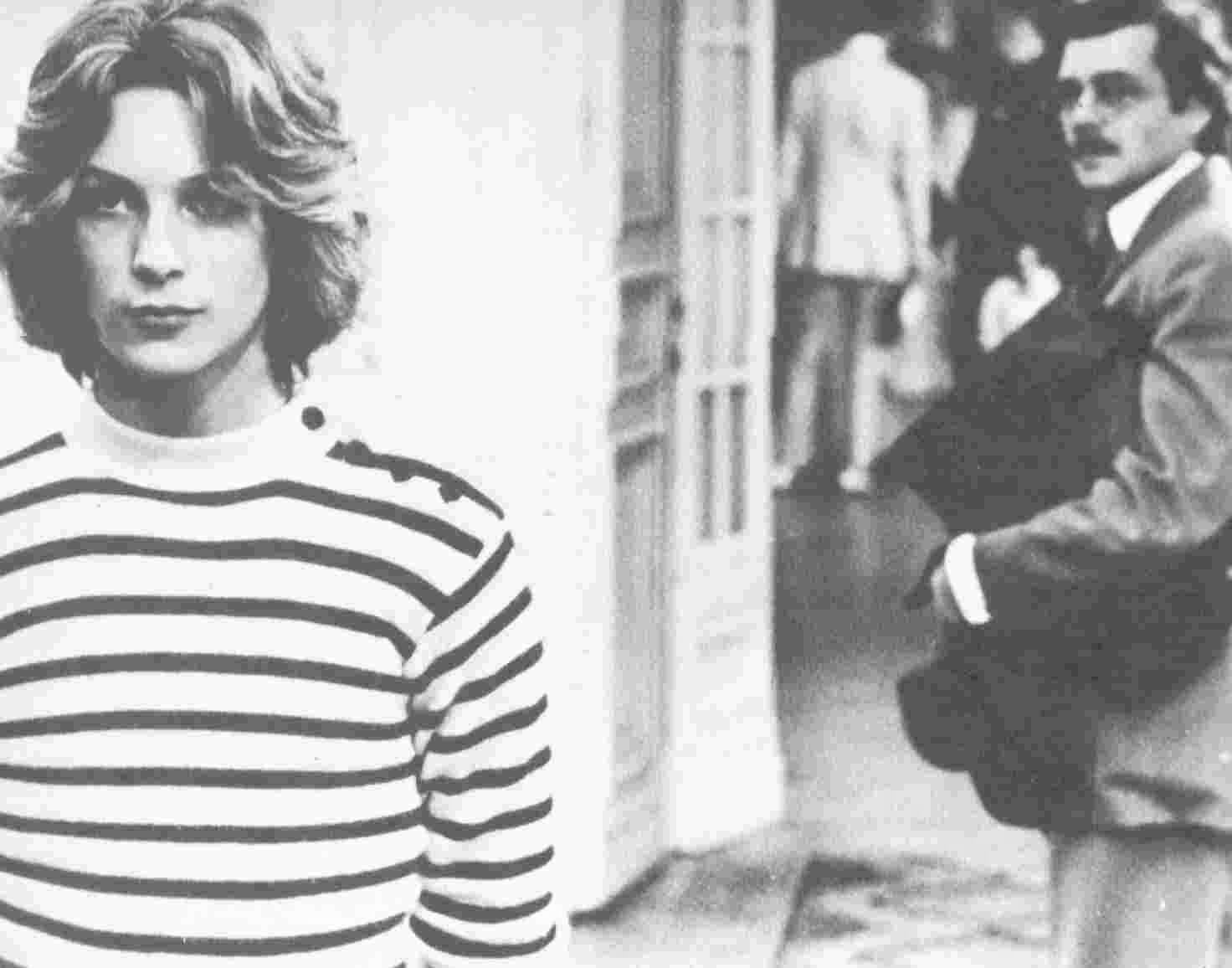
DEATH
IN VENICE
(MORTE
A VENEZIA)
(Luschino
Visconti, Italy, 1971) (F)
Without
a single sex scene, nudity, or even the
barest
touch, Visconti creates a deeply-felt rendi-
tion
of an older man's frustrated passion for a boy.
The
man, appropriately, has already entered the
shadows
(he dies at the end): the new generation
faces
us seductively, bisexually. The door frame
separates
what must not come together. SC