FILM
- AS A -
SUBVERSIVE ART
THE
DAMNED
(Luschino
Visconti, Italy/West Germany, 1969) (F)
It
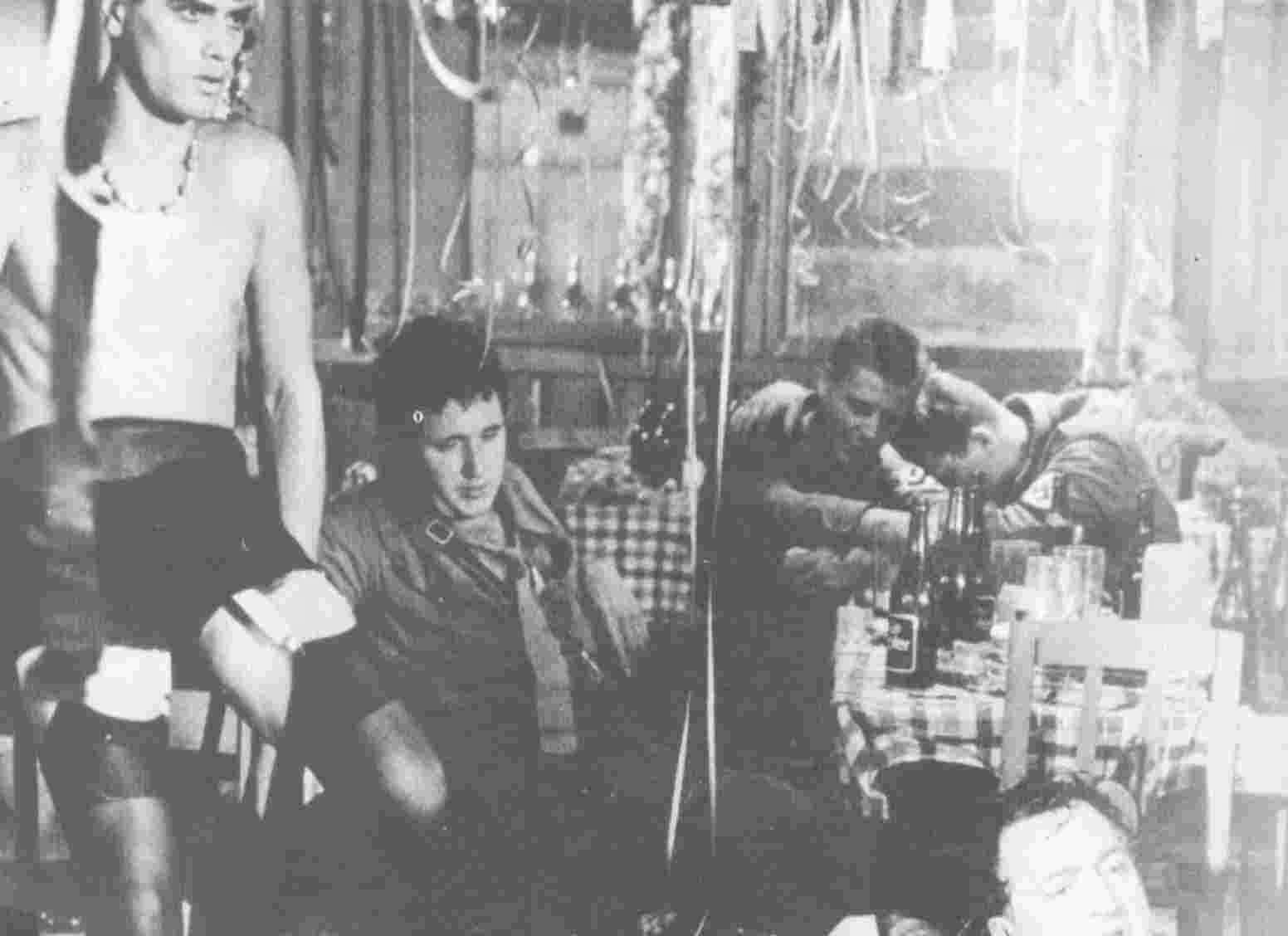
is dangerous and popular to equate Nazi
fascism
with sexual "perversion" though
Visconti
has historic facts (the homosexual
scandal
in the SA) to back him up. The film is
apocalyptic,
the image shocking, and even incest
is
brought in to complete the facile indictment of
a
popular reality by means of a sexual metaphor. SC
THE
END OF SEXUAL TABOOS:
HOMOSEXUALITY
AND
OTHER
VARIANTS - PART TWO
___________________________________________________________________________________________
FRENZY
(Alfred Hitchcock, Great Britain, 1971)
(F)
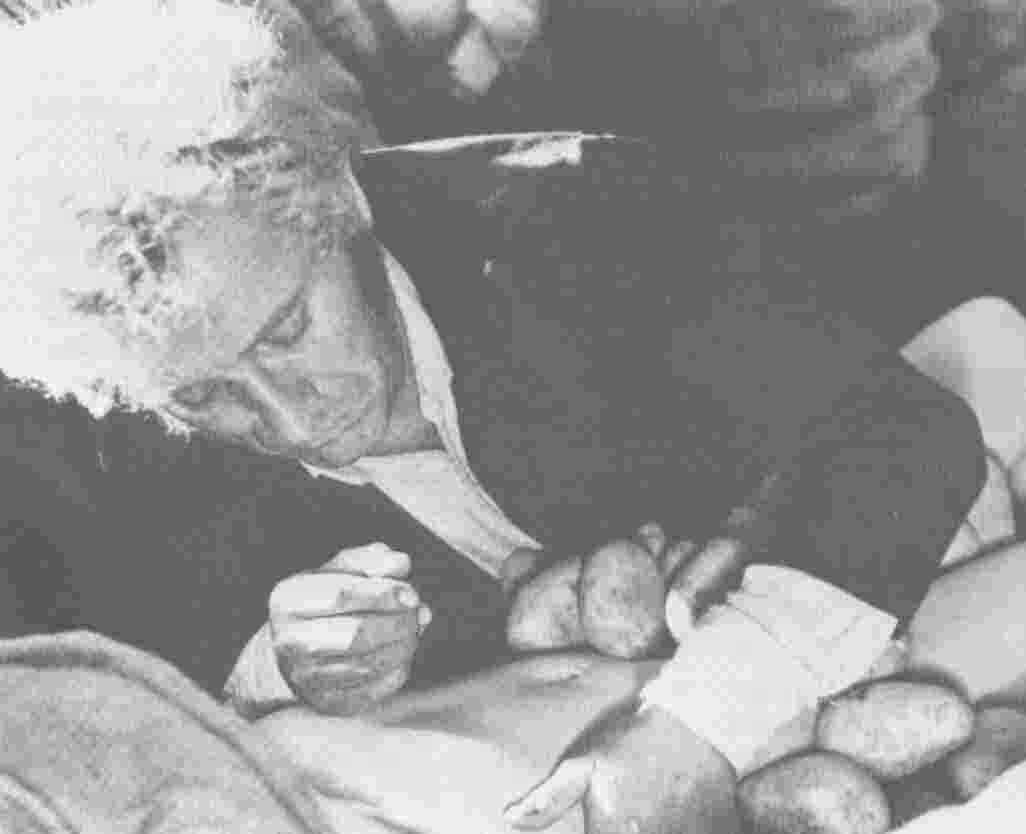
The nude corpse, inundated
by potatoes;
the murderer,
determined and desperate; and
dead
fingers that must be broken to retrieve
the
tell-tale clue. Kinky sex and kinky eating
are
the two constants of this Hitchcock tale.
______________________________________________
"Frenzy"
exhibits curiously parallel symptoms of professional
"mastery" and inner emptiness.
This is one of Hitchcock's
most
successful recent films, a splendid throwback almost
to
the great works of his earlier, British period. A variation
on the Jack-the-Ripper theme, it allows
him to take advantage
of the
new cinematic permissiveness by introducing gory sex
murders, nudity, and two Hitchcock
"firsts": pubic hair and the
fondling
of breasts. It is also one of his kinkiest films. The most
sensational sequence involves the
attempted retrieval by the mur-
derer
of the tell-tale clue (his tie clip) from the victim's corpse,
hidden under bushels of potatoes in a
wildly careering truck;
he is
finally compelled (with appropriate sound effects)
one
by one to break the rigid fingers of his delicious corpse.
The tension, tempo, editing, and
camerawork are superb;
but the
afterglow induces a deja vu. Perhaps the film can
be appreciated only as a highly-mannered,
commercial
entertainment, a
tour de force by a master craftsman
whose
implicit anti-bourgeois stance -- "nothing is what
it seems to be in this most rational of
all worlds" --
long ago
"mellowed" into bourgeois titillation.
___________________________________________________________________________________________
THE
SERVANT
(Joseph
Losey, Great Britain, 1963) (F)
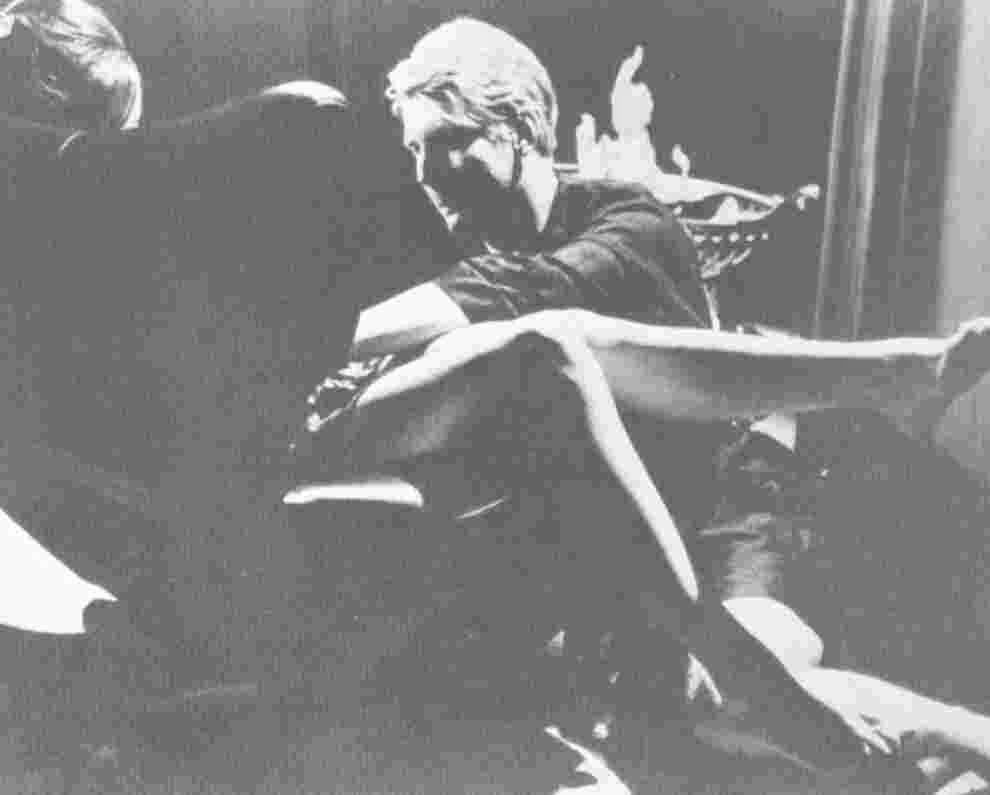
An
air of evil and corruption permeates one
of
Losey's strangest films. In this scene, erotic
effects are achieved solely by hints,
lighting,
composition, and our
own associations. The
still
is as evasive and as stimulating as the
sequence
itself. The script is by Pinter.
___________________________________________________________________________________________
HEAT
(Paul Morrisey, USA, 1972) (F)
A bizarre, yet mild version of "Sunset
Boulevard" a la Warhol,
with
a bevy of voracious females of varying proportions vying
for the casual favors of a passive Joe
Dallesandro. The dialogue
is
fresh, simple, funny, as is the relaxed, improvised acting.
Fellatio and demythologized sex make
their usual appearance,
though
-- for Morrisey -- in a curiously reserved manner.
While
these desperate people and their always-interrupted
sex
acts are perhaps too small really to engage one's concern,
Morrisey's talent for a new, weird kind
of naturalism (as
in his
Trash) now seems fully established. Most notably,
sex is both ubiquitous and joyless, an
almost inevitable
chore that
can neither be avoided nor really enjoyed. SC
___________________________________________________________________________________________

IT
IS NOT THE HOMOSEXUAL WHO IS PERVERSE,
BUT
THE SITUATION IN WHICH HE LIVES
(NICHT
DER HOMOSEXUELLE IST PERVERS,
SODERN
DIE SITUATION, IN DER ER LEBT)
(Rosa
von Praunheim, West Germany, 1971) (F)
Passionate
kissing between men continues
as
a strong taboo of commercial cinema,
though
it freely appears in avant-garde,
independent,
and, of course, gay films.
______________________________________________
A
"cinema verite" freakshow of German homosexuals,
portrayed at their most giggly and
melodramatic,
this supposedly
pro-gay film seems permeated by
fire-and-brimstone
puritanism and unacknowledged
guilt,
with several agitated narrators warning of
ever-deepening
"corruption" unless the gay turns
to
love and politics. An ambiguous morality tale,
it delineates the distance between the
German
and American gay
movements at this moment.
"Rosa"
von Praunheim is a male left-wing radical
filmmaker.
The length and documentary quality of
the
title (as in Costard's The Suppression of Women
Is Recognizable Above All By the
Behavior Of The
Women
Themselves!) denotes the anti-illusionist,
anti-"art"
stance of the political German avant-garde.
___________________________________________________________________________________________
LOVEMAKING
(Stan Brakhage, USA, 1969)
Four varieties of sexual love, as seen by
the famed
American
avant-gardist: a young couple in explicit,
lyrical,
yet almost abstract embrace; dogs during
foreplay,
seduction, and copulation, their faces,
tongues,
and eyes exhibiting lust; a group of nude
children
frolicking on a bed in unconscious sex
play,
their organs almost erotic. But the most
extraordinary
episode involves two men performing
mutual
fellatio, reaching climax in mounting erotic
passion;
even their toes curl in involuntary tension.
___________________________________________________________________________________________
M
(Fritz Lang, Germany, 1931) (F)
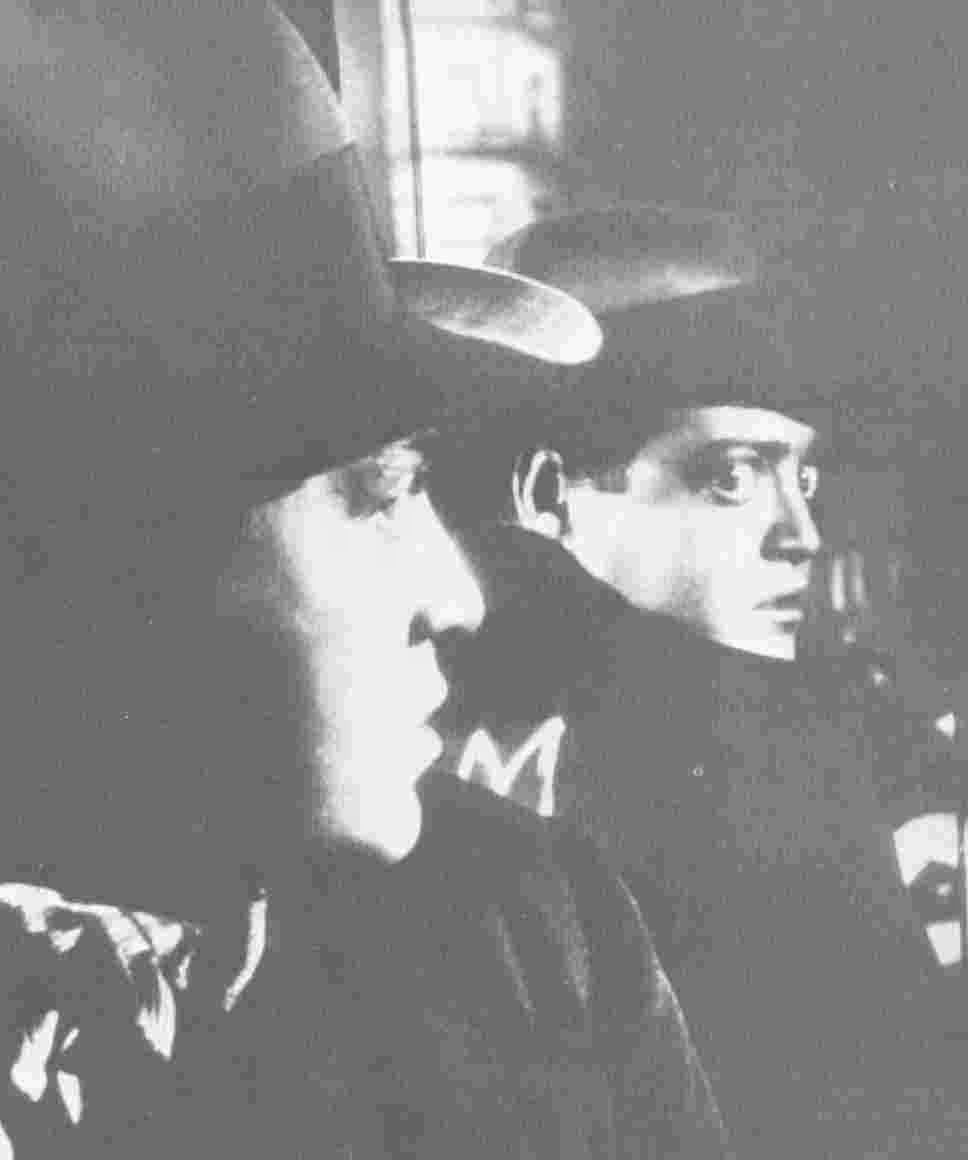
Peter Lorre, as a child murderer, is
chased by both
police and
underworld, each for its own reasons; he
has
just been "tagged" by the underworld with the
letter "M" for murderer, his
identity now known.
His
discovery -- and simultaneous fright -- are
portrayed
purely visually. Lorre's immortal perfor-
mance
succeeded in actually evoking compassion
for
his sex murders over which he had no control.
___________________________________________________________________________________________
MONA
(Bill Osco, USA, 1970) (F)
The incursion of hardcore sex into the
commercial film market
has
brought with it the elevation of one of the most common,
most lusted-after and most "forbidden"
sex acts -- fellatio --
to the
status of a profitable commodity. A 1972 newcomer
to the scene, Gerard Damiano's Deep
Throat, turned a $24,000
production
budget (three days shooting in motel rooms) into a
multi-million dollar profit that
increased every time the police
or
would-be censors went after it without (at least initially)
succeeding. However while this latter
film -- now world-famous
as
the prototype of "fellatio" films -- is unique in no
respect except
for the
impossible anatomical talents of its star, Linda Lovelace
(there has never been deeper penetration
anywhere) -- Mona must
be
recorded as the pioneer and in every respect a superior work.
In this film, unlike Deep Throat,
the challenge of the topic is taken
seriously
and the sexual activity riveted on it, as we observe the heroine
in action in bedrooms, cinemas, back
yards, wherever the opportunity
can
be created. There is an edge of abandon and desperation to her
that whets the appetite of frustrated men
and helps to define the
film
as a commercial product, in disproportionally large demand
solely because society will not freely
accept human activities as human.
___________________________________________________________________________________________

THE
MAN FROM ONAN
(Alan
Ruskin, USA, 1971) (F)
A
young girl gets sexually involved with her brother's
sports equipment and finally rocks to a
climax on a
football. A
scene from a rather unique hardcore
feature
that concentrates solely on masturbatory
fantasies
of women (unfortunately, as fantasized
by
men). The setting is very "American" (guitar,
poster, baseball mitt, and slippersocks);
also
conveyed is a very
contemporary loneliness.
______________________________________________
One of
the best of the new genre of hardcore films, this
film
is unique in openly pivoting on masturbation.
It
displays perverse originality in sequences such
as
the one in which a frustrated girl systematically
reduces kitchen implements to
onanistic tools, even
to the
compulsive sucking of carrot juice from a fruit
extractor
spout; and the sequence in which another
lustful
young lady gets involved with (her brother's?)
baseball bat and jockstrap, and rocks to
climax on
a football. Though
conceived as a male sex fantasy,
the
film succeeds, better than most, in conveying both
the
hunger for sex and post-orgasmic onanistic loneliness.
______________________________________________
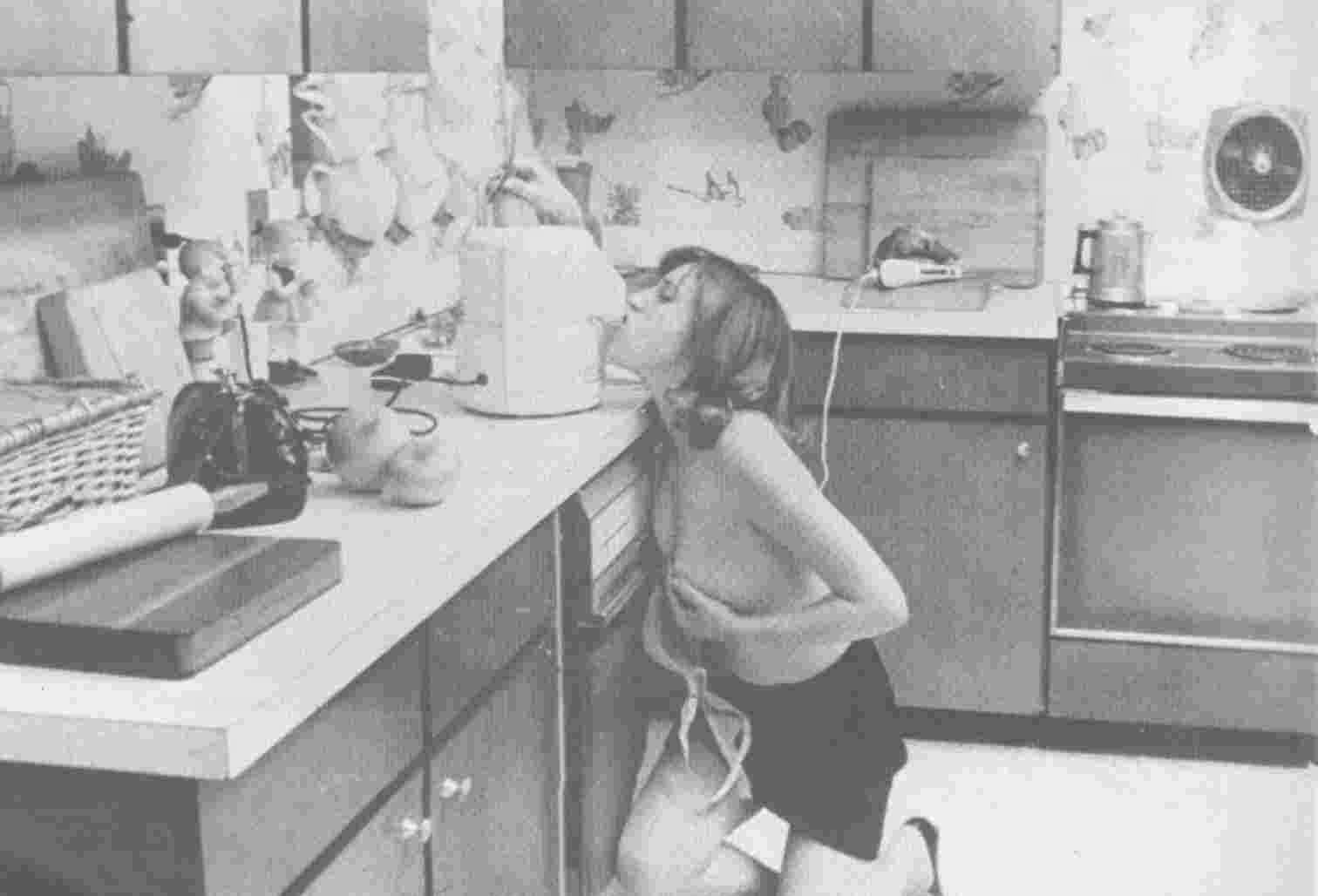
THE
MAN FROM ONAN
(Alan
Ruskin, USA, 1971) (F)
Another
sequence displays a similarly per-
verse
originality in showing a frustrated girl's
systematic
reduction of kitchen implements
to
onanistic tools -- even to the compulsive
sucking
of carrot juice from a fruit juicer's spout.
___________________________________________________________________________________________
MURMUR
OF THE HEART
(SOUFFLE
AU COEUR)
(Louis
Malle, France, 1971) (F)
Particularly
in the context of official French puritanism,
this
story of European middle-class adolescence in the
fifties
is curiously modern and liberating in its casual
treatment of sex, masturbation, and
"accidental" incest,
which
is doubtless why the French censors recommended
its
total prohibition. Since it is slanted towards commercial
aceptability, the film does not show sex
but makes it specific
by
implication and dialogue; a safe and bourgeois device.
Nevertheless, it has its young
hero, doors locked, sit with an
erotic
book to masturbate; then confess this to a priest who
fondles his thigh; engage in tearful
fetishism with his mother's
underwear
after discovering her with a lover; and finally take her
to bed for a brief interlude, immediately
followed by a night with
a
young girl, his sexual education completed. "The
biological
justification for
the incest taboo", says Malle, "has been made
obsolete by the pill"; and the film,
in its acceptance of sex,
refuses
even to hint at possible psychological difficulties.
___________________________________________________________________________________________
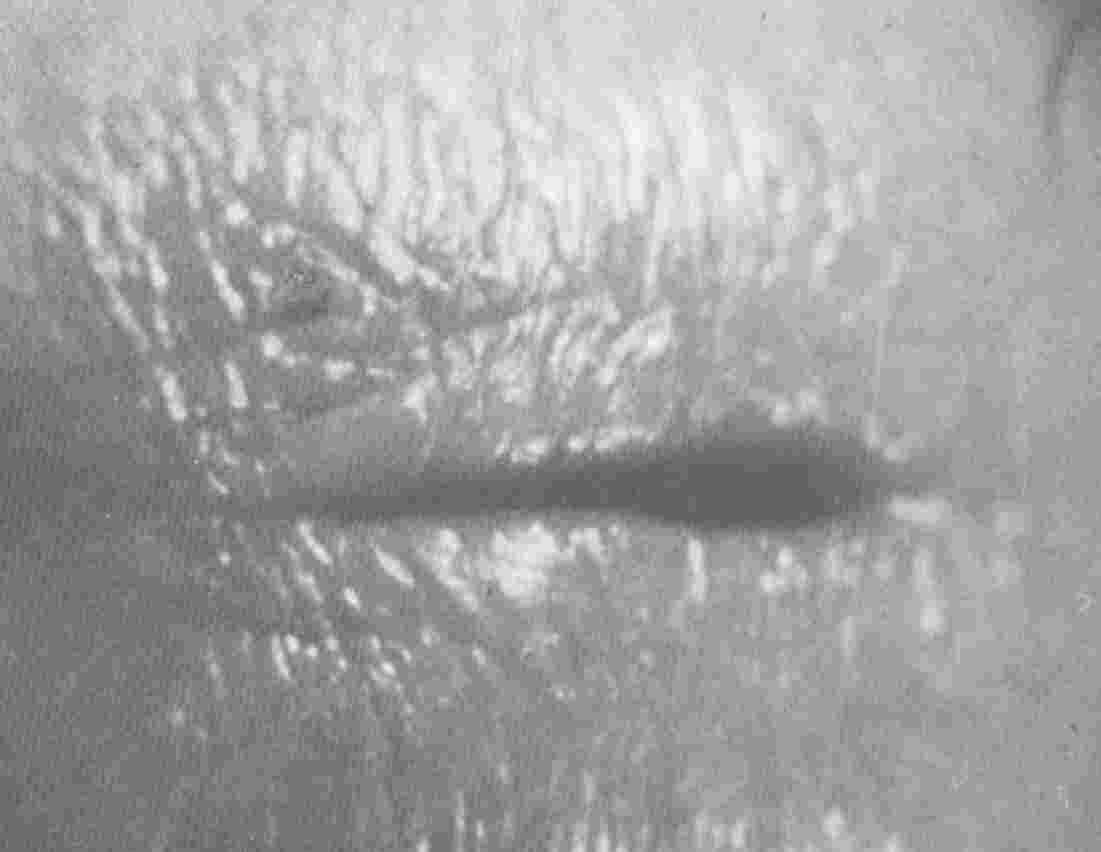
PARTICULARLY
VALUABLE
(BESONDERS
WERTVOLL)
(Helmuth
Costard, Germany, 1968)
"Only
the perverse fantasy can still save us,"
said
Goethe to Eckermann, as quoted by the
filmmaker,
who promptly proceeds to outrageous
filmic
provocation for political ends, including
these
close-up shots of a "talking" penis and
its
subsequent ejaculation toward the camera
lens.
Close-ups abstractify and almost render
acceptable
otherwise "offensive" visuals.
______________________________________________
Pornography
in the service of politics. An outrageous
provocation,
this attack on reactionary German
legislation
discriminating against young film
directors,
features head-on, close-up shots of a
penis
"mouthing" the parliamentary defense of the
law by its author. This is
followed by masturbation of
the
organ by an anonymous female hand, ending with
ejaculation into the camera and a
close-up of a nude
behind
"blowing" out a candle (with appropriate sound).
A landmark in political pamphleteering,
the film was
selected for the
1968 Oberhausen International Short
Film
Festival by a committee of leading German critics,
and
promptly banned by the (social-democratic!)
city
government, causing the withdrawal of almost all
German
directors from the festival and a national scandal.
The
title satirically refers to the official certificate of
"Particularly Valuable" given
each year to the best
film
shorts by an Establishment selection committee.
___________________________________________________________________________________________
PORTRAIT
OF JASON
(Shirley
Clarke, USA, 1967) (F)
This
moving cinema verite study by a leading American woman
director consists of a feature-length
interview with a Black
homosexual
who, despite controlled nonchalance and smiling
sophistication, reveals perhaps more than
intended. "A bold,
incisive
choreography, a dance of the human ego in all its ugly,
beautiful nakedness. We see a
relentless unfolding of a personality
whose
charm and malevolence are both irresistable and exasperating.
It's like watching an emotional
strip-tease, with Jason unbuttoning
himself
in public to reveal (or conceal) unashamedly his rascality,
his conceits, his sexual hang-ups, his
raggedy-assed buffoonery,
his
conquests and defeats -- a fascinating confessional
right
down to the last G-string." - Storm De Hirsch
SC
___________________________________________________________________________________________
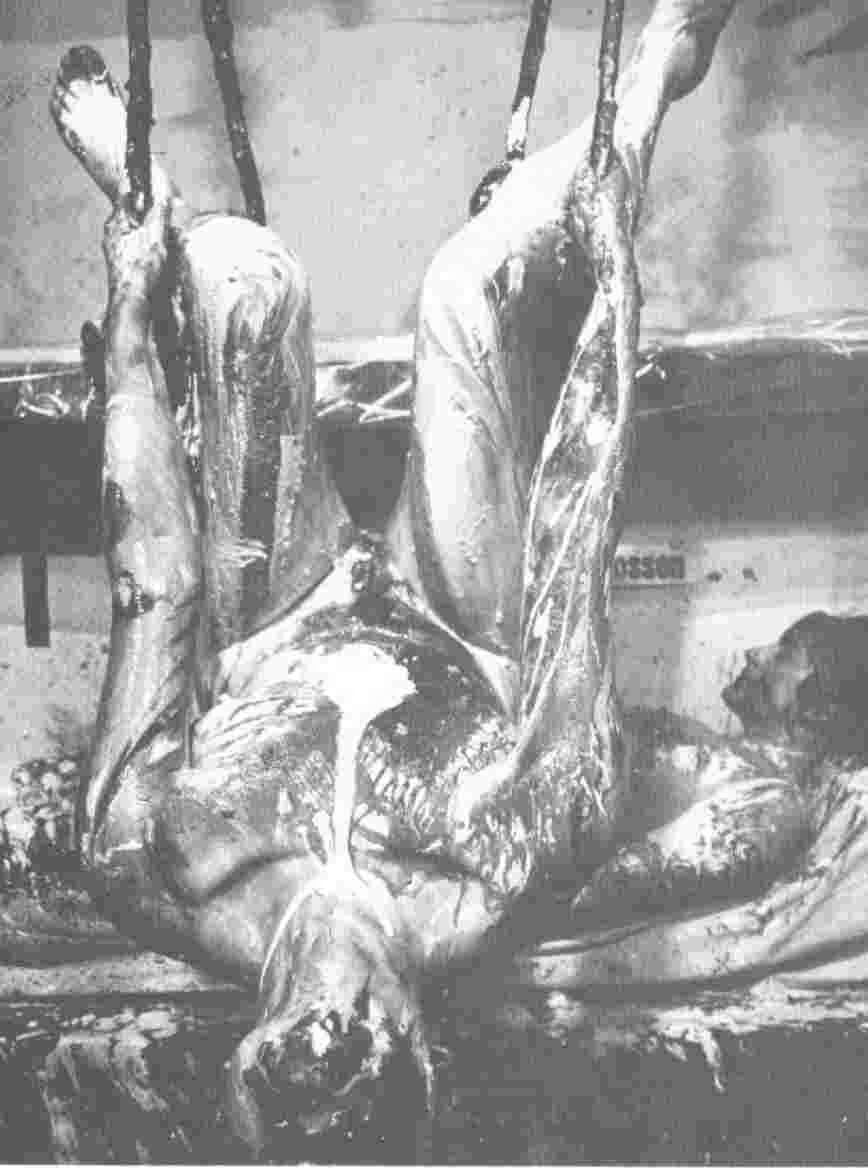
SODOMA
(Otto Muehl, Austria, 1970) (F)
A scene from Otto Mueh's "happenings"
evokes,
in its sado-masochist
horror and defilement,
the
evil memories (if not present realities)
of
a civilization of concentration camps and
genocide.
Franju's slaughterhouse film, The
Blood
of the Beasts -- another ideological
statement
of our day -- is not too far off.
______________________________________________
The
Austrian avant-gardist Otto Muehl may well be
the
most scandalous filmmaker working in cinema
today.
Whether he is also the most subversive is
the
subject of a continuing international debate,
with
even some liberal critics denouncing him as
fascist,
or at least, anti-humanist. But it is a grave
mistake to misinterpret Muehl's work as
pornographic,
thereby
underestimating its seditious, anarchist intent.
Muehl's
films -- of which Sodoma is the most famous --
are
based on his notorious "Materialaktionen"; live
happenings, involving nude protagonists
in real and
extravagant acts
of sexual violence and defilement.
Clearly
derived from dada-surrealist anti-aestheticism,
these
public performances predictably caused police
prosecution, scandals, and near-riots in
various
countries. They
invade the spectator's defense
mechanism
and value systems in a manner
comparable
perhaps only to the slitting of the
woman's
eyeball in Bunuel's Un Chien Andalou
or
Franju's deceptive documentary of the
slaughter-houses,
The Blood of the Beasts.
Muehl
cannot be understood except as the product of
a
continent that experienced within half a century two
world wars and the crushing trauma of
Nazism; there is a
stench of
concentration camps, collective guilt, unbridled
aggression, hallucinatory violence that
-- however relevatory --
has
the dimensions of an atavistic generalized myth of evil.
If these are works of defilement -- as
they surely are -- they
reflect
a society of defilement; they capture its essence by
means of harrowing violence and perverse
sexuality. To
Muehl, the
only way to exorcise this cruelty is by recrea-
ing
it in the protected environment of theatrical space,
cruelly confronting the spectator
not with fraudulent,
fictionalized
simulations but with the act itself.
The
"documentary" action recorded in Sodoma includes
fucking, fellation, masturbation,
urination, the tying or
stringing
up of participants (particularly women), the
insertion
of various fluids or objects into vaginas, pumps
attached
to penises; a complete demystification of sex
and
its portrayal as a purely physiological, bodily act.
Most
shocking is the "Scheisskerl" ("Shit-Ass")
episode
(co-authored by Hanel
Koeck), for here Muehl goes beyond
hardcore
sex (no longer so daring nowadays) and enters
into
the still forbidden realms of coprophilia. ("This film is
dedicated to shit eaters.") As
one nude woman administers
an
enema to another, a man lying beneath her waits, with
open mouth; not for long. Gagging
under the sudden riches,
his
nude body is lovingly smeared by the second woman
who
then fellates, masturbates, and fucks him until he
lies
in utter exhaustion, an inert, motionless object.
The
emotions of outrage, acceptance, anger, or liberation
engendered in audiencese are too profound
to allow of
a facile dismissal
of Muehl as pathological pornographer.
His
images -- in their combination of explicit sexuality
and
violent defilement -- would appear to be even more
"subversive" than those of the
now almost standard hardcore
pornographic
films. The scatological element -- one of the
secret delights of mankind -- is visually
particularly distur-
bing,
evoking both (impermissible) interest and (carefully
modulated) disgust; for we do not find
our own excretions
disgusting
and in love or sexual passion may even temporarily
be
capable of accepting those of the beloved. The Muehl
"Materialaktionen" confront the
spectator with his secret fears,
aggressions,
wish dreams, nightmares, and unacknowledged
desires.
They "stir up" residues of the concentration-camp
guard, rapist, masochistic victim or
brutal opressor in all
of us,
and reintroduce us, in painfully original fashion,
to
the concepts of collective guilt (or catharsis?)
My work
is psychic subversion, aiming at the destruction
of
the pseudo-morality and ethic of state and order.
I
am for lewdness, for the demythologization of
sexuality.
I make films to provoke scandals, for au-
diences
that are hidebound, perverted by "normalcy",
mentally stagnating and conformist ...
The worldwide
stupefaction of
the masses at the hands of artistic,
religious,
political swine can be stopped only by the
most
brutal utilization of all available weapons.
Pornography
is an appropriate means to cure our
society
from its genital panic. All kinds of revolt
are
welcome: only in this manner will this insane
society, product of the fantasies of
primeval mad-
men, finally
collapse ... I restrict myself to flinging
the
food to the beasts: let them choke on it.
-
Otto Muehl
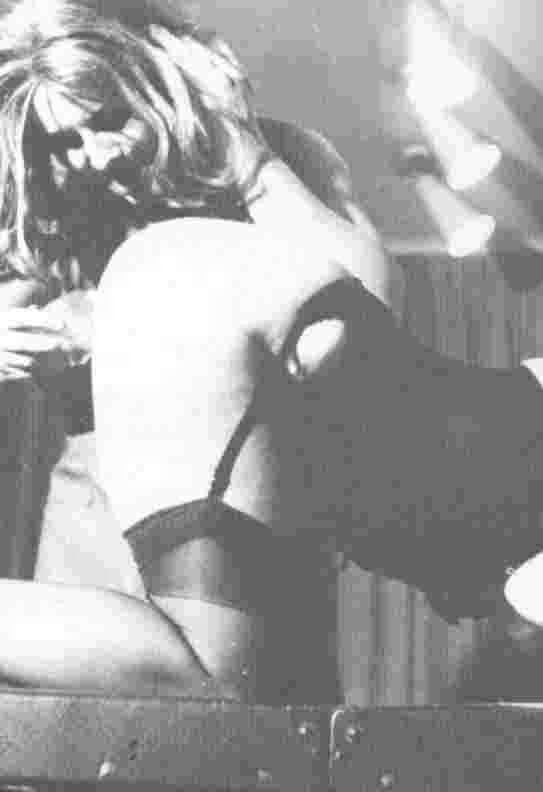
SODOMA
(Otto Muehl, Austria, 1970) (F)
A woman administers an enema to
another in preparation for an act
of coprophilia involving Otto Muehl.
As in all of Muehl's "Materialaktionen",
the artist participates as accomplice in
the
horrors and gruesome
delights he portrays.
___________________________________________________________________________________________
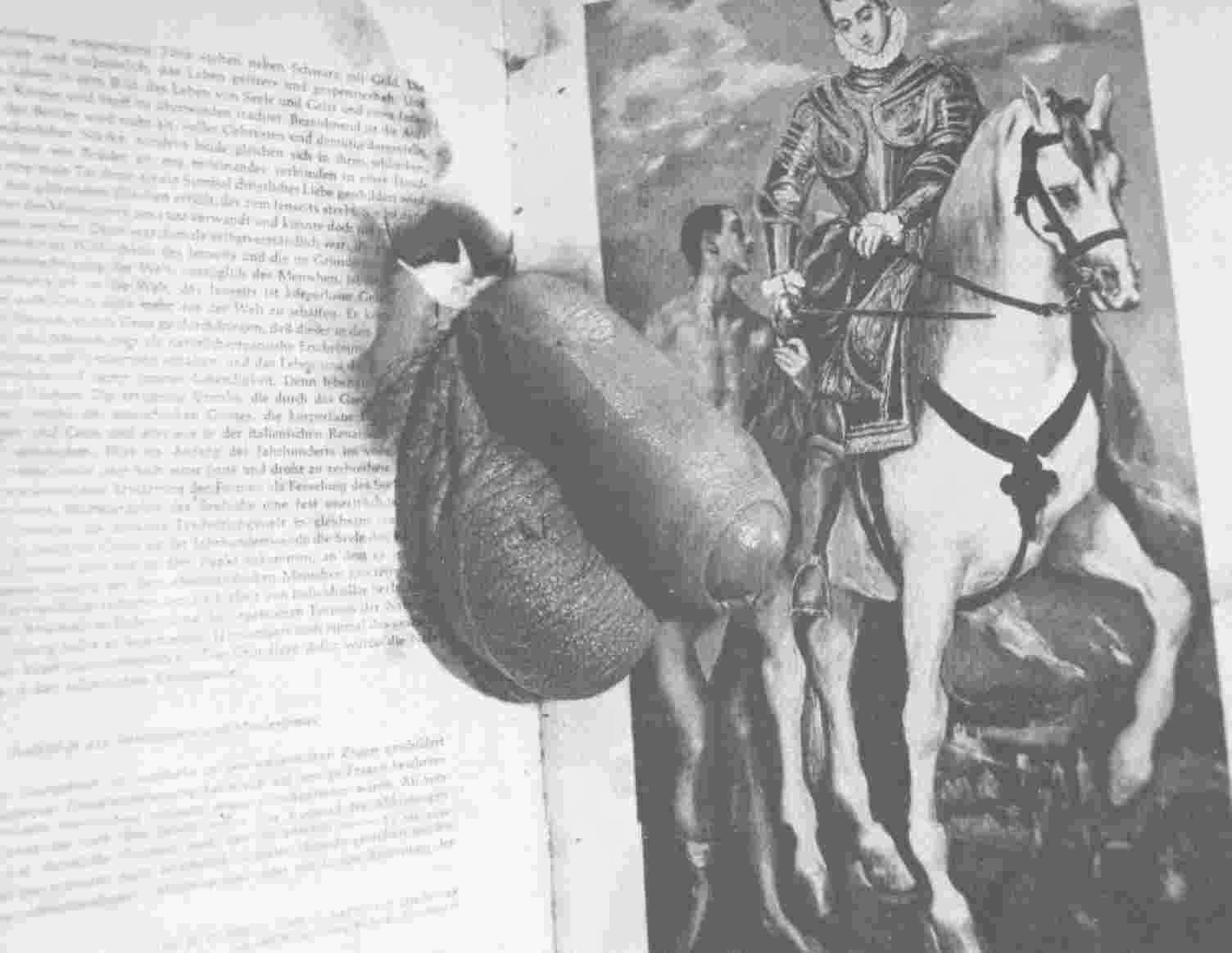
MAMA
AND PAPA
(MAMA
UND PAPA)
(Otto
Muehl, Austria, 1963-69)
In
the various films made from his scandalous
live
happenings, Otto Muehl emerges as one of
the
most subversive artists now working in the
medium.
The counterposing of a close-up,
sharply
defined penis "breaking through"
the
pages of an art book to attack a symbol
of
Western bourgeois art is comparable in its
shock
effect to Bunuel's eyeslitting in Un Chien
Andalou.
Muehl's "instructions" are specific.
"Fuck
an art book from behind, open it, and
you'll
find yourself in good company. Your
cock
wil be quite ready for museum display. SC
______________________________________________
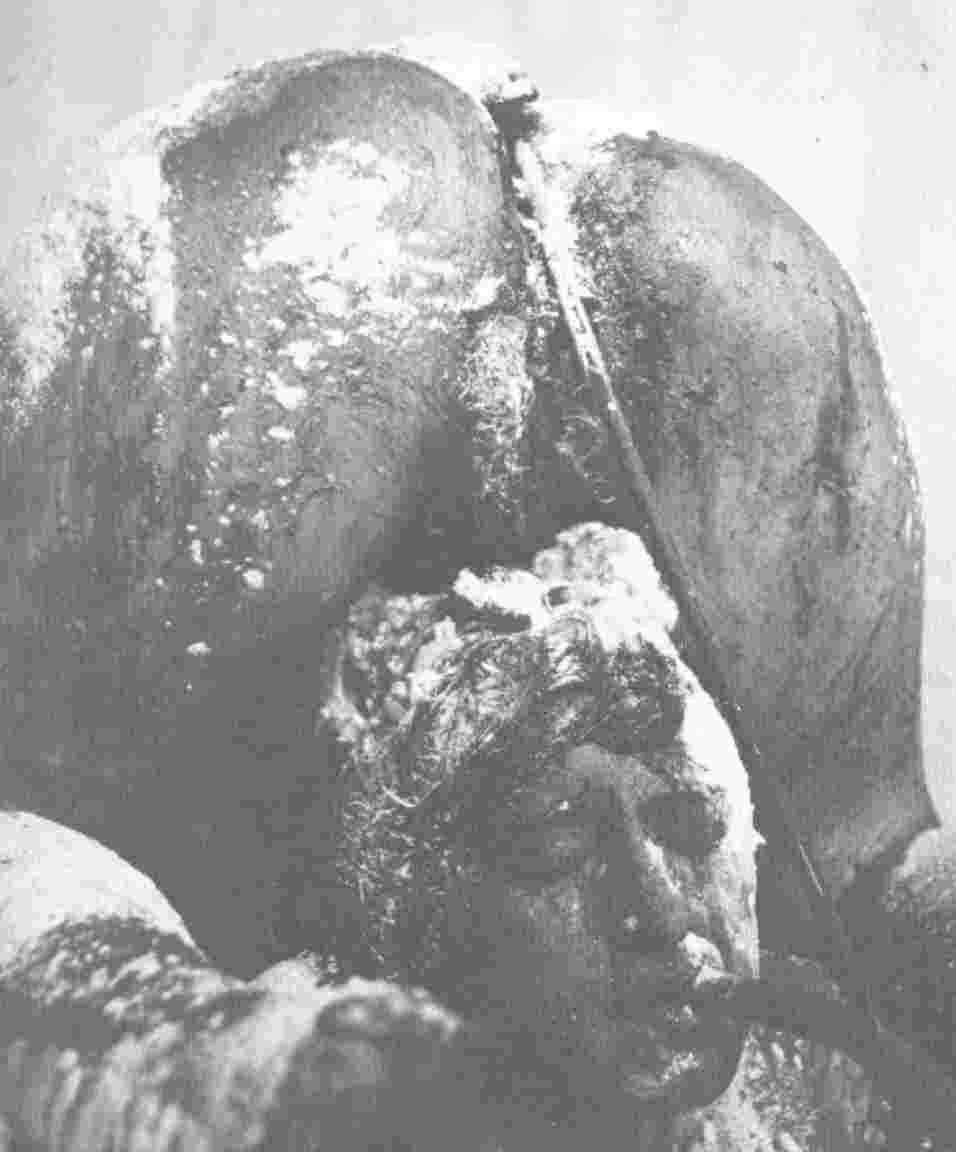
MAMA
AND PAPA
(MAMA
UND PAPA)
(Otto
Muehl, Austria, 1963-69)
The
sadistic manipulation of the body and its
defilement
by Muehl is a calculated, subversive
affront
to our sensibilities, aiming at consciousness-
changing
through methods of shock. The intent is to
deromanticize and demythologize what is
considered
inviolable in
theory yet in practice incessantly violated
in
warfare, political, torture, and exploitative sex. SC
______________________________________________

MAMA
AND PAPA
(MAMA
UND PAPA)
(Otto
Muehl, Austria, 1963-69)
For a
brief moment, the action looks realistic,
but
then we realize that penis, fluid, and hand
are
artificial; significantly, this does not lessen
the
visual shock. Muehl's incessant attacks on our
last
taboos extend to the public display of bodily
functions otherwise considered too
private (i.e.
too universal)
to be viewable in good society. SC
___________________________________________________________________________________________
THE
SUPPRESSION OF WOMEN IS RECOGNIZABLE ABOVE
ALL BY
THE BEHAVIOR OF THE WOMEN THEMSELVES!
(DIE
UNTERDRUCK DER FRAUEN IST VOR ALLENAM
VERHALTEN
DER FRAUEN SELBER ZU ERKENNEN!)
(Helmuth
Costard, West Germany, 1969) (F)
One
of the ideologically most aggressive filmmakers of the
German avant-garde (see also his
porno-political Particularly
Valuable)
has us spy on the humdrum activities of a housewife
during a typical day of her life, much of
it recorded in real time
to
reveal its boredom and stultifying idiocy. She washes dishes,
talks on the telephone, masturbates in
front of a mirror, cooks.
With
characteristic perversity, however, she is placed by a
male in male dress: a brilliant and
disturbing visual met-
aphor.
Here the Warhol style of "real time" and minimal
cinema is utilized for a radical
political statement.
___________________________________________________________________________________________

IMPUDENCE
IN GRUNWALD
(Guenter
Brus and Otmar Bauer, Germany, 1969)
Defecation,
as a human activity, must also be
demystified
and made public, if the prevailing
"order"
(which sanctifies violence and genocide
but
denies the body and its functions) is to be
destroyed.
It is significant that Muehl's
provocations
(and those of artists inspired
by
him) occur in countries traumatized by
Nazism
that now find themselves impotent
between
two unscrupulous, violent power blocs.
___________________________________________________________________________________________
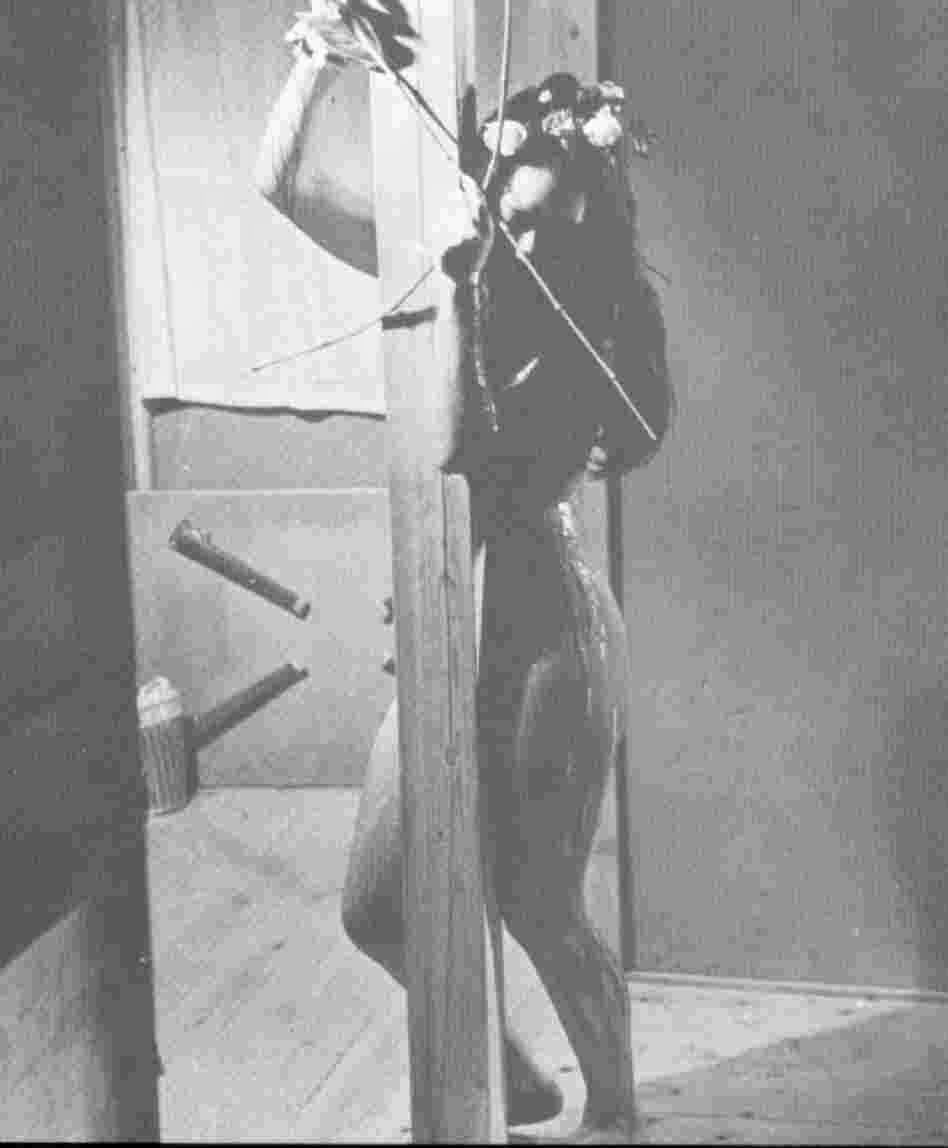
VIOLATED
ANGELS
(OKASARETA
BYAKUI)
(Koji
Wakamatsu, Japan, 1967) (F)
Reminiscent
of a modern crucifixion, this is one
of
several young women systematically tortured
and
cut up amidst shrieks and moans by a young
man
with a gun and a razor; the ambiguity created
by
shadows and arrows augments the disquiet. The
film
ends in a blood bath of anti-feminist sadism.
______________________________________________
This
film is more symptomatic than significant. Its director claims
that his twenty sado-masochist and erotic
features project an anti-
authoritarian
message. The "angels" in this film are young nurses,
methodically violated, shot, and/or cut
into ribbons to the accom-
paniment
of shrieks, moans, and croaking noises, by a young man with
a gun and a razor. In a lake of blood and
beautiful nude bodies, he is
unable
to kill the last one, curling up, fetus-like, in her lap instead.
"Why did you spill so much blood?"
asks the girl-mother. "To orna-
ment
you," he replies. While there is no doubt of Wakamatsu's
ability
as an artist,
his anti-feminist sadism, unadorned by ideological
context, ultimately gives his work an
anti-humanist flavor.
___________________________________________________________________________________________
WHY
(HVORFOR
GOER DE DET?)
(Phyllis
and Eberhard Kronhausen, Denmark, 1971) (F)
The
well-known sex researchers and proponents of
erotic
freedom present a plea for sexual tolerance
in
the form of a factual, non-moralistic portrayal
of
unorthodox sex acts. Revealing yet unsensational
interviews with the protagonists are
interspersed
with discussions
with bored, fascinated, scared or
aroused
Danish university students, who watch the
proceedings
in a sports arena transformed into a sex
emporium
by two exercise mattresses in its center.
The
first episode involves a passionate and arousing
Negro-White lesbian episode. After
a great deal of
athletic,
obviously unstaged lovemaking on-camera,
the
beautiful black girl discusses the relationship
in
poignant detail; she regrets not having a penis,
so
that they could have a baby and get married
("there
is no point in being married without a penis").
The
second episode features simultaneous copulation
by
two married couples, who, in addition to their nude
lovemaking before the students, are also
shown in their
petty-bourgeois
homes. Surrounded by knick-knacks
and
family portraits, they discuss whether they can reach
orgasm during their public performances
and explain,
under the
circumstances somewhat incongruously, their
distaste
for group sex or acting in pornographic films.
The
third episode involves the famous Danish girl-farmer
who
loves her animals. We see her lying across the back of
a bull, vainly trying for arousal by
masturbating him. While
flies
settle on her legs, of which she remains unaware, she
plaintively explains that they may have
to get a heifer "to get
him
started". But she is luckier with her pet dog who after-
wards whines jealously throughout a
lengthy sex act
between her
and her boyfriend. The most romantic
sequence
involves the mating of two horses ("you can't
do
it with a stallion, he'd split you apart", she remarks
wistfully); the job done, the sudden
plopping out of his
organ
sends waves of shocked laughter through the
audience.
We see her locket, with a picture of her dog;
we
learn the various techniques of doing it with animals;
we
discover in a curiously honest, simplistic interview
that
her mother considered sex dirty; and perhaps
we
do learn the tolerance the Kronhausens wish to feel.
___________________________________________________________________________________________
TRASH
(Paul Morrisey, USA, 1970) (F)
A high-camp "love story" of an
outrageously handsome
heroin
junkie and his trash-scavenging girlfriend (played
by
a female impersonator), this film skips from fellatio
to
seduction to foot fetishism in its attacks on soap opera
myths and Hollywood. A playful
perversity, an acceptance of
the
soft underbelly of bourgeois society, a strange poignancy
informs this fable of impotence, drugs,
and sex. In the climactic
love
scene, the hero -- remaining impotent -- suggests to the
lusting "girl" -- reclining on
a rumpled bed among objects
gathered
from garbage cans -- that she use a beer bottle instead;
she does, while he soli- citously
inquires whether she is coming,
then
holds her hand and promises to do better next time.
In
a second scene, she accuses him, in rage, of not even letting
her "suck" him off. What
with an antiwar Welfare worker
revealed
as a malignant foot fetishist, assorted females as
sexual
aggressors against the forever innocent male, drug-fixes
or penises casually displayed, the
mounting intrusions upon
the
viewers' value system mark this as a truly seditious work. SC
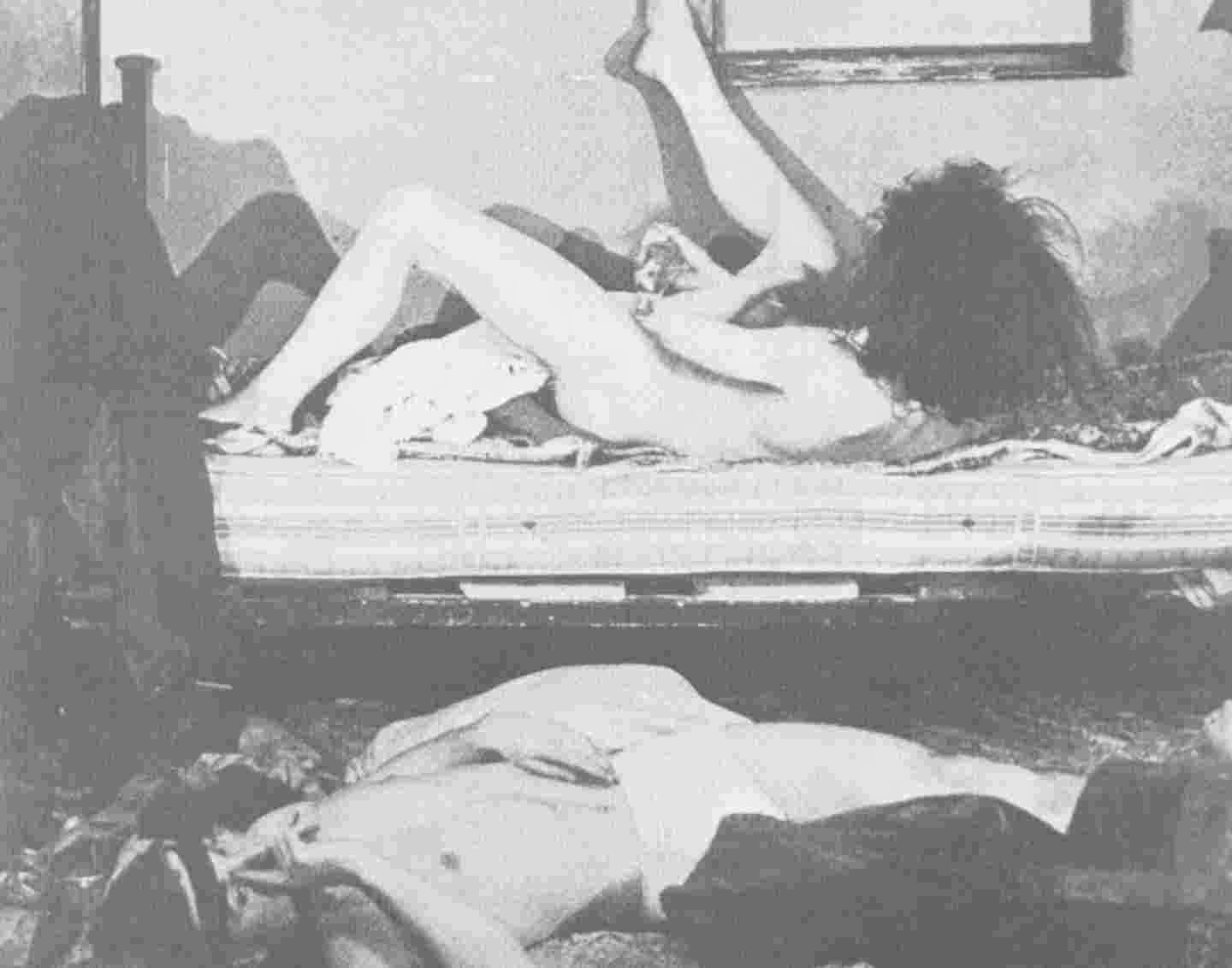
TRASH
(Paul Morrisey, USA, 1970) (F)
The antidote to genteel bourgeois
sexuality.
The manon the floor
is a heroin-addict
and
impotent. His dissatisfied girlfriend --
a
garbage scavenger, played by a man --
uses
a beer bottle instead. The compo-
sition
emphasizes separation, disorder,
seediness,
and the film's unsentimental
accepting
attitude towards life. SC