FILM
- AS A -
SUBVERSIVE ART
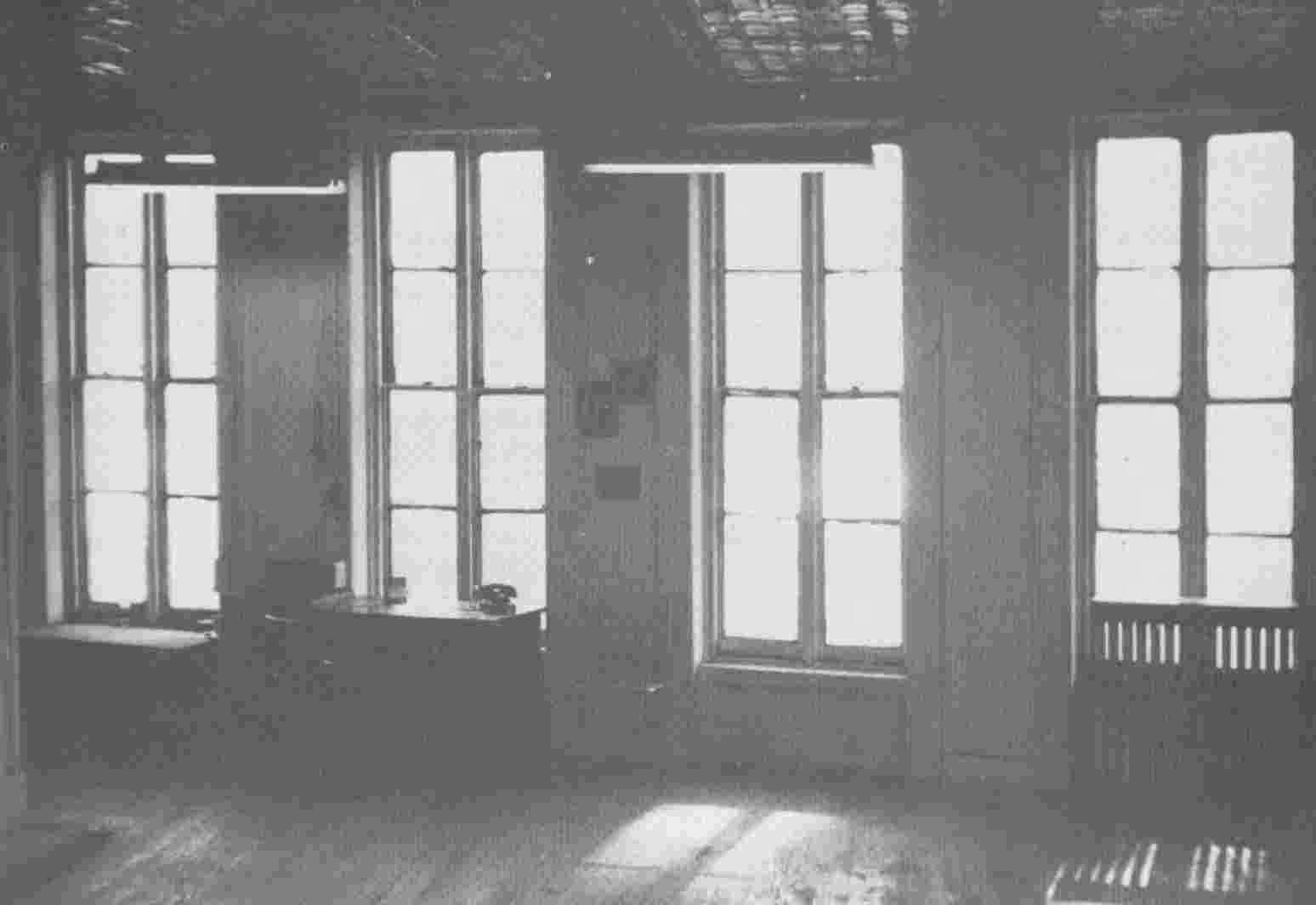
WAVELENGTH
(Michael Snow, USA, 1967)
A
magic moment in a magic film; the strong,
spectral
sunlight streaming through carefully
"placed"
windows into the still, mysterious
loft
through which, for 45 minutes, the camera
traverses
its eighty-foot length in one continu-
ous,
almost imperceptable zoom movement. SC
______________________________________________
A
seminal work of the new avant-garde and unquestionably
one of the most iconoclastic and original
experiments of
the 60s.
This hypnotic, 45 minute long film consists entirely
of
one continuous, almost imperceptible zoom movement
which
traverses the length of the 80-foot New York loft.
During
this time, four tiny "human events", none longer than
a minute, occur in front of the camera
(such as two people
walking
in), the rest is painful (to minds attuned to Hollywood
plots) poetic contemplation that turns
into reverie. A perfect
example
of the cinema of stillness, it weaves its charms so subtly
that those who come to scoff remain
transfixed. A speculation
on
the essence of the medium and, inevitably, of reality, the real
protagonist of this film is the room
itself, the private life of a
world
without man, the sovereignty of objects and physical events.
The film is accompanied by a
steadily growing electronic sound --
created
by the rising pitch of an oscillator working against
the
60-cycle hum of an amplifier -- which finally reaches an
unbearable level; to Snow, the glissando
of this oscillator
sine wave
is the sound equivalent of the camera's zoom. SC
THE ASSAULT ON MONTAGE
An
instructive and sadly amusing commentary on man's
attempts to eternalize the necessarily
transitory may be
discerned in
the evolution of film editing. The discovery of a
revolutionary new technique, its
institutionalization, ossifica-
tion,
and supersession -- all are there, in cyclical progression.
The
significance of this first and basic filmic task cannot be
overestimated. Cocteau phrased it
succinctly: "A director
who
does not edit his own film, allows himself to be translated
into a foreign tongue." (1)
Editing was born in 1903 when
Porter
found it necessary to glue two pieces of film together
to
develop a scene in The Great American Train Robbery.
Initially
viewed merely as a helpful mechanical device to maintain
continuity, it was quickly discovered to
have aesthetic potential
as
well. Griffith not only intentionally divided a scene into shots,
but within it varied distance, angle,
perspective, and focus,
adding
close-up (significant detail) and cross-cutting (simultane-
ous advancement of different plot lines)
to the arsenal of editing.
Following
the development of an entire theory of montage by
the
Russians and its creative utilization by the Germans in its
20s, Hollywood institutionalized what
could have been a tool
of art
into a smooth technique. The result was the establishment
of a "mythology of editing", an
international canon of regulations
scrupulously
obeyed by filmmakers and editors, immortalized in
text
books, and further vulgarized by film schools. These rules
were not only "right" -- they
were reasonable, logical, the triumph
of
common sense in the cinema, reflecting an orderly, predictable
world within which surprise or shock were
kept to a minimum.
It is
perhaps impossible to convey how definitive this received
canon of editing was regarded as being by
the film industry.
As
usual in human affairs, its historicity was apparent only to
rebels. Ultimately it was they who,
by challenging the "eternal",
broadened
the expressive range of cinema. Having assiduously
chipped away at one rule after another,
desecration is now complete.
The
best-known rule of the canon specified a particular etiquette for the
introduction of a new scene; a carefully
choreographed ballet of long shot
("objectively"
photographed from a distance to "establish" the physical
setting of the scene and show the
placement of characters within it)
to
medium shot (drawing the viewer into the action) to close-up.
The
rebels break with this: they open new scenes with a close-up or
a medium shot, disorientating the viewer
into frantic and inevitable
attempts
at understanding, thereby pulling him into the action more
securely. This "jarring" is by
no means confined to Bertolucci, Godard,
or
the underground. It can already be found in such films as Bunuel's
Viridiana, and is paralleled in the
structuring of the modern novel.
There
exist traditional devices, according to the canon, for transitions
between scenes: fades (to denote time
passage), dissolves (to denote
action
occurring elsewhere at about the same time), iris effects (an
opening up or closing down on a scene,
for emphasis). The rebels
either
dispense with these devices in favor of "direct cuts" to
subsequent scenes (increasing
disorientation and space-time com-
pression)
or using them for non-conventional, creative purpose.
In the
canon, if transitional devices are not used, adjoining
scenes should be spatially or temporally
similar to maintain
continuity
and smooth narrative structures. The rebels tend,
on the contrary, to use the direct cut in
the manner most
calculated to
"shock" the viewer into new time and space.
By the
book, a shot is not to be ended
before
the end of action within it or before
the
viewer can fully grasp it. The rebels
instead
prefer to increase the mystery.
The
worst cinematic crime is said to be the jump-cut --
a
false, mismatched cut within a scene, joining two
discontinous parts of a continuous
action, thereby
violating
strict continuity. But with Godard's Breathless,
the jump-cut becomes the hallmark of the
new cinema,
denoting an
acceptance of discontinuity by artist and
audience
for purposes of heightened imagination, or inti-
mations
of memory, passion, or anxiety. It produces high
visual excitement, "particularly when
the frame remains
unmoved
and the character is popped about with it." (2)
According
to film orthodoxy, size of objects in adjoining
shots
should be similar and sudden changes in scale are
to
be avoided. The rebels prefer to increase disturbance.
In
photographing a scene, say the rules, the cam-
era
must remain on the same side of the action
throughout,
so as not to disrupt continuity of
direction.
Since Antonioni's L'Avventura, however,
this
"immutable" law has been under severe attack.
Dialogue,
music, or sound effects were supposed to end
simultaneously with the scene.
However, overlapping
sound has
now become an editing technique not only
for
bridging, but as metaphor or counterpoint.
Conventionally,
dialogue between two protagonists should
cut
from person to person and back, with the speaker always
visible and the listeners visible at some
time; head movements
and
positioning should be synchronized with camera angles.
But Godard's The Married Woman --
an excellent example of the
new
subversion -- contains long dialogue sequences in which the
camera remains with one person for almost
the entire duration:
shots
of listeners are missing, head positioning is arbitrary.
An
"insert" (a cut-away shot to another action
or
object) should be used to cover up temporal or
spatial
discontinuities. This is discarded by the rebels
as
discontinuity relates to the modern sensibility.
Screen
motion (left to right or vice versa
in
chase sequences, for instance) must be
maintained
in successive shots. But this,
too,
is not longer held necessary.
Significant
changes in pacing throughout a film
(not
just at climaxes) have hitherto been frowned
upon.
However, both Godard and Antonioni,
to
mention only two, favor alternating slow
and
rapid sequences within the same film.
According
to the canon, even in realistic films
real
time is invariably (and invisibly) compressed
into
filmic time. This is rejected by Warhol et al in
one of the large cinematic revolutions of
our day.
It was
held that filmic time ought not to be so compressed
as
to draw attention to itself. Modern cinema has violated
this precept with a vengeance; the
customary time conden-
sation
is far greater than ever before and is accomplished
without resort to customary fades,
dissolves, and inserts.
Convention
demanded that neither tenses nor modes of experience
be
mixed except by the use of well-defined devices of separation
(flashbacks, flashforwards, blurring for
fantasy, etc.) But the entire
modern
school -- with Resnais in the lead -- have successfully
eliminated this stipulation, mingling
time, illusion, and reality.
In
orthodox filmmaking, scenes move forward in orderly, logical
progression. This too is rejected by the
rebels who repeat certain
key
scenes for poetic emphasis, intermittently insert brief flash-
forwards or memory shots, add subliminal
or "extraneous" material,
and
freeze action within the film to a complete standstill.
By
creating masterpieces in strict violation of these established rules,
the new cinema has exposed their
historical (transitory) nature and
asserted
itself as a cinema of poetry. Creativity has taken the place
of smooth continuity. Lyricism,
passion, and romanticism have toppled
the
(superb) craftsmen of Hollywood. Slaves of the mass market,
they
dared not break the rules;
this required the young, as yet free of
responsibility
and routine. Said Cocteau: "What one should do with
the young is to give them a portable
camera and forbid them to observe
any
rules except those they invent for themselves as they go along.
Let them write without being afraid of
making spelling mistakes." (3)
If one
studies the entire canon of conventional editing technique,
the crime most to be avoided has always
been that of evident
editing;
the emphasized cut, drawing attention to montage and
such. It is now clear that the
entire thrust of the new cinema
has
been towards the destruction of this false modesty and
reactionary (because reality-reinforcing)
unobtrusiveness.
Yet the
force of illusionism in art (and of man's
need
for it) is such that even "intrusive montage"
quickly becomes accepted as a new
narrative
"device",
tending once more towards invisibility.
The
assault on conventional montage, however, has
contributed
towards propelling cinema away from
the
petty-bourgeois sentimentalities of Hollywood
into
our real universe of unrest, uncertainty, anguish.
This
sense of disparity, disequilibrium, or unbalance
which
I have called the main theme of Eliot's poetry
and
Fellini's films, is one of the most important ways
in
which modern art has voiced its troubled awareness
of
the disorder of our times. And it is significant that
the expression of this sense of
disorder should be in the
poetically
and filmically formed technique of montage,
developed
in Western countries to emphasize disparity,
while
its Russian form emphasized conflict.
(4)
A
corollary is pointed out by Karel
Reisz
and Gavin Millar in explaining
Godard's
unorthodox editing techniques:
Successive
developments of this action are shown to us as
the
would strike us if we were spectators in real life. Nothing
is prepared or led up to. No
"clues" are laid as to imminent
action
... We are given no insight, we have no omniscience.
We
have to accept ... The logic of the author who used to
share his knowledge with us is
replaced, for better or worse,
by
the logic of the passer-by who knows as little as we do.
(5)
This
also indicates, Rod Whitaker notes,
the
similarities between film and the modern
novel
which allows the reader to see every-
thing,
but, unlike the ubiquitous narrator
of
Balzac's times, tells him nothing. (6)
Dispensing
with compositional stability, narrative clarity,
and
orderly progression, the modern filmmakers plunge
us
headlong into unpredictable action, their images forever
"ahead" of us, and confront us
with mystery as we painfully
attempt
quickly to adjust ourselves to ever new locales,
situations, and plot twists. In the
context of the darkened
theatre,
in which our entire perceived universe consists of
a
white rectangular space reflecting violent visual events,
considerable physiological and
psychological shock inheres in
the
sudden appearance of entirely new environments, huge
objects towering over us, extreme changes
in scale, transi-
tions too
rapid to follow, large movements across the screen,
and
torrents of images in rapid, continuous succession.
The
assault on the old montage is therefore an attempt to
strengthen immediacy, to capture the
viewer by mystery
and
intimation, to increase his identification by forcing
him
into stronger mental and psychological response, thus
jolting him from the comfortable safety of
his own universe.
But
there also exist in contemporary cinema countervailing
tendencies, opposed not to the conventions
of montage, but
to montage
itself. This is to be seen in certain experiments of
Brakhage and Markopoulos (films "edited"
in the camera during
shooting,
without resort to later montage), in Robert Frank-Alfred
Leslie's Pull My Daisy (described
by them as "an accumulation of
images
rather than a selection"), (7) in the radical wing of the cin-
ema verite movement (which aims it leaving
reality "undisturbed").
It
also includes Godard and Jansco, in their use of lengthy one-shot
sequences, early Warhol, and the
sepulchral contemplations of the
minimal
filmmakers. The trend reappears in the attempts at "cosmic
cinema" by Belson et al, whose
films ultimately consist of variations
on
one continuous image-experience, orchestrated and transmuted
not by cuts, but by overlapping
superimpositions. Ideological adhe-
rents
of this type of cinema, such as Youngblood, believe that
the resultant simultaneity of (non-
dramatic) action, proceeding
within
a space-time continuum, most accurately reflects, among the
various film styles, the era of relativity
and that superimposition
must
take the place of montage. (8) In short, the assault on mon-
tage, in true subversive fashion, seems to
come from all directions.
REFERENCES
(1)
Cocteau on Film, Dennis Dobson, 1936
(2)
The Language of Film, Rod Whitaker, 1970
(3)
Cocteau (4) Literature and Film, Robert
Richardson, 1969
(5)
The Technique of Film Editing, Karel Reisz & Gavin Millar
(also see A Primer for
Filmmaking, Kenneth Roberts & Win Sharples, 1971)
(6) Richardson
(7) Reisz-Millar (8) Expanded Cinema, Gene
Youngblood, 1970
FILMS
___________________________________________________________________________________________
BEFORE
THE REVOLUTION
(PRIMA
DELLA RIVOLUZIONE)
(Bernardo
Bertolucci, Italy, 1964) (F)
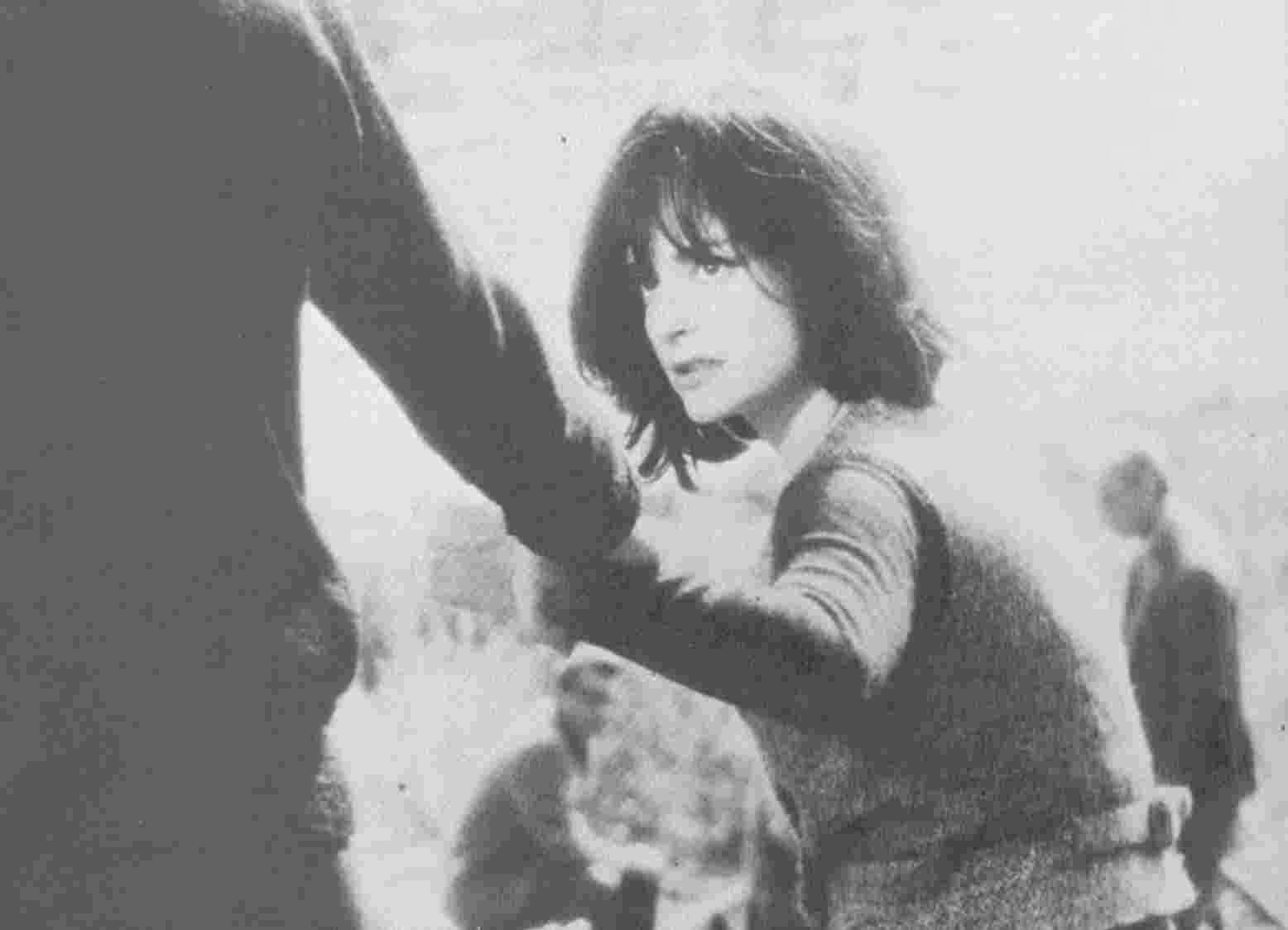
Adriana
Asti's luminous eyes parallel the positioning
of
the hero's arm and lead us toward him; the rigidity
of
her own arm and her facial expression denote
resistance;
but the lovers do not exist in a vacuum
as
hinted at or by the background figures, one of
whom
becomes the sequence's central protagonist.
______________________________________________
Rarely
has a talent burst upon the film scene with such
brilliance as Bertolucci did with this
film, perhaps the
most
germinal work of the new cinema. A flood of poetic
visuals, montage, and sound, it is a
shamelessly passionate,
intensely
personal statement of political and sexual coming of
age.
Bertolucci's entire oeuvre is permeated by an unresolved
tension between a luxuriant, vibrant
aestheticism and an
attempt at
radical, committed cinema. A profound feeling for
a
tactile, sensuous, pictorial cinema of (radical) form, texture,
color, ad composition is balanced by a
strong sensitivity to
social
issues, including the dilemmas of the radical bourgeois
in a period of capitalist decline.
Unable to escape his class
roots,
Bertolucci's sensitivity sharpens his political radicalism
while blunting it with informed
scepticism and ambiguity.
The
motto that prefaces this film also points to Bertolucci's
dilemma: "Only those who lived
before the revolution, knew
how
sweet life could be." (Talleyrand) Thus
Bertolucci is at
his best
describing, with anguished ambivalence, bittersweet
episodes of middle-class life -- an
evening at the opera, the
raptures
of young (bourgeois) love, the despair of an Italian
aristocrat whose world is being
destroyed by capitalist mate-
rialism.
The red flag and the poisonous beauty of privileged
bourgeois existence are the two constants
of Bertolucci's work.
What is
most original in it, however, is his outrageous and exuberant
pictorial sense, his (aesthetically)
revolutionary attempt to create a
poetic-political
cinema by means of audacious, violent editing and
visual
effects, far in advance of anything the commercial cinema has
to offer and surpassing many of the most
potent achievements of the
international
avant-garde. Bertolucci's camerawork and montage are
entirely unorthodox, yet infused with a
lyrical fluidity and depth of
feeling
untypical for a contemporary of Godard, Robbe-Grillet, and
Resnais. The often handheld camera
is in continuous, unexpected
motion,
and subjective zoom or tracking shots heighten the feeling of
immediacy. This authenticity and "hot"
involvement is further mag-
nified
by editing that fuses brief, disparate closeups -- unmatched
in conventional continuity or scale --
into staccato sequences (with
large,
rapidly moving shapes creating tension within the frame);
introduces sudden cuts from longshots to
closeups, accompanied by
vivid
camera movements with or against subject motion in the frame;
leaves action incomplete, or continues it
in direct cuts that include tem-
poral
or spatial lapses; repeates significant acts from slightly different
viewpoints; and scrambles time withing
seemingly realistic sequences.
______________________________________________
BEFORE
THE REVOLUTION
(PRIMA
DELLA RIVOLUZIONE)
(Bernardo
Bertolucci, Italy, 1964) (F)
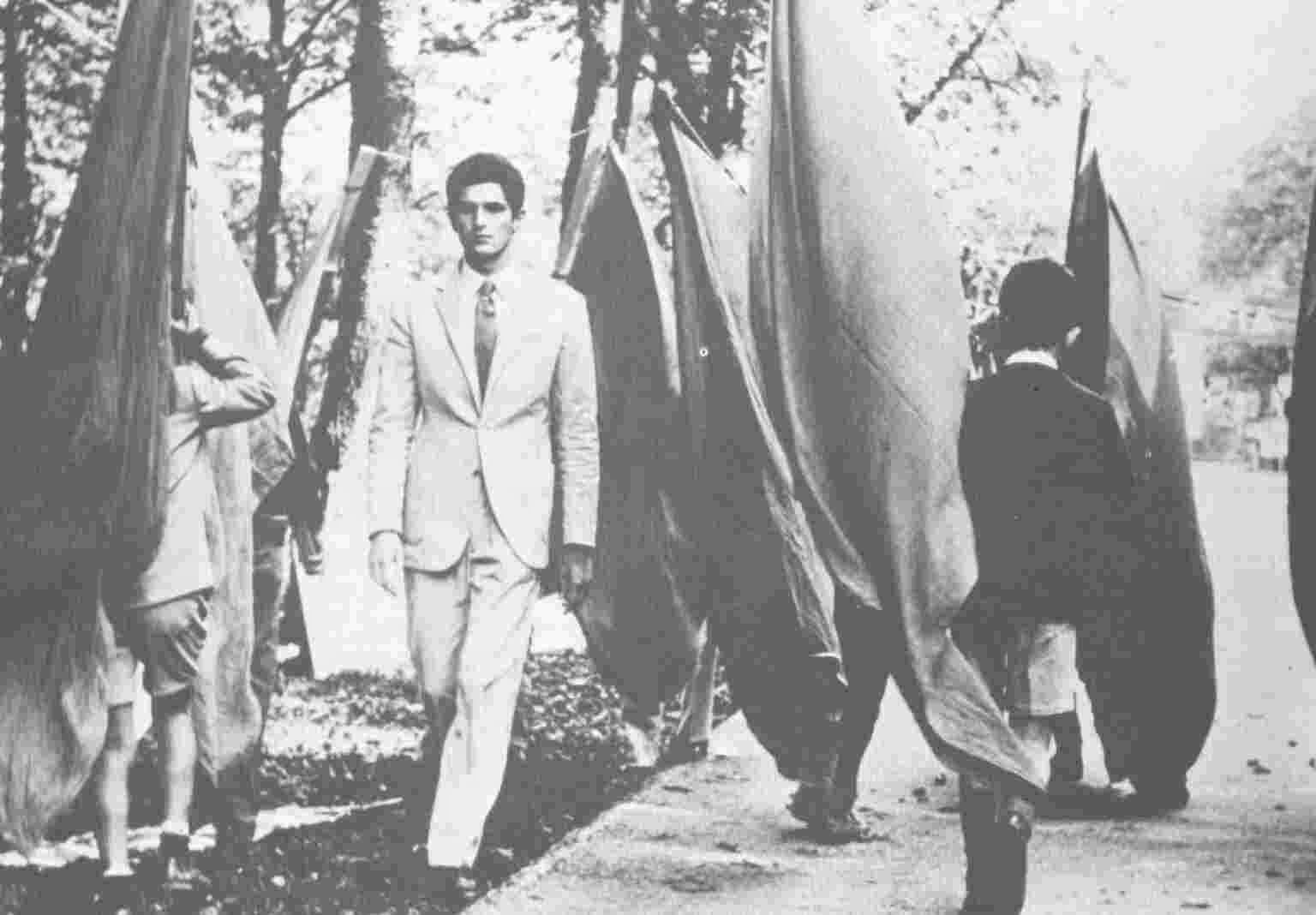
During
a discussion of his political doubts, the
young
bourgeois attempting to be a revolutionist
symbolically
walks in an opposite direction from
a
group of Communist marchers. Bertolucci's
entire
work is permeated by an unresolved
tension
between a luxuriant aestheticism
and
an attempt at radical cinema.
___________________________________________________________________________________________
BREATHLESS
(A
BOUT DE SOUFFLE)
(Jean-Luc
Godard, France, 1959) (F)
The
modern cinema could not exist without this film.
Godard's
first feature, it influenced an entire generation
of
filmmakers and permanently changed existing notions
of
what films had to look like. For into this largely irrele-
vant story of a petty gangster and his
American girlfriend,
Godard
infused not merely the paradoxes of a restless, ironic,
existentialist outlook on life, but also
a style of narrative and
pictorial
representation that corresponded to it. So pervasive
has his influence been since then
that Breathless today begins to
look
"conventional". Its initial impact, however,
was shocking:
Godard had
dispensed with the smooth and logical continuity
of
the Hollywood film, with its careful "matching" of
successive
shots, its use of
transitional devices such as dissolves and long-
shots
to "establish" new scenes, its inching, by cautious
degrees,
to the center of
action. Instead, Godard's narrative style was
"disjointed", restless,
electrifying; it "jumped" times and space,
cut
together different locales or events without a single dissolve,
and telescoped action by showing only its
most important seg-
ments.
Together with an almost constant use of a mobile camera,
these methods seemed stylistically to
incorporate the synco-
pated,
explosive rhythms of modern life, the philosophical
underpinnings of a universe now
recognized as relative.
The
same sensibility is expressed in his handling of
character and storyline. Unlike the
wise and benevolent
author of
old, taking the audience into his confidence,
Godard
simply exhibits mysterious, not fully drawn
characters
whom -- as in life -- we are asked to decipher.
The
clues more often than not are insufficient, the motivations
clouded, the communications guarded (or
perhaps sincere).
"Order"
and "logic" -- in plot progression, editing,
composition --
have vanished
into the fog of the contemporary world view,
with
director, actors, and audience picking their way into the
unknown. Prototype of the assault
on conventional editing.
Breathless
was nevertheless only the first station on the long path
of Godard's subsequent transgressions of
cinematic convention. SC
___________________________________________________________________________________________
THE
CHRONICLE OF ANNA MAGDALENA BACH
(CHRONIK
DER ANNA MAGDALENA BACH)
(Jean-Marie
Straub, Germany, 1967) (F)
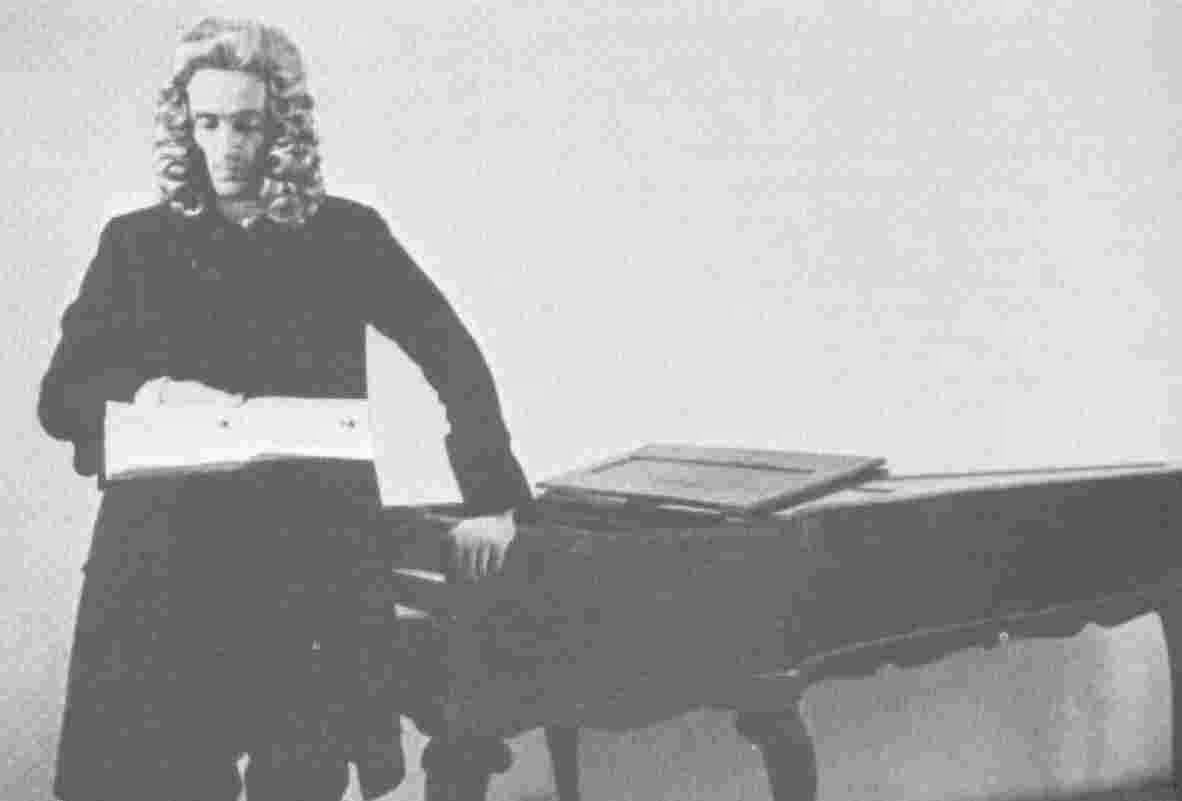
Utmost
economy of means, a feeling of stillness,
concentration
on a single point: a perfect repre-
sentation
of the spirit of this "minimal" work. The
director's refusal to move the camera,
condense
"irrelevant"
action or create "artful" compositions
is
an assault on our cinematic value systems.
______________________________________________
This
uncompromising forerunner of structural cinema is an
attempt at factual and moral
authenticity. It constitutes a "per-
verse
portrayal of a musician (through the eyes of his wife) as
if he lived today and was not yet famous,
a rendition of his music
on
the original instruments and without interruption, a refusal to
reshape the actuality of a life by the
introduction of narrative or
dramatic
elements. The inherent illusionism of the screen is further
destroyed by repeated visual presentation
(and reading) of historical
documents
and letters. The refusal to move the camera or render
the image more interesting and an
insistence on real time (parti-
cularly
during the frequent musical selections) represents a
frontal assault on the cinematic value
system of the spectator.
___________________________________________________________________________________________
TOUCH
OF EVIL
(Orson
Welles, USA, 1957) (F)
Partly
recut by the producers, unaccountably underrated
by
the critics, this remains one of Welles' most original works.
His abiding fascination with power and
its corruption is here
transmuted
into a baroque thriller of manic intensity. Claustro-
phobic, hypnotic, excessive, the work
reeks with moral putrefaction,
cynicism
and a humanism which is pitiless and anti-sentimental.
A
sordid tale, it subversively shows innocence to be ineffective
against
evil, goodness to have
a club-foot, rationalism to be inadequate in an
irrational world. The evil cop
(Welles) frames a downtrodden Mexican,
who
is not innocent, as we had hoped, but guilty. The world of this
film
is not ordered or
predictable, but fragmented and atomized; the brilliant
visual style both reflects and creates
this reality. Nullifying the old rules
of
montage, it places the viewer in the position of being always
"behind"
the
cascading images and action. No "explanations"
establishing shots, or
orderly
progressions are provided; instead, direct cuts between scenes (or
con-
tinual changes of camera
setup during them) constantly shifts locale, action,
and
viewing position. The spectator is whipped from scene to scene,
never
certain of his bearings,
thus experiencing the film "forward" in its evolution
toward an as yet unknown denouement.
Very aware of plastic values and
spatial
relationships, Welles keeps his camera moving constantly, suddenly
introducing new objects into the frame,
tilting angles, photographing most
of
the film from below for emphasis, editing the soundtrack into a
babble of
overlapping voices
-- sometimes purposely unintelligible, sometimes used in
counterpoint. The film's opening
sequence -- a masterpiece -- startles by its cla-
ssicism
of style and incongruity of subject matter: within a single,
unbroken,
amazing "take"
of several minutes' duration, the camera swings over roofs,
buildings, streets, masses of extras,
moving vehicles and passing livestock,
in
a continuous snake-like movement of increasing, finally unbearable,
tension. At its start, we had
observed a timebomb surreptitiously being
placed
in a car, subsequently entered by an (unaware) couple and slowly
driven to the border control station,
frequently stopped by traffic. We
fearfully
anticipate the scene's end, and the old master does not disappoint
us.
___________________________________________________________________________________________
TWICE
A MAN
(Gregory
J. Markopoulos, USA, 1963) (F)
A
modern recreation of the legend of Hyppolytus
subtly
reveals homosexual and incestual motives
among
its three protagonists as it mingles reality
and
memory. Particularly noteworthy is the attempt
to
portray thoughts and flashes of memory by inserting
bursts of single-frame, almost subliminal
shots into the
main sequence
which proceeds in different time and space.
___________________________________________________________________________________________
THE
RED AND THE WHITE
(CSILLAGOSOK,
KATONAK)
(Miklos
Jancso, Hungary, 1968) (F)
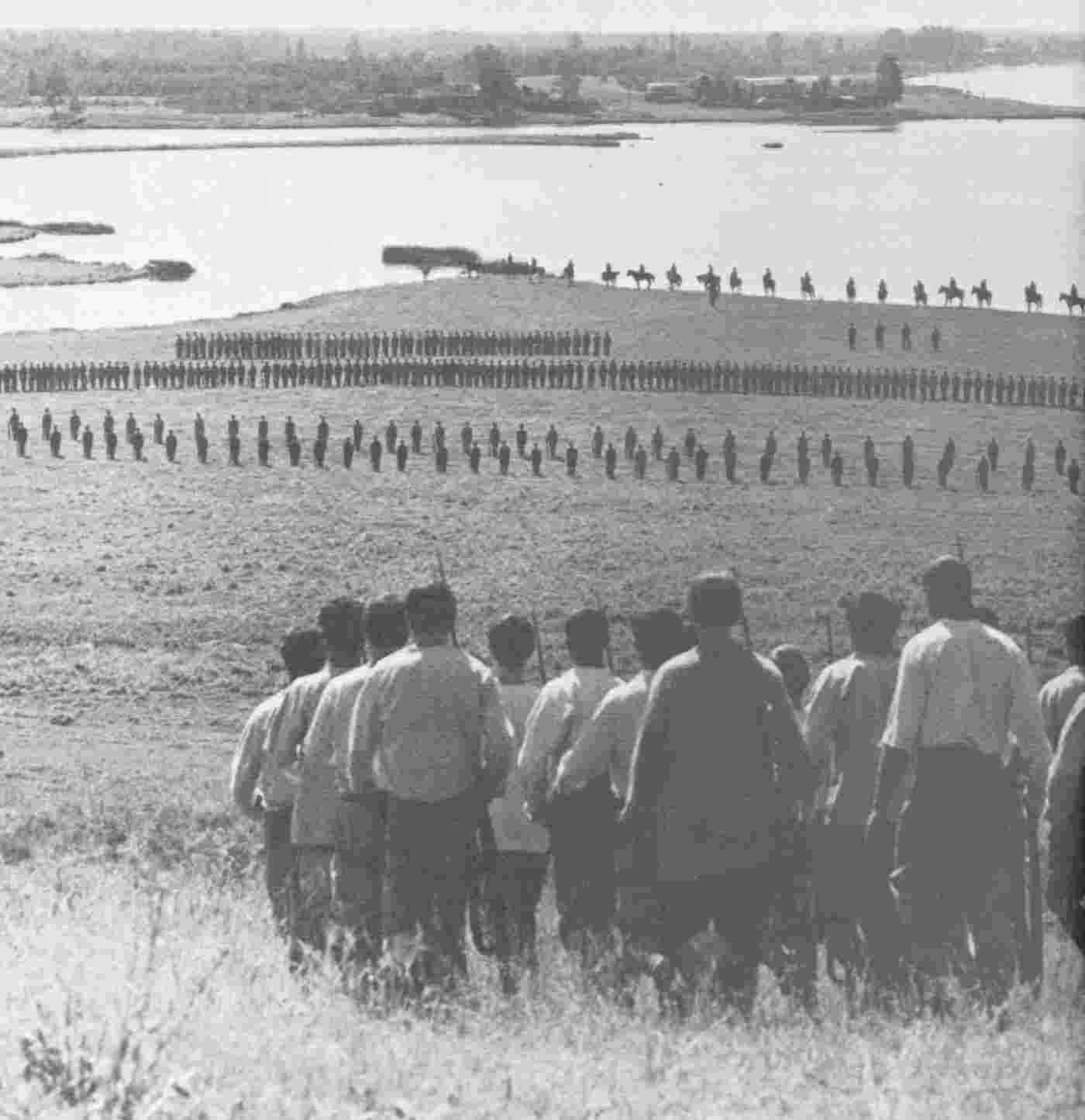
One
of the most surprising works from the East; this is a
beautifully photographed, stylized drama
of the Russian
civil war in
which neither Reds nor Whites are stereotypes
and
only war is evil. There is little conventional editing:
the entire film consists of long
uninterrupted "takes",
with
the camera in constant choreographic movement
through
the action, circling or following the protagonists.
In
an absurdly pastoral setting, an implacable, confused
charade of executions, captures, and
vengeance is acted out
by both
sides, with shifting fortunes constantly transforming
hangman into victim, victim into
hangman. Great plastic
beauty
and a poisonous lyricism permeate this ballet of
violence, its nameless men trapped in
hypnotic, archaic
rituals, its
proud or violated women appearing as symbols
of
fleeting life. Based on themes from Isaac Babel's works,
this is a fully realized paraphrase of
the human condition.
______________________________________________
THE
RED AND THE WHITE
(CSILLAGOSOK,
KATONAK)
(Miklos
Jancso, Hungary, 1968) (F)
Conventional
editing disappears in a film of less than 25
uninterrupted, single-shot sequences with
the camera in
constant
choreographic movement throughout the action.
Compositional grandeur
characterizes this confrontation
of
the implacable White Army (significantly in dark
uniforms) and the more "human"
Reds (in shirt sleeves).
The
juxtaposition of man and landscape is extraordinary.