FILM
- AS A -
SUBVERSIVE ART
THE
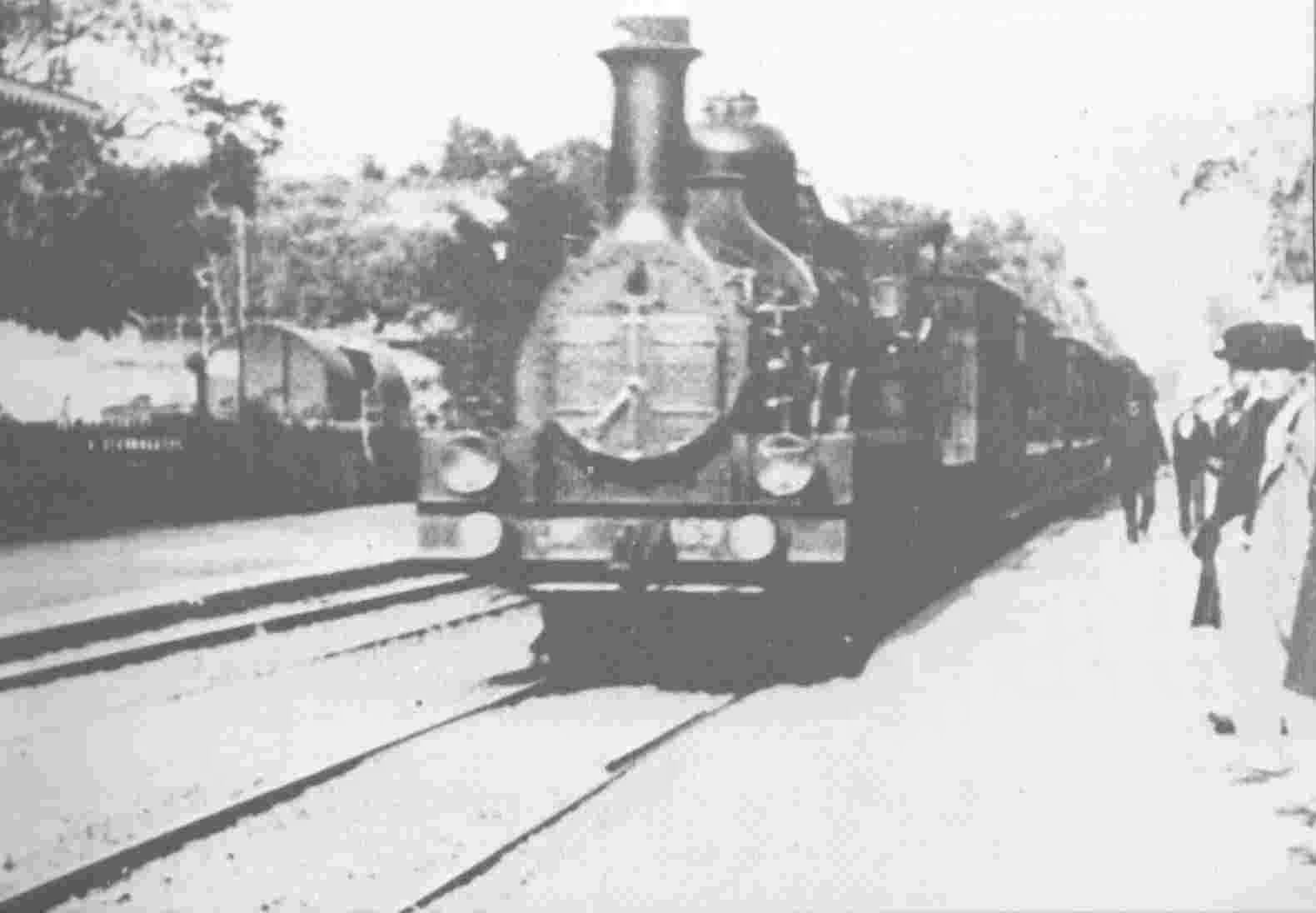
ARRIVAL OF A TRAIN IN THE STATION
(Louis
Lumiere, France, 1895)
The use
of "real" (not condensed) time; an
immobile
camera; a tiny event -- definitions
of
both minimal and earliest cinema. Lumiere's
1895
train cause a riot as it neared the spectators,
proving
the relativity of the tabooed image and
its
emasculation by exposure and familiarity.
THE
TRIUMPH AND DEATH
OF
THE MOVING CAMERA
THE CAMERA MOVES
The
transformation of film from surrogate theatre to visual
art occurred when the camera began to
move. Until then, the
cinema's
full potential could not be realized; an immobile camera,
in the fashion of a theatregoer, stared at
a proscenium beyond
which the
action of the photo-"play" took place. Movement was con-
fined to the actors and their constant
regrouping in theatrical space.
The
liberation of the camera proceeded in stages; first, (though
remaining
fixed) the camera
changed position between shots, bringing the action
closer to or removing it from the viewer.
This for the first time violated
what
had previously been considered an absolute distance and set the
stage for an intricate (at first
liberating, ultimately stultifying) orchestra-
tion
of establishing-, medium-, and close-shot. A further step
consisted
of the development of
mechanical devices (special vehicles, cranes,
rails,
flexible tripods for pans or tilts) to change camera position.
Though
the camera had "moved" in Griffith and, according to
James Card, in William Adler's The
Second Coming (1915), (1)
It
was Karl Freund's moving camera in F.W. Murnau's The Last
Laugh (1924) and E.A. Dupont's
Variety (1925) that served
as
harbinger of a revolution which -- with the development
of montage -- transformed cinema into an
art form.
Fluidity
of camera, its elaborate, choreographic movement
within
the frame, have since become symbols of creative
cinema,
offering immediacy, authenticity, and a sense of phy-
sical participation which the immobile
camera could not match.
In
addition to "composing" by editing after shooting had been
completed, the film was now also created
in the camera. Entire
episodes
were developed in continuity, without cuts, fades,
or
titles, and with the camera itself moving to interpret or
follow action or perhaps more importantly,
to express feelings.
Complete
sets were constructed to allow for the camera's passage.
An
important later advance came with the development of hand-
held, lightweight cameras (with portable,
synchonous sound).
Nothing surpasses this camera's capability to produce intimacy
and involvement, particularly in sequences
of tension or drama,
in cinema
verite studies (where the bulkier older equipment
had
precluded even relative privacy), and in the subjective
explorations of personal reality by
underground filmmakers.
The
apotheosis of the moving camera came in works such as Alfred
Hitchcock's Rope (1948), an almost
90 minute film consisting en-
tirely
of ten-minute "takes" during which the camera moves inces-
santly while all editing has been
abolished; this technique has also
been
used in Miklos Jancso's work, usually consisting of less than 15
"takes" without cuts, the camera
in continous choreographic motion.
The
concept of the moving camera is more closely associated with the
visual filmmakers and the avant-garde
(both independent and commercial)
that
with the earnest craftsmen of the large studios whose mandate was
to produce safe entertainments within a
matrix of pseudo-realism. To move
the
camera is a revolutionary act. It introduces an element of
"hotness",
instability,
emotional entanglement, and implicit anarchy. A period of social
imbalance and unrest (from the twenties on
and as yet unresolved) char-
acterizes
its emergence; and it is the high-strung outsiders or critics
of bourgeois society -- Antonioni, Godard,
Bertolucci, Brakhage --
who use
it more than the Fords, the Wylers, or the many Hollywood
artisans, content with the stability
exemplified by the fixed camera.
Any
movement of the camera -- even if the scene portrayed is
immobile -- sets up a tension more
powerful (because confined to
less
space, amidst darkness) than the act of moving one's head; for
the invisible world-center behind the
camera is the Self, and any
motion
of this center (be it gradual or sudden, linear or irregular)
sets up a basic disturbance of the
system. This is why camera
movements
paralleling, moving towards or away from action are
so much more intense than the same action
shot by a fixed camera.
It is
particularly the travelling shot (forward movement into the action,
with viewer as camera eye) that transports
us into the life of the film
in
a dream-like manner, as we literally feel removed from our seats and
propelled into the frame to be driven in a
car with traffic and trees coming
toward
us, hurtling down in rollercoasters, personally attacking the enemy.
There
probably exists no other effect in cinema as powerful as a rapid
zoom at a climactic moment. It is a
personal attack at close range,
hurtling
the viewer without prior warning into horror or revelation,
or cruelly separating him from the action.
Since identification and au-
thenticity
have been considerably augmented by equating the viewer
with the camera eye, his trepidation or
anxiety increases as well,
since
the outcome of (his!) drama is "as of the moment"
uncertain.
The
patterns of tension resulting from these invisible
forces
within the frame create, with montage, the
true
reality of a film's impact, of which the spectator
(responding to plot, acting, decor)
remains largely
unaware while
being profoundly affected subconciously.
MINIMAL CINEMA
Considering
the effectiveness of these instruments of subconcious
subversion and their utilization by the
most modern filmmakers, it
is
significant that a counter-revolutionary subversion of the moving
camera has recently been initiated from
within the avant-garde itself.
A shift
in emphasis began to surface in the movement in the early 60s.
Until then, their attack on time, space,
and narrative had assumed the
shape
of subjective, poetic explorations of the subconcious and of states
of
mind; but with Warhol -- at
first considered an eccentric outside the main-
stream
of the avant-garde -- a new stage was reached which by the 70s
had become part of a significant trend in
contemporary experimental film.
Subversion
is now directed against content or meaning as such;
only
the work of art "itself" -- its structure and methodology
--
is declared worthy of
contemplation or analysis. (2) Variously re-
ferred to as minimal, structuralist, and
conceptual cinema (or, by less
sympathetic
critics, as the cinema of creative tedium), the spectator
is now deprived of the last props of
psychological support. Instead,
he
is asked to observe motionless objects in real time (often for min-
utes on end), compositional patterns or
anti-illusionist deformations of
the
image, the repetition of purposely meaningless shots or situations
that have been entirely drained of
anecdotal significance. In short,
he
is confronted with the often tiresome, yet strangely stimulating
portrayal of an unedited reality, in which
film time equals real time,
silence
is as significant as speech, and tiny details, because of
the absence of larger events, acquire
unexpected importance.
The
primary characteristic of most minimal cinema is the use
of a fixed camera photographing real
time. In Ken Jacobs'
Soft
Rain (1969), a camera "stares" out of a window onto a
street for about nine minutes
(actually, a three-minute
segment
repeated three times); nothing is staged; there is
no
editing, no camera movement; reality flows by, Zen-like,
and is recorded. The image is mostly
still, except for a few
cars
and pedestrians; these become events. There is no
aesthetic reason for the film to last nine
minutes instead
of ninety; its
"form" is the unstructured matrix of reality.
A
similar pattern, with variations (such as mechanical camera
movement along a fixed axis), can be found
in many minimal
films. This
combination of fixed camera and real time is pos-
sibly
the most difficult for audiences to accept or to endure;
for nothing is more oppressive in cinema
than real time.
Unexpectedly,
the unedited flow of real time fails to provide a
greater
semblance of reality, but instead increases awareness
of
the work's artificiality. The film "as such" calls
imperious
attention to itself.
Slowing all experience to a minimum
(unlike
easily accented moments in real life when "nothing
happens"), it nevertheless rivets our
attention "in the hope"
that
something will transpire; for even here we realize,
subconsciously, the presence of a
calculating artist.
By force
of negative example the minimalists have made us
aware
that almost all other films progress in greatly condensed
"film" time; by the introduction
of real time, they compel us
to
experience objects, events, and duration in all their purity
and self-sufficiency. The reductive
process increases the
significance
of the few objects remaining and reintroduces
us
to the importance of the small event or gesture.
An
extreme example of "real time" was to occur in Warhol's
intended filming of The Bible.
Each page of an actual bible
would
appear on screen, in turn, for a period long enough to
allow for reading. Several years
later and undoubtedly aware
of
Warhol, cable television now projects push-button order-
ing of books from an electronic library,
based on home-set
reception at
the rate of a page a time, with the viewer
signallingwhen
he wishes to proceed to the next page.
It will
not do to view these new concerns of contemporary
filmmakers as empty aestheticism.
Too many artists of note
(not
merely in cinema) are involved and the movement -- however
it may abhor being linked to history and
revealed thereby as but a
stage
in its unfolding -- even has antecedents: Lumiere and his fixed
camera, at the very beginning of cinema,
observing workers leaving
a
factory in real time; constructivist enquiries of the 1920s into the
na-
ture of artistic creation;
Yasujiro Ozu's massively humanistic works of
stillness,
each scene shot with a fixed camera; the single-frame or film-
loop experiments of Robert Breer in the
50s. There are even parallels
in
the music of Cage, the choreography of Cunningham, the happenings
of Kaprow, and the impassive and neutral
explorations of objects and
surfaces
in the nouveau roman, disturbingly progressing in real time.
If there
is "meaning" in these works, it lies, as Youngblood
suggested,
in the relationship
of work and beholder; "The subject of the work
is
its own structure and the concepts it suggests." (3)
The silent
contemplation forced
upon us by this art throws us back on to
ourselves.
It engenders, as Susan Sontag notes in a perceptive
comment on the philosophy of the movement,
"a stare" and
allows
no release from attention. The spectator approaches
it as he does a landscape, which does not
demand his "under-
standing".
Much of contemporary art, Sontag suggests,
aspires
to this conceptual attitude through strategies of
blandness, reduction, "deindividuation",
and "alogicality".
This
"aesthetics of the inventory" -- the enumeration of
events or scenes that are without meaning,
as in early
Warhol or
Robbe-Grillet -- confirms the inhumanity of
things,
their impersonality, their indifference to and
separateness from human concerns. (1)
With Robbe-
Grillet, the
world and its objects quite simply "exist":
Around
us, defying the noisy pack of our animis-
tic
or protective adjectives, things are there ...
any
meaning we impose on them reduces
them
to the role of tools. Let them lose their
pseudo-mystery, their suspect
interiority,
the "romantic
heart of things." (Barthes)
(6)
But
although the works of the minimalists have unquestionably
produced some of the most provocative and
subversive film
experiences of
the last decade,one nevertheless cannot escape
their
somber symbolic "content" (however this may contradict the
presumed "neutrality" of their
efforts): the feeling that mankind,
in
its specifically contemporary form and within the matrix of a
declining civilization, is reaching the
end of the road. True, the
structuralist
stance -- by the very resoluteness and extremity of
its
purist position -- is opposed to the status quo and its false
blandishments; yet the total draining of
human concern or emotion
(not
to be confused with a call for propagandistic art) seems to
denote the growing dehumanization of art.
Sontag, though strongly
sympathetic
to the movement, realizes this unspoken component when
(poignantly, and as a friend) she both
endorses the radical potential
of
artists such as Grotowski, Duchamp and Beckett while somehow
deploring the historical situation
responsible for their rise:
The
myths of silence and emptiness are about
as
nourishing and viable as might be devised
in
an "unwholesome" time -- which is, of
necessity, a time in which
"unwholesome"
psychic
states furnish the energies for
most
superior works in the arts. Yet one
can't
deny the pathos of these myths ...
These
programs for art's impoverishment
must
not be understood simply as terroristic
admonitions
to audiences, but rather as strategies
for
improving the audiences experience. The notions
of
silence, emptiness and reduction sketch out new
prescriptions for looking, hearing,
etc., which either
promote
a more immediate, sensuous experience of art
or
confront the artwork in a more conscious, conceptual
way
... Perhaps the quality of the attention one brings
to
bear on something will be better (less contami-
nated,
less distracted) the less one is offered. (7)
By
placing the movement within a firm
historical
framework, she thereby denotes
both
its significance and its limitations.
REFERENCES
(1)
Roy Huss & Norman Silverstein, The Film Experience, 1968
(2) P. Adams Sitney,
"Structural Film", Film Culture Reader, 1970
(3) Gene
Youngblood, Expanded Cinema, 1970
(4)
Susan Sontag, Styles of Radical Will, 1969 (5)
Sontag
(6)
Alain Robbe-Grillet, For a New Novel, 1969 (7)
Sontag
FILMS
___________________________________________________________________________________________
THE CAMERA MOVES
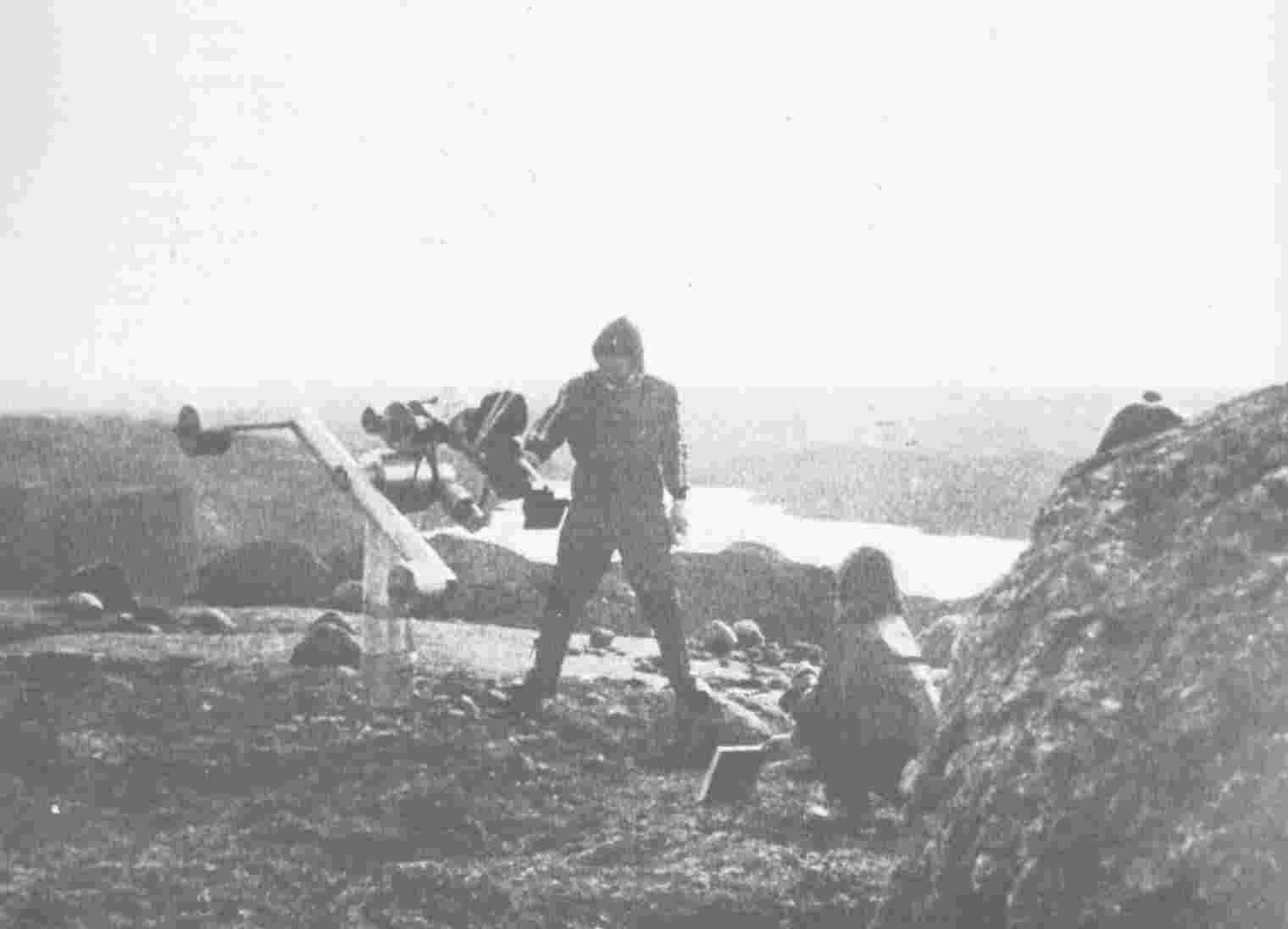
LA
REGION CENTRALE
(Michael
Snow, USA/Canada, 1972) (F)
In
a primeval landscape, the filmmaker, like
a
mysterious spaceman, sets up the tech-
nological
and programmed movements --
vertical,
elliptical, horizontal, or combined --
of
a camera mounted on it, which for the
next
three and a half hours explores every
last
stone of the landscape from a fixed
position.
There is no sign of life.
___________________________________________________________________________________________
THE
LAST LAUGH
(DER
LETZTE MANN)
(F.W.
Murnau, Germany, 1924) (F)
This
revolutionary masterpiece of the silent cinema
completely
dispenses with titles, telling its story
solely
in visual pantomime and with a moving camera
so
fully integrated with action, and sets that entire
sequences develop in continuity,
uninterrupted by cuts.
With
Karl Freund's camera mounted on special mobile
vehicles
or swinging cranes, the sets were constructed
so
as to allow both camera both camera and action full
and
continuous movement throughout. The camera --
integral component of the work -- swoops,
rises and zooms,
goes through
doors and windows, anticipates, follows or
interprets
action, becomes the spectator of unfolding events,
or
the protagonist. If film had previously been composed
after shooting (with a static camera).
The worldwide impact
of this
film proved that a new method of pictorial narration
had
been developed, transforming film into a fully-fledged,
visual art form. It took the sound
film and, particularly,
the
word-bound Hollywood entertainments many years
to
undo the achievements of this pioneering work.
___________________________________________________________________________________________
RUNNING
SHADOW
(Robert
Fulton, USA, 1971) (F)
An
extraordinary example of a work entirely based
on
a constant camera movement. A soaring third-
conciousness exploration -- in purely
visual terms --
of the shapes,
and patterns of nature, in which camera
tilts,
upside-down shots, single frame and trucking shots
at
great speed register not as gimmicks but as structurally
determined components of a visual poem.
Here, at last,
is a prototype
of the new space-time continuum on film.
___________________________________________________________________________________________
RED
SONG
(MEG
KER A NEP)
(Miklos
Jancso, Hungary, 1972) (F)
The
1972 Cannes Best Director prize went to Miklos Jancso,
who should have received it years ago.
In this recent work --
a
choreographed portrayal of an abortive Hungarian peasant
revolt of the 19th century -- Jansco has
reached the apotheosis
of his
style and theme: the constantly shifting relations between
opressed and opressor, the role of
violence in human affairs,
the
necessity for eternal revolutions and (perhaps) eternal
repression. Here the theme has
become totally abstract --
a
cinematic ballet created by a constantly moving camera
(single takes, without editing, until the
film runs out),
constantly
moving actors, flowing into each other against
a
background of revolutionary and counter-revolutionary
ritual, chants, and mass ceremonies.
While this film
represents the
most prefect fusion of form and content yet
achieved
by Jansco, its subversive aspect seems muted and
subsumed
by a curiously abstract, left-wing romanticism.
___________________________________________________________________________________________
VARIETY
(VARIETE)
(Ewald Andre Dupont, Germany, 1925)
(F)
Together with Murnau's The
Last Laugh -- shot by the same
outstanding
photographer Karl Freund -- this film represents
the
apotheosis of the moving camera. A melodrama of music-
hall life, produced at the end of the
expressionist era in
German
cinema, this relentless work owed its huge popu-
larity
with audiences and critics alike not merely to its
open
affirma- tion of sensuality (promptly weakened by
censors in several countries) but also to
the unprecedented
fluidity
with which its ever moving camera wove into and out
of the action. Aided by sensuous
dissolves, fluid transitions,
and
unusual angles, it "saw" everything, including a
profusion
of smallest details,
transformed into huge screen events. More
than
just telling a story, it presented it from the subjective view-
point of a particular protagonist. In
this Dupont superseded,
as
Kracauer realized, the conventional realism of the past
by capturing the psychological processes
below the surface.
___________________________________________________________________________________________
MINIMAL CINEMA
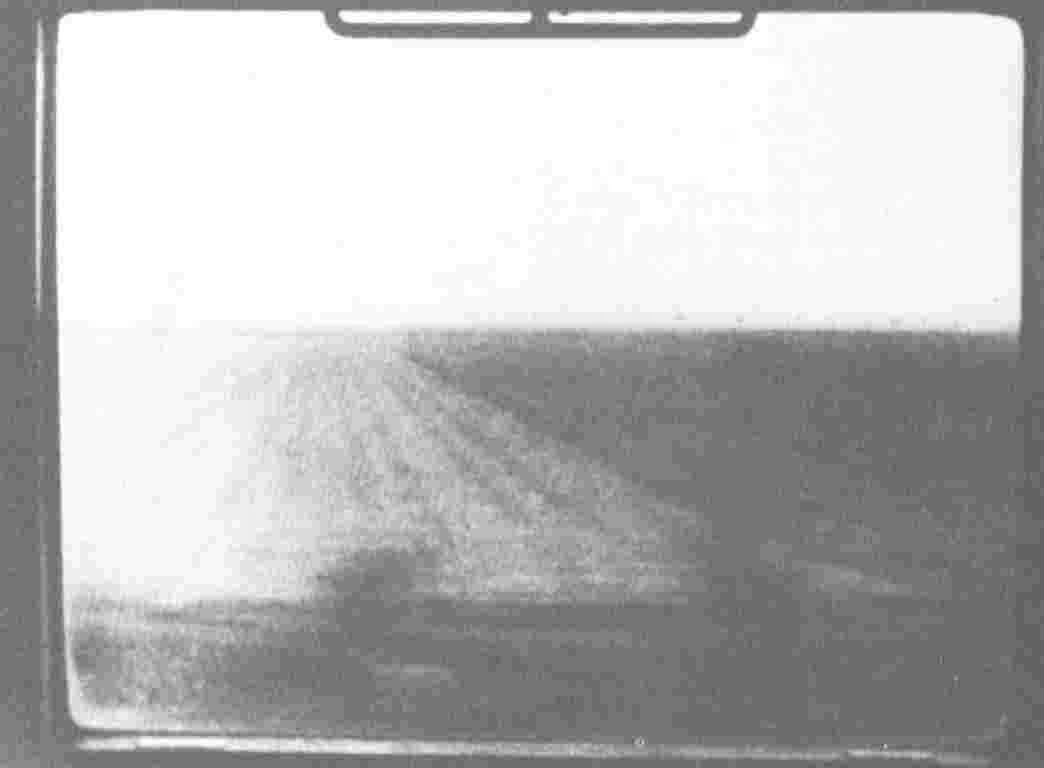
RAILROAD
(Lutz Mommartz, Germany, 1967)
From inside a train, a fixed view of a
passing landscape,
repeated
every thirty seconds for sixteen minutes.
Hypnotic
or numbing, depending on who you are.
______________________________________________
From
inside a train compartment, the stationary
camera
presents a fixed view of a passing, monotonous
landscape,
repeated by the filmmaker every 30 seconds
for
16 minutes. Monotonous train noises and the rep-
etition
of "irrelevant" action create a hypnotic effect.
___________________________________________________________________________________________
COLOR
FILM
(Standish
Lawder, USA, 1971)
This is a
fine example of pure minimal
cinema:
the camera faces a projector, through
which
endless strips of blank film pass forwards
and
backwards in rapid rhythm, first in red, then in
other
colors. Intermittently, the names of various
colors
flash on to the screen, not synchronized
with
the colors of the film. There is no meaning
or
message; the film exists purely for itself.
___________________________________________________________________________________________
A
FILM
(UN
FILM)
(Sylvina
Boissonnas, France, 1969)
A
young woman -- Miss Boissonas -- sleeps, walks, lies,
or
sits at the bottom of a huge metal cylinder which
fills
the entire screen. The camera, in a fixed position
throughout, is suspended from above the
cylinder along
its
central axis and points downwards. There is a hole
at the bottom and side of the cylinder,
from which water
or sand
sometimes flows to submerge the young woman
who
remains passive throughout. For minutes on end
there
is no action; she is either immobile or changes posi-
tion only slightly. No camera
movement occurs during the
13
"scenes". The "events" of this provocative,
oppressive
example of minimal
cinema repeat themselves. The film
is
circular and has no temporal progression. Its minimal
form becomes a metaphor of the human
condition.
___________________________________________________________________________________________
KISS
(Andy Warhol, USA. 1962)
Audiences generally titter, then fall
into private reveries
whenever
this film is shown. For here we witness a basic
human act in all its subtlety, fervor,
and boredom, as for
60 minutes
hetero- and homo-sexual partners exchange
passionate,
superficial, deep, short, extraordinary kisses.
An
immobile, passive camera records the evens in real
time;
the result is simultaneously arousing and numbing.
Warhol
acts as anthropological observer of alien territory;
by
concentrating his pure and blinding focus on the
everyday, he makes it visible and
significant. SC
___________________________________________________________________________________________
NAISSANT
(Stephen Dwoskin, Great Britain, 1967)
For fourteen minutes, the camera shows
the troubled face
of a young
girl. The purpose: not to tell a story but to involve
the viewer "in the moments of a
person". Through subtle,
non-verbal
communication, certain of her feelings and fears
are
intimated; the film's real time allows -- indeed, compels --
us to consider them more closely and to
"think with her".
___________________________________________________________________________________________
PARTICLE
REMOVAL SERIES
(David
McCullough, USA, 1972)
"First
in a Series" from the (imaginary) Visual and Spatial
Research Center, this study consists of
five one-minute episodes, in
close-up
and introduced by titles: 1) Glass Fragment (step-by-step
removal from wound by pincers, in real
time); 2) Fingernail Dirt;
3)
Wooden Sliver in Hand; 4) Debris Between Toes; (5) Glass.
At the end, there is visual
recapitulation and re-identification
of
each item. The dead-pan elevation of the commonplace to
the plane of detailed awareness leads to
audience agitation,
laughter
and applause (upon successful removal).
___________________________________________________________________________________________
ON
A MOST BEAUTIFUL MEADOW
(IM
SCHONSTEN WIESENGRUNDE)
(Peter
Von Guten, Switzerland, 1968)
At
12:45 each day, the Swiss radio congratulates elderly
couples on their wedding anniversary. In
this film -- while
we listen
to a full, five-minute rendition of the old Swiss folk
song "On a Most Beautiful Meadow"
-- we see Mr. and Mrs. Leo
and
Adele Marti-Schlaefli of Fahrenstrasse in Breitenbach,
Canton Solothurn, today's celebrants, in
their living room.
They sit on
a comfortable couch, looking at us seriously.
They
do not speak, nor do they move, except imperceptively,
involuntarily. The camera remains in a
single, fixed position
throughout.
There is no interruption in what is being recorded.
The film proceeds in real time -- five
minutes is very long. We
see
and study -- in terms of who we are -- this well-fed, solid and
steadfast couple who have spent so many
years together, growing
into
what they are today. We see and study the furniture
and decor that have been important to
them for so long.
___________________________________________________________________________________________
RUNAWAY
(Standish Lawder, USA, 1970)
This is an example of minimal cinema
"with a purpose".
The
filmmaker takes a brief scene from an old Hollywood
cartoon in which running dogs, deflected
by an unseen obstacle,
pull up
short and stop; by transforming this scene into a continuous
loop, the action is compulsively
repeated, the dogs running endlessly
to
and fro, while the image itself is further manipulated and degraded
("I showed the film in Washington
once and someone in the
audience
called it the most savage indictment of American
foreign
policy he had ever seen" - Standish Lawder)
___________________________________________________________________________________________
SLEEP
(Andy Warhol, USA, 1963-64) (F)
In this most famous of the early Warhol
films, a man is seen
sleeping
for six hours in real time. For long periods, there is no
action and the "weight" of
unstaged reality seems unbearable,
but
then there are "events" -- small movements, a shifting of
the body in sleep -- that suddenly
acquire new import and
meaning
by the infrequency of their occurrence and absence
of other actions. We realize that
we witness something neither
acted
for our benefit nor planned in advance, but existing for itself,
carrying no ideological burdens beyond
the passage of time and
movements
of masses recorded within it; the film is robbed, as
Robbe- Grillet so well understood, of
symbolic or metaphoric mean-
ing.
Warhol is the most consistent of the minimalists, exposing us
to the full measure of real time in
cinema by the sheer length of his
films;
compelled to look at less for a longer period, we see everything
more clearly though perhaps not more
deeply. Lucy Lippard is right
right
to pose the question whether in our era of visual overload by bad
television, bad art, and bad political
speeches. Warhol's return to visual
simplicityand
stark expressiveness of gesture is not more powerful.
SC
___________________________________________________________________________________________
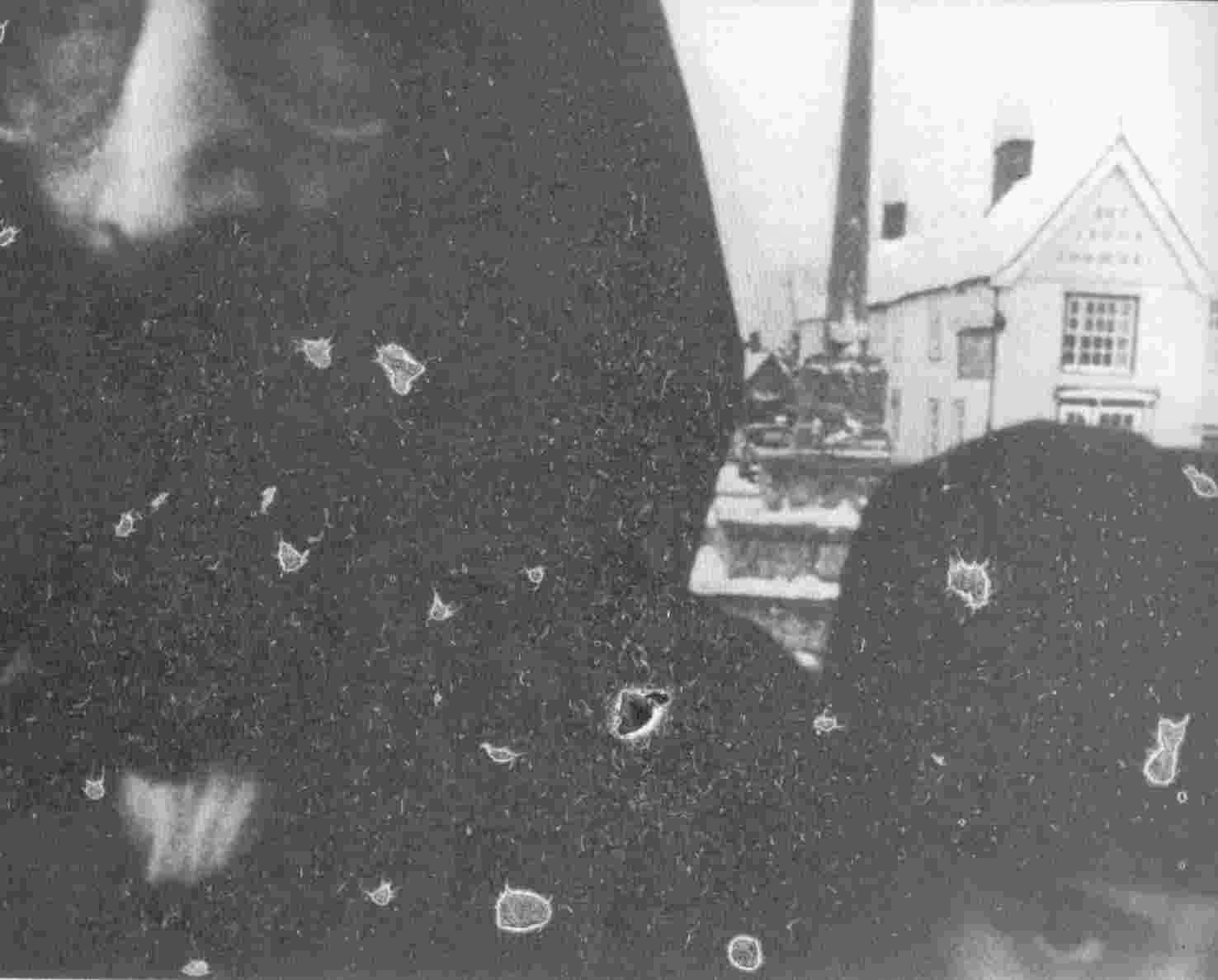
APOTHEOSIS
(John Lennon, Great Britain, 1970)
Bundled up and bisected by the frame,
John and Yoko are left behind, as the
camera, attached to a balloon, literally
rises to the heavens. The use of real
time
includes a 4-minute
passage through
a cloud band;
the screen is blank.