FILM
- AS A -
SUBVERSIVE ART
TRIUMPH
OF THE WILL
(TRIUMPH
DES WILLENS)
(Leni
Riefenstahl, Germany, 1936) (F)
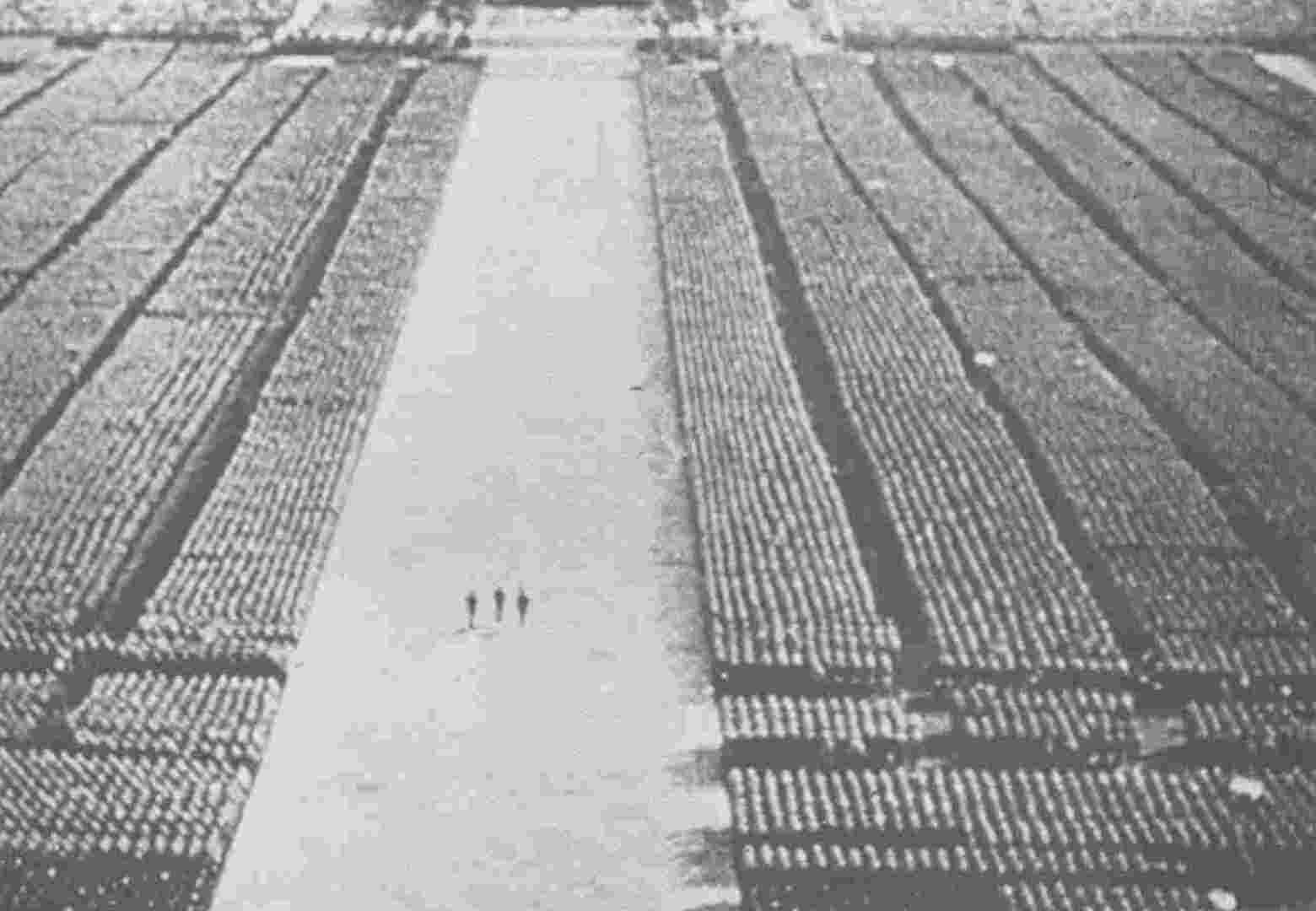
Unquestionably
the most impressive single image
of
the Nazi period, a perfect representation of its
Fuhrer-Mass ideology. The lonely
grandeur of
Hitler, Himmler,
and SA leader Lutze traversing
the
entire length of the stadium is visually or-
chestrated
into a sequence of awesome power. SC
THE
TERRIBLE POETRY
OF
NAZI CINEMA
Whether
history -- the knowledge and remembrance of things past --
can be transmitted to new generations as a
cautionary tale or guide
to
action, is a moot question. There is terrifying evidence --
books,
schools, and
philosophers to the contrary -- that life begins at birth
and with oneself, and that what preceded
it is both incomprehensible
and
invisible. Perhaps it is therefore only those who lived through
the Hitler era who know its reality; to
new generations, it is a quaint
and
not entirely terrifying tale of the mythical past, difficult to be-
lieve and, in any case, "completed"
in that its outcome is known.
Hiroshima,
the Congo, Vietnam, and Chile are already moving into
the
same void to become the stuff of history books. Yet, in every
generation, an attempt is made, against
heavy odds, to carry past
experiences
forward into the future for others to ponder or avoid.
In the
case of Hitler's regime, particularly excellent study material
exists in the form of Nazi films.
Though the movement and its
leaders,
their cities and diabolic diversions are gone forever,
the Nazis do continue to exist on film,
their initial frightfulness
encapsulated
and rendered acceptable for study.
The Nazi
regime arose from real and recognizable causes: defeat,
depression, huge unemployment,
unprecedented inflation, decadence
of
society, moral and personal corruption, irreconcilable class warfare,
national stagnation, and aborted
revolution. The Nazis contrasted with
this
the dream of a Third Reich, cleansed of dissidents and corruption,
united,
strong, pure in its
racial strength; from the ashes, a rebirth of the nation.
The
dream found its catalyst in the master psychologist, Hitler, whose
Mein
Kampf remains
a unique psycho-political primer, a vicious, extraordinary
compendium of mob manipulation. Only
someone exceptionally gifted
could
have so fully understood the depths of our atavistic unconscious.
Hitler's
unending and sadistic love affair with the masses as explicitly
outlined in Mein Kampf is
predicated on a psycho-analytically fas-
cinating
construct of Fuhrer (male element, superman, repository
of national wisdom and will) seducing (by
means of propaganda) the
masses
below (the female element). Given historical evidence, an
entirely tenable interpretation of one
facet of Hitler's personality
postulates
that if a monomaniac cannot "make" it with a woman, he
attempts to make it with an entire nation;
in this view, Mein Kampf
also
serves as a surrogate sex manual outlining seduction by proxy.
That there was sexual tension between mass
and Fuhrer -- with
pseudo-orgasms
on both sides -- cannot be denied by anyone
acquainted
with Hitler's speeches and the audience's reaction.
The
masses, says Hitler in Mein Kampf, are simple, uneducated,
inferior, and lazy. "Their
receptivity is limited, their intelligence
is
small, but their power of forgetting is enormous." (1)
Like
the woman, whose psychic state is determined
less
by abstract reason than by an indefinable emotional
longing for a force which will
complement her nature,
and
who, consequently, would rather bow to a strong
man
than dominate a weakling, likewise the masses
love
a commander more than a petitioner ...
(2)
In
their overwhelming majority they are so feminine by
nature that sober reasoning
determines their thoughts
and
actions far less than emotions and feelings.
(3)
To
convince them, one needs propaganda; and this must be addressed
to their level (intellectuals will be
repelled by it). Propaganda does not
"deal"
with a question; it only touches on it. It should be simple, easily
accessible, (4) addressed to emotion, not
intellect, and adjusted to "the
most
limited intelligence". The greater the mass, the lower its
intellectual
level will be.
Propaganda is not scientific: "its task is not to make an
objective study of the truth (in so far as
it favors the enemy) and then set
it
before the masses with academic fairness; its task is to serve our
own
right, always and
unflinchingly." (5) Propaganda, like advertising, is to
confine
itself to a few points,
repeated again and again; "only after the simplest ideas
are repeated thousands of times will the
masses finally remember them."
Propaganda
must concentrate on one foe, one issue, and not be concerned
with subtlety; "it belongs to the
genius of a great leader to make even more
adversaries
far removed from one another seem to belong to a single category."
(7) The "seduction" of the
masses should preferably take place at night, (8)
at
mass meetings, (9) at which the Fuhrer is best able to exercise
his powers
over the supine,
receptive mass below; under these conditions suggestive
intoxication and enthusiasm lead to its
succumbing to mass suggestion. (10)
There
exists, however, another means of propaganda as powerful as the
mass meeting: the cinema. "Here a man
needs to use his brains even less ...
He
will accept pictorial representation more readily than a newspaper
article ...
a picture brings
enlightenment much more quickly -- I might also say, at one
stroke." (11) The darkness of
the cinema makes the mass succumb more easily
to
the dominating will of the Fuhrer, just as the darkness of night
makes women
succumb more
easily. This, according to Hitler, also explains the
utilization of
mysterious
twilight in Catholic churches -- the Roman Catholic Church being
to him, after Bolshevism, the second most
important agency of propaganda. (12)
Hitler's
crude anti-feminism ("The German girl is a subject and only
becomes a
citizen when she
marries." (13) , his contempt for the masses, and his
realization
of the subversive
potential of cinema (both he and Goebbels had been pro-
foundly affected by Eisenstein's Potemkin)
led him to the production of the most
famous
propaganda film ever made -- Triumph of the Will. It is
fascinating
that the task of
creating this work was handed by Hitler to -- a woman.
REFERENCES
(1-13) Adolf Hitler, Mein Kampf, 1943 edition
FILMS
___________________________________________________________________________________________
TRIUMPH
OF THE WILL
(TRIUMPH
DES WILLENS)
(Leni
Riefenstahl, Germany, 1936) (F)
In
1934, the Nazi leadership -- one year old -- was as yet relatively
unknown both at home and abroad, to speed
the process of
recognition,
Hitler convoked a national party convention in
the
form of a week-long monster rally in Nuremberg. In addition
to bringing one million party members to
the city, the event was
to
serve the international dissemination of the new Nazi myth
by means of a film spectacle of a scope
never before attempted.
Hitler
called upon Leni Riefenstahl, whose earlier mystic Das
Blaue Licht he had greatly
admired. Riefenstahl, unquestionably
one
of the greatest of women film directors, was given an almost un-
limited budget, 130 technicians, almost
90 cameramen (on roller-
skates,
lifts, bridges, towers, and huge platforms built solely for
the occasion), and one million extras,
more than appeared in
Intolerance
or Cleopatra. However, the most startling
aspect
of the project was the
creation of an artificial universe that
looked
entirely real and the resulting production of the first
and most important example ever of an
"authentic documentary"
of
a pseudo-event. It is a stupendous revelation to realize that
this whole enormous convention was
primarily staged for the film.
The
preparations for the party congress were made
in
concert(my emphasis - A.V.) with the preparations
for the camera work -- that
is, the event was planned
not
only as a spectacular mass meeting -- but as a
spectacular propaganda film
... the ceremonies, and
precise
plans of the parades, marches, processions --
the
architecture(my emphasis - A.V.) of the halls and
stadium were designed for the
convenience of the cameras.
It
does not matter whether everything appears in proper
chronological order in this
film. Its creative dynamism
required
me to instinctively shape it out of the real
experience of Nuremberg in
such a way that it catapults
the
spectator from scene to scene, from impression to
impression in an ever more
overpowering manner ...
I
look for the inner dramatic structure of this recreation.
It comes into being as soon
as the film materials,
the
speeches, the mass shots and close-ups,
marches
and music, pictures of Nuremberg night
and
morning, become symphonically heightened
to
such an extent that they finally do justice
to
the "spirit" of the Nuremberg event6 ... (1)
In a
post-war interview, Riefenstahl stated: "I owe this film
several years imprisonment -- but when
you look at it today,
you will
see that not a single scene is staged. Everything
is genuine. And there is no tendentious
commentary for
the simple
reason that there is no commentary at all.
It
is history -- pure history." (2) (my
emphasis - A.V.)
Brave
lies; for the whole film -- here referred to by
Riefenstahl in an unguarded moment as a
"recreation",
actually
takes place in artificial time and space;
it
is "manufactured" history. Before our very eyes,
says Kracauer in what remains the most
perceptive
(yet incomplete)
analysis of the film, life becomes an
apparition;
reality is absorbed into an artificial event.
Aspects
open here as confusing as the series
of
reflected images in a mirror-maze; from the
real
life of the people was built up a faked reality,
which, instead of being an
end in itself, merely
served
as the set dressing for a film that was then to
assume the character of an
authentic documentary. (3)
The
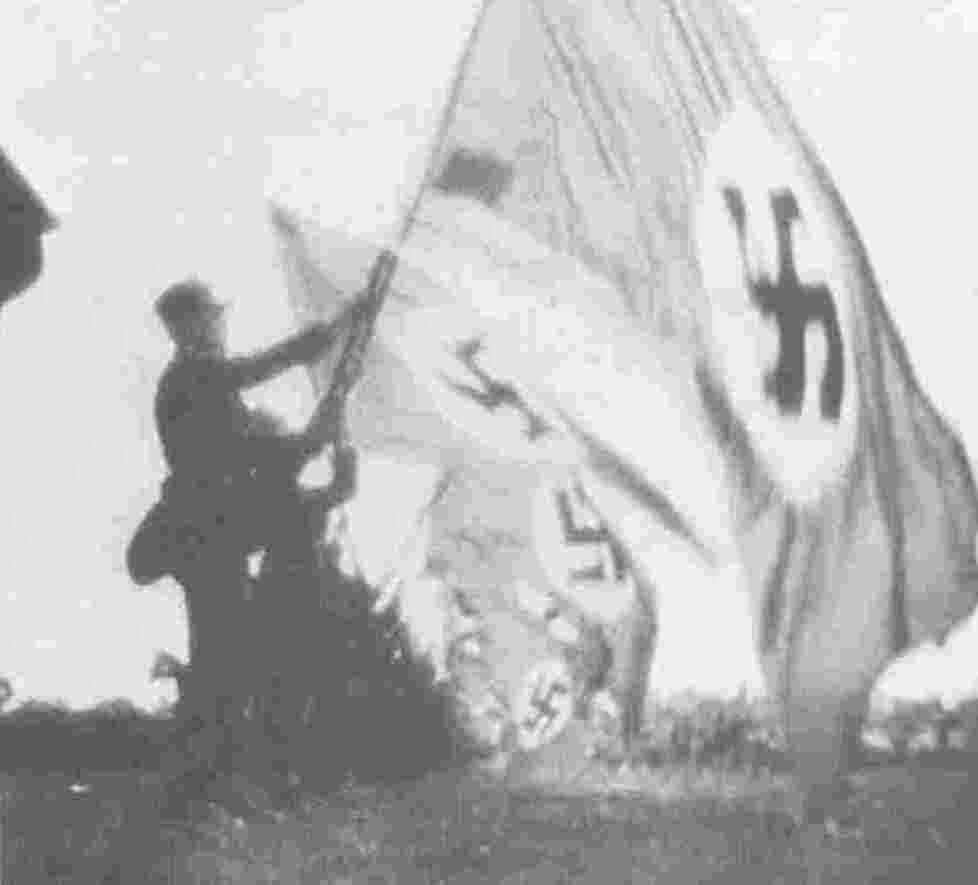
star of the film is Hitler -- the only Nazi film in which he
so appears. He arrives "from
the clouds" in a now ridiculously
dated
airplane -- the savior, coming from where all the gods live,
while below the supine mass waits for
deliverance. He is kind,
omnipotent,
firm, possessed, ubiquitous, a symbol of strength
and
of the soul of the nation. He is male -- like all Nazi leaders
(just as raised-arm salute and goose-step
were erection symbols).
To
make him into a superman, all his failings -- i.e. what makes
him human -- have been painted out; both
he and the film are
perfect
and there is not a single false step anywhere. He is fre-
quently photographed from below, high on
a pedestal against
the sky,
or in slow, caressing pans. Even when he is in a crowd,
he is alone. In one of the greatest
scenes of the film, an enormous
long-shot
taking in the entire expanse of the stadium, Hitler,
Himmler, and SA leader Lutze are shown
walking its length
along a
wide central aisle left open on both sides by tens of
thousands of SA and SS men, completely
filling the screen,
to place a
wreath for the German First World War dead. The
three slowly traverse the enormous length
of the stadium, against
the
background of the multitude; the effect is overpowering.
However,
Hitler is the only individual left; the other Germans
merely appear as part of a huge
collective. Individualism and
bourgeois
democracy are finished. In this monstrous, primeval
rite, the mass -- anonymous and
hypnotized -- never acts; it only
reacts
to the Fuhrer's initiatives, delivered in authoritarian,
hysterical, obsessive, and deafening
fashion. Everything is
designed
for seduction: the sensory overload of high-pitched,
propagandistically inflamed oratory, the
massed bands and
banners, the
rhythm of goose-step and drums, the sentimentality
of
old German songs, and the shots of old Nuremberg, linking
the new regime to the national past.
Even language become
ritualistic,
incantatory; as when Hess, extolling Hitler,
refers
to him as "flesh of our flesh / blood of our blood /
before us -- lies Germany / behind us --
there is Germany /
the party
is -- Hitler / but Hitler is -- Germany / and Germany
is
-- Hitler". All these devices trigger symbols derived from
the collective unconcious; it is its
conscious manipulation
that
constitutes propaganda. As Hitler so clearly explains,
propaganda is a device to inhibit, not to
extend understand-
ing.
Information is distorted and withheld at the moment
that
atavistic symbols are activated, resulting in
psychic
regression to more primitive levels. (4)
The
basic components of mass manipulation outlined by
Hitler
remain the same for all propaganda regardless of source
(American right-wing films, East German
attacks on the USA,
Nixon's TV
speeches, Cuban propaganda films). A recent
example
is The Hellstrom Chronicle, a fraudulent "documentary"
amalgam of extraordinary nature
footage, tendentious editing,
and
pseudo-scientific narration that predicts the impending
destruction of mankind by its "real"
enemy, insects.
But
despite their carefully prescribed parameters,
propaganda
films, precisely because of their calculated nature,
are,
in fact, subversive; they contaminate not merely the truth,
but all who come near them; witness
the ominous,
perverse
attraction of Triumph of the Will even today.
It's
power also derives from the specificity of the image, its palapable
concreteness which erroneously makes it
appear as a guarantor of truth.
(Pictures,
Nixon quite seriously claimed in one of his flights of profundity,
do not lie.) This is further
reinforced in documentary cinema by the
accepted
assumption of non-fictional reality. The subversive tyranny
of images can only begin to be broken
when this assumption is exposed
as
falsehood. Reality is unordered; film is ordered. The images,
in the
context of a
constructed work, is never neutral. It is chosen and its
boundaries defined by the filmmaker
before shooting, in a subjective
process
of selection, arrangement, omission, and emphasis; even camera
angles and movement, choice of film
speed and filters, lighting and sound
influence
our reaction. The image's position and duration in the
completed
film are once again
subjectively determined by the filmmaker creating his
own
rhythms, metaphors, amalgams, analogies, or contrasts. The
whole
process, subjective from
beginning to end, becomes an ideal mechanism
for
conscious manipulation of audiences by the propagandist.
In the
last analysis, the shocking intellectual emptiness one feels when
emerging from Triumph of the Will's
induced stupor only reinforces
its
mythological and propagandistic intenmtion; it was not meant
to represent a convocation of equals,
demo- cratically discussing
ideology
and tactics. It is precisely because of its profound appeal
to unconscious elements and its masterful
orchestration of filmic
and
psychological components that the nightmarish incantation
of Triumph of the Will must be
classified as a profoundly sub-
versive,
profoundly dangerous masterpiece of visual cinema. SC
______________________________________________
REFERENCES
(1)
Leni Riefenstahl, Hinter den Kulissen des Reichs-Parteitag-Films,
1935
(2)
Interview with Leni Riefenstahl, Cahiers du Cinema, September 1965
(3) Siegfried
Kracauer, in From Caligari to Hitler, 1947 (4)
Kracauer
___________________________________________________________________________________________
HITLER
YOUTH QUEX
(HITLERJUNGE
QUEX)
(Hans
Steinoff, Germany, 1933) (F)
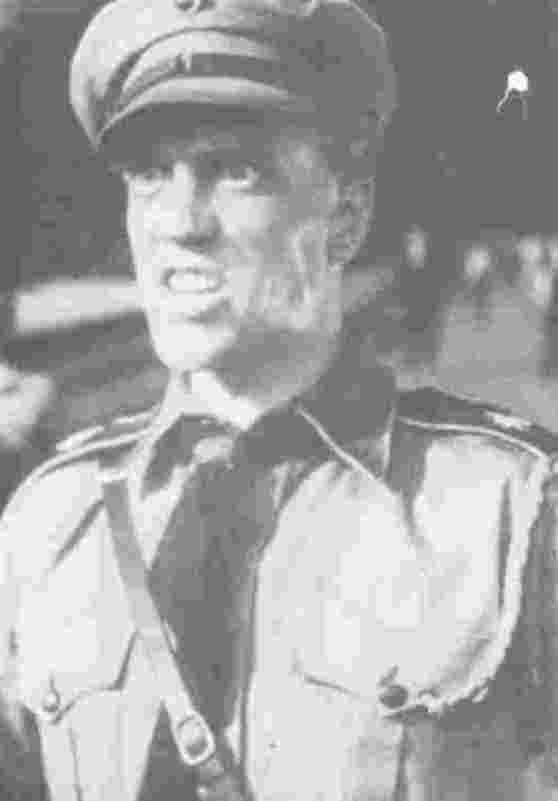
Self-portrayal
of the Nazi idol; frightening,
faintly
ridiculous totalitarian (masculinity
enhanced
by uniform), carrying a big
stick,
and not speaking softly. There is
an
air of raving, of striking terror into
the
hearts of others. The indistinct
figures
(appropriately in the background),
are
Hitler youth about to be "moulded". SC
___________________________________________________________________________________________
BAPTISM
OF FIRE
(FEUERTAUFE)
(Hans Bertram, Germany, 1940) (F)
Though entirely based on "authentic"
newsreel materials,
this is a
splendid distorted "record" of the Nazi Blitzkrieg
against Poland, designed to terrorize
(particularly foreign)
viewers
into accepting the Nazis' god-like military superiority.
Kracauer's profound analysis stresses the
magic, irrational core
of the
film, its reliance on graceful over-simplifications, clever
amalgams, a pseudo- narration that
professes to inform,
and
insidious comparisons. Particularly frightening are its
terrifying maps of encirclement and
destruction from above.
Strength
and decisiveness are constantly stressed; suffering
is,
at most, cartographic, and death entirely absent.
___________________________________________________________________________________________
HANS
WESTMAR
(Franz
Wenzler, Germany, 1933) (F)
In
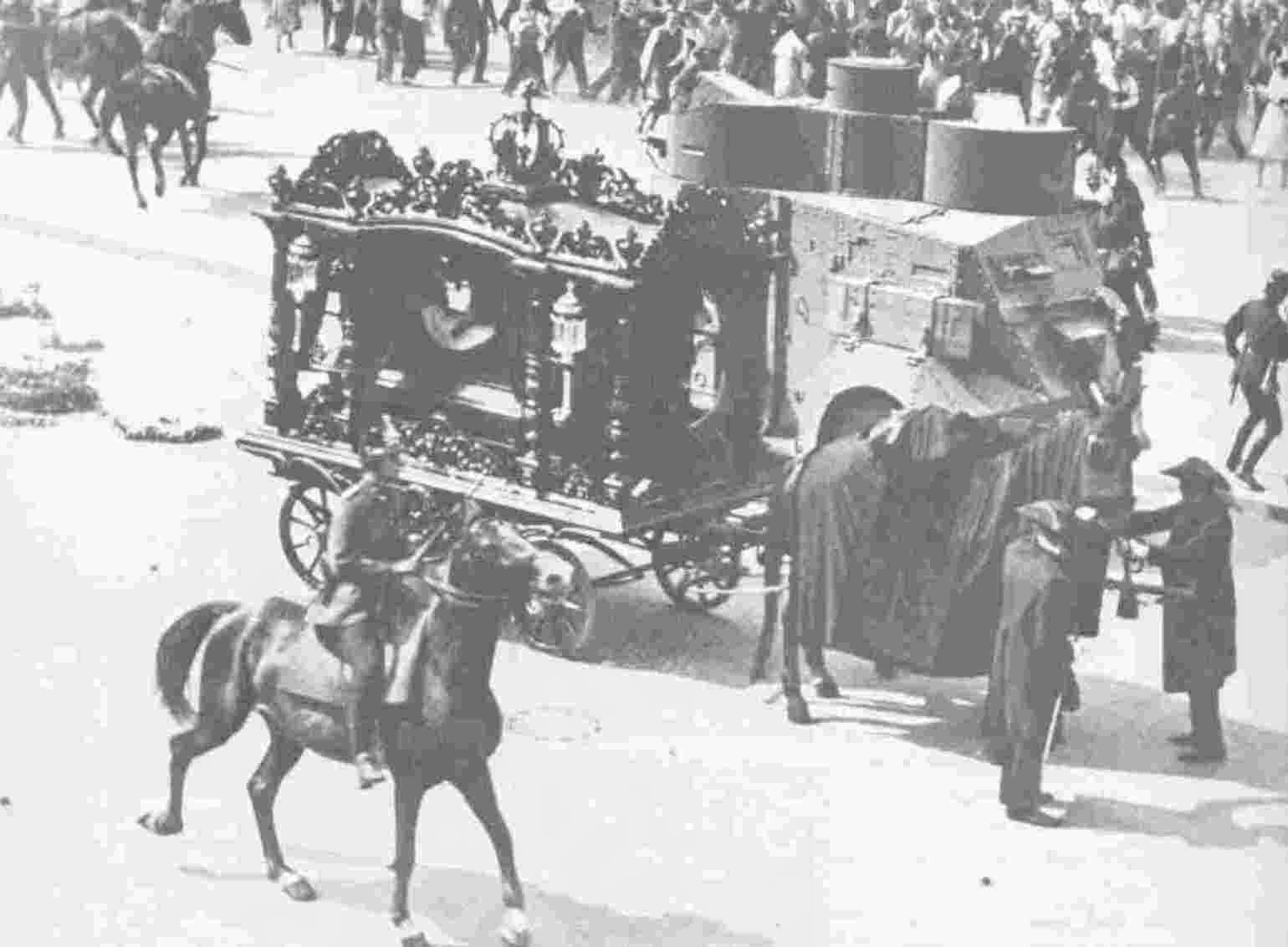
1933, a Nazi filmmaker produced, from newsreels,
a
record of the funeral of Nazi martyr Horst Wessel
(presumably killed by Communists)
revealing it
as a modest
affair, poorly attended. The same year,
a
fictional treatment of this event made it "heroic",
adding richly ornate hearse, armored
carrier, and
thousands of
rioting Communists in a complete fabrication.
___________________________________________________________________________________________
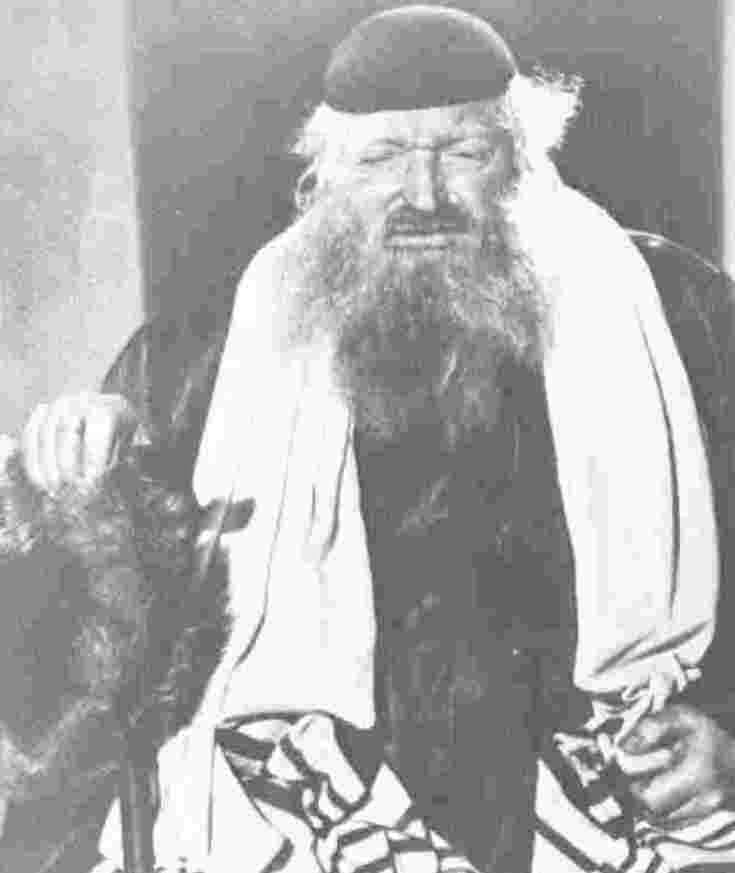
THE
JEW SUSS
(JUD
SUSS)
(Veit
Harlan, Germany, 1940) (F)
The
great German actor Werner Krauss as the
evil
Rabbi Loew in one of the most sinister
anti-semitic
films ever made. So detailed
and
particular is Krauss' recreation --
even
mouth and eyes attempt to imitate
the
archetypical Jew -- that a strange
dignity
suddenly begins to come through. SC
___________________________________________________________________________________________
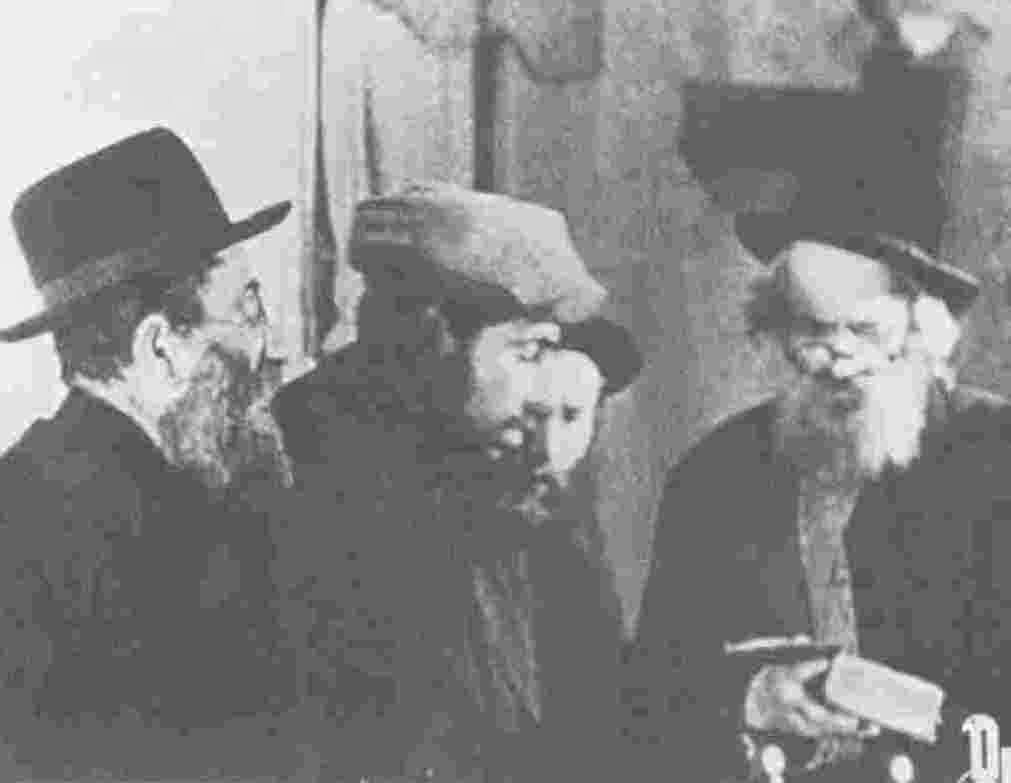
THE
ETERNAL JEW
(DER
EWIGE JUDE)
(Fritz
Hippler, Germany, 1940) (F)
It
is a tragic irony that almost the only remaining
visual
records of a now vanished civilization --
East
European Jewry -- should reach us through
the
films of those who destroyed it. Here,
"documentary" shots are
subverted by montage
and
narration into anti-semitic propaganda. SC
______________________________________________
This is
the most subversive film ever made against a particular
race or nationality group; there is no
other like it in film history.
It
purports to be a study of "the problem of world Jewry" and
utilizes documentary footage to expound
its virulently anti-semitic
philosophy.
It is an object lesson in the manipulation of the materials
of reality, in the use of montage and,
particularly, of narration for
purposes
of progaganda parading as objective truth. Shown widely
in Nazi Germany, the occupied Low
Countries, and France, it helped
justify
the "final solution" of the Jewish problem by means of
extermination. Even today, its visual
impact is still considered so
threatening
that it is never shown, and exists only in a few archives.
A screening at the American film
society "Cinema 16" in 1958 -- the
only
one of its kind -- was first stopped by the American customs and
only took place after intervention on
State Departmental level.
"The
civilized Jews with whom we are acquainted in Germany,"
says the narration, "offer us only
an incomplete picture of their
racial
characteristics. This film shows original pictures from the
Polish ghettos; it shows the Jews
as they really are, before they hide
themselves
under the mask of the civilized European." It is
indeed
ironical that the most
complete and only filmic coverage of Eastern
ghetto
life (now vanished) should be preserved for posterity by means
of the most anti-Jewish film ever made.
For here we see horrible
scenes
of poverty, degradation, and heart-rending faces of people
who were to die within the year; many
frightened, but attempting
to
hide their fear as this would be a mark against them, or smiling,
even acting (to please the Nazi
filmmakers). "The home life of the
Jews
shows his inability to become civilized. Jewish homes are
dirty and in complete disorder."
The narrative goes on to explain
how
the Jew does not like to work; he prefers to make shady deals
and cheat the Aryans as ordered by
Moses. His origin is in the
Orient
and a "surprising parallel to the Jewish migrations of an
equally restless animal -- the
rats." Here shots of vast hordes
of
rats scurrying about are cross-cut with mass shots of Jews.
"The rats accompany man as a
parasite from his very beginning;
wherever
rats appear, they carry death, spread leprosy, plague, typhus,
cholera. They are cunning, cowardly
and cruel and always appear in
large
numbers. They represent, among animals, the same element of
treachery and destruction as the Jews do
among humans." The film
then
proceeds -- always illustrated by well chosen visuals and naming
names -- to show that Jews are variously
gangsters, Bolsheviks,
degenerated
artists, international bankers, white slavers, con-men
and lechers. Excerpts from motion
pictures involving Jews are used
and
often not identified as such, transforming fictional incidents
into generalized characterizations of a
race. Einstein is referred to
as
"the Relativity- Jew Einstein", and New York and America
are
shown to be dominated by
Jewish bankers, as are the left-wing parties
of
Western Europe. "The concept of beauty is alien to them";
they
prefer cubism,
expressionism, and jazz. "Here we see an entire group
of Polish Jews, previously dressed in
their kaftans, and now in West
European
clothing, cleanly shaven, ready to infiltrate Western Europe."
Yiddish ("alien") words are
juxtaposed with Western music. Ritual
slaughter
is depicted in detail to reveal its "inhuman barbarism".
This
unprecedented opportunity to study actual Nazi propaganda
at first hand provides an object lesson
of overriding significance;
all
visual material is inherently neutral and can be made to serve
any purpose by clever montage and
soundtrack manipulation.
It
would be possible to take large sections of this film and provide
them with a sympathetic commentary,
stressing the Jews' plight
in
Eastern Europe and their cultural achievements elsewhere.
(Such an experiment exists in the
case of the American documen-
tary
Operation Abolition, which accompanied shots of left-wing
demonstrations against the House
Committee on Un-American
Activities
with strongly anti-Communist narration; a short time
later, the American Civil Liberties Union
produced a reply, Operation
Correction,
which consisted of the same footage, in the same order,
but accompanied by a diametrically
opposed narration providing
facts
and corrections not contained in the earlier work.) Kracauer is
right in considering the
predominance of language in The Eternal Jew
a
weakness, making it inferior to Triumph of the Will; yet the
semblance
of objectivity it
offered in its dense visual and aural documentation and its
intentional sensory overload of
rapid-fire accusations and allegations
have
made this into one of the most dangerous films ever produced.
SC
___________________________________________________________________________________________
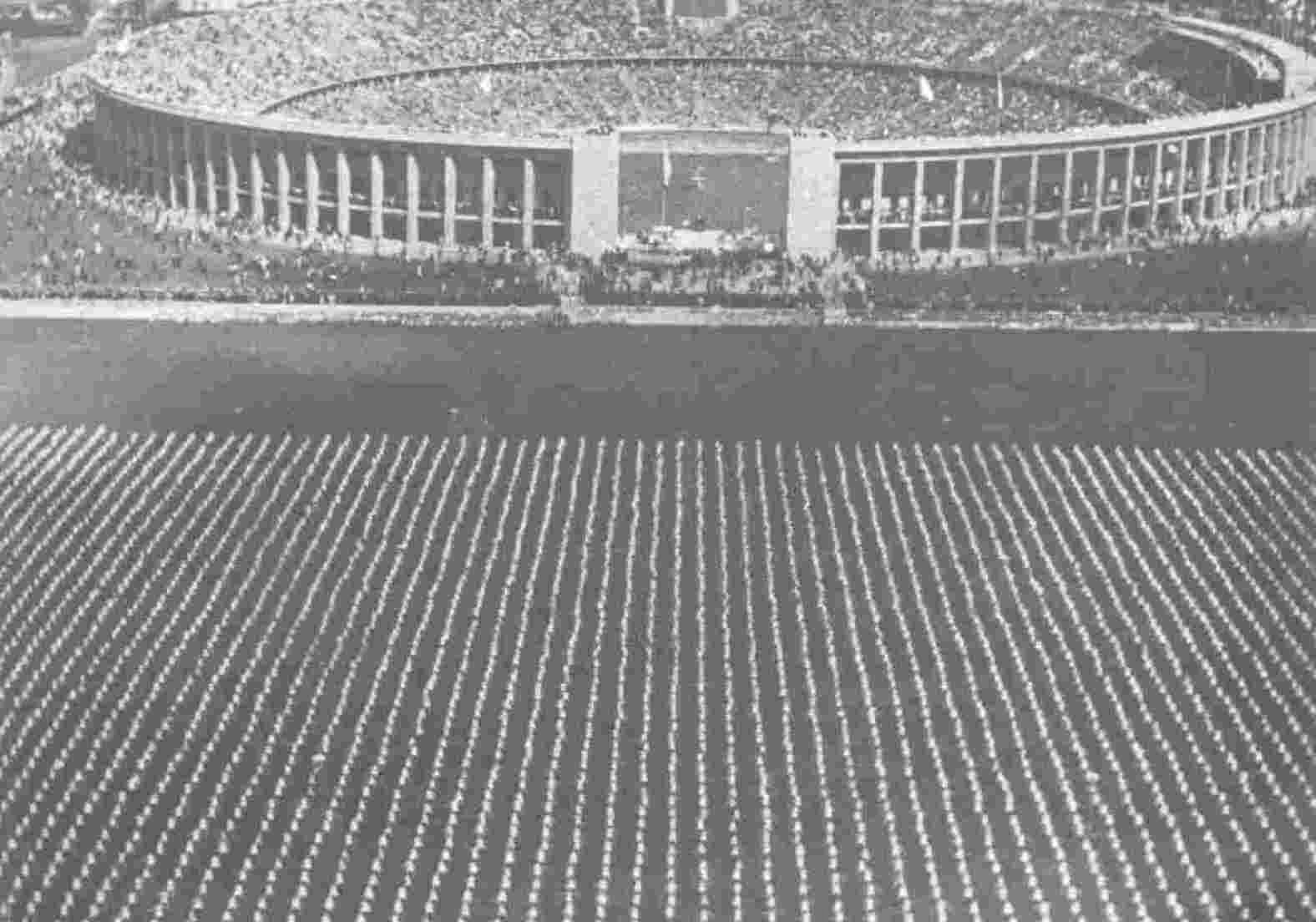
TRIUMPH
OF THE WILL
(TRIUMPH
DES WILLENS)
(Leni
Riefenstahl, Germany, 1936) (F)
Camera
positioning expresses Nazi ideology;
the
death of individualism, the compulsion to
conform
and obey, the perfection of the face-
less,
manipulated mass. As if the thousands of
gymnasts
were not enough, there is the impo-
sing
stadium and its multitudes in the back. SC