FILM
- AS A -
SUBVERSIVE ART
FUNERAL
PARADE OF ROSES
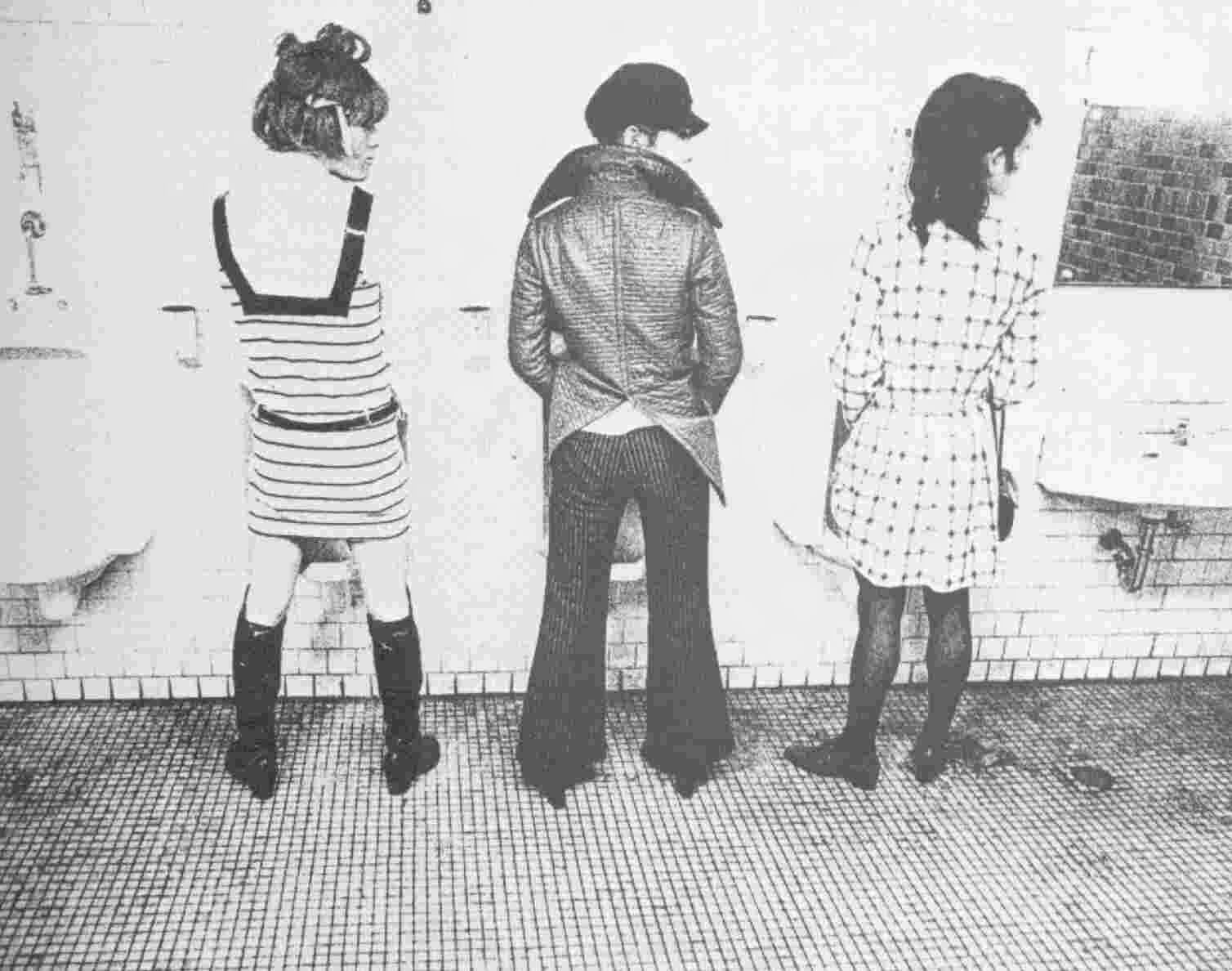
(Toshio
Matsumoto, Japan, 1969) (F)
Surrealist
displacement. The ambiance is very
contemporary,
the positioning startling. A note
of
tension is introduced in the turning of the
heads.
In reality, however, this is a scene from
an
avant-gardemelodrama concerning Japanese
homosexuals.
The three girls are transvestites
and
the shot assumes another meaning.
SURREALISM:
THE CINEMA OF SHOCK
FILMS
___________________________________________________________________________________________
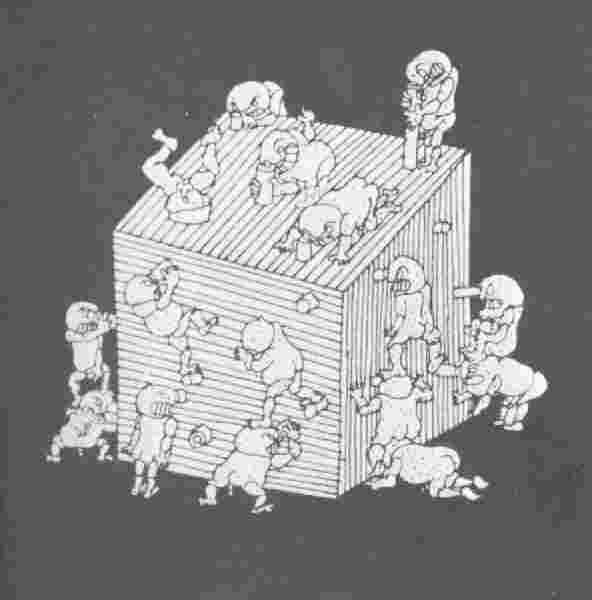
AOS
(Yoki Kuri, Japan, 1964)
The
ugly voyeurs (ourselves) at work. Their
busy
lasciviousness is obvious; but we are not
permitted
to see what they see. The device of a
closed
box with peepholes is eminently cinematic;
the
blackness of the surrounding space removes
the
event from reality and makes it mythological.
______________________________________________
This
extraordinary animation -- already a classic --
projects
a universe of bizarre and frustrated lusts, in
which
monsters, voyeurs, and misshapen objects engage in
nightmarish and often sado-masochistic
outrages amongst
Freudian
symbols of anxiety. Max Ernst and Bosch come
to
mind, but the rage against repression is entirely Japanese
and ideological: sexual anti-puritanism
as a liberating device.
______________________________________________
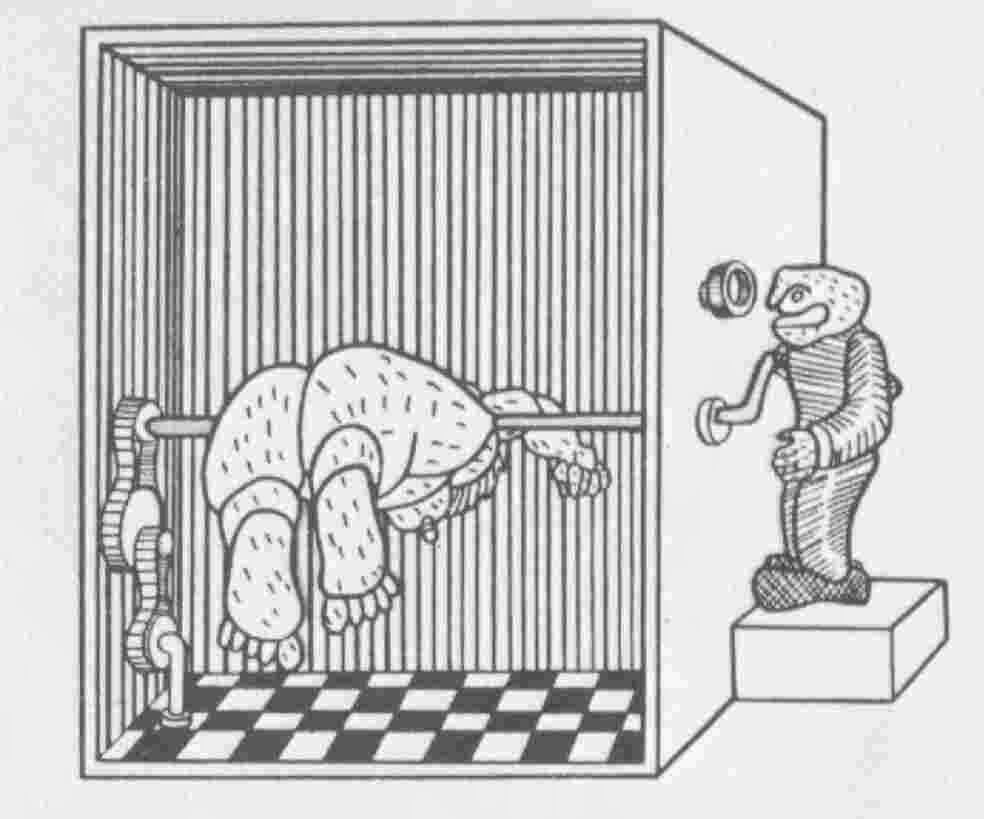
AOS
(Yoki Kuri, Japan, 1964)
A
universe of secret, illicit lusts, powered by mechanical
contrivance, the intent is
sado-masochist, the woman,
incongruously,
very hairy. The sexual anti-puritanism
is
viewed as a surrealist, hence liberating device.
___________________________________________________________________________________________
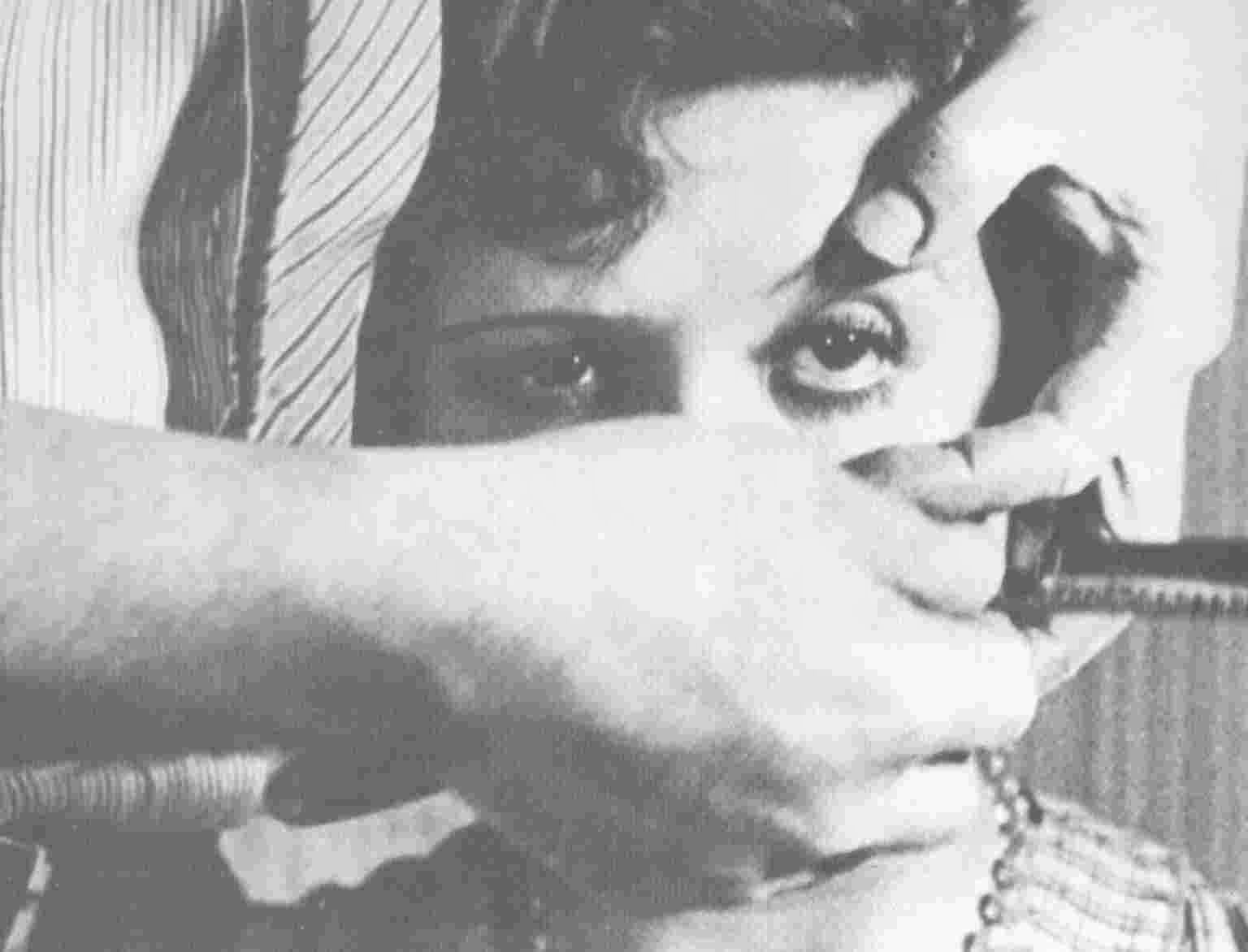
AN
ANDALUSIAN DOG
(UN
CHIEN ANDALOU)
(Luis
Bunuel & Salvador Dali, France, 1929)
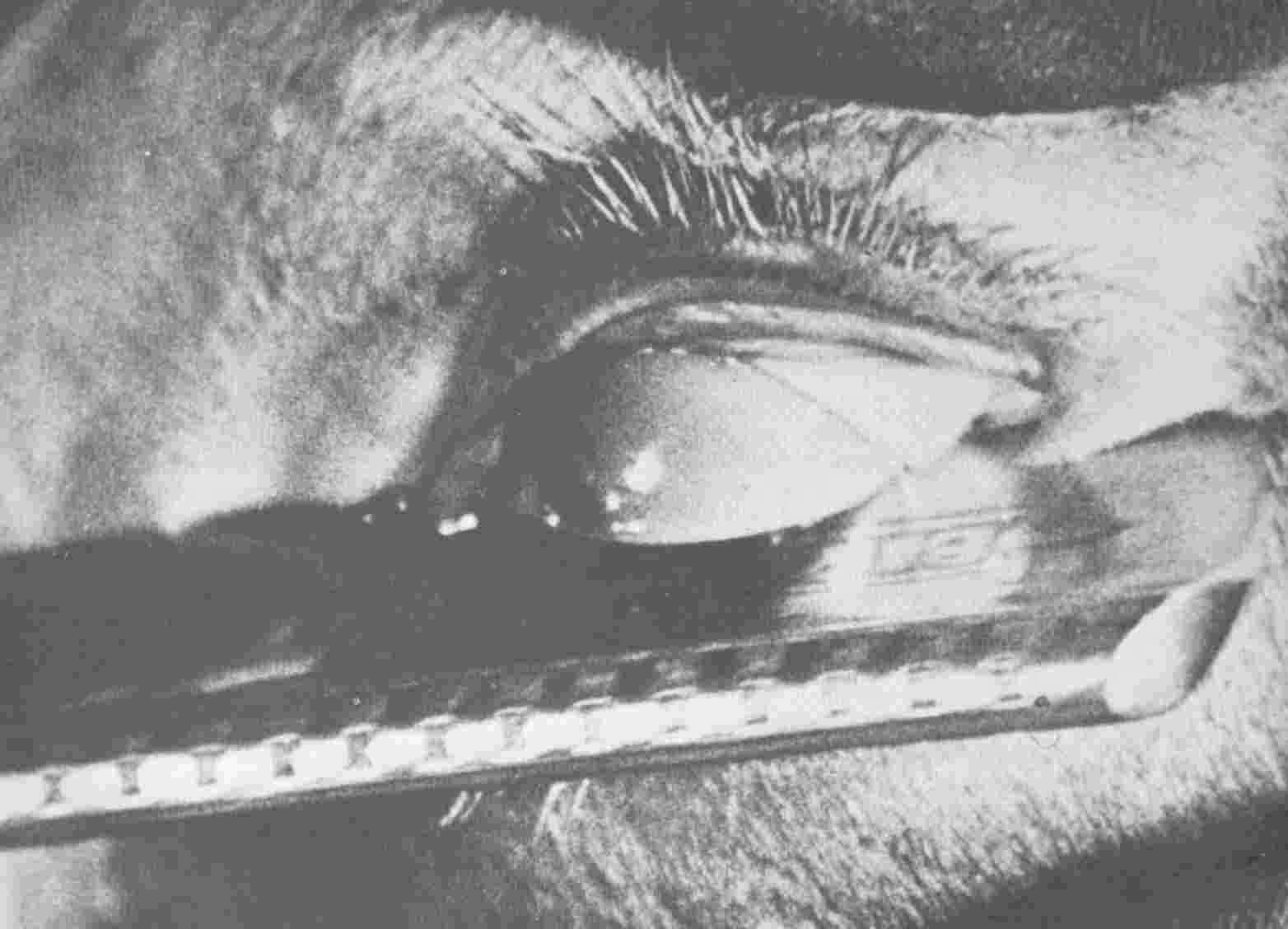
One
of the most shocking moments of world cinema.
To
open the viewer to new awareness, the first
sequence
of this surrealist classic consists of
the
(on-camera) slicing of a girl's eye (the razor
wielded
by Bunuel). For impact, the camera is at
eye-level
(this is where we automatically look).
The
woman's submission is complete; we fear what
might
happen; and, for once in cinema, it does. SC
______________________________________________
AN
ANDALUSIAN DOG
(UN
CHIEN ANDALOU)
(Luis
Bunuel & Salvador Dali, France, 1929)
Though
the preceding still often appears in
print,
this one does not; an interesting example
of
visual censorship, since the former only portrays
the
moment before the act and hence is not represen-
tative of the film which continues into
this shot. SC
______________________________________________
"This
film", said Bunuel, describing what was to become the most
famous
avant-garde film ever
made -- "draws its inspiration from poetry, freed
from reason and traditional morality.
It has no intention of attracting
or
pleasing the spectator -- indeed, on the contrary, it attacks him to
a
degree to which he belongs
to a society with which surrealism is at war ...
this
film is meant to explode in the hands of its enemies."
There is no
"plot"
-- only innuendos; no logic except that of the nightmare; no
reality
except the inner
universe of the subconcious. The continuity, if
any, arises
solely in the mind
of the viewer. The illogical, dream-like progression of
feared or forbidden images in this
intentionally shocking work has by now
entered
film history and has almost acquired a patina of
respectability,
so far has the
world moved towards real and worse nightmares. Yet we
remain disturbed by the close-up of live
ants crawling in a wound in the
palm
of a hand, by the sudden, "comic" transposition of a
woman's underarm
hair
into a man's moustache, by the couple buried to their necks in the
sand.
The inordinately lustful
protagonist fingers the woman's breasts which are
suddenly transformed into buttocks; a
severed hand is poked by a stick. But
if
these images have to some extent become more "acceptable",
one sequence
has remained
shockingly "liberating" as it was originally: the
slitting of
the woman's
eyeball, on camera, deftly conducted in close-up by the young
Bunuel himself. By placing this
sequence at the start of his first film
(and
thereby his life's work as one of the cinema's most original
talents),
Bunuel serves
warning of his intention: to change our conciousness.
______________________________________________
AN
ANDALUSIAN DOG
(UN
CHIEN ANDALOU)
(Luis
Bunuel & Salvador Dali, France, 1929)
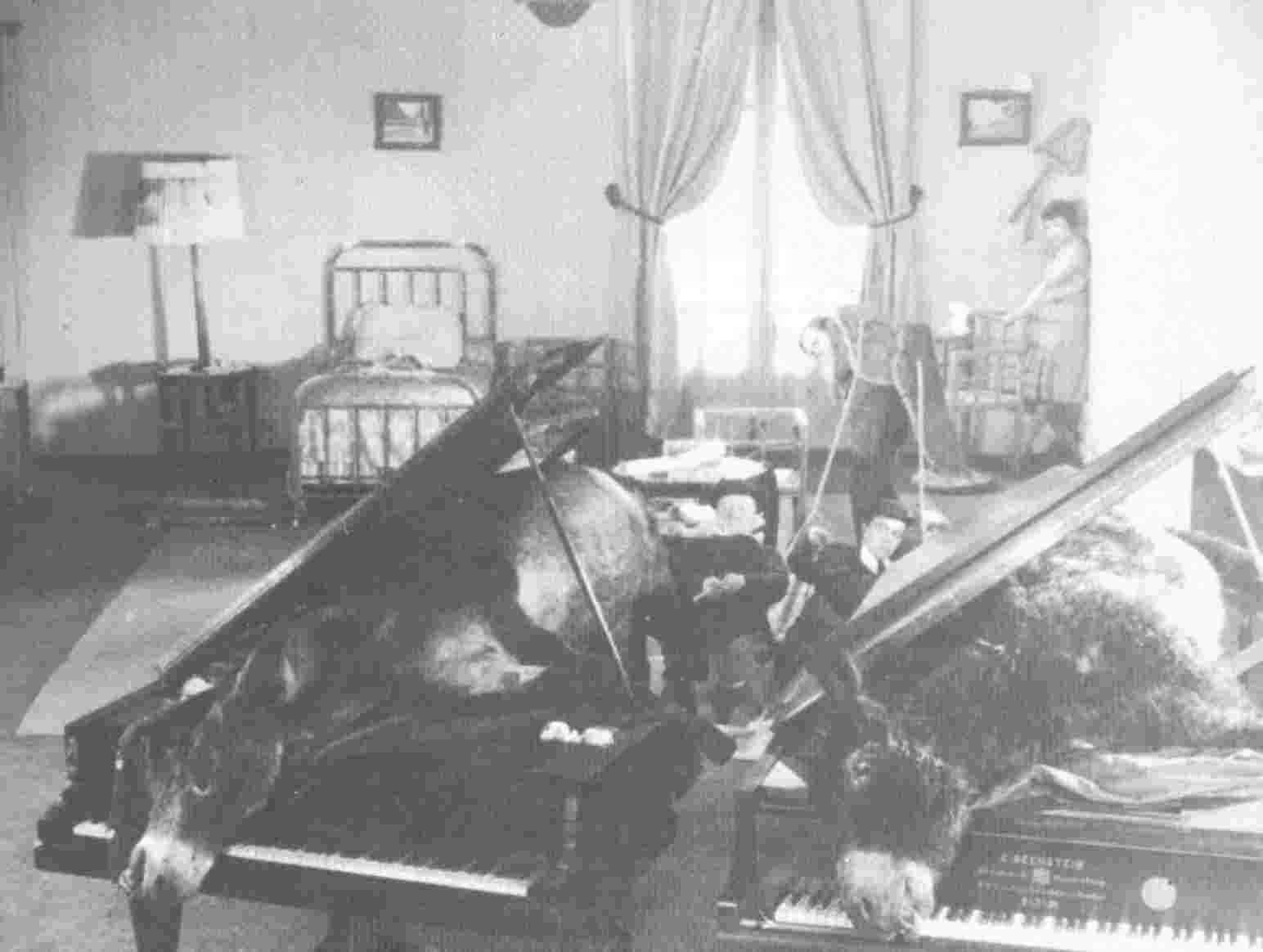
The
hero, attempting to take a girl by force, is
dragged
back by the clutter of his inhibitions
and
simultaneously offers a possible defini-
tion
of Western civilization: religion, culture
(the
piano) and bleeding carcasses. SC
______________________________________________
AN
ANDALUSIAN DOG
(UN
CHIEN ANDALOU)
(Luis
Bunuel & Salvador Dali, France, 1929)
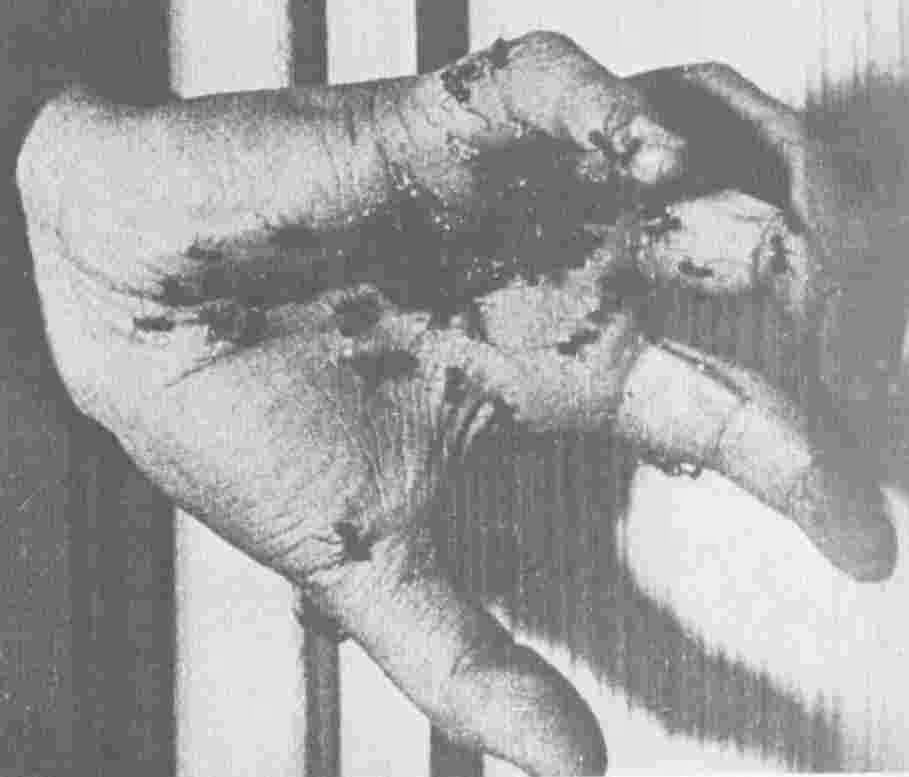
The
ants emerge from the wound. The cramped
position
of the fingers, the vile scurrying about of
the
insects, and the impermissible combination
of
the two, trigger submerged atavistic fears.
Strong
verticals, shadows, and cut-off effect of
the
door-frame add to the feeling of dread. SC
___________________________________________________________________________________________
THE
CHURCH BELL (LA CLOCHE)
(Jean
L'Hote, France, 1964)
A man,
accidentally trapped beneath a church bell about to be
installed "walks off" with it.
The sight of a church bell majestically
moving
through Paris streets and suburbs, creating inevitable havoc,
is a splendidcinematic equivalent of a
surrealist object in action,
created
by simple displacement from its customary surroundings.
___________________________________________________________________________________________
THE
DISCREET CHARM OF THE BOURGEOISIE
(LA
CHARME DISCRETE DE LA BOURGEOISIE)
(Luis
Bunuel, France, 1972) (F)
Bunuel's
mingling of realism and dream here moves him
closer
to the anarchic freedom of his early surrealist period,
distilling seditious intent into
sequences of limpid purity. In
this
most insane of all worlds, engulfed by war and destruction,
the inperturbable upper class attempts,
ever more irrelevantly,
to
maintain gentility and civilized values (good meals and
manners, empty talk and reverence for
money). But reality
"breaks
through" more insistently in a series of outrageous
events they delicately attempt to reduce
to manageable
proportions.
A particularly disturbing incursion of unreality
takes
place in a sequence during which they sit down to a long-
delayed meal only to have one of the
drape walls revealed as
curtain
and themselves as "actors" on what has suddenly
become
a stage. As they
are "prompted" -- before a hissing audience -- one
admits sheepishly: "I've
forgotten my lines" -- a perfect comment
by
the moralist- filmmaker on the contemporary ruling class.
___________________________________________________________________________________________
EATEN
HORIZONS
(SPISTE
HORISONTER)
(Wilhelm
Freddie, Denmark, 1950)
Two
men, using the back-side of a nude woman
as
their table, eat a loaf of bread, then cut a
hole
in the woman's body and eat her insides.
___________________________________________________________________________________________
AN
EATER
(Kazutomo
Fuzino, Japan, 1963)
Accompanied
by exaggerated eating sounds, a waitress
falls
into a dream in which the chef operates on her,
removing
gurgling fluids, spaghetti, an eye, and a
man
who's nose he cuts off. This "dish" is served to
voracious eaters who devour it. After she
awakens,
she vomits,
producingan endless string that finally
enmeshes
all the eaters. A macabre surrealist classic.
___________________________________________________________________________________________
FINGEREXERCISE
(Robert Schaer, Switzerland, 1969)
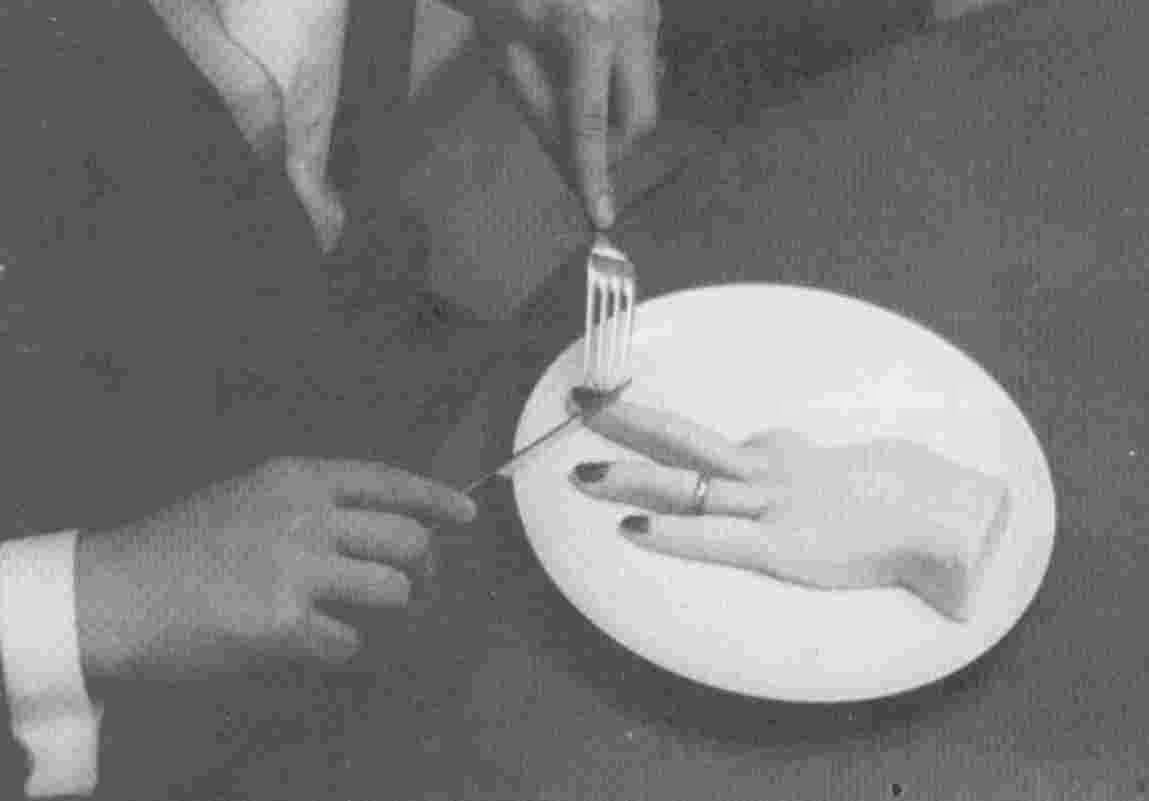
A severed limb is always frightening, the
more
so when it is about to be
nonchalantly consumed.
Both
eater and victim are well-groomed: cuffs, nail
polish,
and wedding ring add to the over-all effect.
Most
unsettling is the very while plate and the impen-
ding
dissection of a finger, the position of knife and fork
impeccably conforming to European eating
etiquette.
___________________________________________________________________________________________
THE
GIFT (LE CADEAU)
(Jacques
Vasseur & Dick Roberts, France, 1961)
The
entire plot of this delightful cartoon is based on the
shock effect of "misplaced"
sounds: a cow that honks, a
horn
that moos, a baby that screeches marches. Here sound
instead of object is torn from its
customary surroundings.
One of
the few examples of "aural surrealism" on record.
___________________________________________________________________________________________
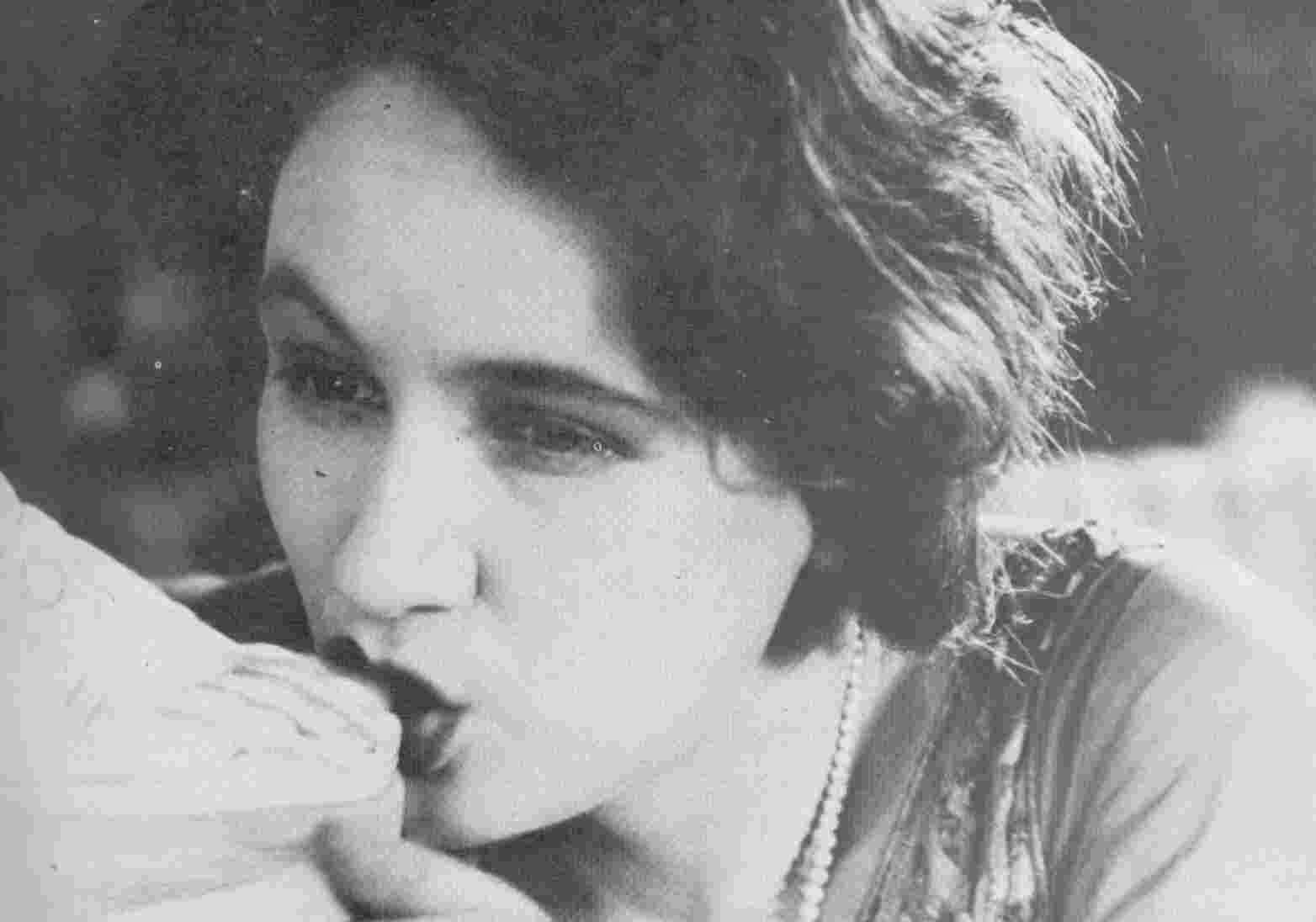
L'AGE
D'OR
(Luis
Bunuel, France, 1930)
According
to the Surrealists, nothing can counteract
the
deadly burden of institutions and Establishment
except
irrational, anarchic, wild love. In a film de-
voted to this theme, a frustrated,
sexually aroused
woman
passionately sucks the toe of a statue in a
display
of foot fetishism quite typical of Bunuel's
work;
further implications are inevitable. SC
______________________________________________
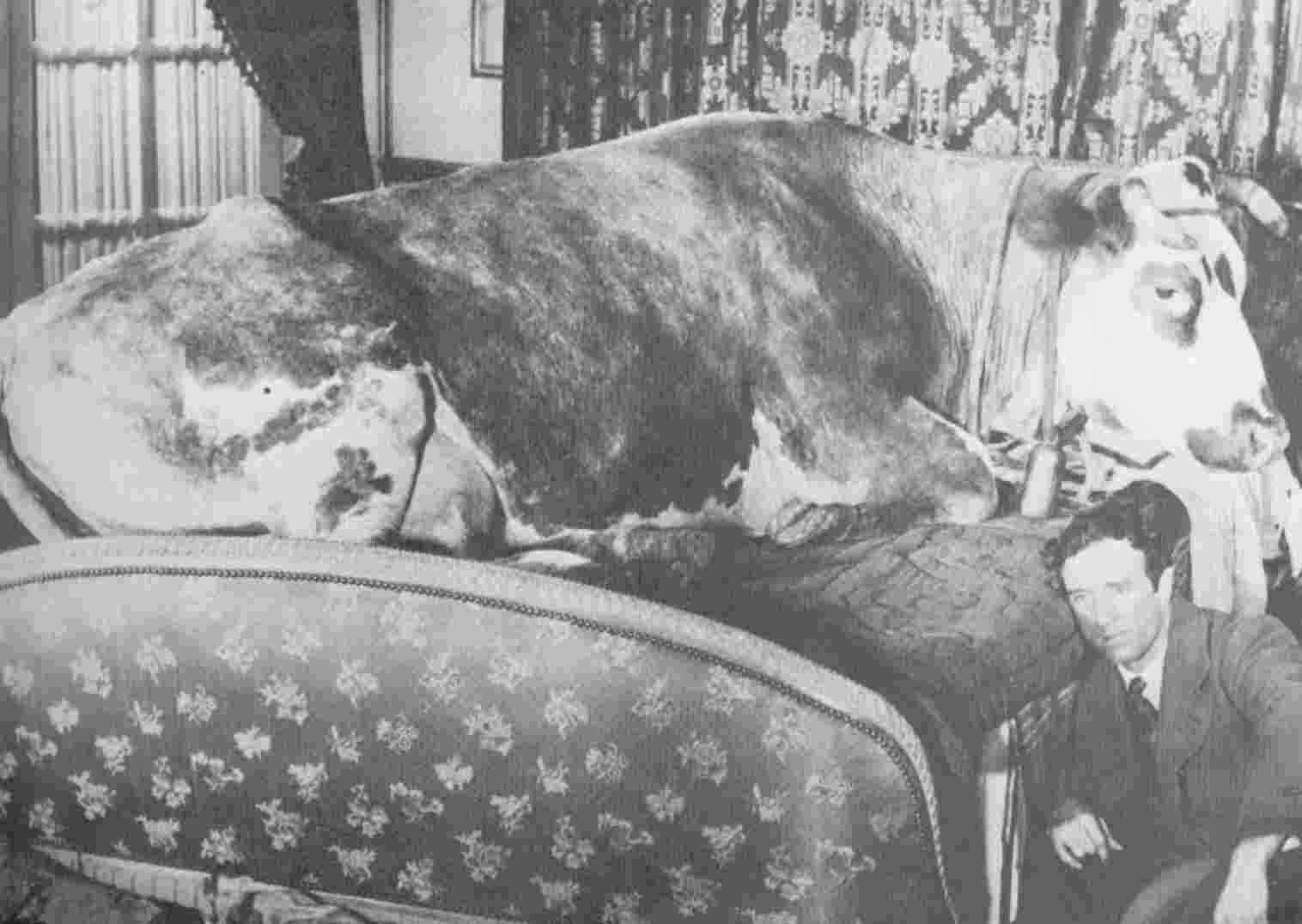
L'AGE
D'OR
(Luis
Bunuel, France, 1930)
Unexpected
and unacceptable combinations of
thoroughly
familiar elements introduce a feeling
of
marvel and unrest, opening the subconcious to
new
possibilities and hence, potential freedom. The
cow
is very large indeed; the bed very sensuous; the
man
in a swoon or stupor; in any case, brutal reality
has
supervened in the sanctuary of the bourgeois --
his
bedroom. SC
___________________________________________________________________________________________
LA
GRAN SIGURIYA
(Jose
Val Del Omar, Spain, 1955)
An
explosive, cruel work of the deepest passion,
a
silent cry, this is a mystic evocation of the
nightmares
of Spain. Reminiscent of Bunuel's
Land
Without Bread, it succeeds in conveying
nameless
terror and anxiety. One of the great
unknown
works of world cinema; surfacing
at
the 1958 First International Experimental
Film
Festival in Brussels, it just as quickly
disappeared
and is now unavailable.
___________________________________________________________________________________________
MAGRITTE
(Luc De Heusch, Belgium, 1955?)
Souvenirs of a voyage into the universe
of the Belgian
surrealist
painter. The film is an evocation of the mystery
and macabre humor of paintings that
unexpectedly juxtapose
familiar
objects or situations and dissociate them from their
environment. This is one of the few
films to deal with the
philosophical
basis of contemporary art. ("Reality is a word
devoid of meaning; space is not certain;
the world has lost
all
consistency. My task it to evoke the mystery." - Magritte)
___________________________________________________________________________________________
MR.
FRENHOFER AND THE MINOTAUR
(Sidney
Peterson, USA, 1949)
Surrealist
interpretation of Balzac's prophetic and oblique
paraphrase of modern art, this is the
story of a 17th-century
painter
who, obsessed with perfection, modifies his paintings
until they become unrecognizable.
The film is notable for its
poetic,
tongue-in-cheek commentary, teasingly delivered in the
style of a Joycean "interior
monologue". Verbal disintegration
and
visual distortions further contribute to the dream atmosphere.
___________________________________________________________________________________________
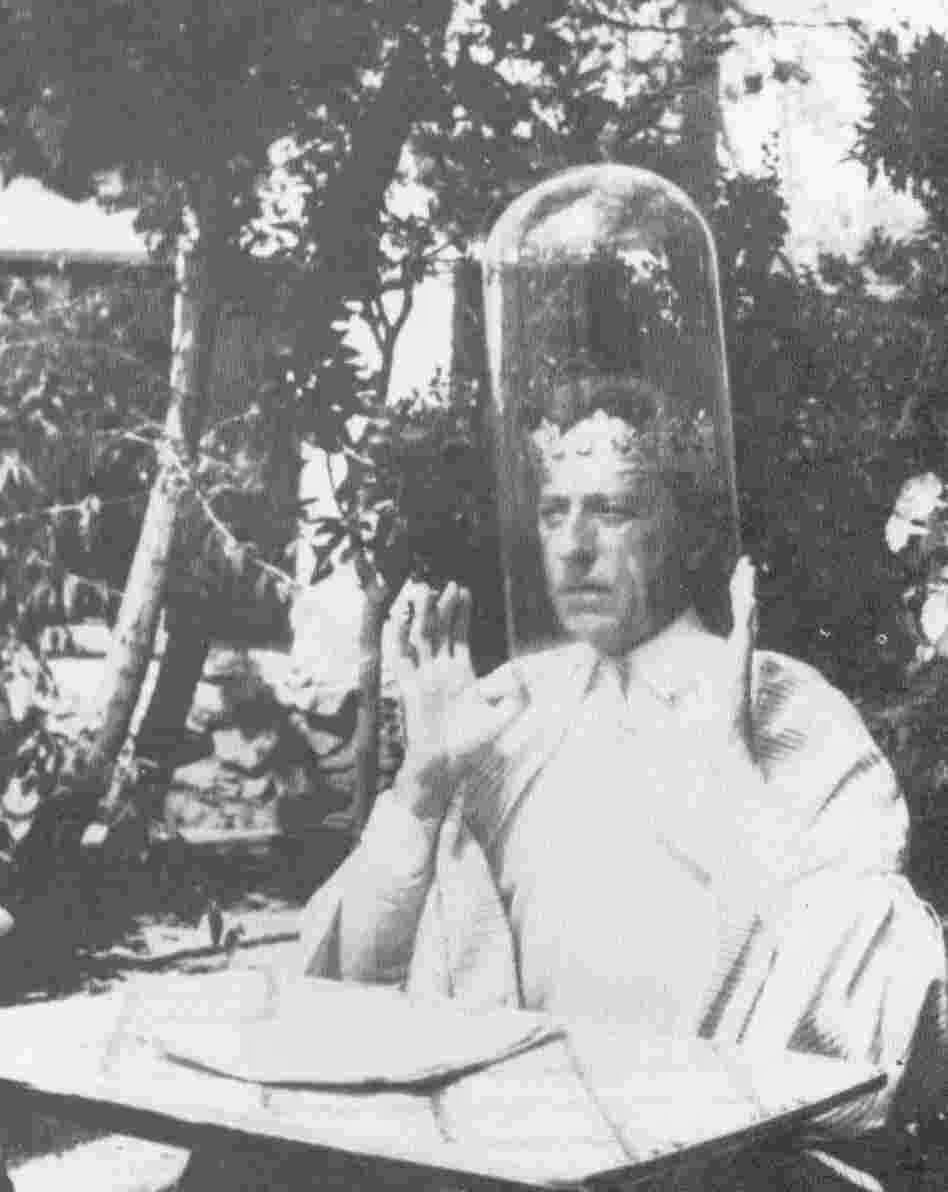
8
x 8
(Hans
Richter, USA, 1957)
Jean
Cocteau in a curiously reverential still shot
from
Richter's "chess" film, in which Arp, Tanguy,
Duchamp, and others perform as chess
pieces.
This episode,
"Queening of the Pawn",
was
written and directed by Cocteau.
___________________________________________________________________________________________
OUR
LADY OF THE SPHERE
(Larry
Jordan, USA, 1969)
A rich
surreal fantasy, derivative of Max Ernst's
juxtapositions
of old engravings and irrelevant objects
or
events. A particularly successful sequence shows
several
farm animals in an old engraving looking at
an
easel on which -- in unexpected animation -- various
drawings rapidly appear and change in
spectacular fashion.
___________________________________________________________________________________________
THE
RUNNING, JUMPING AND STANDING STILL FILM
(Richard Lester & Peter Sellers,
Great Britain, 1959)
Shot in
two days, this wild early collaboration between
Peter
Sellers, Richard Lester (A Hard Day's Night) and
Spike Milligan (of the Goon Show) is a
perfect example of
surrealist
comedy. The various protagonists undergo ridicu-
lous catastrophes, exaggerated
non-sequiturs, and Keystonian
mayhem
in a sylvan setting. Produced at hardly any cost at all,
it proves once again that talent is more
important than money.
___________________________________________________________________________________________
RUNS
GOOD
(Pat
O'Neill, USA, 1971)
As seen in
this film, the surrealist cinema of the 1970s
works
with tools the original surrealists never dreamed of:
solarization, multiple exposures,
"artificial" contrast, varying
image
size, negative color, three-dimensional effects. The title
comes from the windshield of a battered
old car in a used-car lot.
___________________________________________________________________________________________
THE
WORLD OF PAUL DELVAUX
(LE
MONDE DE PAUL DELVAUX)
(Henri
Storck, Belgium, 1947)
For
once, a film about a painter that does not show a
numbing
procession of works, but rather enters his universe,
as
the camera glides uninterruptedly and dream-like, from
painting to painting, their frames and
identities obliterated.
Neither
lecture nor spectacle, but an experience, this is a curious,
disturbing journey through the fantastic
world of the celebrated
Belgian
surrealist, in which luxuriant, icy female nudes and
fully- dressed, meek men co-exist in
mysterious landscapes.
The
score by Andre Souris and a surrealist poem written and
spoken by Paul Eluard further contribute
to an unsettling,
magical
experience. Storck's outstanding work extends
from
early radical documentaries to later surrealist films.
___________________________________________________________________________________________
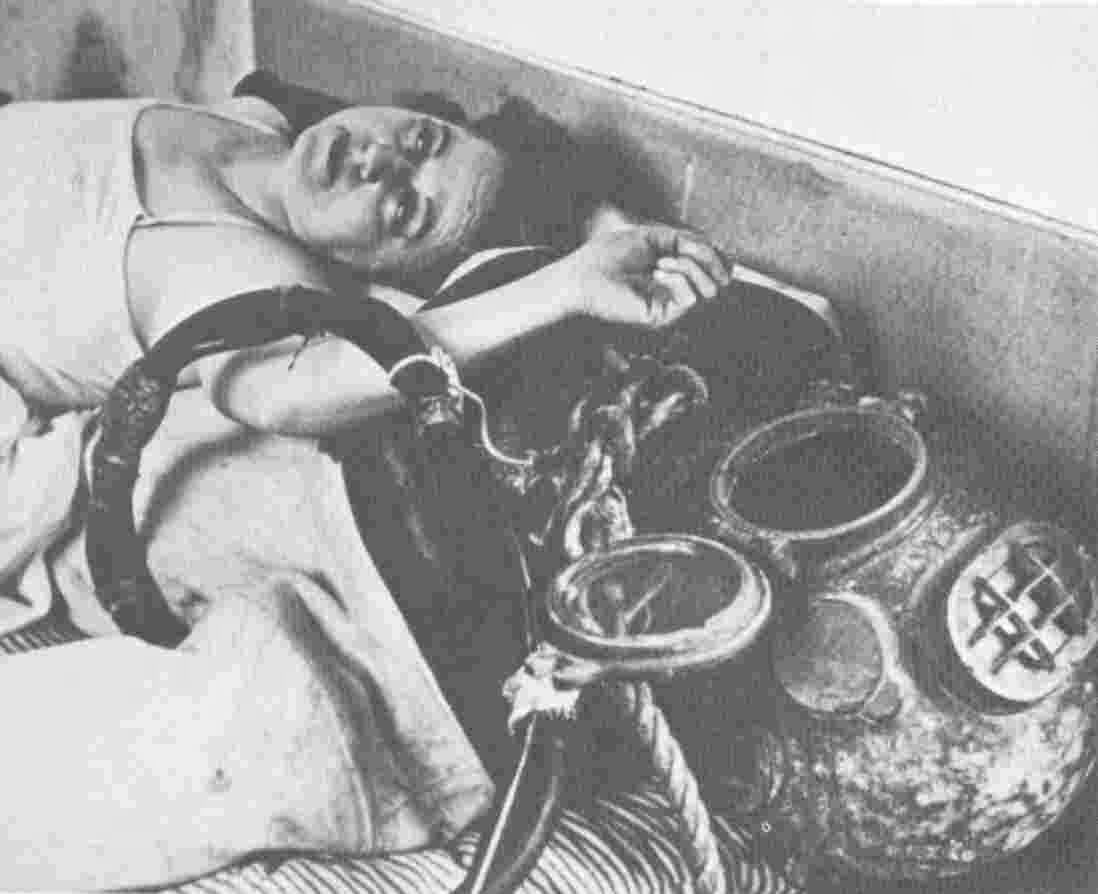
THE
LEAD SHOES
(Sidney
Peterson, USA, 1949)
A
yielding to the inevitable, an attempt
at
memory or remorse, as the wife-mother
passively
clings to the empty symbol of
her
murdered husband, perhaps killed by
his
sons in a nightmarish surrealist film.
______________________________________________
The
most accomplished work of America's foremost
surrealist
filmmaker. This is a hypnotic, obsessive night-
mare of parricide and compulsive attempts
to undo the deed.
The
basic images -- the blood, the knife, the bread voraciously
attacked -- shock by their
atavistic simplicity. The hallucin-
atory
effect is reinforced by the extraordinary soundtrack, an
enigmatic exploration of two old English
ballads, scrambled
in jam
session style and interwoven with experimental sound.
___________________________________________________________________________________________
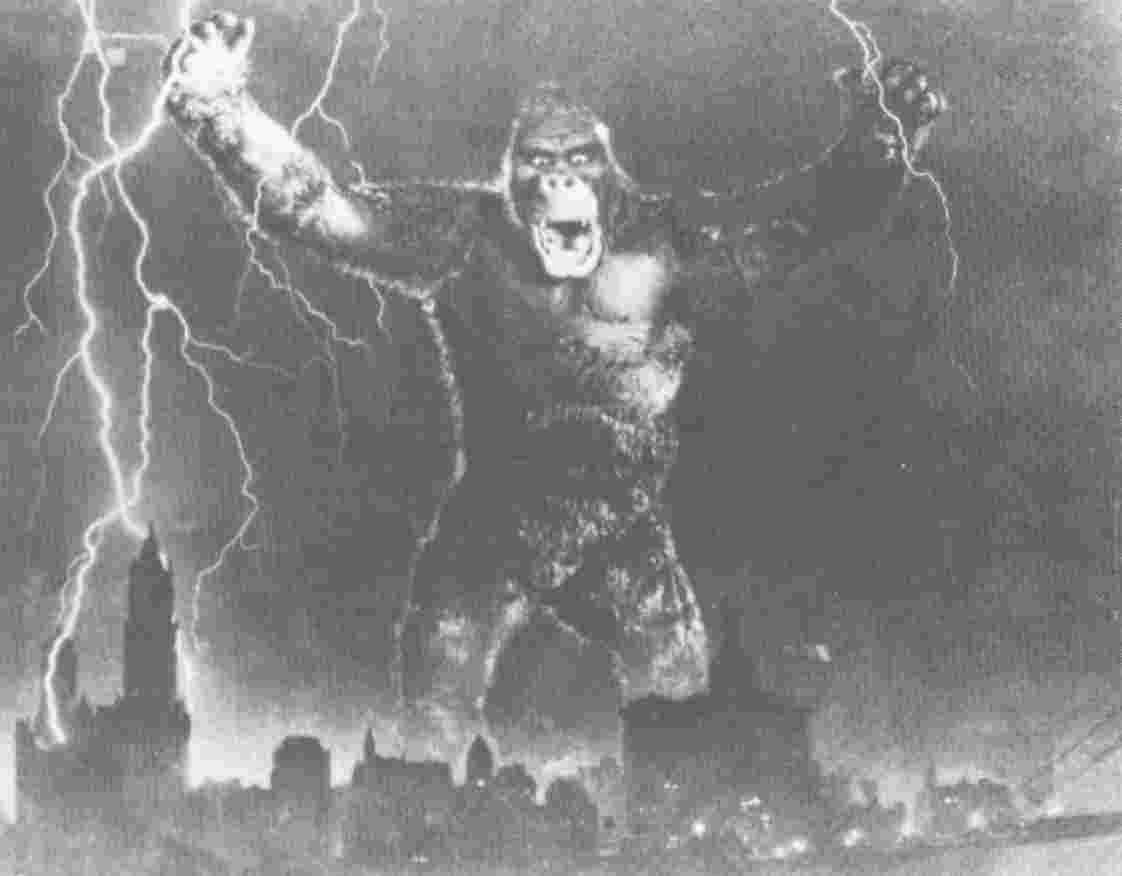
KING
KONG
(Merian C.
Cooper, Ernest B. Schoedsack, USA, 1933)
Shall
we ever accept -- or overcome --
the
horror (however delicious)
evoked
in us by this curious monster?
______________________________________________
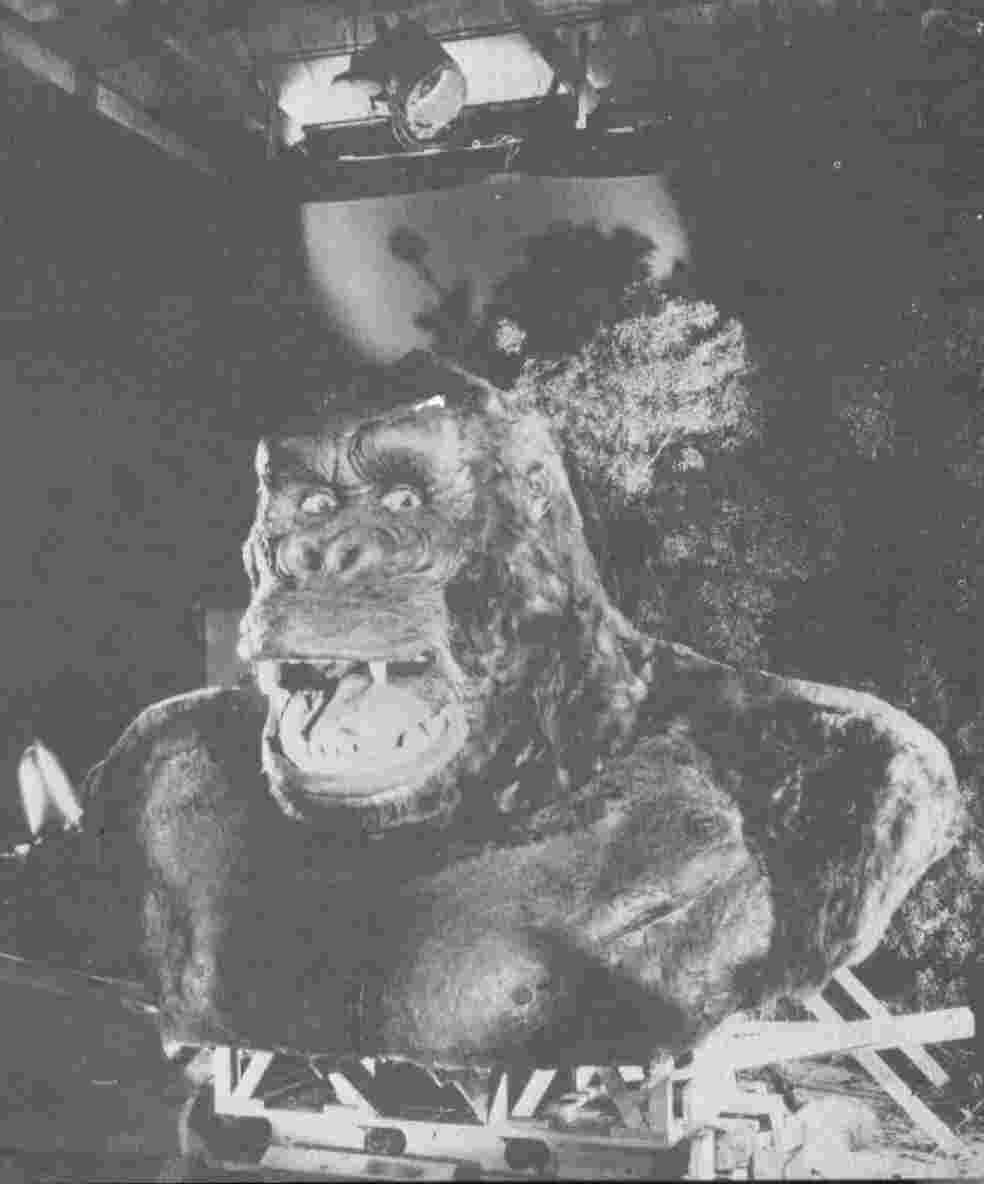
KING
KONG
(production
still)
And why, even when we
find out how
it was done, is
our horror not lessened?