FILM
- AS A -
SUBVERSIVE ART
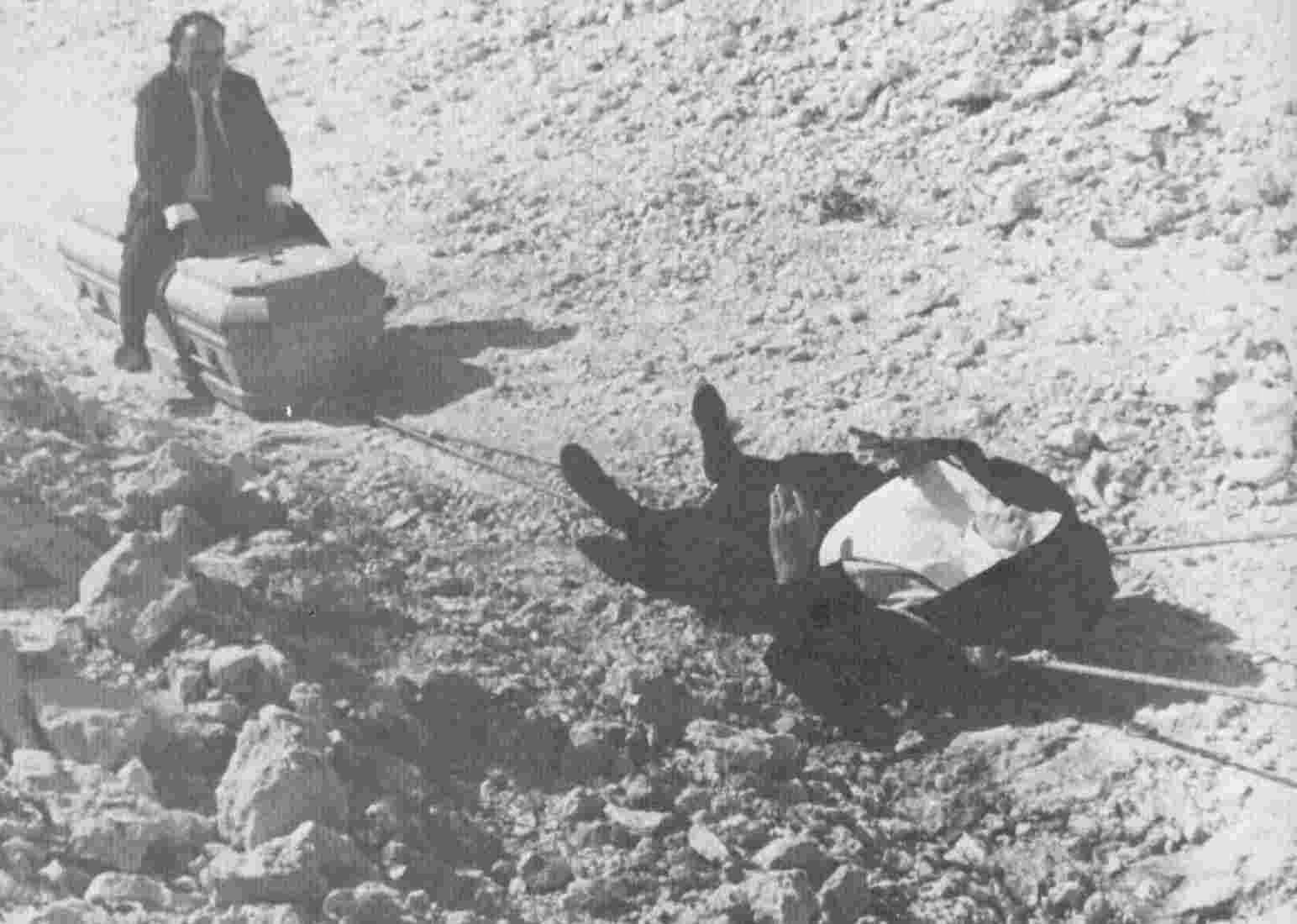
DEATH
OF A BUREAUCRAT
(Tomas
G. Alea, Cuba, 1966)
A dream
of coffins and nuns in a satirical Cuban attack on
bureaucracy. To qualify for
rent-exemption (made possible
by
her husband's death), the widow must present his working
papers; but these were buried with him as
a status symbol --
and "only
the man himself" can request a duplicate. To get
the original, he must be exhumed --
but this is illegal for
two
years. Dug up surreptitiously, his reburial becomes
impossible because no legal proof of
exhumation exists.
LEFT
AND REVOLUTIONARY
CINEMA:
THIRD WORLD
FILMS
___________________________________________________________________________________________
A
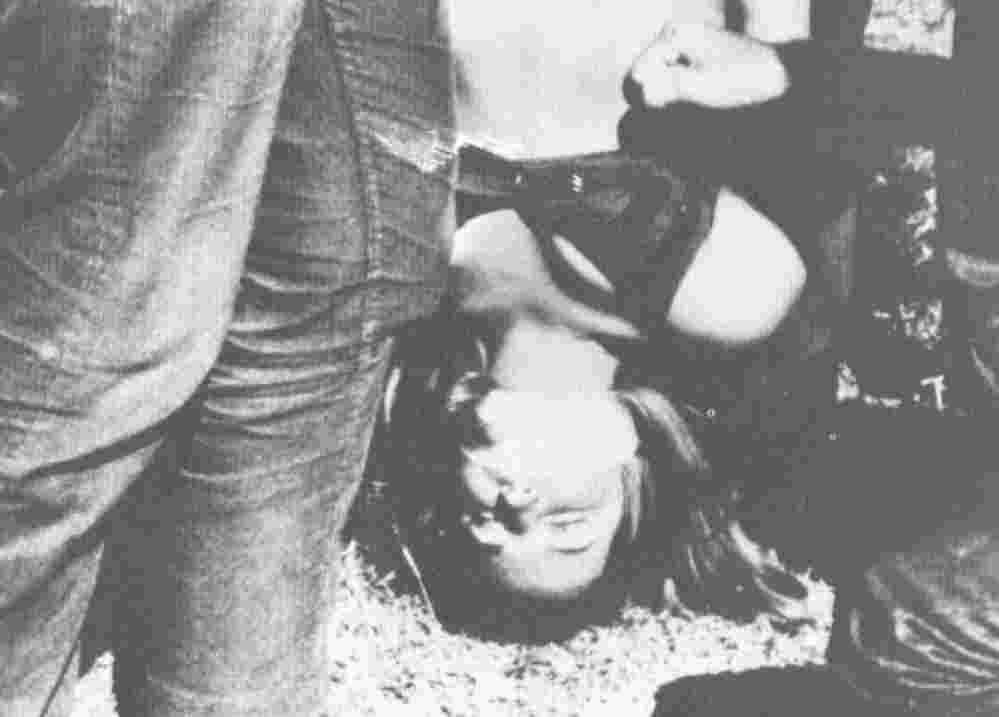
REPORT ON TORTURE
(Saul
Landau and Haskell Wexler, Brazil, 1971)
The
bold counterposing of an upside-down, gagged
female
with a probably threatening hand and a man's
lower
torso symbolizes the ambiance of this document
of
our times; a factual study, through interviews and
demonstrations, of the Brazilian
government's use of
torture
against political prisoners. The protagonists
are
recent Brazilian political refugees in Chile
(now
presumably again in jail or tortured anew).
___________________________________________________________________________________________
THE
ALIENIST
(IL
ALIENISTA)
(Nelson
Pereira Dos Santos, Brazil, 1970) (F)
Based
on Machado de Assis' novel, this is a macabre story
of
a 19th century Brazilian priest and social reformer who
puts most of the population of his
village into a madhouse
to
"cure" them of insanity and sin, and make his utopia come
true. The land-owners (left without
workers to till the land)
volunteer
to take their places in the "rest home"; when the
priest refuses, he is subjugated and
finally becomes the
only
inmate of the asylum. "Some day", he muses, antici-
pating Laing, "the madness of our
day will be the reason
of
tomorrow." The film's radical intention is clear and the
decor, color, and mise en scene
extravagantly beautiful,
but
the audacious parable ultimately becomes labored.
___________________________________________________________________________________________
ANTONIO-DAS-MORTES
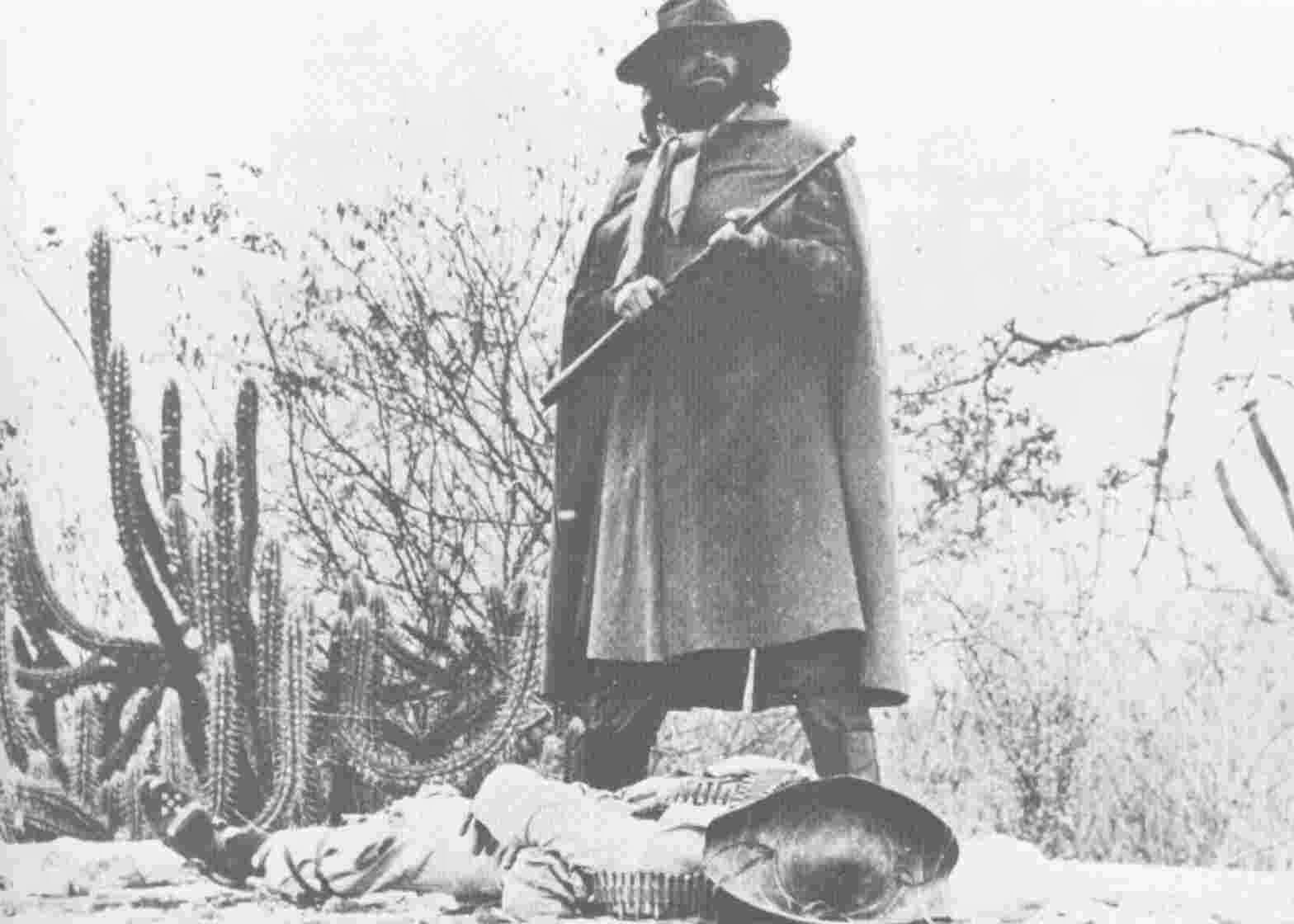
(Glauber Rocha, Brazil, 1969) (F)
The archetypical themes of revolutionary
Brazilian cinema; the arid plains,
primitive
stage for atavistic
plots of oppression, terror,
revenge;
the towering revolutionary hero fight-
ing
for the downtrodden; the ever-present
rifle.
Bloody, exorbitant, and partisan, this
is
an ecstatic song of revolutionary violence. SC
______________________________________________
Among
the young Brazilian directors of the "Cinema
Novo" movement, it is
particularly Glauber Rocha
who
has transcended its early neo-realism to embrace
expressionism and stylization. In
Antonio-Das-Mortes,
these
characteristics assume the flamboyant sweep of a
revolutionary folk epic, replete with a
mysticism both
surprising and
appropriate of the late 20th century,
when
rationalism has revealed its limitations and
deeper
layers of consciousness are being probed
in
ecstasy by the new revolutionaries of our day.
Antoni0-Das-Mortes
is an exuberant, and blood-stained
radical
work, choreographed and wedded by proud young
nationalists to Brazil's rich folk
heritage, which includes
the
legends of the cangaceiros", fiery bandit-rebels
who
redressed social injustice by violence. This is the
story of Antonio-Das-Mortes, a former
cangaceiro who
during
the 40s turned professional killer in the pay
of
rich landowners and the church, to kill his former
compatriots; "touched by grace"
-- his realization
of his
employers' cruelty and injustice -- he finally
rejoins
the revolutionary cause with a vengeance.
An
implacable, metaphysical tone and rhythm permeate
this
film, creating a non-realistic continuity that depends
on
expressionist tableaux, set to indigenous music from
African and Portuguese sources.
Mass dances and ballads
provide
a structure for the stylized action. The result is one
of the most difficult and original works
of the "Cinema Novo".
"To
make film is to make a contribution to our revolution,
to
stoke its fire, to make people conscious. This is the
tragic origin of our cinema. Our
aesthetics is the aesthe-
tics
of cruelty; it is revolutionary." - Glauber Rocha
SC
___________________________________________________________________________________________
APROPOS
OF A PERSON VARIOUSLY
CALLED
HOLY LAZARUS OR BABALU
(ACERCA
DE UN PERSONAJE QUE UNOS LLAMAN
SAN
LAZARO Y OTROS LLAMAN BABALU)
(Octavio
Cortazar, Cuba, 1968)
To show
the viability of superstitious belief, this
documentary
records a still-continuing religious
holiday
in Cuba, at which Holy Lazarus is simul-
taneously
celebrated as "Babalu" because of the
strange
mingling of Catholic and African religion
in
primitive societies. As the believers crawl
painfully towards his shrine, shots of a
new
generation doing
calisthenics are intercut.
___________________________________________________________________________________________
BLOOD
OF THE CONDOR
(YAWAR
MALLKU)
(Jorge
Sanjines, Bolivia, 1970) (F)
This
anti-government and anti-American Bolivian
feature
pivots on a persistent and unsavory charge
never
sufficiently disproven, that in a misguided
attempt
to combat poverty and overpopulation,
the
American Peace Corps engages in programs
of
sterilization of native women in underdeve-
loped
countries. The indigenous ruling class
is
seen as accomplice; and the film ends
on
a note of revolutionary anticipation.
___________________________________________________________________________________________
MEMORIES
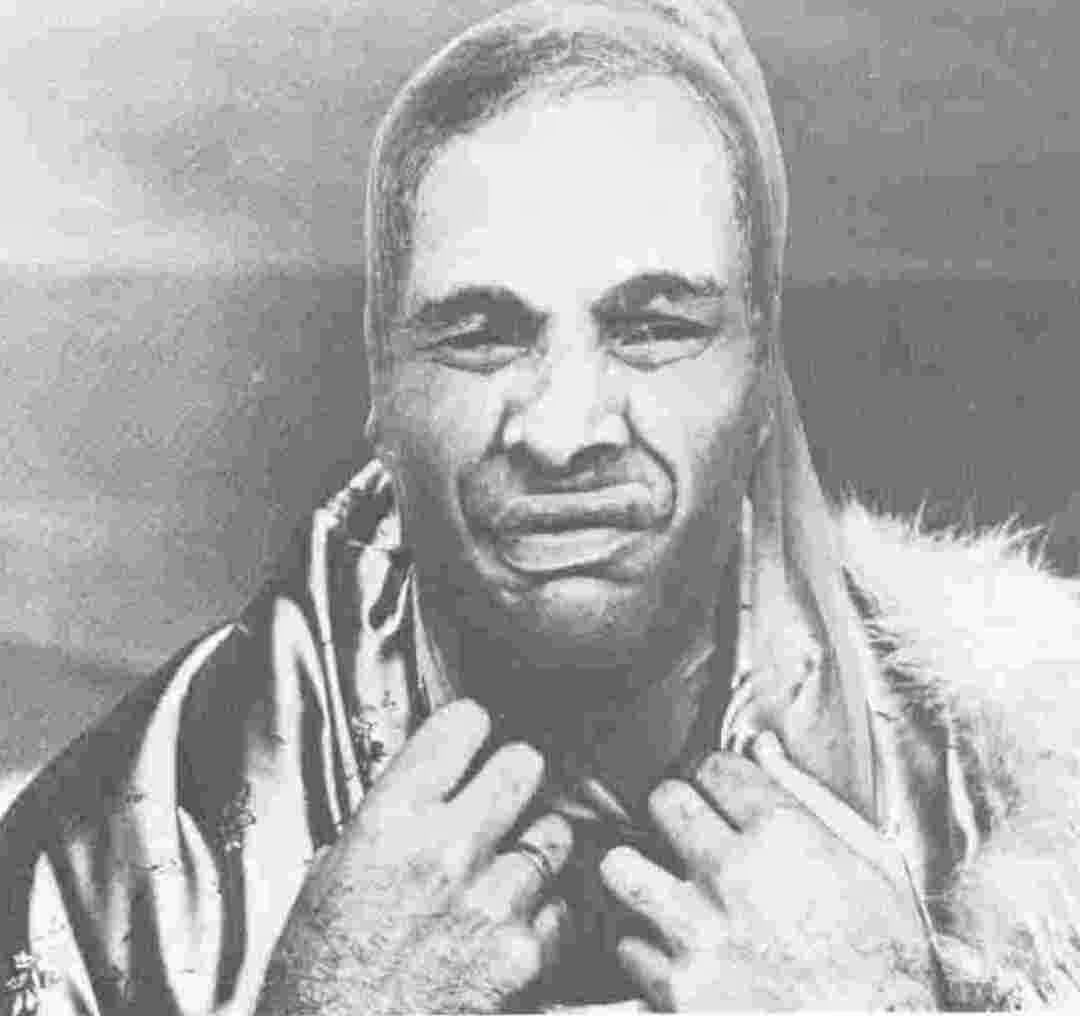
OF UNDERDEVELOPMENT
(Tomas
G. Alea, Cuba, 1969) (F)
His
family having emigrated to America because
of
Castro, this ambivalent liberal, left behind in his
opulent apartment, pulls his wife's
stockings over
his head in
anguish. His doubts and lack of involve-
ment
increase. Finally, as others prepare for action
against America during the missile
crisis, he watches
them
detachedly through binoculars. Politically,
the
most mature and "open" of the Cuban films.
___________________________________________________________________________________________
CHILD
UNDERNOURISHMENT
(DESNUTRICION
INFANTIL)
(Alvaro
Ramirez, Chile, 1969)
A record
of one of the many secret outrages
existing
everywhere in such abundance that they
remain
unsolved, unresolved, and of no interest --
in
this case the plight of poor Chilean children:
living
skeletons, grotesque monsters, in hovels,
covered
by fleas. This is why Allende was necessary;
and
why a new, now violent, social restructuring
remains
inevitable in the Chiles of the world.
___________________________________________________________________________________________
CULEBRA:
THE BEGINNING
(Diego
de la Texera, Puerto Rico, 1971)
Culebra,
an island off Puerto Rico,
is
used by the USA as a target area for
bombing
practice with live ammunition.
The
film documents two years of demon-
strations,
rallies, sit-ins, and, ultimately,
a
live-in at the bombing area by the people
of
Culebra, attempting to put a stop to the
pollution
and destruction of the island.
___________________________________________________________________________________________
EMITAI
(Ousmane Sembene, Senegal, 1971)
(F)
An anti-imperialist yet
curiously muted evocation of
the
French colonial period and of the strong yet waning
influence of tribal religions. As
usual with Sembene,
there is
much fascinating ethnological detail; more
importantly,
this is a film by an African for Africans,
designed
to make them share discovery and revelation,
the
limitations of myth, the cruelty of the opressor, the
fortitude of the people, and the need for
revolution.
___________________________________________________________________________________________
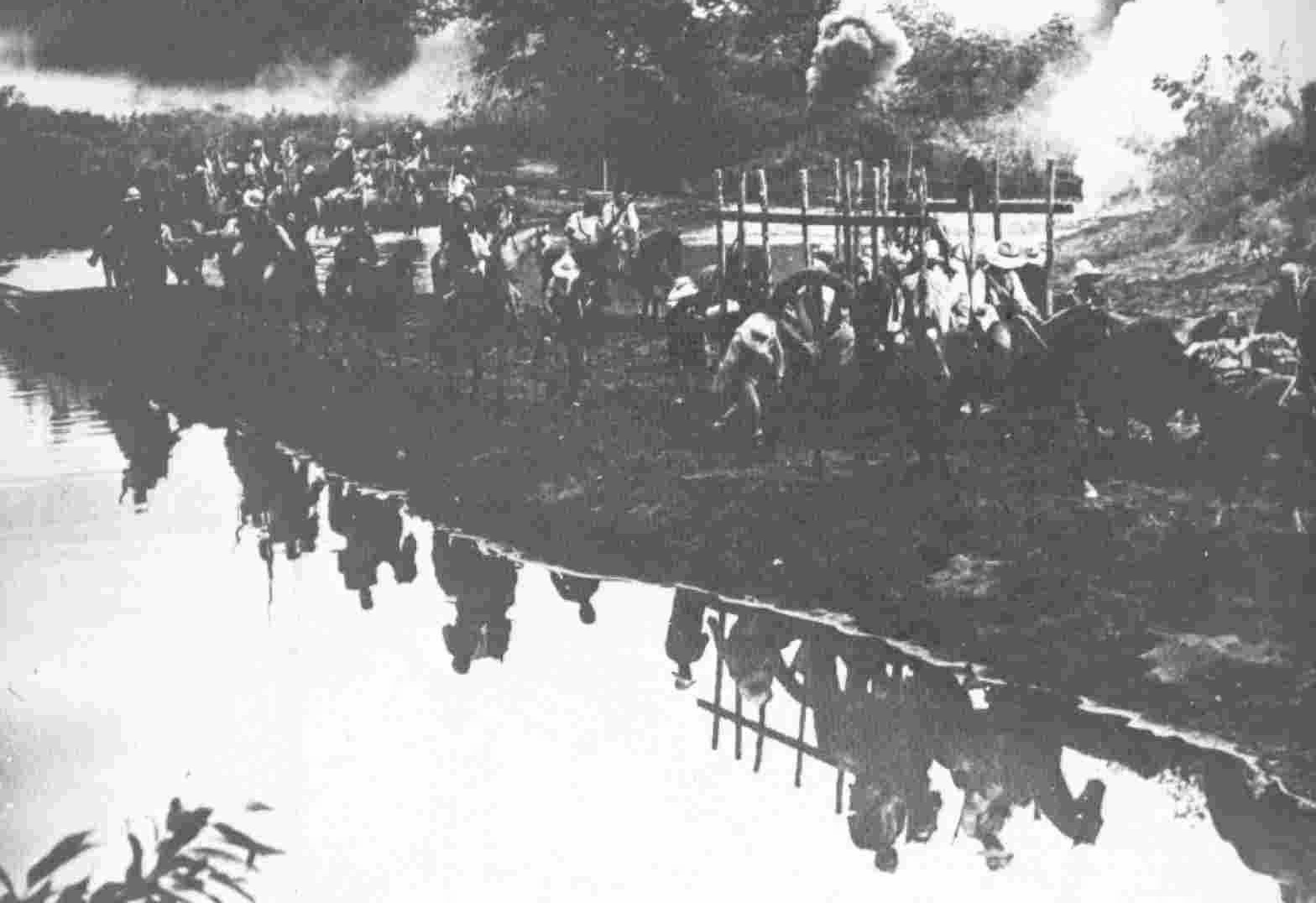
THE
FIRST CHARGE OF THE MACHETE
(LA
PRIMERA CARGA AL MACHETE)
(Manuel
Octavio Gomez, Cuba, 1969)
The
mysterious beauty and strange duality of
this
still -- to turn it upside down merely creates
another,
equally valid reality -- symbolizes
the
strongly aesthetic preoccupations of this
irector
and testifies to the divergent stylistic
tendencies
permitted within the Cuban cinema.
______________________________________________
Possibly
the most "aesthetic" and "experimental" of
revolutionary Cuba's films, this
outstanding work utilizes
high
contrast photography, over-exposure, and solarization
to
created the faded chiaroscuro and poetic authenticity of
the period it depicts. The film deals
with an 1870 uprising
against
the Spanish occupation troops in Cuba, in which
the
machete, originally used to cut sugar cane, becomes a
weapon of the people's welfare. The
portrayals of decadent
upper
classes and heroic peasants are sharp and incisive,
and
distancing devices -- such as characters addressing the
camera -- are used to induce attitudes of
analysis instead of
involvement.
The emergence of such a strongly poetic work
within
the Cuban film industry testifies to the divergent aes-
thetic tendencies permitted expression
within the revolution.
___________________________________________________________________________________________
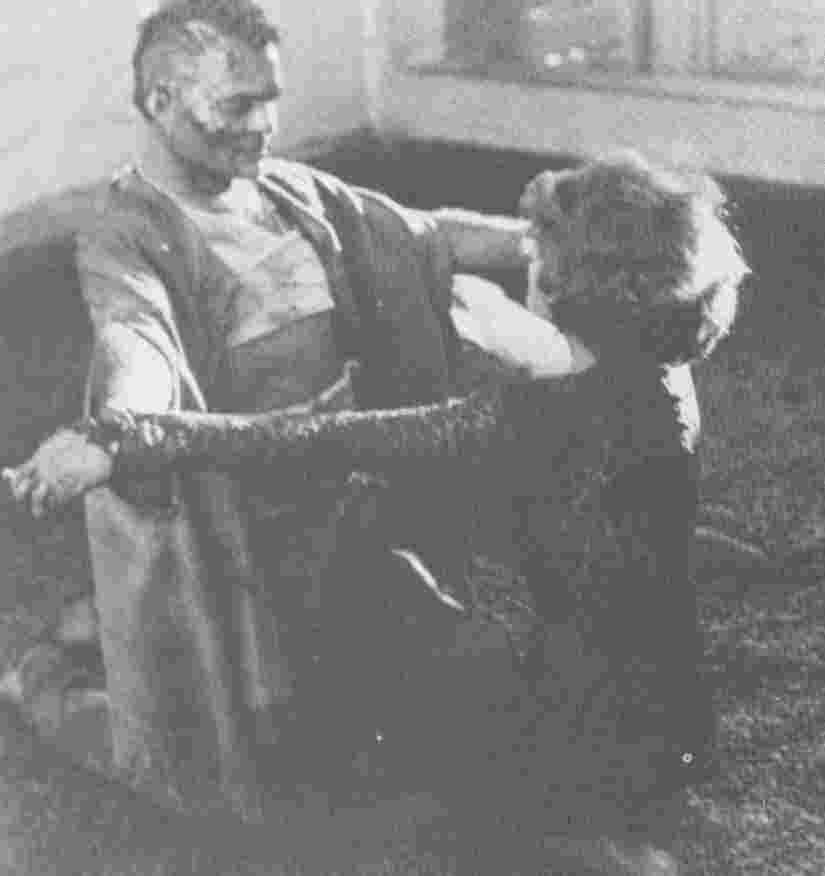
THE
GODS AND THE DEAD
(OS
DEUSES E OS MORTOS)
(Ruy
Guerra, Brazil, 1970)
The man
grievously wronged by the machinations of
the
powerful returns to exact brutal revenge from
each.
A compelling sadness and choreographic
intensity
envelops this moment. Though the man's
gesture
is almost saint-like, one fears incipient
violence;
no good can come from this encounter.
______________________________________________
The
pent-up revolutionary passion, the violent fervor and the
coming explosion of the continent are
evident in this major work.
Told
as a revolutionary epic, it has the hallmarks of the great
Brazilian radical myths, strong, violent
colors, bizarre tableaux,
extreme
stylization, and a total preoccupation with death, blood
and revolution. Luxurious ornate
interiors and sweeping outdoor
scenes
with hundreds of extras embroider a powerful, dense vi-
sual style, but the cubistically told
story is ultimately too diffuse.
Guerra
has given his "gods" anthropomorphic shape, "to make
their obsessions, prostration and despair
more visible", utilizing
elements
of magic derived from African cults. A mixture of baroque
realism and stately expressionism reaches
unexpected levels of
desperation,
ultimately leaving us with acute yet impotent pain
frightening to experience; American
owners of Brazilian tin
mines
(and American liberals) should see this kind of work.
___________________________________________________________________________________________
THE
HEIRS
(OS
HERDEIROS)
(Carlos
Diegues, Brazil, 1968/9) (F)
An
expressionist, at time semi-surrealist
account
of a Brazilian family over the
last
40 years, in the historical impasse
which
the non-revolutionary classes
could
not overcome. A succession of
political
plots, melodramatic upheavals,
and
betrayals capture the violence, color,
and
atavistic strangeness of an opressed,
stagnant
civilization and its victims.
___________________________________________________________________________________________
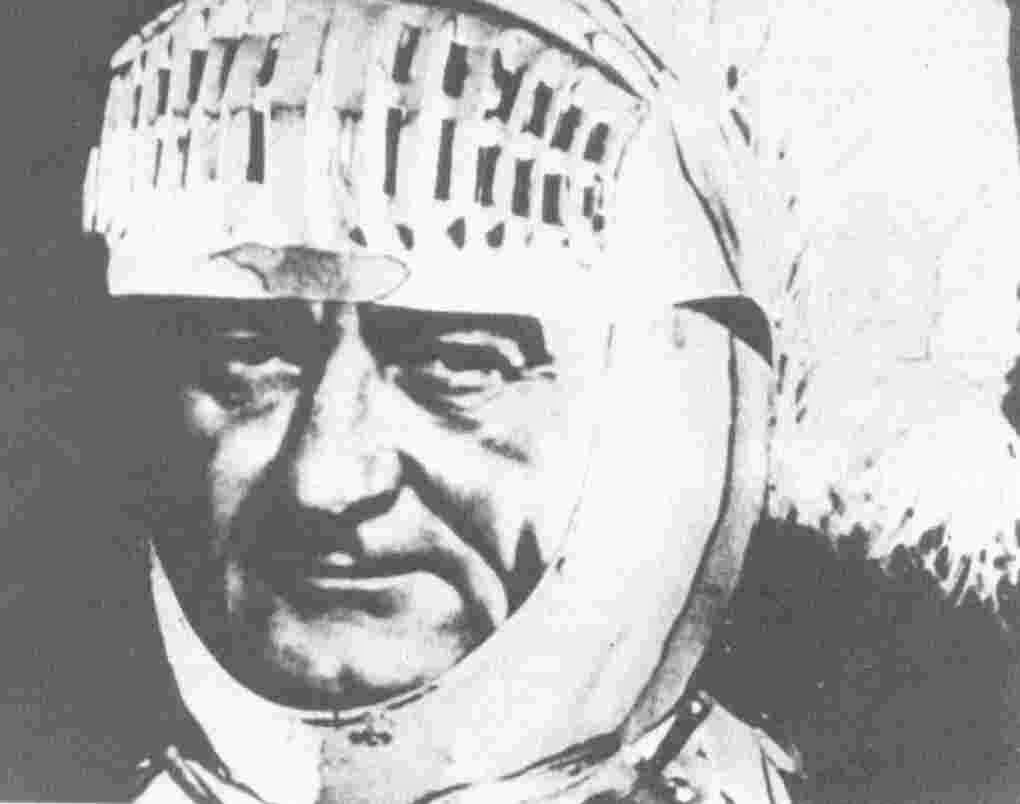
LBJ
(Santiago Alvarez, Cuba, 1968)
Using LBJ's career as matrix,
this hard-hitting propaganda film
is an historical, didactic, poetic,
and satirical comment on American
violence from Wild West days to today.
___________________________________________________________________________________________
MANDABI
(THE
MONEY ORDER)
(Oushane
Sembene, Senegal, 1968) (F)
Ousame
Sembene is Africa's major film talent and this is his best
film. Set in present-day Senegal, it
recounts the adventures of a
dignified,
moneyless Moslem, with two wives and many children,
who
receives a money order from his street-sweeping nephew in Paris.
As he attempts to make use of this
symbol of Western civilization by
cashing
it, it re- venges itself by enmeshing him in a web of missing
birth certificates, unobtainable identity
cards, helpful conmen,
and
deadly French bureaucrats, until the entire amount has been
stolen. At the end, he has to
choose: become a "wolf" like every-
one
else, or help change the country. Sharp naturalistic detail,
ethnographic concerns, militant
anti-imperialism, and robust
humor
characterize this jaundiced view of a man and a society in
transition, in which neither French nor,
significantly, Senegalese
emerge
as heroes. But while this gentle and seditious "comedy"
avoids one-sidedness, it clearly marks
the French imperials as
villains
and the Senegalese as victims. The breaking down of organic,
meaningful, tribal patterns under the
impact of the West is parti-
cularly
well shown. Instead of editorializing about imperialism,
the film reveals it organically in its
implacable storyline. Sembene's
work
marks the emergence of a truly indigenous African cinema.
___________________________________________________________________________________________
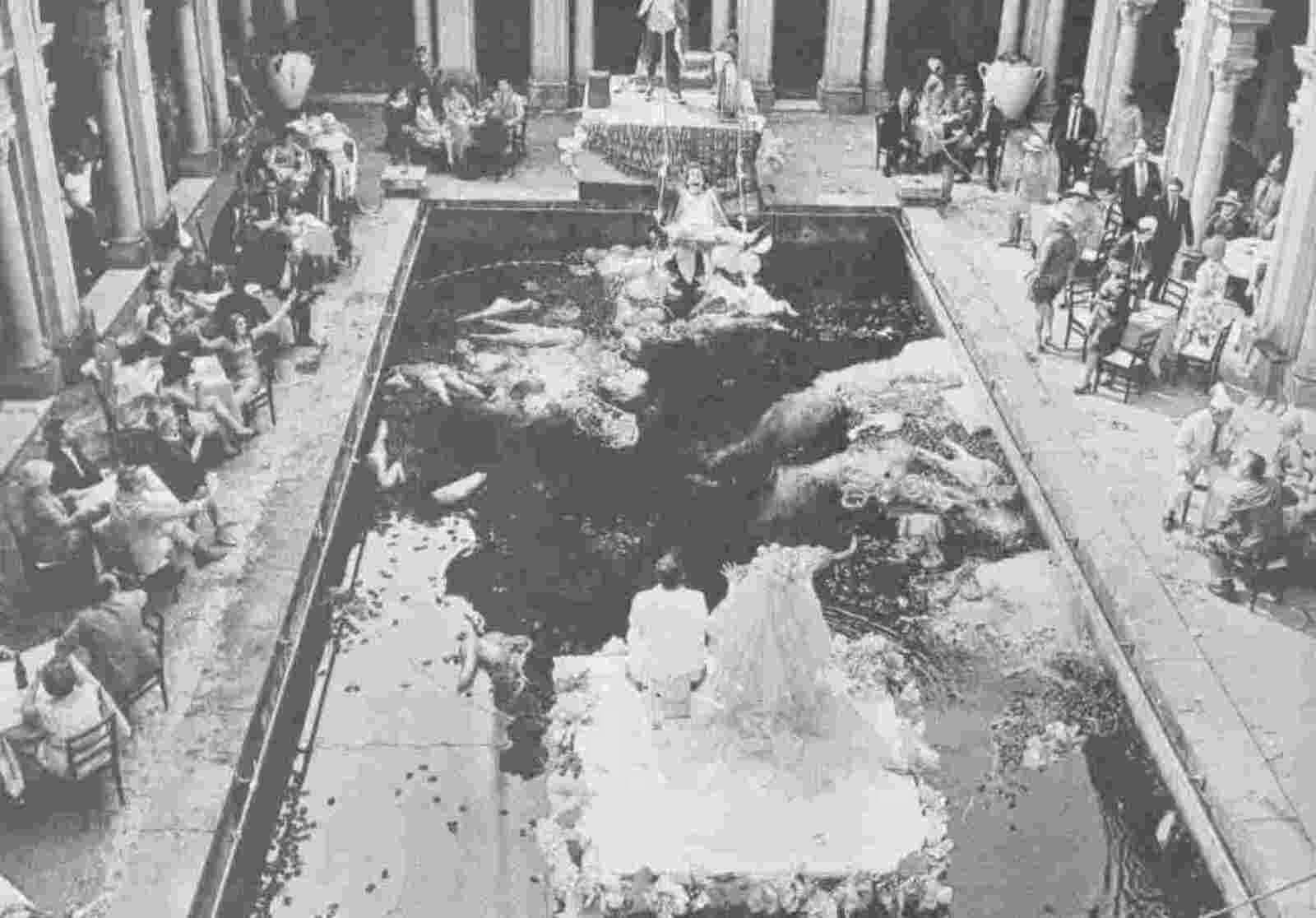
MACUNAIMA
(Joachim Pedro de Andrade, Brazil, 1969)
(F)
The bizarre first
"musical" of the Brazilian Cinema Novo
movement
ends with a gargantuan open-air party, at
which
the assorted bourgeois, precariously dangling
from
trapeze bars, are forced to swing across a piranha-
filled swimming pool, with predictably
colorful results.
______________________________________________
Startling,
bizarre, cynical, sexy, this first musical of the Brazilian
Cinema Novo movement is marked by
all its virtues; modernity,
vigor,
and a radical metaphysics in the service of the revolution.
It is so truly indigenous that its
mysterious delights and
allusions
transform us into voyeurs at an alien feast, to
whose
nuances we reverberate without fully grasping them.
Based
on a key work of the Brazilian modernist movement of the
20s, this ironic Odyssey recounts the
picturesque, Rabelasian mis-
adventures
of a "hero without character", a metaphor of Brazil.
Moving from jungle to urban
guerilla warfare to cannibalism, we
are
transported from realism to the supernatural with an ease that
denotes the presence of true folk art.
Along the way, we witness
Macunaima's
miraculous birth, fully-grown, from beneath the
skirts of a hideous woman standing in a
hut, and watch his periodic
transformations
from an ugly Black-Indian-Portuguese into a
ridiculous
knight, to satisfy the sexual desires of his sister-in-law.
Leaving home, he meets an obliging
cannibal in street clothes, a
ravishing
guerilla fighter who loves red hammocks but unfortu-
nately carries her bombs beneath their
baby lying in its carriage.
A
con-man sells him a magic duck that defecates instead of laying
golden eggs. He gives an impromptu
political speech denouncing mos-
quitoes,
balconies, and smallpox only to be branded as a Communist.
He talks to a vagrant who persuades
him to break his balls and eat them;
but
there are always willing girls to cure him. After a brief stop-over
at a leper colony, the film ends with a
gargantuan open-air party,
at
which assorted bourgeois are forced to swing across a sumptuous
swimming pool filled with piranhas, with
predictably colorful results.
The
visual elegance of the images and decor is as satisfying as the bold
use of striking, sensuous colors and
compositions. The charmingly
bizarre
and "naively sophisticated events and ideas testify to the
presence of a very modern cosmopolitan
sensibility, jaundiced by
corruption
and class privilege, lovingly aware of the true cultural
matrix of his country. To this filmmaker,
the cinema is a medium
of
magic and of revolution: a revolution of attitudes and
character
rather than of
propaganda. A marvelously joyful melange of pop
tunes accompanies Macunaima's incessant
progress to ultimate
defeat:
a charming vulgarity expresses the film's disregard of
puritan conventional values. The
multi-racial mixture of cast,
events,
and bodies totally bypasses the problem of "integration",
and a playful, ideologically-based
cruelty further contributes
to
a truly foreign film experience; not every day are we told in
the cinema that it is "each man for
himself and God against all".
It
would be difficult but not impossible to misunderstand this film as
a harmless dadaist romp. But the
underlying vision is philosophical
and
dark. The main themes are the Little Man as victim (and, still
worse, as accomplice), the world as an
alien and inexplicable place,
the
blind stupidity and implicit cruelty of privilege and class power;
and finally, the need to recapture a
genuine Brazilian folk ethos, a
link
with an indigenous culture free of foreign domination. In all
these respects, Macunaima personifies
the best artistic and social
aspirations
of the Brazilian Cinema Novo movement, that intrepid
and desperate band of directors who
attempted to portray the real
Brazil
and whose risks in making their films were not always financial.
___________________________________________________________________________________________

NOW
(Santiago Alvarez, Cuba, 1965)
A powerful attack on American racialism,
based entirely on newsreel materials and
closely edited to Lena Horne's rendition
of
"Now".
Documentary shots often provide
symbolic
statements: in this case, flag,
stick,
black boy, policeman, and faceless
anonymity
of both generalize an event.
___________________________________________________________________________________________
PRATO
PALOMARES
(Andre
Faria, Brazil, 1970) (F)
This
extraordinary work has the dubious distinction of being
the most famous unseen film of
contemporary world cinema.
Officially
announced at the Cannes Festival for two consecutive
years, it was withdrawn both times due to
pressure by the Brazilian
government.
It is a scream of anguish, a nightmare of defeated revolt,
and repression, an expressionist
confrontation of radical ideology,
self-doubt,
compromise, incorruptibility, and eternal subversion.
Two
cornered, wounded guerillas hiding in a church and a mysterious
woman who joins them form the center of
its delirious tableaux, their
desperate
talks soon superseded by police (abetted by Americans)
who proceed to torture. It is a
tribute to Faria's control over his
materials
that decapitation and the cutting off of tongues and limbs
are accepted as inevitable escalations of
the delirium which forms
the
core of this work. Its cruelty is believable, its paroxysms
necessary,
its metaphors an
extension of Cinema Novo, of which it may be the
swan song; yet, with one guerilla
decapitated and the other co-opted,
the
woman, who never compromised, continues the struggle --
now mute and without hands -- for a
revolution without words.
___________________________________________________________________________________________
QUE
HACER?
(Saul
Landau, James Becket, Raul Ruiz,
Nina
Serrano, Chile-USA, 1970)
A
successful attempt at political cinema by a Chilean-
American film collective. Centering on
the period
of Allende's
election, the film interweaves reality
(documentary
footage), political fiction (a Peace Corps
girl,
a political kidnapping, Maoists, and the CIA), and,
on
a third level, the filmmakers themselves, breaking into
the continuity of the work.
Provocative, fast-moving, and
well-edited,
this is a serious discussion film which, despite
the
clear sympathies of its makers, establishes a certain
objectivity that distinguishes it from
propaganda.
___________________________________________________________________________________________
REED:
MEXICO INSURGENT
(REED:
MEXICO INSURGENTE)
(Paul
Leduc, Mexico, 1971) (F)
This
film is a notable, oblique work of great subtlety.
With
John Reed, the left-wing American journalist, we
enter,
stage by stage, into the true realities of the Mexican
(or any other) revolution: lulls
and confusions, fallible
(that
is, human) leaders , bumpy roads, unexpected
death,
sudden friendships, and meandering half-actions.
This
is what it must have been like. The sentiment is
anti-conventional, anti-folklorist, anti-
sentimental,
anti-heroic; and,
therefore, closer to revolutionary
reality.
As the film progresses, Reed -- who had planned
to
"cover an event" he sympathized with -- realizes
that he must turn participant; at the
end, in a beau-
tifully caught
small gesture, he throws a solitary
rock
at a store window, and becomes a revolutionist.
___________________________________________________________________________________________
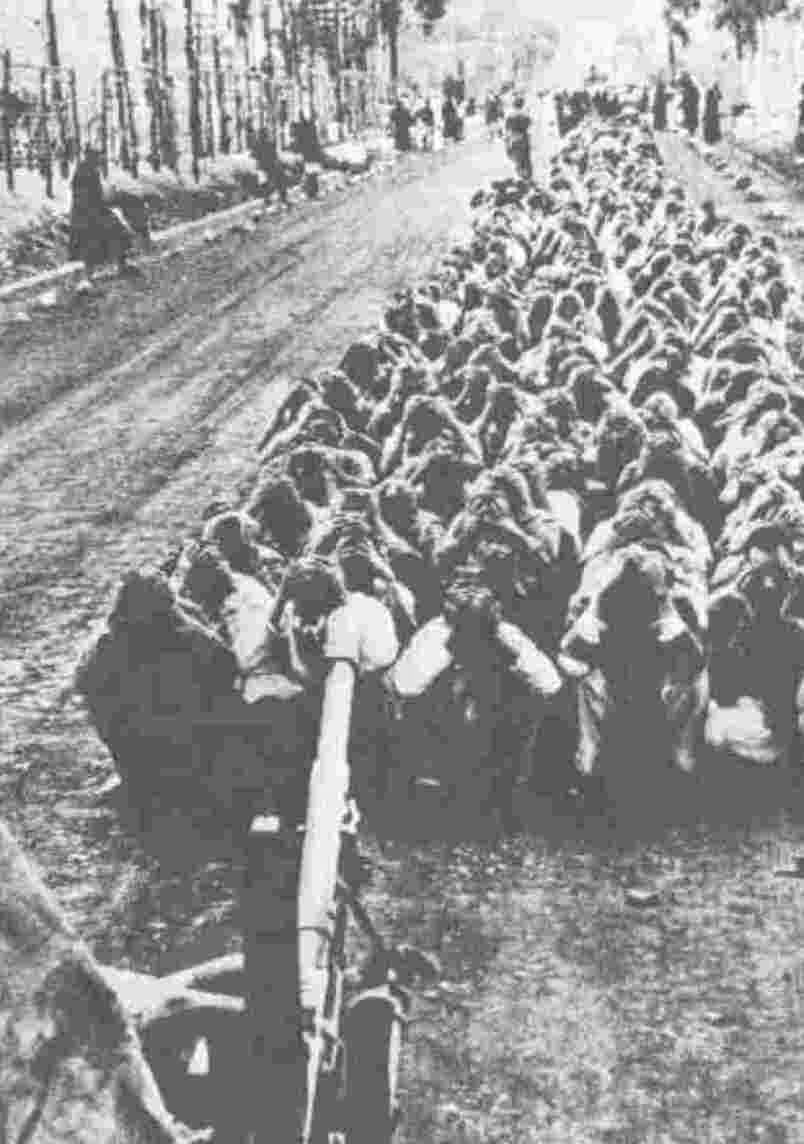
THE
TWILIGHT OF THE DAMNED
(Ahmed
Rachedi, Algeria, 1970)
This,
too, is part of man's history. Under a French
gun,
Algerians are victimized in their own country.
Nothing
is prettified in this documentary shot.
The
anonymity of victims and victimizers, the
ominous
greys and blacks, the air of unhealthy
anticipation
and incipient violence render the
precise
quality of a moment of historical time.
___________________________________________________________________________________________
THE
SECRET FORMULA
(LA
FORMULA SECRETA)
(Ruben
Gomez, Mexico, 1966) (F)
Strange,
semi-surrealist nightmares -- somehow
related
to Mexican realities -- form the matrix
of
this work. A corpse is carried on a flour truck,
a
boy knifes a cow, a couple kiss before a blood-
bespattered wall, clerical students
imitated the
crucifixion.
Perhaps the best scene is of a Mexican
staring
out silently toward the Mexican plateaux;
after
a while, the camera pans away from him, to
concentrate
on the landscape. Stubbornly he
re-enters
the frame and assumes his former
position,
the camera pulls away again, and
again
he returns ... a perfect visual metaphor.
___________________________________________________________________________________________
79
SPRINGTIMES
(79
PRIMAVERAS)
(Santiago
Alvarez, Cuba, 1969)
A film
tribute, upon his death, to Ho Chi Minh,
by
Cuba's best documentary filmmaker. Avoiding
"official"
reverence and propagandistic sentimentality,
the
film provides a moving portrait of Ho from youth
to
old age, showing him as an early revolutionist,
a
modest student, a man on a donkey, a man at a
typewriter thinking. The crimes of
the Americans,
in documentary
shots, are cross-cut with Ho's
funeral
amidst moving expressions of popular grief.
___________________________________________________________________________________________
TIME
OF VIOLENCE
(TEMPO
DI VIOLENCIA)
(Anonymous,
Argentina, 1970)
Produced
illegally, this is a radical, anti-
American
agit-prop documentary, filled
with
amazing sequences of large-scale,
violent,
unreported street riots in several
Argentinian
cities. The film is a testimony
to
the power of censorship -- and the need
for
clandestine filmmakers to counteract it.
___________________________________________________________________________________________
THE
HOUR OF THE BLAST FURNACES
(LA
HORA DE LOS HORNOS)
(Fernando
Solanas, Argentina, 1967) (F)
This
subversive masterpiece -- a shattering indictment of Amer-
ican imperialism in South America -- is a
brilliant tour de force
of
tumultuous images, sophisticated montage, and sledgehammer
titles, fused into a passionate onslaught
of radical provocation
to olt
the spectator to a new level of consciousness. Here is a
Marxist film that "rocks":
a proudly subjective, passionately
dogmatic,
totally conscious plea for violent revolution.
The
first sequence sets the tone. Accompanied by strident drums,
a barrage of images of street violence,
flashing by at extreme
speed,
singly or in clusters is intercut with black, blank frames
and a rapid- fire succession of highly
political, incendiary
titles
which (as in Eisenstein's work) become integral
components of the work. They burst
into the action from
right or
left, from above or below, all the while catapulting
the
ideological argument forward as if they were sticks of
dynamite. Together with the violent,
impressionist images,
monstrous
statictics, and a montage both brilliant and ten-
dentious, they create a poem of revolt, a
compendium of the
best modern
film techniques in the service of the revolution.
There
are unforgettable, searing images: child beggars running
alongside a train in a desperate attempt
to keep up with it, so
that
blase passengers might reward them with pennies; in an
outdoor hovel, a young prostitute, her
pubic area exposed,
waiting
zombie-like; the Argentinian elite -- not exaggerated
types (as in Eisenstein's films) but
elegant people, the more
horrifying
for being "nice"; and a monstrous cemetery for
the rich, in which hundreds of huge
headstones and crypts,
each
larger than life-size, merge into a spectacular expres-
sionist set of a mythical city. The
most disturbing sequence
attacks
the throttling of indigenous culture by the sheer weight
of the dominant, "alien"
Western civilization, so dear and so
inviolable
to us: Renoir, go-go girls, the Sistine Chapel, Coca-
Cola, the Parthenon, and Michelangelo are
presented as neo-
colonialist
tools to depoliticalize the masses and render them
apathetic. The film ends with one
of the most daring examples
of
minimal cinema for political ends ever: a close-up of Che's
face in death, hovering over us,
immobile, for a full 3 minutes.
The
camera never moves. The image is eternal. We are forced
to contemplate the challenge of this
man's life and death.
Here,
then, is a film that states clearly what the Latin radical
intellectual thinks. It is an
inescapable, shattering confrontation
that
also explains the atavistic, "alien" and indigenous
violence
behind the Brazilian
Cinema Novo movement and such films
as
Antonio-Das-Mortes. But what is the presumed audience?
The very sophistication of its structure
and narration -- for
example,
its repeated use of the term "Balkanization" of Latin
America -- precludes its use with the
masses and stamps it as
a work
for intellectuals, students, and the already convinced.
To others, its facts resemble
allegations, its revolutionary
purity
dogmatism and its transformation of images
into
polemic through editing, demagogic distortion. SC
______________________________________________

THE
HOUR OF THE BLAST FURNACES
(LA
HORA DE LOS HORNOS)
(Fernando
Solanas, Argentina, 1967) (F)
A
subversive masterpiece of Third World radical
cinema
ends with an example of minimal art in
the
service of politics; a close-up of Che's face
in
death, hovering over the viewer, immobile,
for
fully 3 minutes. The image is eternal. SC