FILM
- AS A -
SUBVERSIVE ART
IT
HAPPENED HERE
(Kevin
Brownlow and Andrew Mollo, Great Britain, 1964)
A
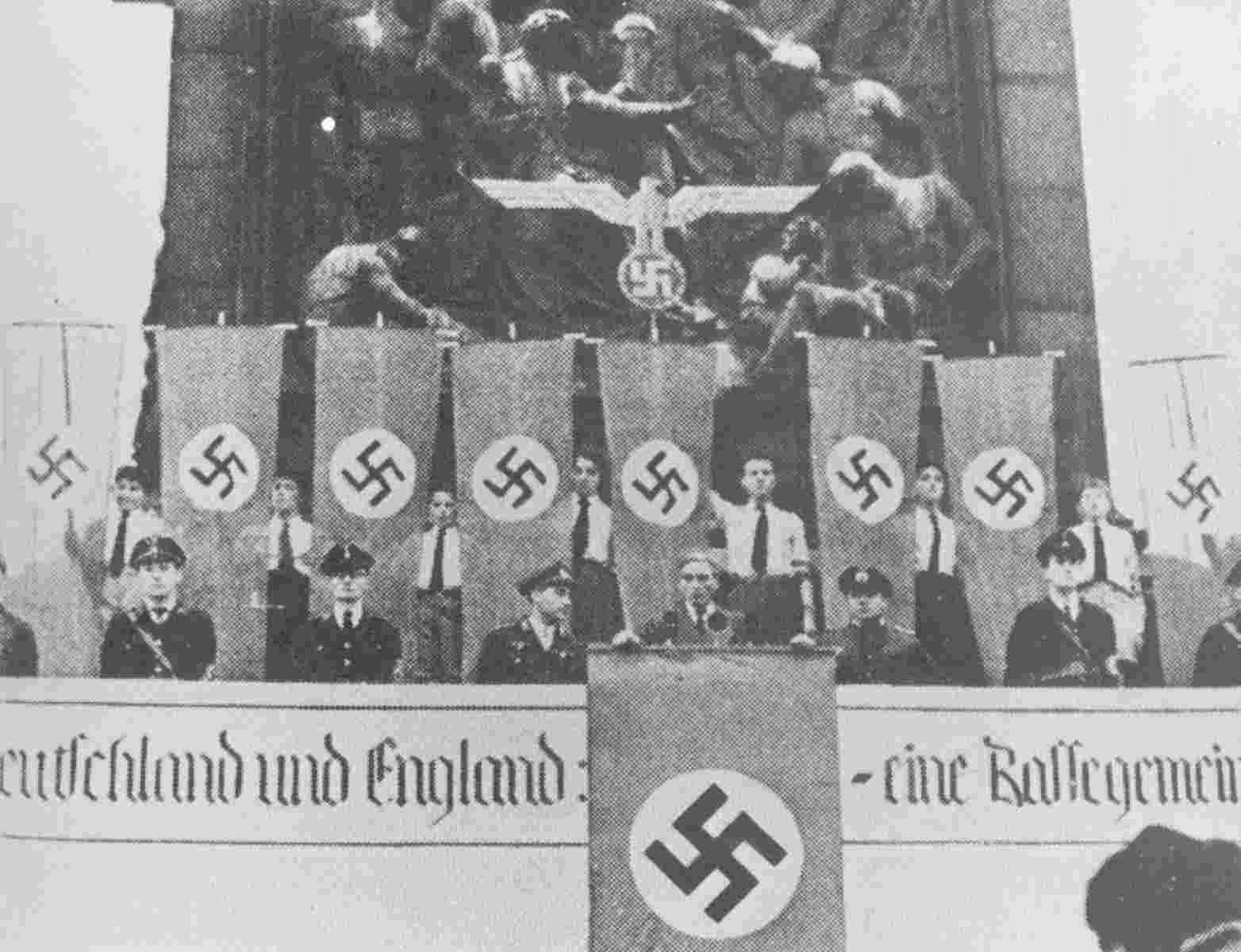
disturbing reconstruction of what life in
Great
Britain might have been like if Germany
had
won Second World War. The reviewing stand,
crowded
with British fascists, features the slogan
of
"Germany and England -- a community of race."
Even more unsettling than this image is
the
film's courageously
appropriate assertion
that
fascism is possibly anywhere.
THE
WEST: REBELS, MAOISTS,
AND
THE NEW GODARD
-
PART ONE -
FILMS
THE
BATTLE OF ALGIERS
(Gille
Pontecorvo, Italy, 1966) (F)
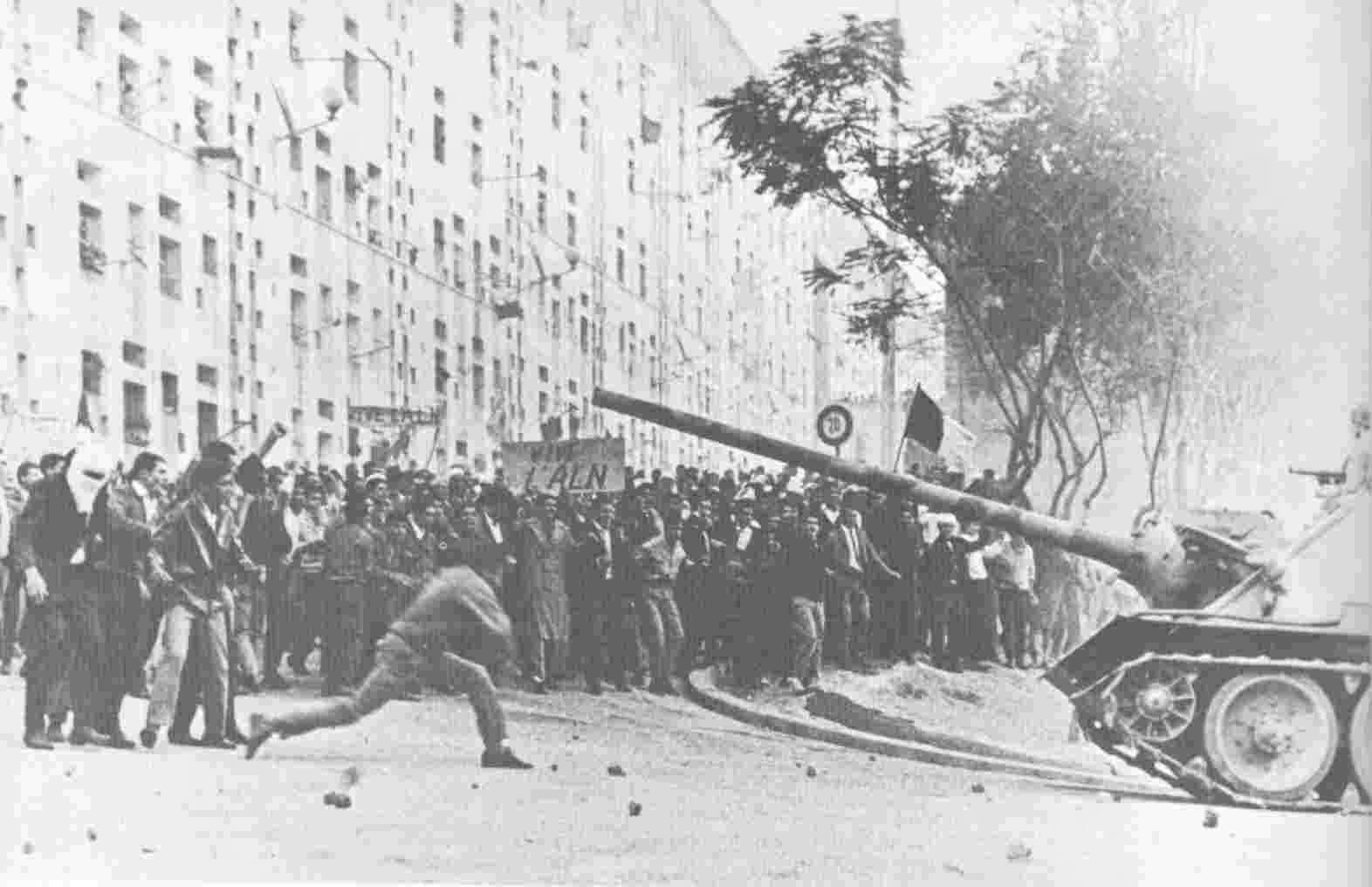
Confrontation
between Algerian nationalists
and
French army during the Algerian civil
war.
high-contrast photography, hand-held
camera,
slightly blurred motion in foreground
gives
this moment the ambience of an authentic
newsreel
shot; yet it was entirely staged.
______________________________________________
Because
of its perfect fusion of form and content, this is one of
the most strikingly successful subversive
films ever made. Its
revolutionary
fervor -- though subtly muted by a compassionate
humanism
that embraces both camps -- is pure and passionate.
Without Pontecorvo's control over his
plastic material, however,
it
would have remained ineffectual. Incredibly, this huge
"documentary" of the Algerian
struggle against the French --
street
battles, bombings, riots, mass strikes, assassinations --
was entirely staged, and made to resemble
authentic newsreel
shots by
the use of high-contrast, high-grade film stock, handheld
cameras, and intentional jump-cuts.
The cruelty of torture, the
arrogance
of the fascist French paratroopers, the escalating
terrorism and mutual reprisals, plots and
counterplots mount
to a
masterful final sequence of poetic symbolism: the Algerian
masses, leaderless after the destruction
of the National Liberation
Front,
once again surge into the streets in a spontaneous, powerful
demonstration, reaffirming that the will
to freedom does not die.
Their
confrontation with the French military is classic in concept
and execution and reminiscent of early
Soviet cinema: the steady,
drum-like
chants for independence of the swaying possessed mass,
the young woman with flags, the soldiers
slowly retreating, the music
reaching
towards a crescendo but symbolically ending before the final beat.
______________________________________________
THE
BATTLE OF ALGIERS
(Gille
Pontecorvo, Italy, 1966) (F)
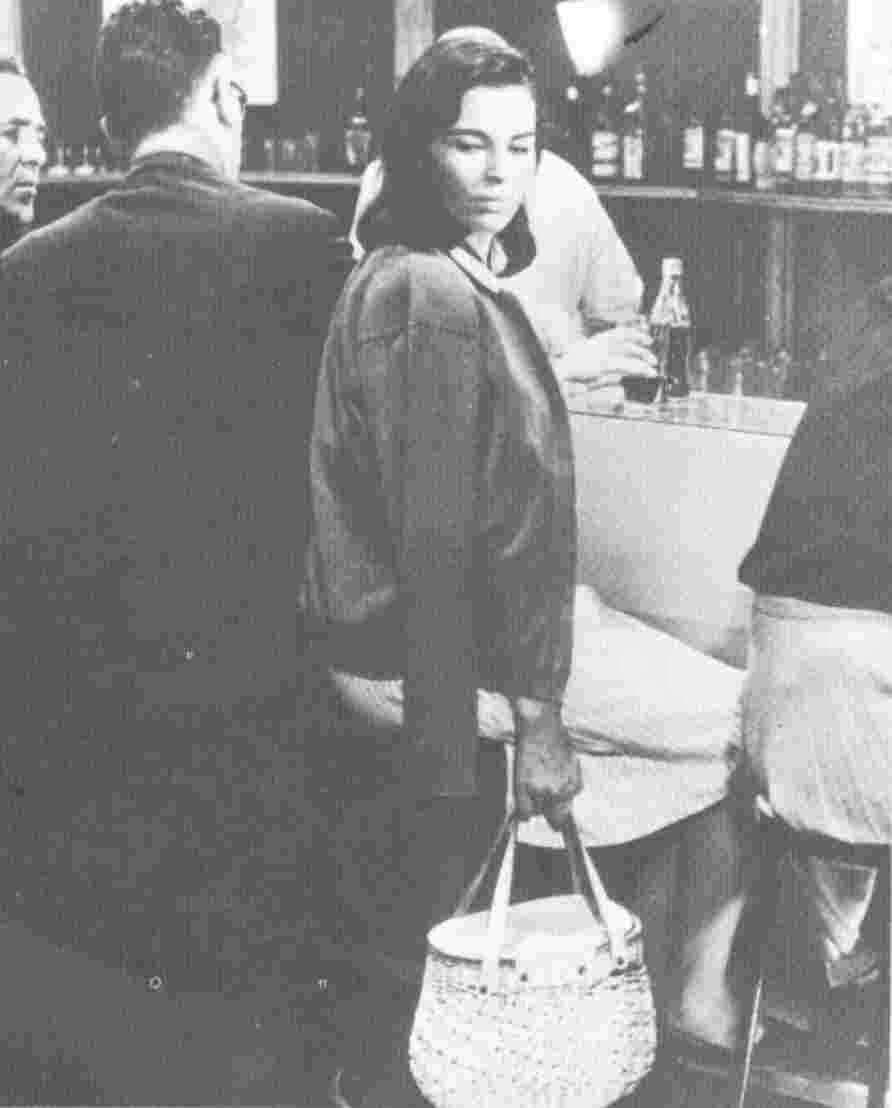
The
guerilla fighter minutes before the bomb in her
handbag
will explode in this crowded French cafe.
As
she glances around, we experience the moral issue:
these
people (innocent? guilty?) including women and
children,
will die by her hand. She does not hesitate,
but
her glance reaffirms her humanity and anguish.
_____________________________________________-_____________________________________________
THE
BELLS OF SILESIA
(DAS
UNHEIL)
(Peter
Fleischmann, West Germany, 1972) (F)
This
obsessional, pessimistic work about present-day
Germany
by implication extends its pervasive hatred
of
bourgeois values to the entire world. Beginning as a
study of a young man's neurosis, it ends
by declaring him
sane in an
insane world. Priests, teachers, capitalists,
and
police are seen as integral parts of a mindless ruling
class; the compromises, cowardice,
and undigested Nazism
of the
older generation are as mercilessly portrayed as the
vapidity and provincialism of the young.
An abrupt narrative
style --
with scenes frequently starting or ending in the middle
of the action -- permits the filmmaker to
build up to an odious,
cumulative
ending, in which the post-war German "economic
miracle" (with its encrustations of
reactionary past and
its
absorption in consumer goods) is experienced as
a
nightmare from which one cannot awaken.
_____________________________________________-_____________________________________________
BLACK
PANTHERS
(Agnes
Varda, USA, 1969)
A
significant (now tragically nostalgic) memento of
America's militant Black movement of the
sixties --
its leaders, its
meetings, its prisoners -- by the
distinguished
French woman director. Sympa-
thetically
observing an American phenomenon,
she
correctly senses its universal aspects.
_____________________________________________-_____________________________________________
THE
BRIG
(Jonas
Mekas, USA, 1964)
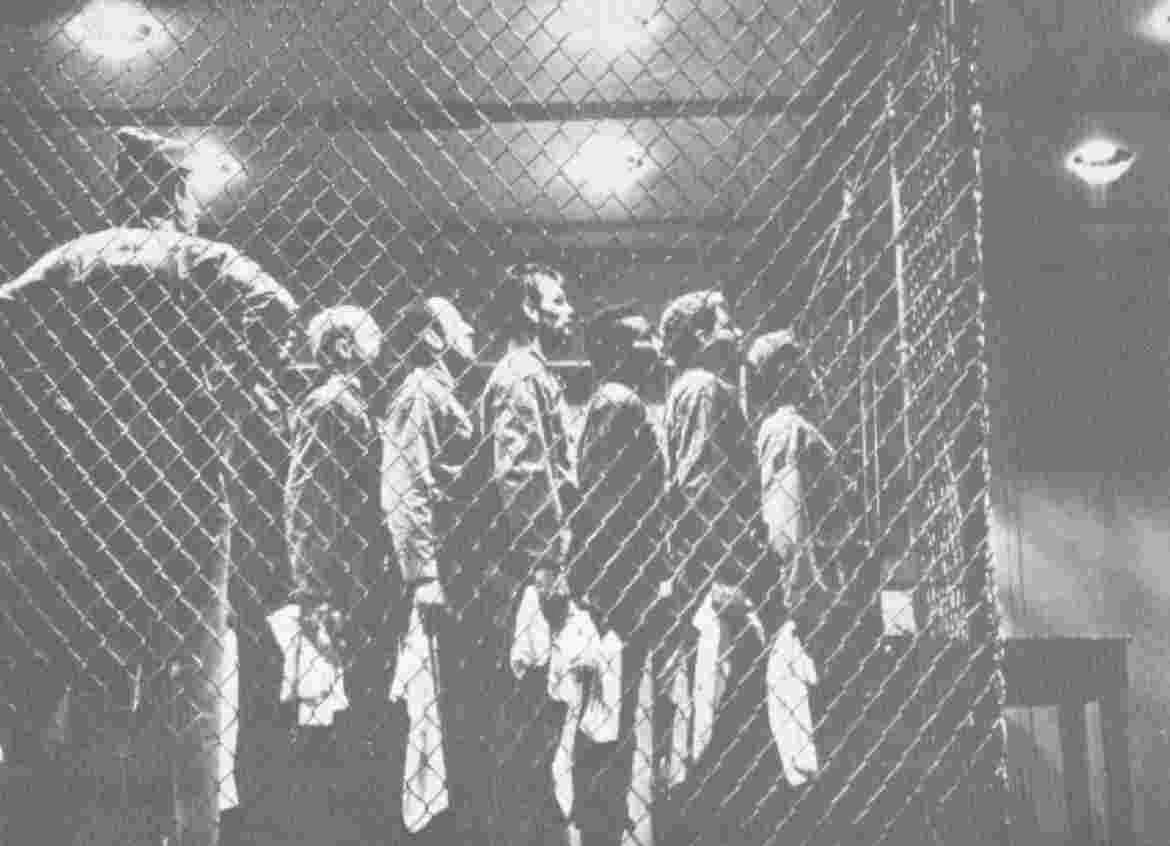
Caged men,
under glaring lights, fearfully at
attention;
the Living Theatre's brutal documen-
tary
portrayal of life in a military jail tortured the
audience with its incessant, obsessive,
unrelieved
degradation of the
men. A handheld camera, deeply
involved
as if a prisoner itself, transforms it into
valid
radical cinema, leaving the viewer drained. SC
_____________________________________________-_____________________________________________
THE
CRY OF JAZZ
(Edward
Bland, USA, 1959)
Forerunner
of black militancy, this angry, radical,
and
deliberately abrasive work (made by young
Black
intellectuals) explodes in passionate outbursts
about
the death of jazz at the hands of the Whites
and
the suffering of the Black race. It postulates
that
the Black is the conscience of America
and
will liberate it. An historic document.
_____________________________________________-_____________________________________________
DEADLINE
FOR ACTION
(Union
Films, USA, 1948?)
This is a
unique example of radical left-wing
propaganda
by a trade union then under
Communist
control (United Electrical
Workers
of America); it traces high prices
and
lay-offs to the "trustification"
of
Big Business and to capitalism.
_____________________________________________-_____________________________________________
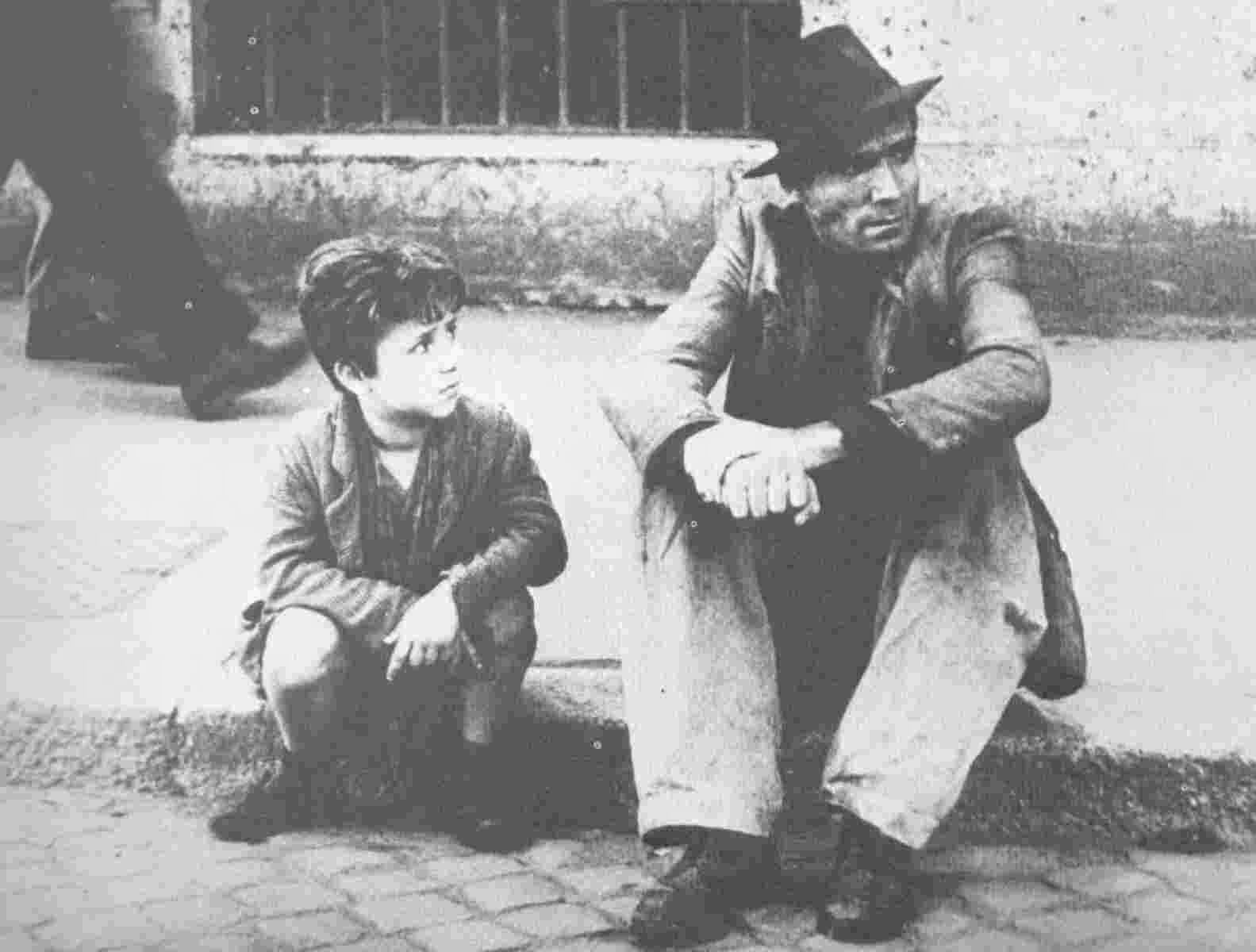
THE
BICYCLE THIEF
(Vittorio
de Sica, Italy, 1949) (F)
Non-professionals,
actual locales, the plight
of
the people: this total rejection of decadent
fascist cinema is at the heart of Italian
Neorealism.
In De Sica's
humanist masterpiece, the unemployed
father,
unable to work because his bike has been stolen,
attempts
to retrieve it, but after endless heartbreak,
is
himself forced into stealing one to live. Caught, he
is degraded in front of his son, with him
throughout;
instead of
rejecting him, the boy takes his hand
as
they disappear into the multitude.
_____________________________________________-_____________________________________________
DELAWARE
(Newsreel film collective, USA, 1968/69)
One of the best of many political films
made by "Newsreel",
the
radical-left American film collective. This is a carefully
constructed expose of the complete
control exercised over
the
State of Delaware by Dupont, one of America's corporate
giants, through its domination of
schools, media, political
parties
and pre-eminent position within the power structure.
_____________________________________________-_____________________________________________
EIGHT
FLAGS FOR 99 CENTS
(Charles
Olin, USA, 1970)
A
professional, intelligent montage of brief interviews
with America's so-called "silent
majority", indicating
that,
as of 1970, Middle America was as opposed to the
Vietnamese war as the anti-war movement.
This is an
excellent example
of the non-propagandistic approach
that
yet serves a clear ideological (and subversive) purpose.
_____________________________________________-_____________________________________________
AN
EVIL HOUR
(Peter
Wolff, USA, 1970)
A
horrifying, compassionate documentary of
what
the Vietnamese war has done to the children.
It
shows pickpockets, pimps, shoeshine boys,
roaming
gangs, drunks, and orphans; sad, old
faces;
children burned by napalm, with limbs
missing,
festering sores, abandoned, rocking.
_____________________________________________-_____________________________________________
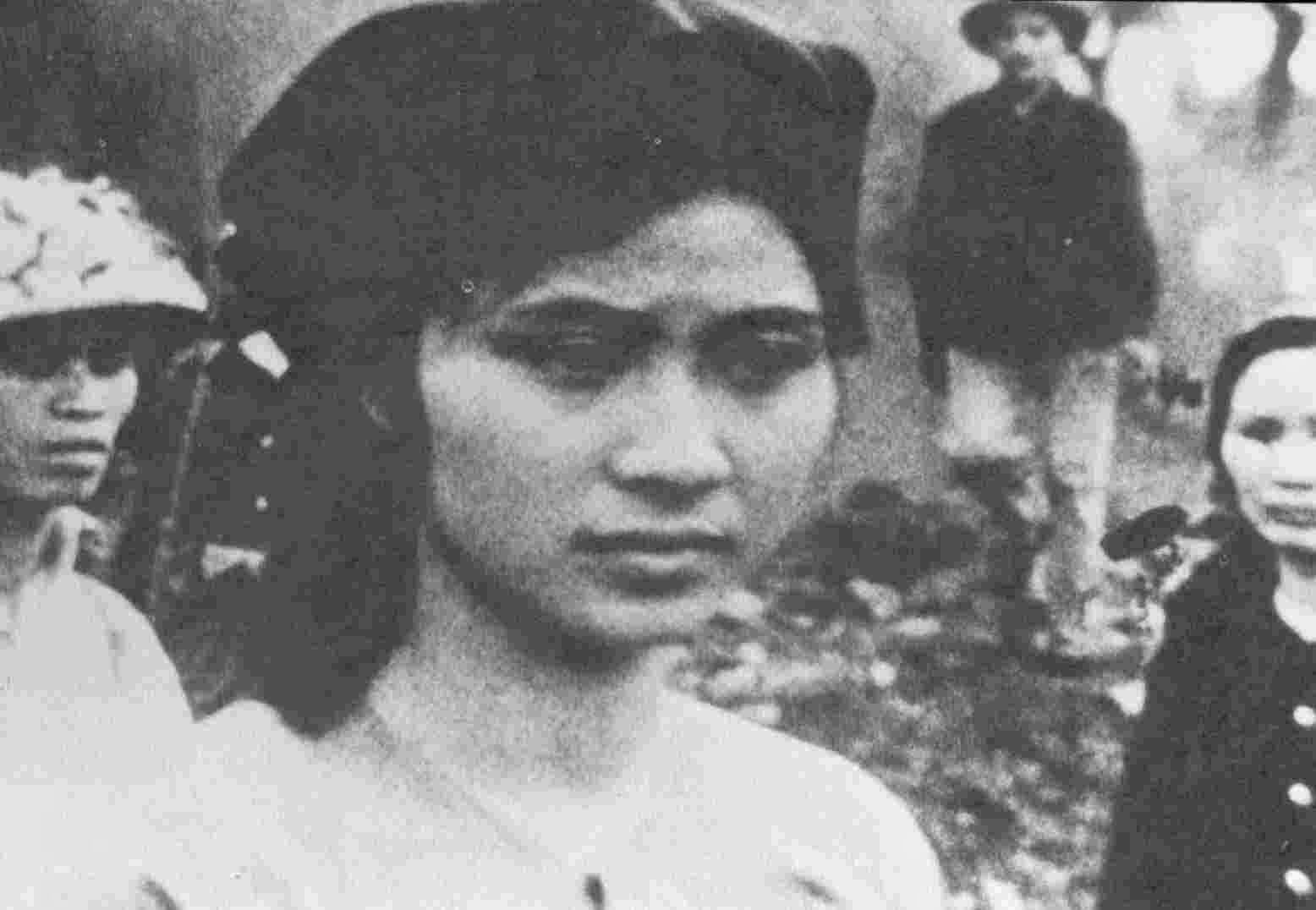
FAR
FROM VIETNAM
(various
directors, France, 1965)
It is
possible that this newsreel image will live a
very
long time, for without having been staged by
some
"political" filmmaker, it reflects the sadness,
determination, dignity, and literal
"presence"
of this
unfortunate people. It also found its way
into
the anti-war film made by Resnais, Varda,
Godard,
Marker, Klein, Ivens and Lelouch to
show
their solidarity with the North Vietnamese.
_____________________________________________-_____________________________________________
THE
GREAT SOCIETY
(Fred
Mogubgub, USA, 1967?)
To the
strains of "The Battle Hymn of the Republic",
and at the approximate rate of one image
per second,
the filmmaker,
without further comment, presents
head-on
shots of an endless barrage of American
consumer
goods, packed, frozen, canned or bottled.
_____________________________________________-_____________________________________________
GUIDEBOOK
TO BONN AND ENVIRONS
(STADTFUHRER
FUR BONN UND UMGEBUNG)
(Manfred
Vosz, West Germany, 1969)
Inspired
by Thorndike's similar East German films,
this
is a carefully researched, professionally executed
indictment of the West German government
bureaucracy,
proving that many
of its members -- individually shown
and
identified -- had served in the same capacity under
the
Nazis. A barrage of official documents, incriminating
photographs and Nazi newsreels
substantiate the argument.
_____________________________________________-_____________________________________________
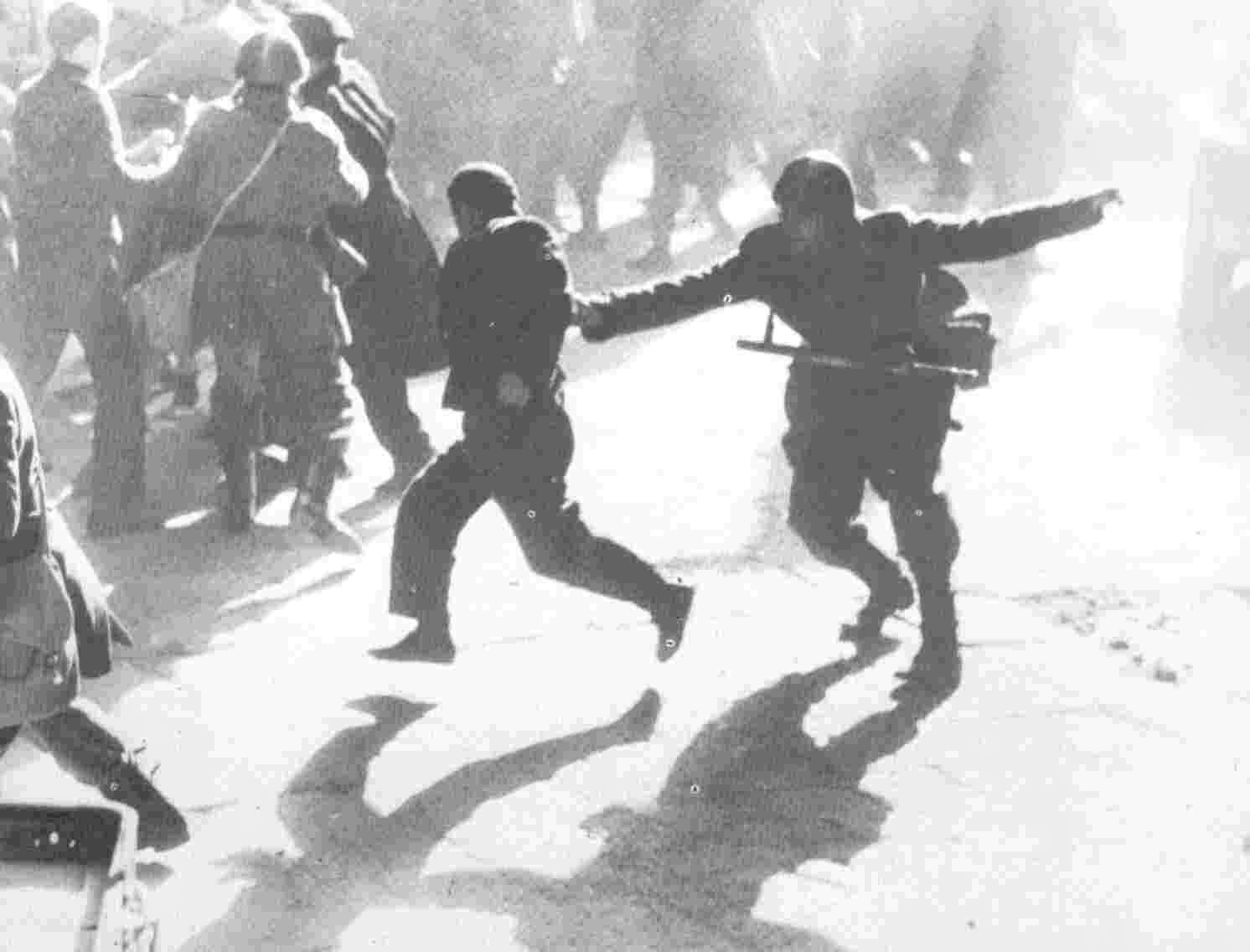
HANDS
OVER THE CITY
(Francesco
Rosi, Italy, 1963) (F)
The
eternal, archetypal image, here brilliantly
staged:
the rioter (his cap identifying him, in Europe,
as
a worker) and the militia- man, trapped in an
eternal
ballet, surrounded by light, shadows, dust,
and
other violence. In this, one of the best political
films
of post-war Europe, the issue is housing
scandals
and parliamentary manipulation, all
deriving
from the profit motive and capitalism.
_____________________________________________-_____________________________________________
HAIL
(Fred Levinson, USA, 1971) (F)
A full-scale production by a previously
unknown director,
very
professional and elaborate. This is a fast-moving and
interesting, if superficial, political
fiction of an attempted
coup
d'etat against an American President moving towards
fascism. The plot soon
reveals the ideological shallowness of
the
script, with a denouement both exciting and dissatisfying;
the problem of fascism is reduced to the
level of individuals,
and
neither analysis nor context is provided. But we must
be grateful to any filmmaker who
reassures us that the
American
eagle appears on the doors of Presidential toilets. SC
_____________________________________________-_____________________________________________
THE
HAMBURG OCTOBER 1923 INSURRECTION
(DER
HAMBURGER AUFSTAND OCTOBER 1923)
(Reiner
Etz, Gisela Tuchtenhagen,
Klaus
Wildenhahn, West Germany, 1972)
Unlike
fictional portrayals of revolutionary problems, this
fascinating cinema verite study presents
a factual record
of the
abortive 1923 Communist coup by introducing 20
survivors, now in their seventies and
still Communists. It is
an
important experience for once to confront Germans of an
age-group usually considered hopelessly
compromised and
to discover
anti-fascists discussing the class struggle. This
moving
tribute by a new generation to an old is nothing
less
than an attempt at a radical history lesson for the
young, marred by its lack of analysis of
Stalinism.
_____________________________________________-_____________________________________________
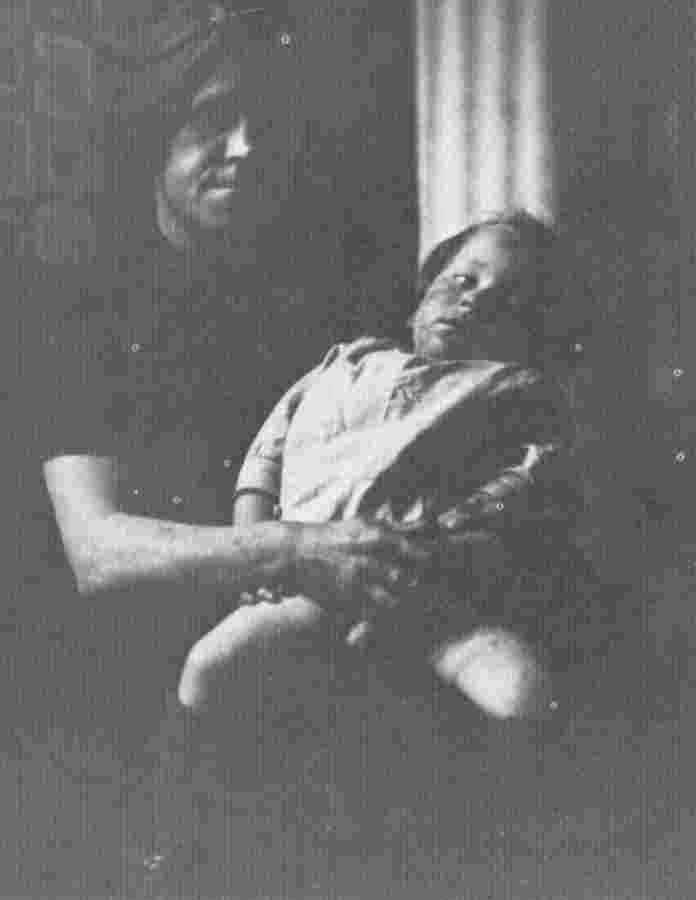
BORINAGE
(Joris Ivens and Henri Storck, Belgium.
1933)
Seldom has proletarian
poverty been so brutally
seen
as in this pro-Communist documentary classic
of
a Belgian miners' strike in the 30s. Intentionally
eschewing the "aesthetic", the
filmmakers nevertheless
cannot
resist an "unconscious" structuring of this
shot: the lighting, sadness, and
positioning of the
child and
the mother's worn, protective hand.
_____________________________________________-_____________________________________________
HOG
CALLING BLUES
(Neal
Pace, USA, 1969)
Unlike slick
propaganda films or carefully manufactured
political
indictments, this is a cry of anguish by the young
filmmaker at Vietnam and the Kent State
University killings
of
anti-war students by the military. Two young men first
decorate a dead pig, placed
on an American flag, and then
(with
disjointed expressions of anger, impotence, anguish)
remove its eyes, cut off its ears,
furiously smash into it
with
an axe. Finally, shoving the flag into the carcass
from behind, they cut off its head:
"The Pig Is Dead".
_____________________________________________-_____________________________________________
ICE
(Robert Kramer, USA, 1970) (F)
This film coolly extrapolates twenty
years into the American
future
to discover urban guerillas in the streets and glass-and-
marble buildings of New York, at war
against a fascist regime.
A
microcosm of personalities, trends, and problems of today's
New Left projected into a very possible
future, the film deals
with
regional offensives, assassinations, terror and counter-
terror, dedication, weariness, betrayal.
Directed by a leader
of the
radical-left documentary film group "Newsreel", it also
hints at the human limitations of its
heroes and displays an
ideologically
interesting ambiguity (if not sadness) toward
them;
significantly, all talk about ideas and causes has been
superseded by discussions of tactics and
terror, as if the
revolution
was merely a matter of efficient technology.
The
ultimate irony is that the film was financed by the
very
official, Hollywood-backed American Film Institute.
_____________________________________________-_____________________________________________
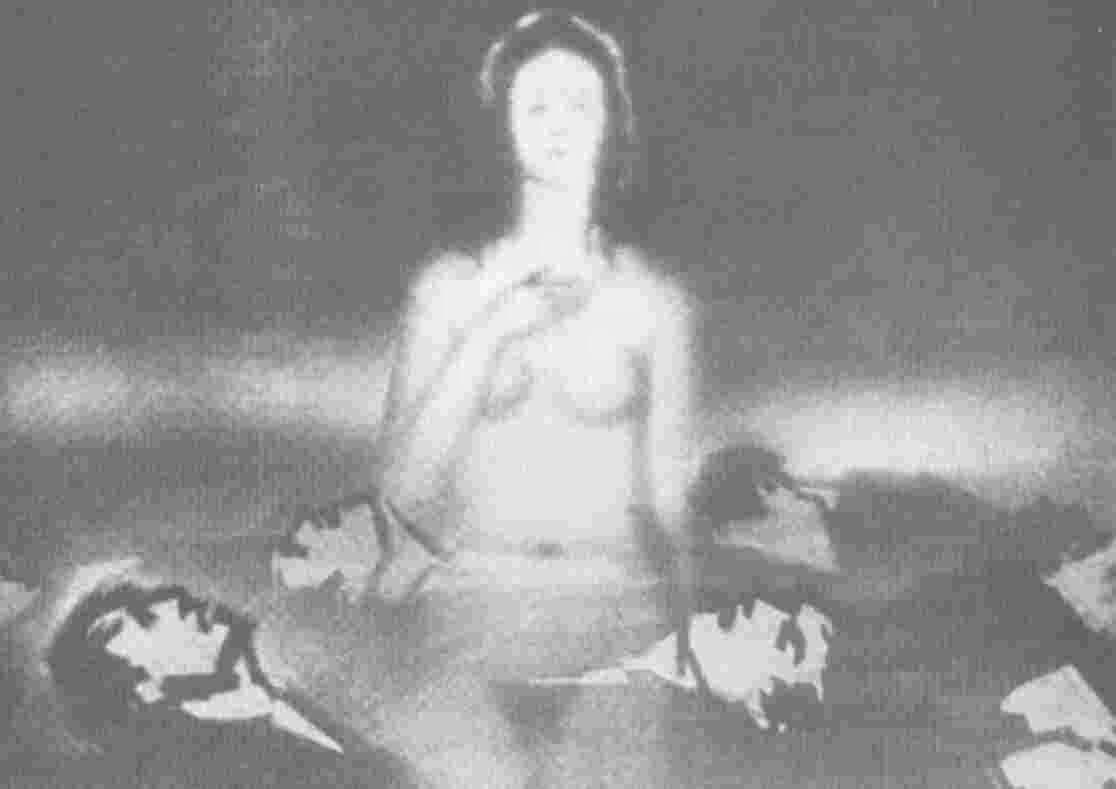
THE
IDEA
(Berthold
Bartosch, France, 1931)
Based
on Frans Mesareel's famed woodcuts,
this
animated film classic was the first trick film
with
a radical film: a revolutionary idea (in the
shape
of a nude woman) is conceived by the artist,
condemned
by the world, the rich, and the church,
but
lives on, forever stirring men to revolt.
_____________________________________________-_____________________________________________
I'M
A MAN
(Peter
Rosen, USA, 1969)
In a
symbolic gesture towards self-realization
and
manhood, a highly sophisticated American
Black
militant walks through New Haven in African
tribal
costume, brandishing a huge spear, and forcing
Whites
-- for the first time, he feels -- to react to him
instead of vice versa: the experiment's
originality becomes
evident in
cinema verite confrontations and interviews.
_____________________________________________-_____________________________________________
I'M
GOING TO GIVE YOU ALL MY LOVE
(Jerrold
Peil, USA, 1971)
US Navy
footage permits us to participate in Vietnam bombing
runs, as the plane's camera follows the
inexorable trajectory
of
air-to-surface rockets to their destination: the huts,
woods, people of Vietnam. Combined
with a rock love
ballad, the
eerie shots of bombs bursting like brilliant
orange
flowers give the film a visually pornographic quality.
_____________________________________________-_____________________________________________
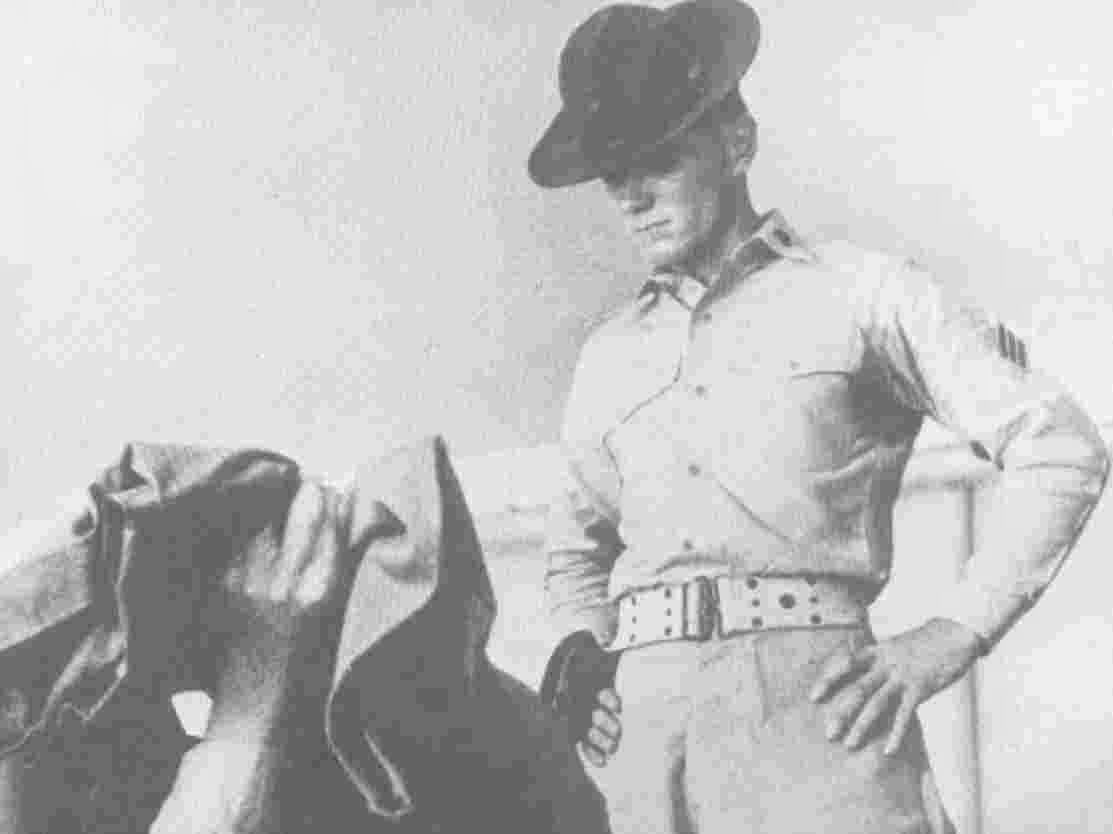
LES
MARINES
(Francois
Reichenbach, Franc, 1957)
A
Marine sergeant towers over an anonymous recruit,
an
appropriate image from a terrifying documentary
about
the training of American Marines, made by
a
French director with inexplicable Department
of
Defense permission. Brutalization, systematic
destruction
of willpower, sadism: incipient fascism.
_____________________________________________-_____________________________________________
LAND
WITHOUT BREAD
(LAS
HURDES)
(Luis
Bunuel, Spain, 1932)
It
"seems" to be -- and is -- a "documentary":
in this case
of a part of
Spain so impoverished as to approach barbarism.
But
the film was made by Bunuel and, to convey the truth that
must be seared into our consciousness, he
spares us nothing.
A donkey is
attacked by bees and dies -- they settle on his now
blank
eyes; skeleton-like children in rags; cretins, the product
of inbreeding; a dying girl lying at the
edge of the road (as in the
Nazi
documentary, Warsaw Ghetto); men emigrating to find work
and returning empty-handed; an entire
family in one bed; and the
luxurious,
ornate church that dominates the town. The counterpoint
of (intentionally) flat, maudlin
narration and horrifying images
further
intensifies the truly subversive attack on our consciousness.
SC
_____________________________________________-_____________________________________________
MICKEY
MOUSE IN VIETNAM
(Lee
Savage, USA, 1968)
In this
one-minute film, Mickey joins the army,
arrives
in Vietnam and is immediately killed.
The
destruction of this national symbol -- in
itself
subversive -- also implies the destruction
of
the American myth by the Vietnam War.
_____________________________________________-_____________________________________________
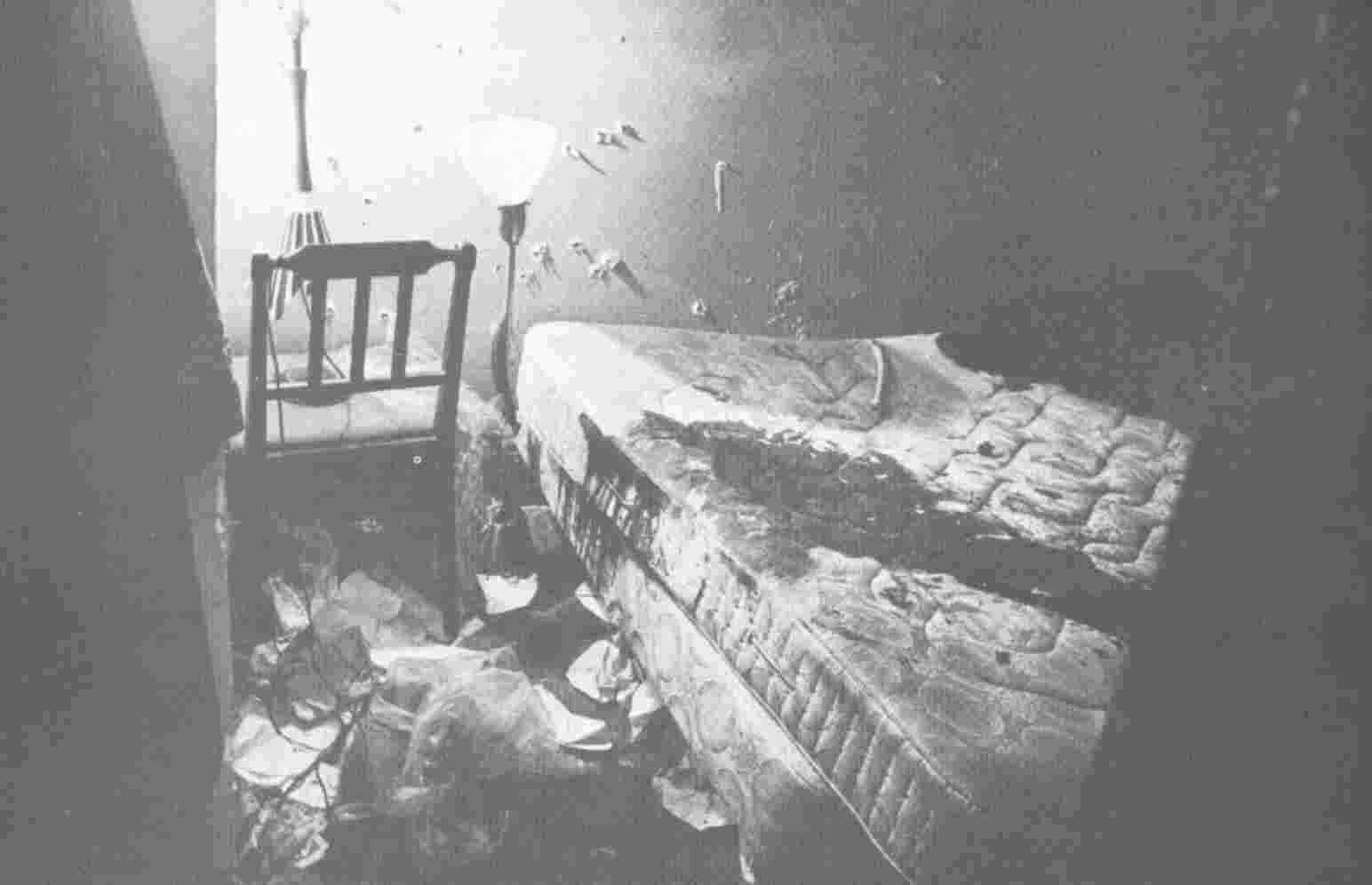
THE
MURDER OF FRED HAMPTON
(Mike
Gray, USA, 1971)
The harsh,
unshaded light cruelly exposes the illusion
of
a society of law and order, for in this sad room, a
Black
Panther leader was assassinated by the police,
whose
fabricated stories of self-defense collapsed
under
later public scrutiny. Hollywood cannot
duplicate
the sordid mattress, the machine-gun
holes
torn into the cheap clapboard wall.
______________________________________________
This
hard-hitting documentary expose of the police assassination
of the Black Panther leader dispenses
with narrative or editorial
comment
to make its damning case by purely audio-visual means
instead: interviews with police,
black revolutionaries, the State
Prosecutor
(later implicated), and detailed examinations of
the
apartment where Hampton was killed. The introduction
of animated lettering at the end,
consisting of rapidly emerging
quotes
from Hampton's last speech (as he is heard delivering it),
is one of the most powerful and radical
uses of this device in cinema.